The History of Bobotie

Can I tell you all a secret? I’ve never actually liked bobotie. Perhaps that makes me a ‘bad coloured,’ or maybe I just don’t like sultanas. Come to think of it, a number of South Africans don’t care much for bobotie – some aren’t even aware that it’s our national dish. Certain locals have gone so far as to denounce this, claiming that it’s not an apt representation of our nation’s diverse cuisine. Either way, I wanted to get to the bottom of the history of this polarising casserole dish.

the history of bobotie

After going down a rabbit hole of the origins of bobotie, reading stories of how the Dutch colonists brought it to the Cape and the Malays made it their own, to stories of physician and gourmet, C. Louis Leipoldt, claiming that Afrikaner dishes are not ‘authentic’ as the Dutch appropriated Indonesian cuisine – I have yet to find a concrete source. But it made me think: what does this mean for the preservation of cultures and the stories purveyed?

That might seem a little ‘deep’ to some, but food is deeply personal. Some inherit trust funds, and some inherit priceless recipes, and whether you enjoy shrivelled grapes in your mince or not, bobotie falls under that category.

The History of Bobotie

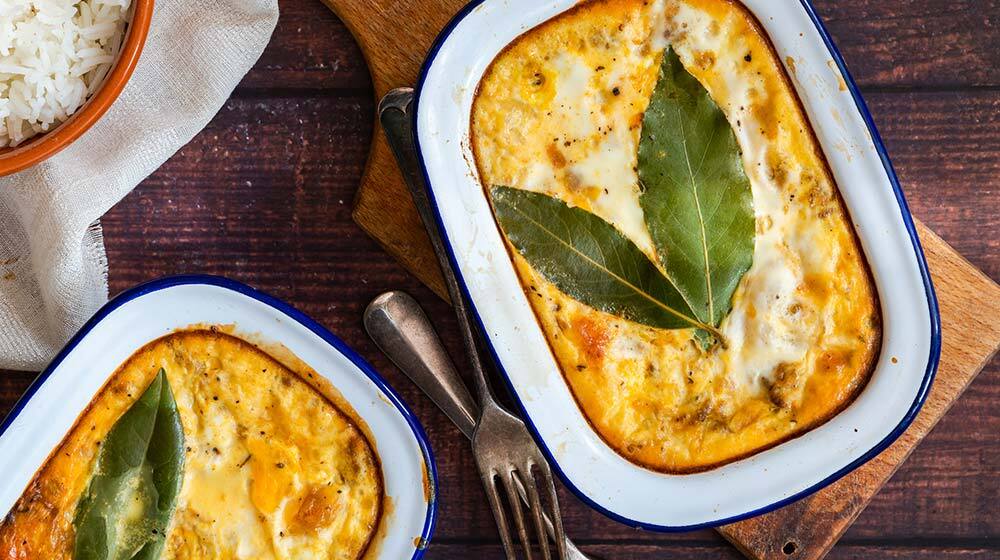
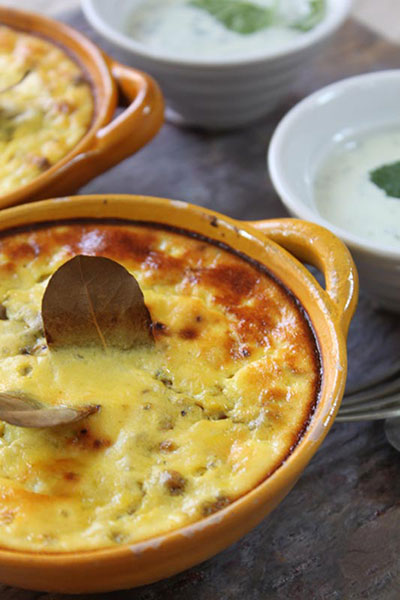
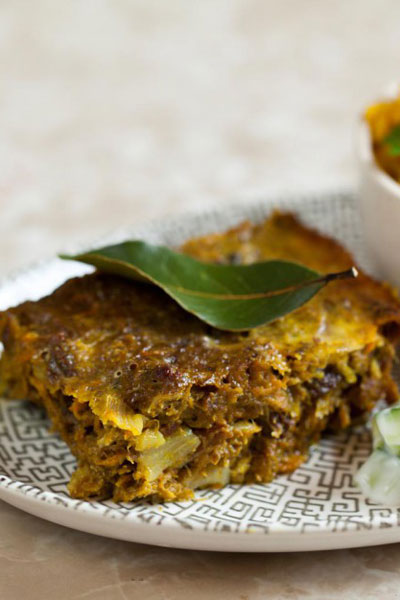
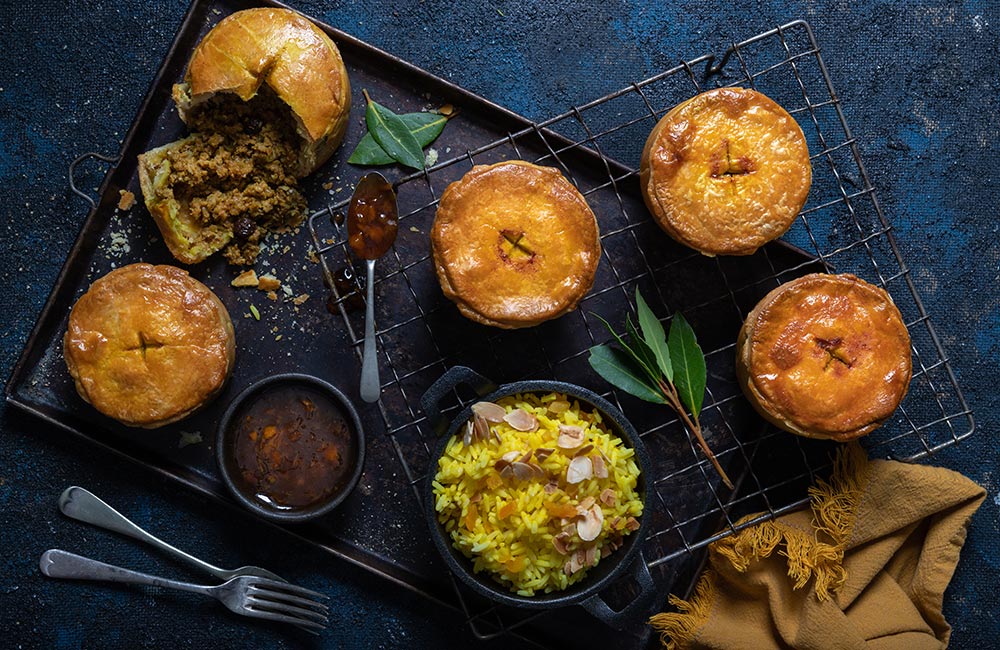
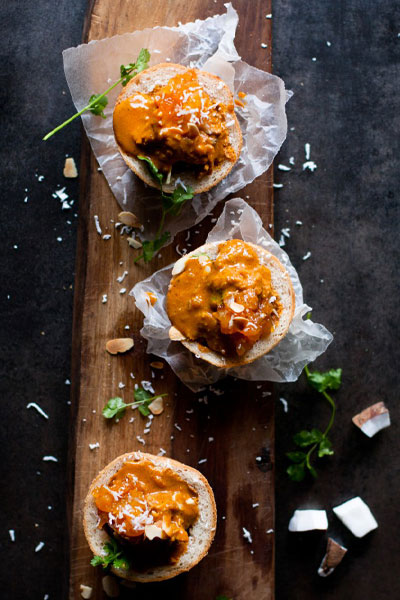
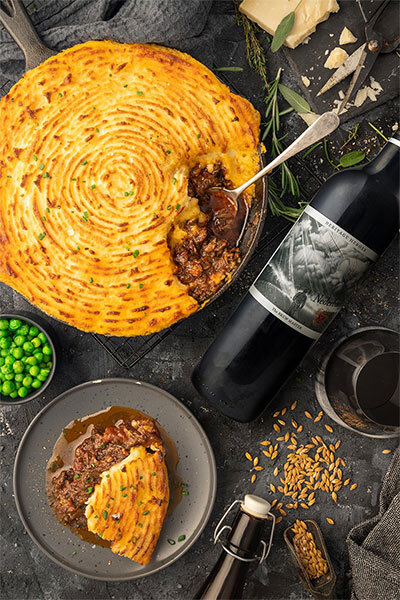
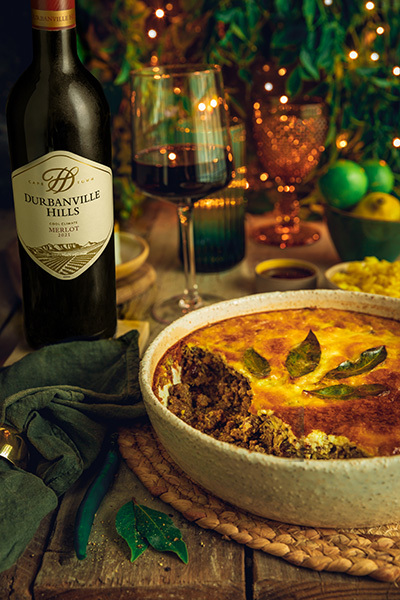
For those not familiar with bobotie, it’s a casserole dish containing onions, slightly sweetened cooked beef or lamb mince seasoned with curry powder and bay leaves, then topped with a savoury egg custard, and baked in the oven. Bobotie is usually served with turmeric-spiced yellow rice and/or blatjang (chutney) and sambal. Other traditional serving suggestions include sliced banana – perhaps owing to the fact that Indonesia is a tropical country. The tangy flavour of bobotie and similarly, pickled fish, could be due to the use of tamarind in Indonesian cooking, with sugar often used to offset the sour notes.

It’s believed that the dish was named ‘bobotie’ because it is reminiscent of the traditional Javanese dish, bobotok.

Those questioning how bobotie became our national dish, well, it was one of the recipes selected for a cookbook by the United Nations published in 1951, which includes globally recognised dishes – bobotie being one of them. As far as the history of bobotie is concerned, we know that it dates back to the 17th century, and if we wanted to be precise, we could approximate it to the year 1806. But, before we familiarise ourselves with the origins of bobotie, we first need to delve into the history of the Indonesians and the slave trade.


The VOC

The Dutch East India Company, otherwise known as the Vereenigde Oostindische Compagnie (VOC), was established in 1602, for the purpose of rivalling the Portuguese who dominated the spice trade at the time. They also sought to gain control over British merchants to relinquish the East Asia spice and tea trade. With a government charter granted, they were able to do just that and more. The VOC apparently had ‘exclusive rights’ to the spice trade in East Asia, giving them dominion to essentially ‘go forth and colonise,’ enslaving masses of indigenous peoples in the process.

The VOC established their headquarters in Batavia, the capital of Dutch East Indies, now Indonesia. They hauled in Javanese and Indonesian political exiles and prisoners who resisted the subjugation of their homeland by the Europeans. Furthermore, they claimed tea and spices, more specifically pepper, clove and nutmeg from the Banda inhabitants. Naturally, they resisted, resulting in the VOC mutilating the Banadanese, and expropriating the island; they also demanded slave labour from neighbouring lands.

In 1649, the VOC directors proposed a mandate, and in 1652, sent Jan van Riebeeck to set up shop at the Cape of Good Hope (now Cape Town), with the purpose of building a refreshment station for crew members travelling between Holland and East Asia. The station was also used to treat crew members suffering from scurvy and other diseases. Mind you, the Cape was never intended to be a colony. Despite the mandate stating that relations were meant to be maintained with the native Khoikhoi and San peoples, van Riebeeck requested the ‘need’ for slaves to ‘help’ build the refreshment station.

Cape Town South Africa

The Dutch appropriated Indonesian slaves, many of whom had a vast array of talents, including being silversmiths, cobblers, singers and tailors. Because many of these enslaved peoples (often of Muslim faith) spoke a lingua franca known as ‘Behasa Malayu’ (Malaysian language) and were brought to the Cape of Good Hope, they were referred to as the ‘Cape Malays.’  Some of them were assigned as cooks in Dutch households.


Origins of Bobotie

Although the origins of bobotie are rumoured to have Dutch roots – with the earliest recipe apparently recorded in a Dutch cookbook in 1609 – no name has been attached to this recipe. Regarding the nomenclature, it’s believed that the dish was named ‘bobotie’ because it is reminiscent of the traditional Javanese dish, bobotok, which incorporates fresh coconut flesh, vegetables, meat or fish steamed in banana leaves. Although bobotok and bobotie taste nothing alike, the appearance of the meat is similar.

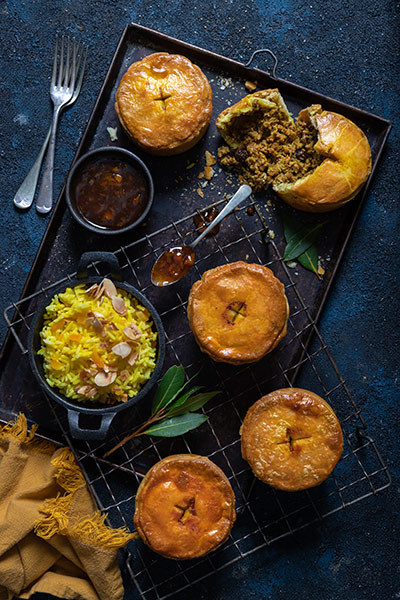
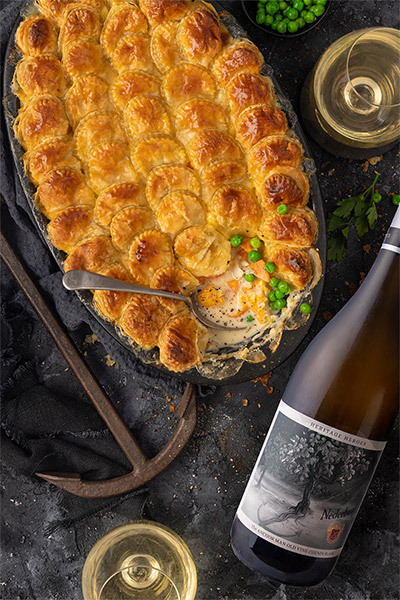
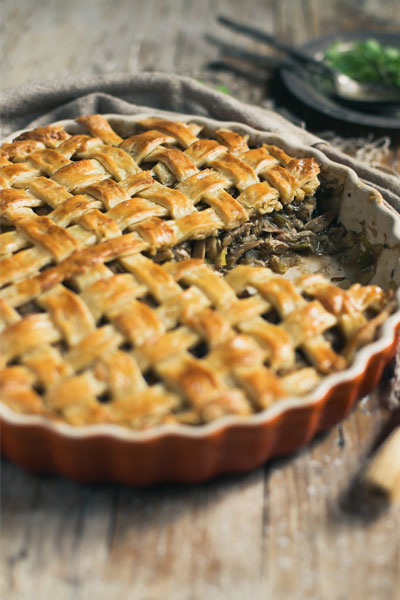
Bobotie_Pie

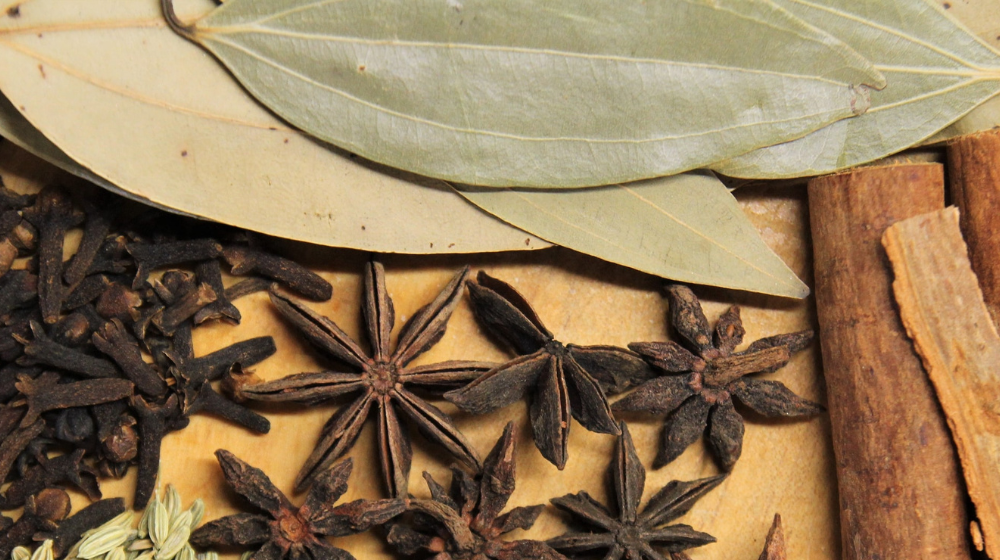
Interestingly, it is believed that the Dutch version originally used lemon leaves. The more popular and current version uses bay leaves – a significant spice in Indonesian and Eastern cooking, but was previously considered a ‘poor’ ingredient. Bay leaves and curry powder were incorporated to season the meat base of the dish, normally leftover meat and day-old bread is repurposed. Traditionally, the meat would be seasoned with lemon rind and lemon leaves. Mutton or pork was also commonly incorporated in bobotie, and while there is a large Muslim community in Indonesia, there are also non-Muslim communities that eat pork.

Today, bobotie is more commonly made with ground beef and lamb.

As with many cuisines, slaves and immigrants have adapted recipes using indigenous or substitute ingredients and spices to resemble flavours inherent to their culture. My theory? If it was in fact an original Dutch recipe, the Indonesian cooks probably considered it bland and took some liberties of their own. Today, bobotie is more commonly made with ground beef and lamb, owing to the fact that South Africa has a significant Cape Malay Muslim community. Families have improvised more traditional recipes through the years, and your auntie’s bobotie would probably taste a lot different compared to mine.

It makes sense that South Africa’s national dish would honour the history of the Cape Malays and their lineage. But with such a diverse demographic, perhaps we should have more than one national dish… I vote tripe and trotters, what’s your contender?

If your auntie doesn’t have a recipe, try our take on The Ultimate Bobotie.

Living Next to Mrs. Parker – Childhood Food Memories

Over the years, I’ve come to question my relationship with food, and reflecting upon my fondest childhood memories, realised that we are ‘what we eat’ but perhaps not in the way that we think…

comfort food recipes

There’s so much embedded in who we are and a large portion of that conversation can be attributed to the nature versus nurture concept. Do I like the things I like because of my deep-rooted heritage, or are my interests a result of cumulated experiences?

Where culture and influence intersect, deliciousness is birthed.

The origins of our food journeys are not only cultural, they’re impacted by influence too. It’s the reason a Sunday isn’t a Sunday without coconut-coated fingertips after indulging a beautifully spiced aniseed and cardamom koe’sister. Or the reason I will drink a piping hot cup of tea in the heart of the summer, as my parents habitually claim that ‘it cools you down.’ In my thirty-something years of existence, I’ve found that where culture and influence intersect, deliciousness is birthed.

My Fondest Childhood Food Memory

Growing up in Rylands, in the Southern Suburbs of Cape Town, skipping from house to house felt like the equivalent of club-hopping, only the religion edition. Back then, we lived in a semi-detached home; the houses were painted like tubs of Country Fresh Neapolitan Ice Cream – the one that’s usually filled with frozen soup instead of ice cream.

Childhood Food Memory

On the one half, we had my family, the Samuels’ – spearheaded by my door-knocking Jehovah’s Witness father and my happy-clappy Christian mother. On the other half, we had the Parkers, a Muslim family.

My mother would often find me next door, scoffing down patata waras in Mrs. Parker’s kitchen.

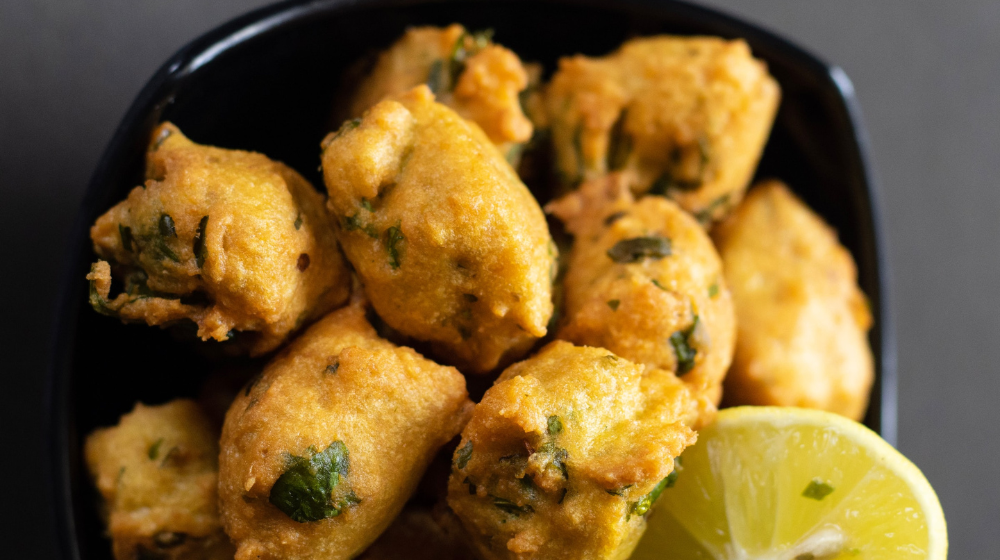
Too young to remember, I couldn’t tell you whether we had a post-box or not, or what colour our house was, but what I do remember is that our home felt far from detached. And for that, I have the Parkers to thank. Being the little rascal that I was, my mother would often find me next door, scoffing down patata waras (patata vadas) in Mrs. Parker’s kitchen, always in time for boeka. The best part about Mrs. Parker’s patata waras was not the soft, pillowy, turmeric-stained potato filling, but rather the fragrance that summoned me to her kitchen – notes of mustard seeds, chilli, and my all-time favourite, coriander or ‘dhanya,’ as we call it.

Then and Now

In hindsight, there’s obviously much left unsaid about the sociopolitical landscape that segregated coloured and black communities from the more ‘affluent’ ones. But I maintain, had I not grown up in the Southies and lived next door to Mrs. Parker, my appreciation for Cape Malay and Indian cuisine wouldn’t have been as considerable as it is today.

I no longer live in a semi-detached home and have since moved to the Northern Suburbs, which is admittedly less ‘lively.’ It’s been a while since I last had a patata wara, but every time I visit the Southies, I get a couple of patata waras from Wembley Roadhouse in Belgravia, which conveniently happens to be around the corner from my mother’s happy-clappy congregational church.

Patata waras or ‘batata vadas’ – deep-fried balls with a potato filling, spiced with ground turmeric, chillies, mustard seeds and coriander, and coated in chana flour.

They don’t taste as good as Mrs. Parker’s, and I’m certain I’ll never find one that does, as the taste has been preserved by the nostalgia of my childhood food memories. But, whenever I do bite into one, I am always reminded of her.

Learn all about The Legacy of Cultural Icon and Cape Malay Cook, Faldela Williams.

Willow Creek Celebrates the Many Tastes of Tradition this Heritage Day

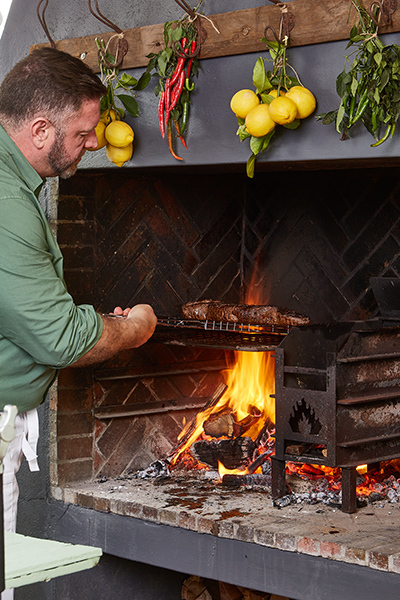
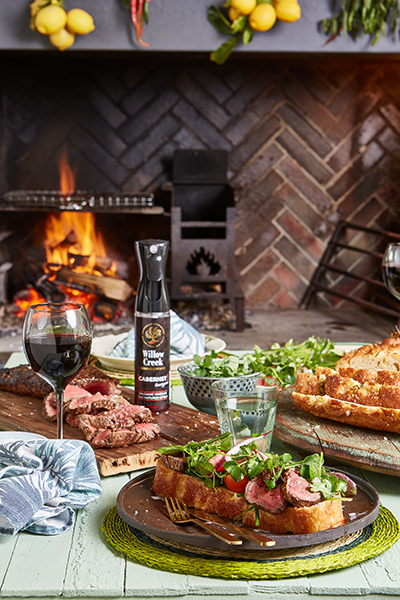
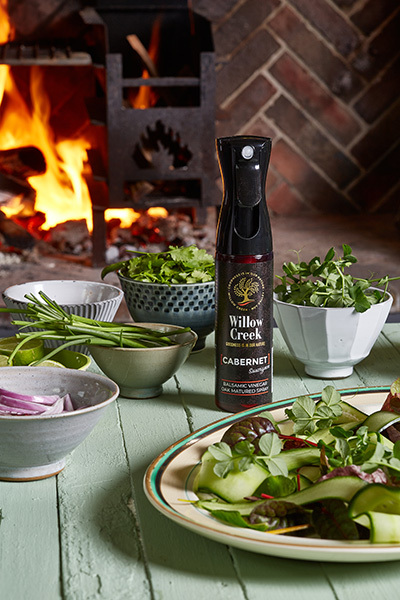
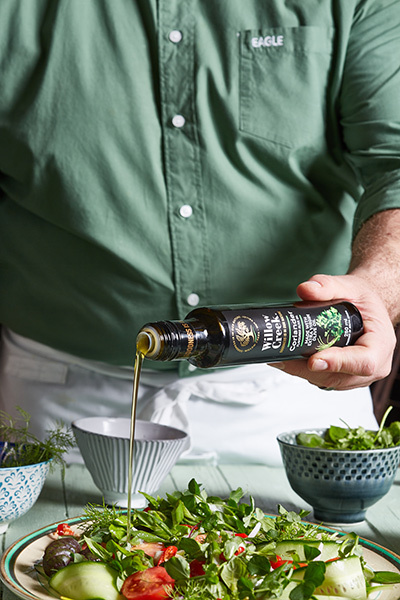
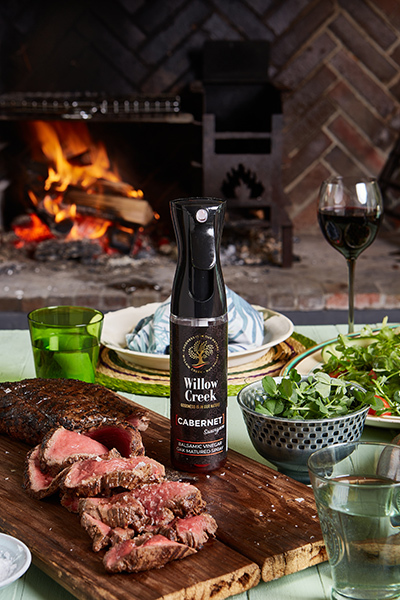
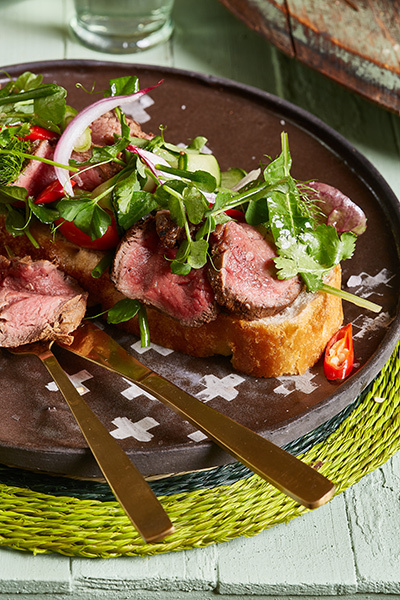
The heart of heritage is culture and people, and what better way to honour that than gathering the family for a flavourful feast? A celebration of local produce and innovation, the Willow Creek product range proves that tradition caters to many tastes and that culture is infused with different flavours. Elevate Heritage Day celebrations with this Rare Roasted Fillet on Olive Focaccia with Salad for a memorable braai feast.

A Feast of Flavour

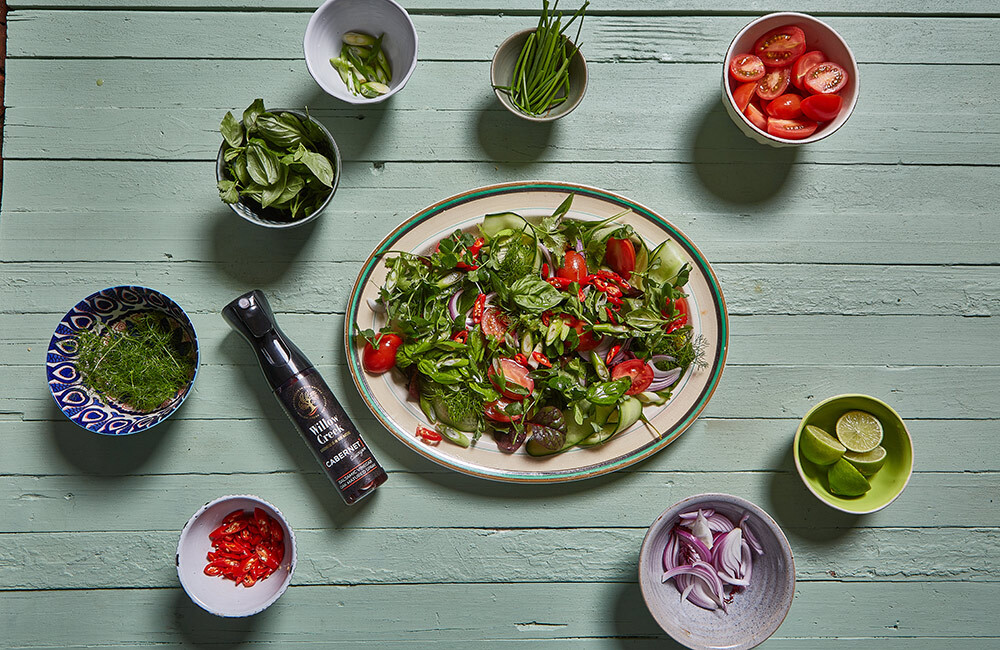
This family feast is a wonderful way to make the most of your money this Heritage Month. Despite choosing a premium cut of meat, you can effortlessly serve a large crowd by thinly slicing the fillet. We pair the succulent braaied beef with a crisp, finely chopped green salad – a slightly more elevated version of the traditional South African salad – and a comforting focaccia. Dressed with Willow Creek Cabernet Sauvignon Balsamic Vinegar, the vibrant salad beautifully balances the hearty flavours of this Heritage Day meal.

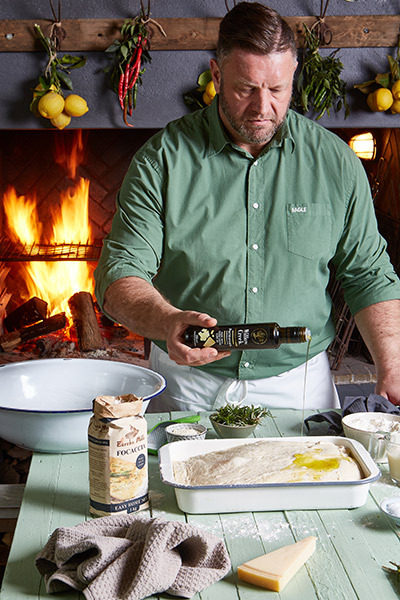
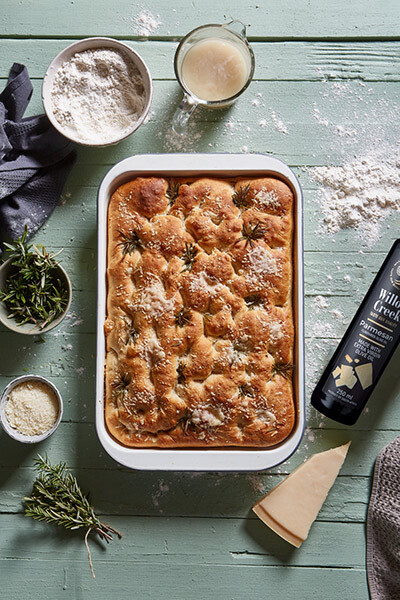
Ideal for breaking bread with family and friends, the focaccia is best served fresh out of the oven,  alongside the fillet and salad. This bread only gets better with time, making it an excellent choice for breakfast toast the following day or for creating delectable salad croutons when toasted. Slice, savour and enjoy!

Recipe for Rare Roasted Fillet on Olive Focaccia with Salad


Willow Creek Flavoured Olive Oil & Balsamic Vinegar

This recipe heroes a few innovative and versatile products from the Willow Creek range, perfect to zhoosh up any dish!

Jalapeño Flavoured Olive Oil – Just enough kick to add another dimension to your dishes. Use this flavoured extra virgin olive oil to liven up salsas and Mexican-style dishes, or generously drizzle it over steaks before firing up the grill.

Parmesan Flavoured Olive Oil – The rich, pungent aroma of this popular hard cheese is expertly blended into Willow Creek Parmesan Flavoured Olive Oil. Use this heavenly extra virgin olive oil to enhance pasta dishes, crusty fresh bread, crumbed chicken or pork chops.

Coriander Flavoured Olive Oil – Herb Heaven! Every drop smells like a herb garden. Instantly add earthy aromas to curries and other fragrant dishes. This product consists of delicate extra virgin olive oil, infused with natural coriander flavouring.

Cabernet Sauvignon Balsamic Vinegar Spray – This is the most versatile and practical way to enhance salads, desserts, roasted meat and carpaccio.

Explore the Willow Creek product range. For more delicious inspiration, try these recipes

willowcreek.co.za | Facebook | Instagram

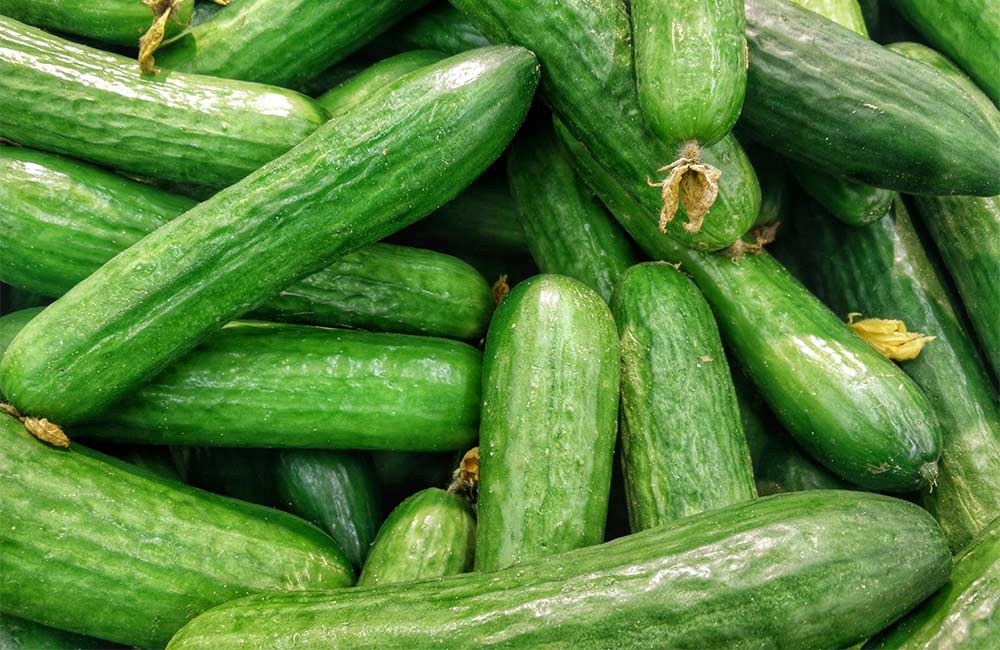
The Cucumber Trend: Why Everyone Is Crazy Over Cukes

If you’re wondering why everyone on the internet is cucumber-crazed and eating out of reusable plastic take-out containers, it’s all thanks to the leader of the ‘Cucumber Community’ and TikToker, Logan Moffitt AKA @logagm, who started the cucumber trend with the belief that “sometimes you just need to eat a whole cucumber.”

Since the TikTok was posted last month (8 July 2024), the original post and more cucumber recipes have gone viral. The initial recipe, which has caught the attention of food lovers across the globe, depicts Moffitt slicing an entire cucumber over a takeout plastic container using a mandoline — do not try this at home, unless you’re experienced.

The recently popular content creator also adds a dash of soy sauce, fish sauce, sugar, ‘a lot of sesame oil,’ grated garlic, chopped spring onion, and sesame seeds to the container. After shaking the contents to evenly coat the cucumbers, Moffitt tucks into his creations with a set of silver chopsticks, sometimes even drinking the remaining juices with a metal straw.


The Cucumber Trend

Besides cucumber, there’s another ingredient that Moffitt consistently incorporates in his viral recipes — “MSG, obviously!” — a catchphrase fans eagerly anticipate.

It seems Moffitt and many food content creators are embracing the use of MSG (monosodium glutamate), an ingredient once (and still somewhat) stigmatised. David Chang and other advocates have disputed that no scientific research linking MSG to negative health effects exists. Thankfully, the supposedly ‘bad for you ingredient,’ naturally found in organic vegetables and commonly incorporated into products like meat seasoning and flavour enhancers like Maggie Liquid Sauce has experienced good PR in recent years and has since been dubbed ‘Yum Yum.’

@logagm

Best way to eat an entire cucumber

♬ original sound – Logan

As for the cucumber trend, some time has passed since Moffitt originally posted the video, but the hype certainly hasn’t died down. Forbes reported that the content creator often posts between three and four videos of cucumber salads and other recipes. Revamped recipes featuring cucumber, like tzatziki, bagel and egg salad-inspired cucumber, have won over the palates of Moffitt’s followers. Most have been hits, with perhaps one missing the mark… peanut butter and jelly cucumber salad — thanks, but no thanks!

Moffitt, who enjoys Asian cuisine, particularly Korean-style dishes, has gained millions of followers — up to 5 million to be exact. The content creator has also shared recipes like Watermelon Kimchi and whole tofu dishes, but it’s the cukes that have home cooks going crazy. If your local grocery store’s produce section is fresh out of cucumbers, this might be the reason.


Join the Cucumber Community

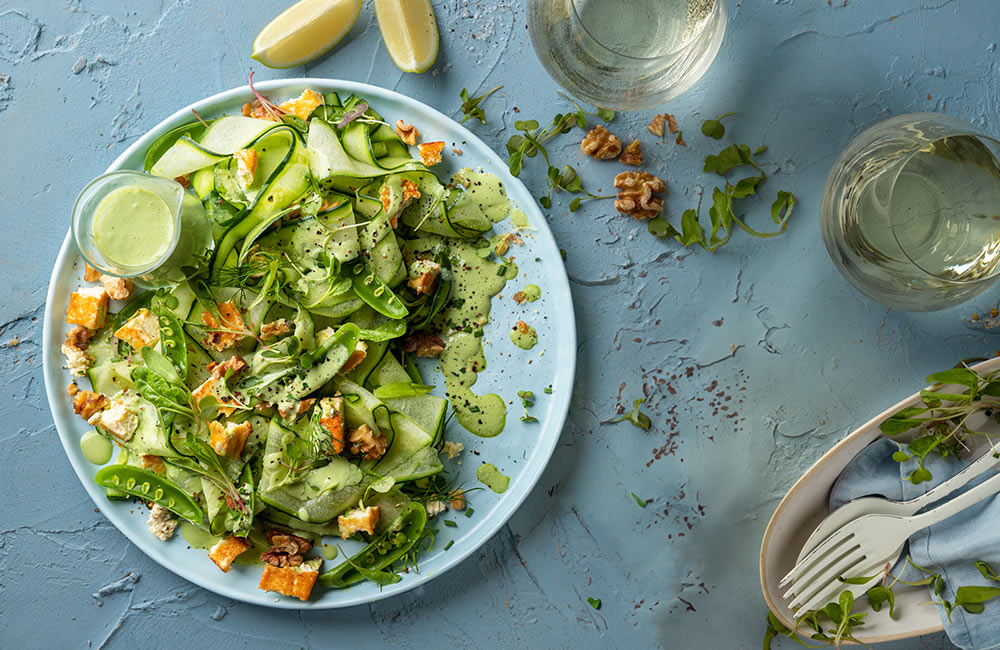
We doubt there’s anyone who loves cucumbers more than ‘The Cucumber Guy,’ but if you want to get in on the cucumber trend, this delicious Cucumber Ribbon Salad with Caramelised Feta & Green Yoghurt Dressing might be for you. It’s refreshing, zingy, garlicky, and the perfect side for braaied lamb chops or spicy chicken thighs.

GET THE RECIPE

Everyone knows that cucumber tastes great in salads, but have you ever tried cooking cucumber? What’s your take – is it clever or criminal?

We Stay at the Palm House Boutique Hotel and Spa, Wynberg

Nestled in the leafy suburb of Upper Wynberg, Palm House Boutique Hotel and Spa is a peaceful sanctuary, offering an ideal escape from the frenetic pace of the city. It is perfectly placed on the cusp of the Constantia Winelands, and just a short drive from all the activities of the city centre. We recently indulged in their exclusive Indulgence Offer and were captivated by the lush green gardens, the unique Nordic Banya barrel sauna, delicious cuisine, and what can only be described as the best massage we’ve experienced in years.

A Grand Welcome at Palm House Boutique Hotel

The stately home, now a National Monument, has recently undergone a thoughtful refurbishment that marries its historic charm with modern luxury, making it ideal for business and leisure travellers alike. Its two and three-bedroom suites are ideal for families and are located in the gardens and around the pool area.

Although it was a typically wet and windy day when we visited, there is no doubt that the pool area will be a popular spot come summer. With sun-soaked loungers and its majestic namesake palms swaying in the background, it will be blissful.Palm-House-_-pool-arena

In the true style of its era, the pillared entranceway gives way to beautiful Herringbone floors, bespoke wallpaper, and graceful chandeliers that complement the original wood panelling in the reception area and the sweeping staircase. The décor is luxurious and inviting, striking the perfect balance between opulence and homey comfort.Palm House Hotel_lobby

We stayed in the Pinot Noir suite, located in the main house, along with 9 other rooms. Our room was incredibly spacious with a plush king-size bed and a sweeping view over the gardens.room-at-palm-house

Once we had checked in, we took a seat in the lovely bar and lounge area, complete with an enviable curved plush window nook, and enjoyed a glass of local MCC and snacks from the kitchen – including the most delicious Bitterballen!

A Serene Spa Experience

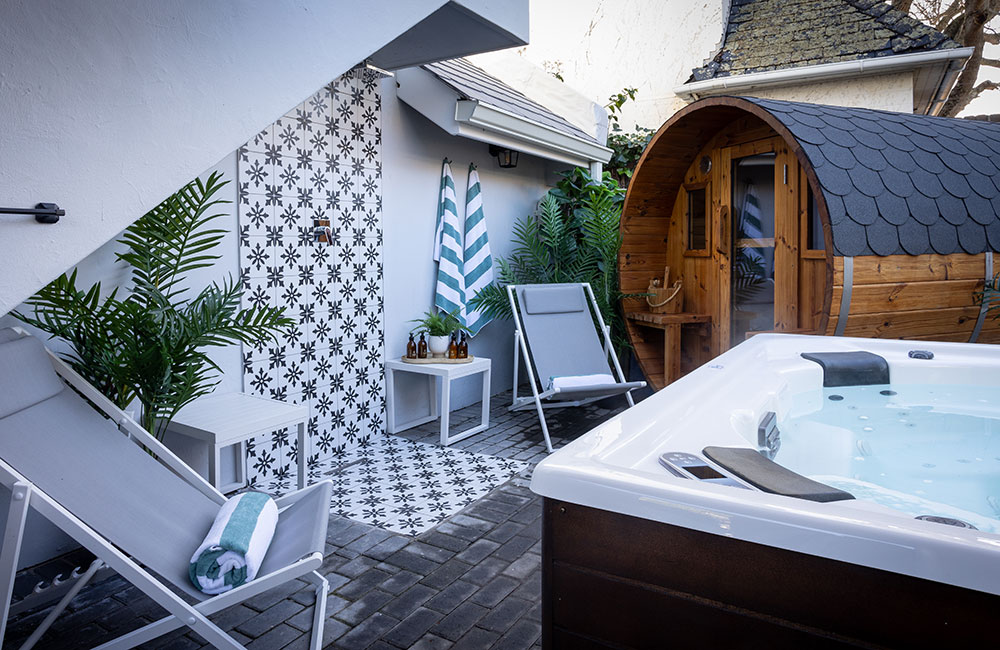
A visit to the Açaí Spa is simply a must. Located just steps from the main house, the spa is a haven of tranquillity, offering a range of wellness treatments using holistic products from the Healing Earth™ range. The wellness oasis courtyard, which is adjacent to the spa, features a unique Nordic pine barrel Banya sauna, complete with the sweetest shingled roof.

The spa is a haven of tranquillity, offering a range of wellness treatments…

wellness-oasis-palm-house-1x65

Alongside it is a bubbling jacuzzi – we spent time in both simply relaxing and enjoying the quiet and warmth on a rather cold and blustery August day. This time to unwind added an extra touch of luxury to our day and, for visitors who have been exploring the city, this will be the ideal way to decompress.

palm-house-acai-spa

The highlight of the spa for us was undoubtedly the couple’s massage in the dedicated treatment room. The two skilled therapists who looked after us, Leandri and Bianca, worked in harmony to create the most amazing experience.

The highlight of the spa for us was undoubtedly the couple’s massage in the dedicated treatment room.

From the curated playlist to the ideal temperature of the room, the thoughtful scents and the intuitive massage, we felt our stress and tension melt away. We left feeling deeply rejuvenated and relaxed, having experienced one of the most thoughtful spa experiences we’ve had in a long time.

A Foraged Dining Experience

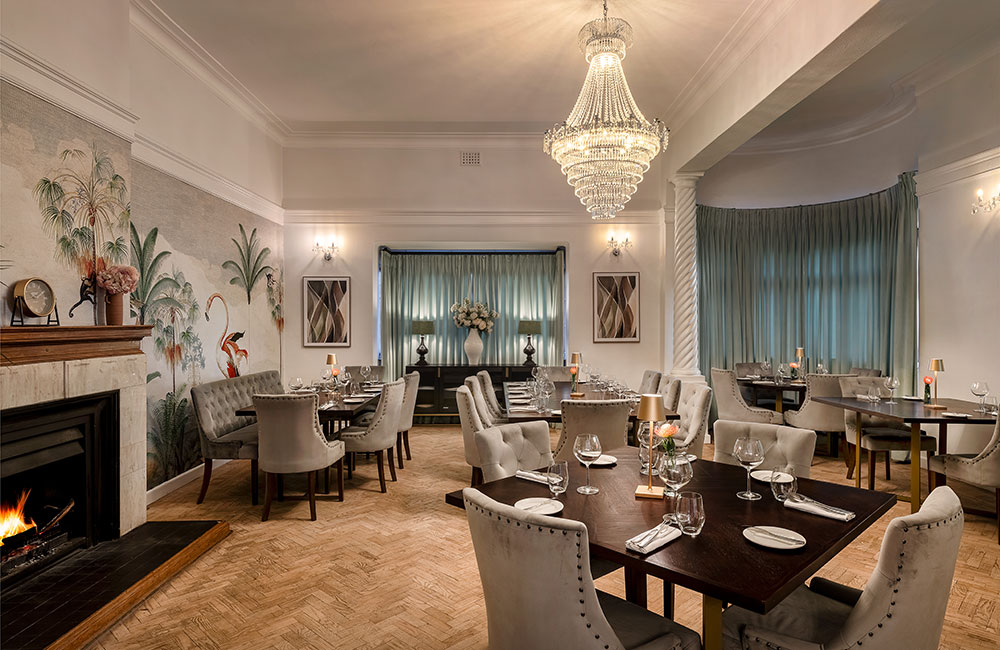
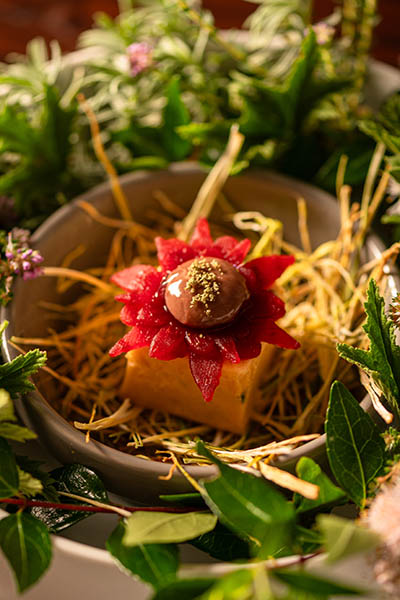
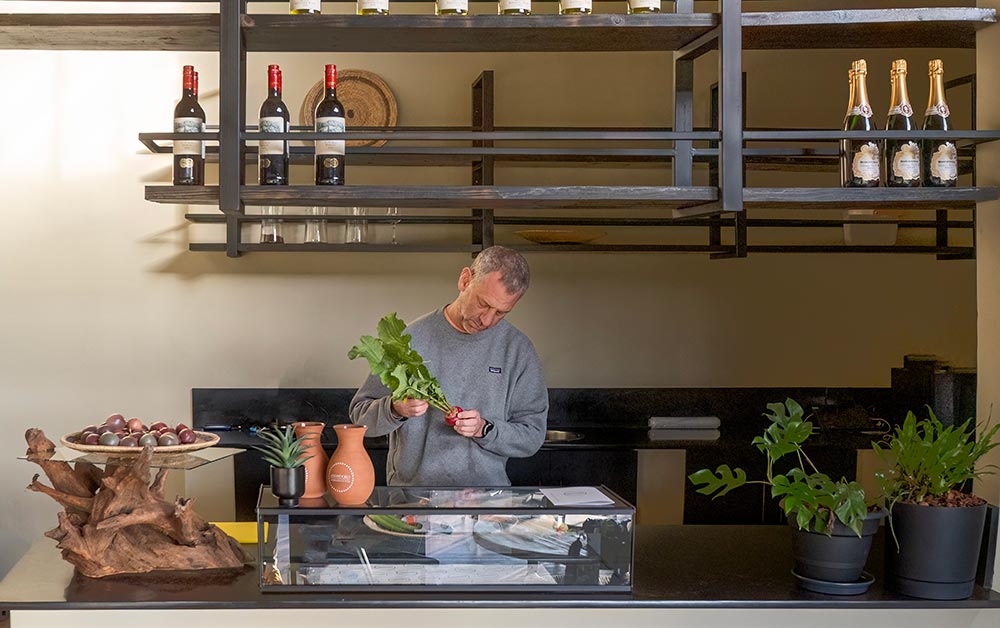
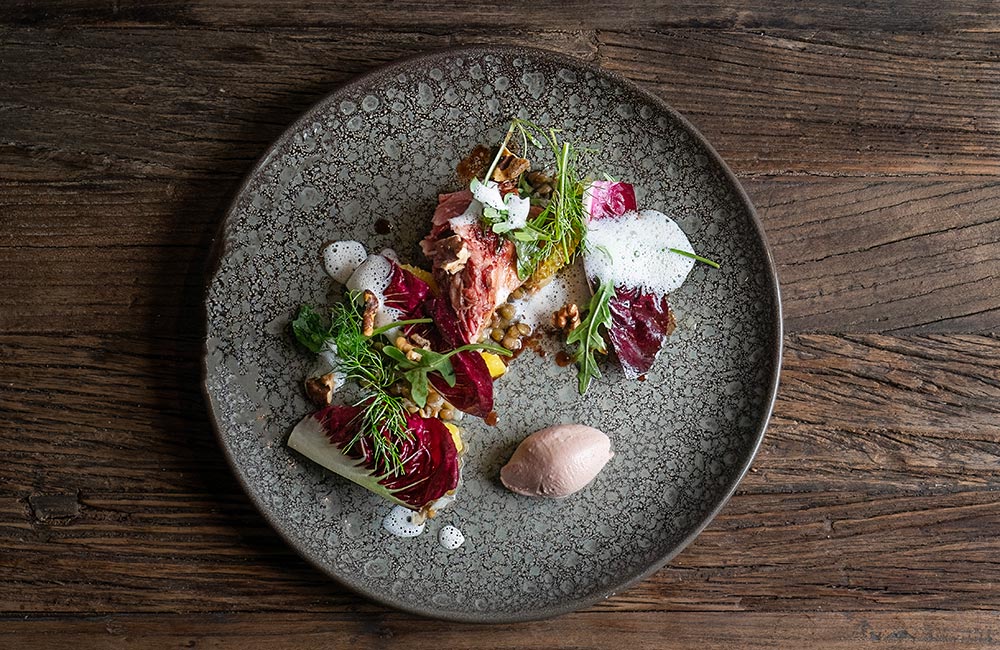
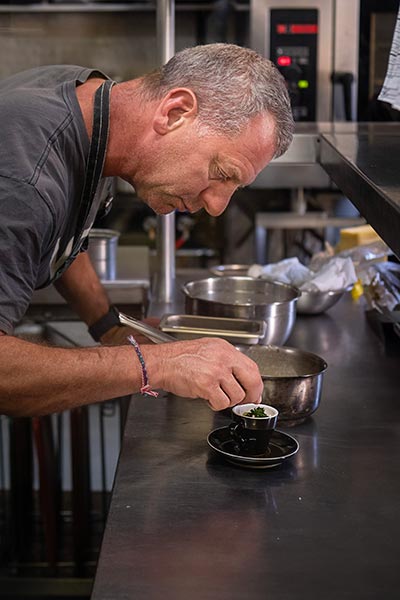
The dinner we experienced at Palm House was a special event arranged for Women’s Day and dishes were a culinary showcase of Cape Town’s indigenous flora and flavours. This special dinner was prepared by Executive Chef Gregory Henderson, also known as The Forage Chef, and was inspired by Fynbos, with a strong emphasis on seafood and sustainability. Although this was a special menu for the evening, Chef Gregory’s menu for de Tafel restaurant at Palm House will continue to be inspired by the same and will be equally as inventive as it is delicious.

PalmHouseHotel-de-tafel-1x65

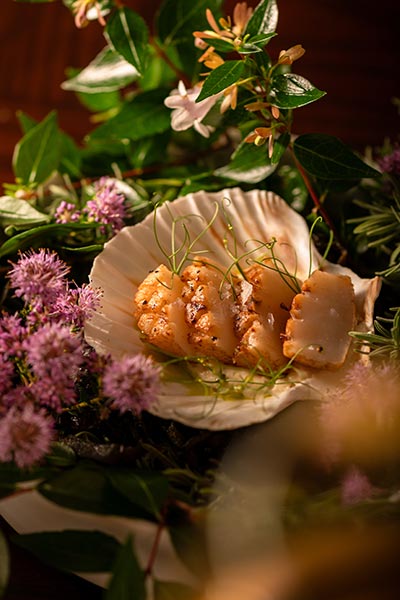
The 5-course menu included highlights like Saldhana Bay Oysters with smoked mayo, buchu gremolata, bokkoms and truffle pearls and Silverfish with seaweed candy, fish bone potato, amaasi and cornsilk cream. Special mention must also go to the Fynbos honey Panna Cotta with Heuningboegoe crème glacèe – divine!

Impeccable wine pairings from the inimitable Carmen Stevens, a pioneering female winemaker, elevated the experience, complementing each course and enhancing the flavours of the foraged ingredients.

Book Your stay

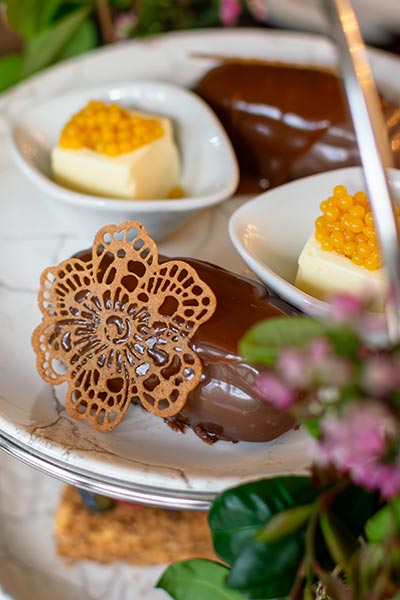
A stay at Palm House Boutique Hotel and Spa is much more than a mere getaway; it’s an opportunity to find moments of quiet, which in a busy city, can be a challenge. Whether you’re relaxing in the spa, enjoying a gourmet meal, or indulging in their sumptuous afternoon tea, the Palm House experience is designed to cater to your every need.

With its perfect blend of historic charm and modern sophistication, this boutique hotel offers an unforgettable experience in one of Cape Town’s most charming neighbourhoods.


Indulgence Package – Available until 30 Sept 2024

The Palm House Indulgence Offer gives you every reason to enjoy the season in the Cape and includes:

  • Luxurious accommodation
  • Welcome coffee or cocktail on arrival
  • Welcome in-room canapés and a bottle of Palm House Red (or sparkling grape juice)
  • A 60-minute massage at the Acai Spa
  • A 3-course dinner menu at the Palm House Terrace
  • Full English breakfast
  • The Palm House Indulgence Offer is priced per person and is available for single or double occupancy.

10 Oxford Street, Wynberg South Africa | Tel: (+27) 21 745 5008 | Email

palmhouse.co.za | Facebook | Instagram

Mhondoro Safari Lodge & Villa Partners with Luke Dale Roberts

Mhondoro Safari Lodge & Villa has partnered with renowned chef and restaurateur Luke Dale Roberts to further elevate the culinary offering at the 5-star lodge in the Welgevonden Game Reserve. The exciting new multi-course menus, wine pairings and curated cocktails, combined with a high level of culinary service, is set to raise the bar for safari cuisine in South Africa.

An Overhaul for Mhondoro’s Culinary Offering

Luke Dale Roberts and his expert executive team are overhauling Mhondoro’s food and beverage experience in totality, phasing in an exclusive, all-new dining experience that is available to Mhondoro’s resident guests only.

Training of Mhondoro’s current in-house food and beverage staff, mentored by Luke Dale Roberts’ and his team, will further develop their skills and expertise to ensure top-tier service and culinary innovation on an ongoing basis.

Mhondoro food

Dale Roberts’ innovative wine-paired menus have already been introduced at dinner. Boma dinners are being reimagined too, transforming the quintessential safari experience of dining around a campfire, into an unforgettable encounter with the African night skies, showcasing local tradition, culture and cuisine. The next step for Dale Roberts and his team will be, creating a delicious new Harvest Table lunch concept, followed later by new breakfast menus, the preparation and presentation of game drive snacks, and exciting sundowner drinks and cocktails.

“Our cuisine sets us apart, celebrating local and seasonal produce sourced from our organic vegetable gardens cultivated on the Mhondoro Eco-Farm. This is where arriving guests now check-in at Mhondoro’s new Reception & Welcome Lounge and enjoy their first taste of the exciting gourmet adventure that awaits at the lodge,” says Fritz Breytenbach, the CEO of Mhondoro Safari Lodge & Villa.

Mhondoro

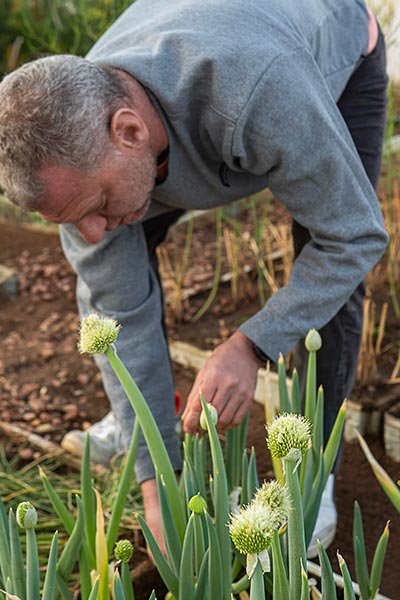
Conveniently situated adjacent to the main gate of Welgevonden Game Reserve in the Waterberg region, Mhondoro’s organic eco-farm also produces free-range eggs and farmed sheep and cattle. Guests may tour the farm and pick fresh ingredients before they are transported through the reserve in open game viewing vehicles to the lodge.

An outstanding new dining experience at Mhondoro

Myrian Vogel, the owner of Mhondoro, says it has always been a dream of the Vogel family to collaborate with a top chef in the heart of the bush. “Seeing this dream come true with someone of the calibre of Luke Dale Roberts is incredibly fulfilling, and we are very proud to bring our guests an outstanding new dining experience at Mhondoro.”

“I am exceptionally excited to partner with Mhondoro Safari Lodge & Villa. Their commitment to excellence and upskilling of staff, in addition to the sustainable development of farmland and an impressive organic vegetable garden are truly inspiring,” says Dale Roberts.

Special Event Sunday 15 September 2024 – Dinner with Luke Dale Roberts x Mhondoro

Bookings are open for a special wine paired dinner at Mhondoro, prepared and hosted by Luke Dale Roberts himself. The rate includes dinner and an overnight stay of luxury accommodation, all meals and house drinks, and two guided game drives. This exclusive, 24-hour gastronomic experience in the bush is available starting from R10,450 per person sharing per night (depending on the room category).

To make a booking, call +27 87 150 2314 or send an email.

mhondoro.com | Facebook | Instagram

Shining the Spotlight on Female Winemakers of South Africa

South Africa’s wines are world-renowned. Pinotage, Pinot Noir and Shiraz are just some varietals that are made to perfection, and people travel from far and wide to experience them. In honour of Women’s Month – and our general obsession with all things wine – we thought we’d highlight some of the amazing female winemakers in South Africa that are making waves in the wine world.

Nongcebo Langa from Delheim Wines

Since having started her journey at Delheim Wines in 2019, Nongcebo Langa has made significant strides. After obtaining her undergrad and master’s degree in Oenology at Stellenbosch University, Nongcebo joined the Delheim team as an intern and pursued a course in the Business of Wine Management at UCT. Under the guidance of Delheim cellarmaster, Roelof Lotriet, she was promoted from assistant winemaker to winemaker in 2022; her exceptional talent and dedication have earned her recognition among industry peers. In 2023, she was awarded the Diners Club Young Winemaker of the Year for her outstanding Gewürztraminer 2022.

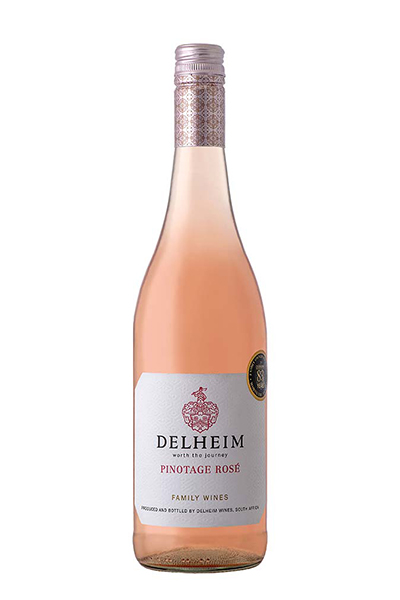
Her work has contributed to Delheim’s continued success with their Pinotage Rosé, a wine that has been cherished by both local and international wine lovers since 1976. Nongcebo’s achievements reflect her passion for creating wines that express the unique character of the region, solidifying her place among South Africa’s notable female winemakers.

We recommend… Delheim Pinotage Rosé 2023


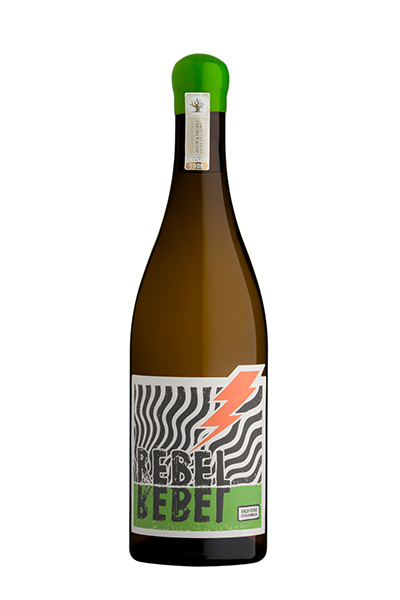
Kayleigh Hattingh of Rebel Rebel Wines

Kayleigh Hattingh, owner and winemaker at Rebel Rebel Wines, began her wine journey at Kaapzicht Wines in 2018. With a passion for low-intervention wines, she decided to launch her own label, Rebel Rebel, in 2020. Kayleigh’s approach focuses on showcasing the unique terroir of Bottelary, Stellenbosch, through her Syrah and Old Vine Colombar wines.

Last year, Rebel Rebel introduced a Méthod Ancestrale, a vibrant Cinsault Pét-Nat with notes of cherry, strawberry, and raspberry. Kayleigh’s dedication to crafting expressive, terroir-driven wines has made Rebel Rebel a standout for many locals, especially the Old Vine Colombar with its texture and vibrant acidity. Following the production of the 2023 Cinsault ‘Pét-Nat,’ Rebel Rebel recently launched their brand new Verdelho ‘Pét-Nat.’

We recommend… Rebel Rebel Old Vine Colombar 2022


Jocelyn Hogan Wilson of Hogan Wines

Jocelyn Hogan Wilson is the winemaker behind Hogan Wines, a family-run business she founded in 2014 in the Banhoek Valley. After earning her BSc degree in Viticulture & Oenology from the University of Stellenbosch in 2001, Jocelyn honed her craft by working at vineyards both locally and abroad. Upon returning to South Africa, she brought her experience and passion for minimal intervention winemaking to Hogan Wines, focusing on expressing the unique terroir of the Western Cape.

Hogan Wines offers a range of expertly crafted wines, including Chenin Blanc, Chardonnay, and a red blend that combines Cabernet Sauvignon and Cinsault (from the Helderberg region) with Carignan from Wellington. Jocelyn’s dedication to showcasing the region’s distinct character has made Hogan Wines a respected name in South African wine circles.

We recommend… Hogan Chenin Blanc 2022


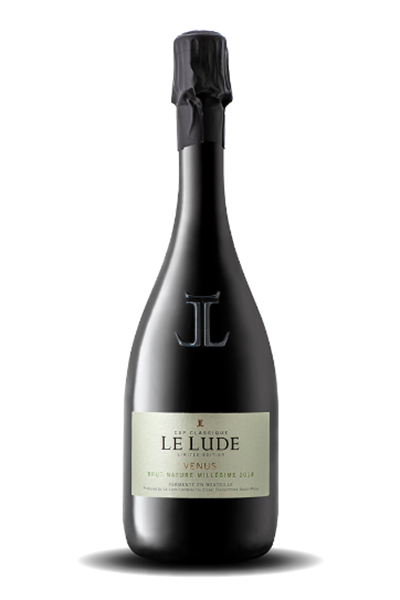
Kalissa de Kok from Le Lude Estate

Last year, Kalissa de Kok was appointed as one of the winemakers at Le Lude Estate, a leading producer of prestigious Cap Classique wines. The family-owned estate, which is situated on the edge of Franschhoek, specialises in bottle-fermented sparkling wines. Their Venus Brut Nature 2014 was awarded ‘Sparkling Wine Discovery of the Year’ in Tim Atkin’s 2022 South Africa Special Report.

Kalissa has embraced the role of crafting award-winning wines with enthusiasm and determination. Her fascination with the meticulous art of crafting Cap Classique was sparked during her studies at the esteemed Elsenburg Agricultural College, where she holds a Bachelor of Agriculture, Cellar Technology and Cellar Management. Kalissa’s final year at the college saw her collaborating closely with Cap Classique masters in the industry, solidifying her dedication to the traditional method of sparkling wine production. She honed her skills through harvest experiences at various cellars in the Western Cape.

We recommend… Le Lude Venus Brut Nature 2014


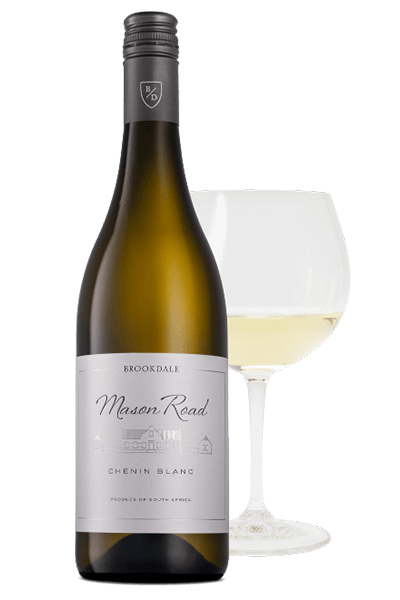
Kiara Scott Farmer from Brookdale Estate

Kiara Scott Farmer was born on the Cape Flats and graduated from Elsenburg Agricultural Training Institute, Stellenbosch. After obtaining her degree in viticulture and oenology, she was selected for the prestigious CWG Protégé Programme and during her three-year tenure, gained valuable experience working under industry professionals, David Nieuwoudt (Cederberg Cellars), Carl van de Merwe (De Morgenzon) and Charles Hopkins (De Grendel). International opportunities to work vintages in the Rhône Valley, Sancerre and the Russian River in Sonoma (California), further expanded her winemaking skills.

Winemaker and mentor, Duncan Savage (Savage Wines), recognised her potential and appointed her as his assistant when he was a consultant winemaker at Brookdale Estate. The maiden vintage of the Brookdale Chenin Blanc (2017) received global acclaim and secured Brookdale’s reputation as a producer of a wine of character. Kiara Scott Farmer’s experience led to her appointment as winemaker at Brookdale, where she officially took the reins from the 2019 vintage. She says: “I have a simple and minimal intervention approach to winemaking. I believe that great wines are made in the vineyard. Year on year, I am aiming to better understand our vineyards and soils to make the work in the cellar easier.”

We recommend… Brookdale Mason Road Chenin Blanc 2022


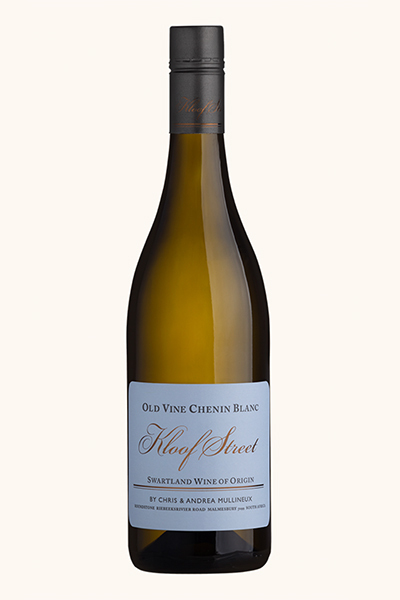
Andrea Mullineux of Mullineux Family Wines

Mullineux Family Wines was established in 2007 in the Swartland region of the Western Cape, by Chris and Andrea Mullineux. Andrea originally hails from San Francisco where she studied viticulture at UC Davis. Her early years working on harvests in Napa Valley set her up well for a fruitful career in the wine industry. She worked in Stellenbosch before moving to Châteauneuf-du-Pape, France, where she met her now husband, Chris, who convinced her to come back to South Africa.

Andrea joined the Cape Winemakers Guild in 2014, and was awarded ‘Winemaker of the Year’ by Wine Enthusiast in 2016. Andrea focuses on dry-farmed Mediterranean varietals.

We recommend… The Mullineux Kloof Street Chenin Blanc


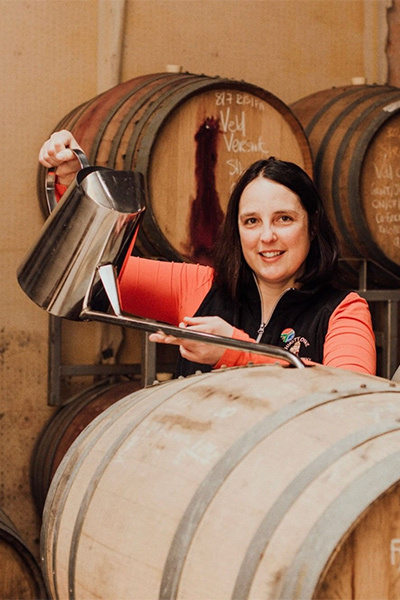
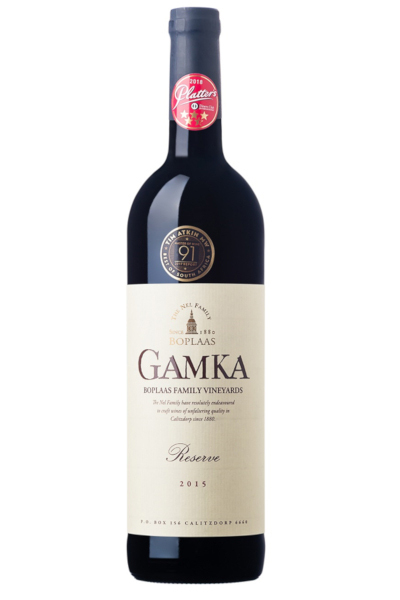
Margaux Nel from The Fledge & Co and Boplaas Family Vineyards

Margaux Nel has been destined to work with wine from the day she was born. Being the 7th generation winemaker of Nels from Boplaas in Calitzdorp, Margaux’s passion for winemaking runs deep. She has a BSc degree in viticulture from Stellenbosch University and an MBA from the University of Stellenbosch Business School. Her research is grounded in practice and experience, having travelled to many wine producing countries and regions.

We recommend… Boplaas Gamka (Family Reserve)


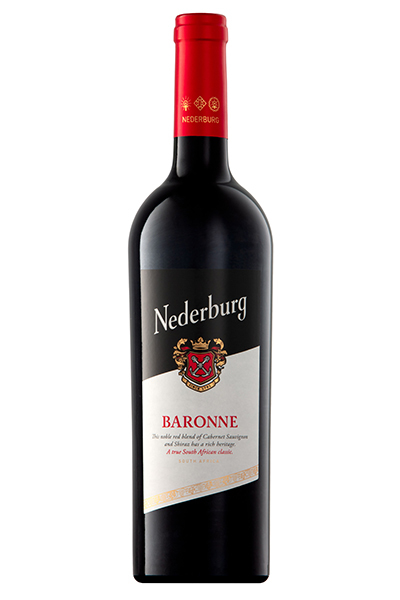
Jamie Williams from Nederburg

Jamie Williams is the white-winemaker at Nederburg wines, and has a wealth of knowledge built up from years of study and experience. Born in the Cape Flats to a single mother, Jamie grew up in Retreat. She always had an interest in science, and after high school she studied molecular biology and biotechnology at the University of Stellenbosch, where she took up a module on wine technology. She’s been working at Nederburg since 2018; the rest is history, as they say.

We recommend…Nederburg Baronne


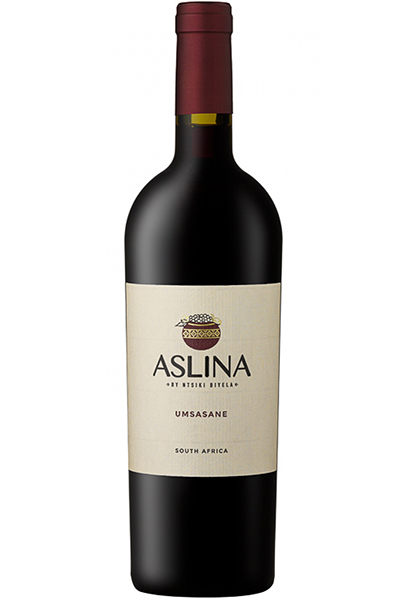
Ntsiki Biyela of Aslina Wines

In 1999, Ntsiki Biyela received a scholarship from South African Airways to study winemaking. Since then, she has grown from strength to strength and has encouraged diversity and transformation in a predominantly white South African wine industry. In 2007, Ntsiki opened her own winery, Aslina Wines, which has consulted wine farms in France and has made a wine for the Winemakers’ Collection.

We recommend… Aslina Umsasane 2021


Nadia Barnard-Langenegger from Waterkloof

South African wine brands

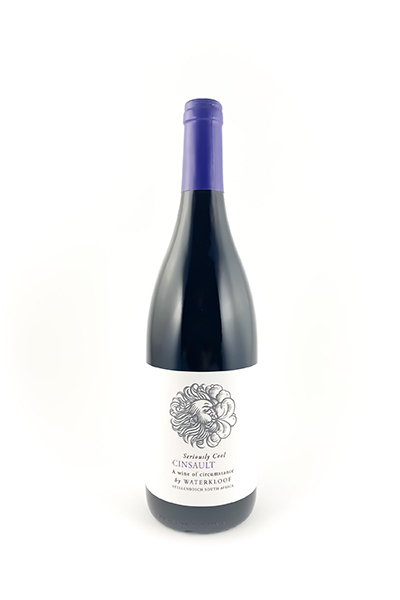
Nadia Barnard-Langenegger spent five years as an assistant winemaker at Waterkloof before graduating to winemaker in 2013. Her passion for winemaking started from a young age and led her to study viticulture and oenology at the University of Stellenbosch. She has worked in South Australia, New Zealand and France, and brings her extensive knowledge to her practice to create delicious, unique South African wines.

We recommend… Seriously Cool Cinsault 2023


Charla Bosman from Sijnn Wines

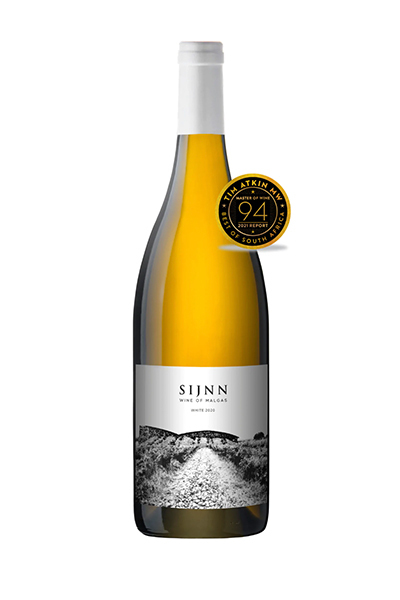
Charla Bosman (née Haasbroek), winemaker at Sjinn Wines, has worked local harvests at Kanonkop, Tokara, and harvests abroad in California. She brought her experience to the Malgas winery and delivers deliciously unique wines through natural farming and winemaking methods. The ambitious winemaker also produces wines under her personal label, Charla Haasbroek Wines.

We recommend… Sijnn White 2019


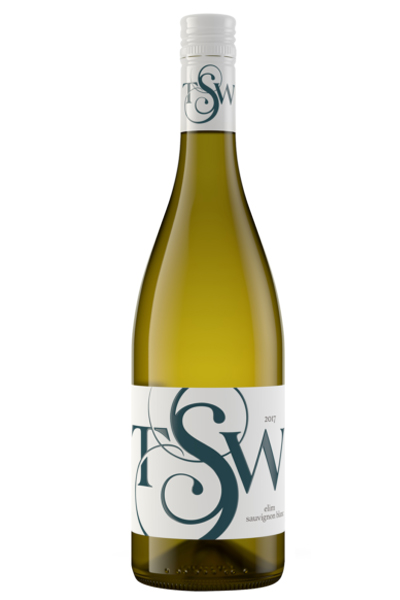
Trizanne Signature Wine

Trizanne Barnard, owner of Trizanne Signature Wines, graduated from Stellenbosch University with a degree in viticulture and oenology. She worked multiple vintages abroad and upon returning home in 2004, was offered the opportunity of starting Anwilka Wines in conjunction with Klein Constantia role-players and Bordeaux winemakers. In 2008, she decided to start her own brand, and Trizanne Signature Wines was born.

She focuses on two very diverse wine regions, namely Elim and the Swartland. Trizanne Signature Wines creates a wide and delicious range of lesser-known varietals.

We recommend… Reserve Sauvignon Blanc | Sémillon 2020


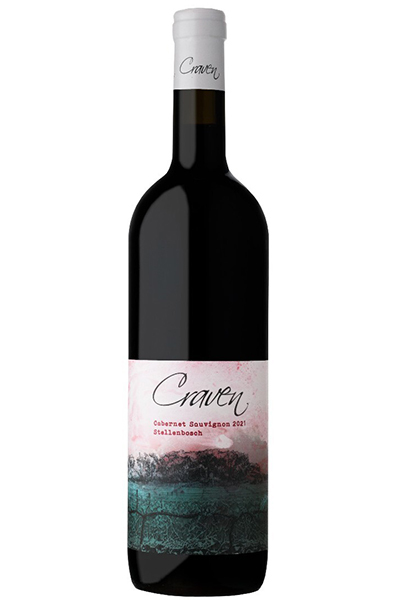
Craven Wines by Jeanine Craven

Jeanine Craven’s winemaking career started with visiting the wine co-op as a child with her father to deliver grapes. The aroma of crushed and fermented grapes is one of Jeanine’s earliest memories of wine. She and her husband, Mick, first met working a wine harvest in Sonoma, California, and since 2013, have established themselves as revolutionaries.

Jeanine’s aim is to make honest, bright wines that tell a story about the special site on which the grapes were grown. Craven Wines is best known for their Pinot Gris and Cinsault, and they also make delicious Cabernet Sauvignon. 

We recommend… Craven Cabernet Sauvignon 2022


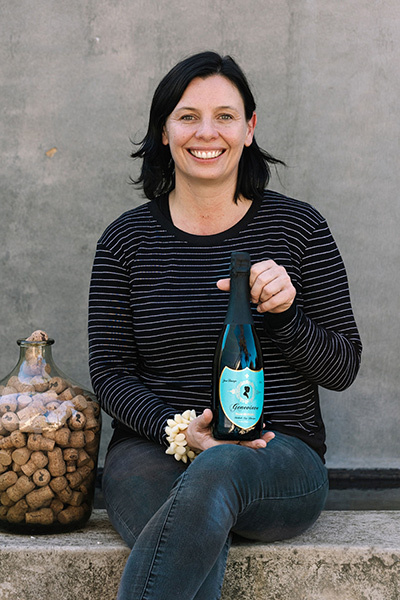
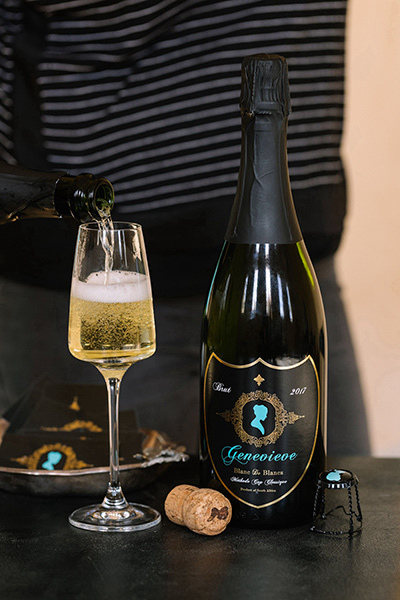
Genevieve Méthode  Cap Classique by Melissa Genevieve Nelsen

Genevieve MCC launched in 2010, and was inspired by Melissa’s passion for Cap Classique. Having once planned to become a pilot, these days Melissa is celebrated for her blue label Zero Dosage Blanc de Blancs, which is aged on the lees for 4 years. Produced from old Chardonnay vines in Botrivier, her sparkling wines embody an elegant, classic style. Her 2015 and 2016 Blanc de Blancs respectively earned 94 points and 93 points by Tim Atkin, and the critics couldn’t agree more.

We recommend… Genevieve Blanc de Blancs Brut 2017


Glen Heatlie by Joan Heatlie

Grenache Blanc lover, Joan Heatlie, set off on her own after working at Solms-Delta and Mullineux. The name Glen Heatlie traces its roots back to her 1880s family farm, where her great-grandfather produced Heatlie’s Brandy. Joan’s interest in winemaking was sparked when she helped out with pruning and odd vineyard jobs on the family grape and citrus farm during school holidays.

She’s best known for her Glen Heatlie, The Frontier Grenache Blanc, which garnered 4.5 stars from Platter’s Wine Guide and 90 points from Tim Atkin in 2021. Joan’s approach to winemaking is, “being respectful of terroir, regenerative vineyard management and natural vinification methods.”

We recommend… Glen Heatlie ‘The Frontier’ Grenache Blanc 2022


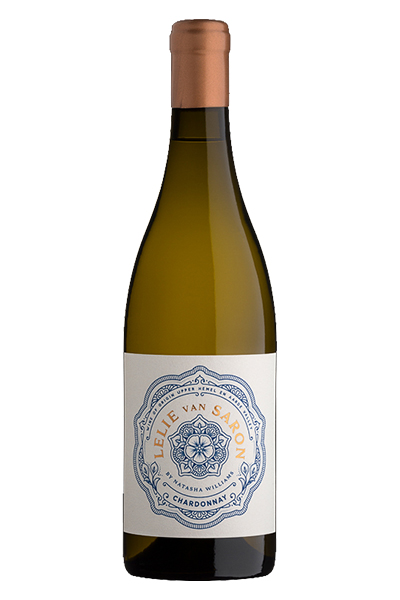
Lelie van Saron by Natasha Williams

It was Natasha’s school career counsellor who first identified that she would make an excellent winemaker, given her interests. She went on to graduate from Stellenbosch University with a degree in oenology, did a stint in California and travelled through France before settling as a winemaker at Bosman Family Vineyards – the very place from which she sources the grapes for her personal venture, Lelie van Saron.

She started with a Chardonnay and Syrah, and then expanded her range. Natasha creates wines with a pure expression of the terroir and grape variety, using natural methods. Natasha believes that it’s best to “follow a minimal approach to winemaking – crafting wines with purity, harmony and balance.”

We recommend… Lelie van Saron Chardonnay 2020


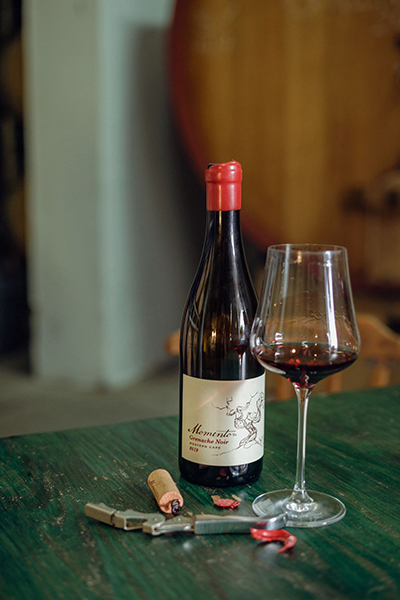
Momento Wines by Marelise Niemann

It may have been a ‘skelm’ glass of Tassies at a school dance that kindled her curiosity for winemaking, but Marelise Niemann has since gone on to produce elegant and pure wines with sound structure and texture. Having cut her teeth in California, and as winemaker for Beaumont Wines, Marelise picked her first Grenache for her solo project in 2011 and then launched Momento Wines in 2013.

Working with old vines in Botriver and the Swartland, she’s recognised for her graceful wines, which place terroir front and centre. The vine on her labels is hand-drawn by her husband, artist Hennie Niemann Jnr., and depicts an old vine and various personal characters. “Above all, I set out to make wines that speak of the place they come from – wines that reflect the character and energy of the vineyard, rounded off by pure and natural winemaking in the cellar,” says Marelise.  

We recommend… Memento Grenache Noir 2021


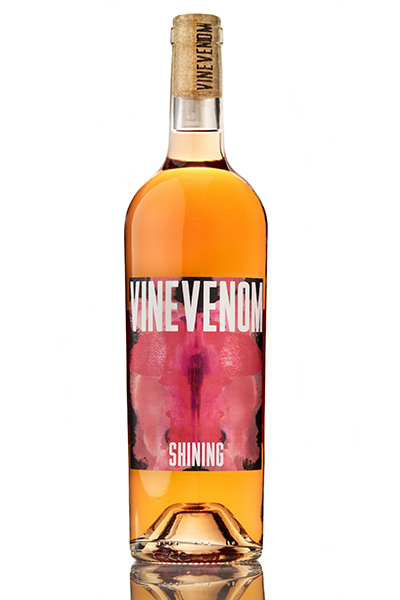
VINEVENOM by Samantha Suddons

After completing her studies with the Cape Wine Academy, and the Wine and Spirits Education Trust, Samantha Suddons has gained a wealth of experience. She has since worked at prominent wineries such as Mullineux, Terracura, Silwervis, Smiley Wines and Reyneke. The latter made the greatest impression and exposed her to low-intervention, biodynamic and organic farming.

Samantha’s winemaking practices include, “exploring creative, minimal intervention winemaking that weaves together the grape’s terroir and my own unique approach, resulting in honest, individual wines.” As such, VINEVENOM produces wines from sustainably farmed vineyards, focusing on quality over quantity to express the terroir. Oxidatively aged under flor yeast, her Shining Rosé is perhaps her most celebrated wine. “While this might sound ‘scary’ to some, it adds an intensity, richness and saltiness that is quite unexpected and intriguing,” says Samantha. 

We recommend… VINEVENOM Shining Rosé

Want to learn more about wine varietals, read up on Merlot, Rosé, Pinotage, Cabernet Sauvignon, Chenin Blanc, Shiraz and MCC.

Getting to Know Cabernet Sauvignon

Whilst Bordeaux, France, may well be the home of this grape, it is very adaptable and some of the world’s finest wines are produced from Cabernet Sauvignon, including locally. Known as the ‘King of Red Grape Varieties,’ it’s a peer of the realm with approximately 11% of total vineyard plantings in South Africa.

Cabernet Sauvignon is triumphant as a grape on its own, but is also frequently blended with other ‘traditional’ Bordeaux grapes such as Merlot, Malbec, Cabernet Franc and Petit Verdot. In fact, I was intrigued to learn that Sauvignon Blanc and Cabernet Franc are the parents of this giant, after a natural crossing of the two grapes in the 1600s.

Traditional, firm, assertive styles are made here, but the trend is towards more up-front wines driven by ripe, juicy fruit with cedar, tobacco and spicy oak complexity. The best wines from this variety display exceptionally deep colour, the characteristic aroma of blackcurrants (cassis) and have an almost unequalled capacity to age in the bottle.

Cabernet Sauvignon is not meant for light and delicate dishes, in fact, the wine could simply crush the meal, spoiling the flavours of the dish. It is a complex and full-bodied red wine pairing well with equally challenging and bold dishes.

Popular meats paired with this style of red wine include steak, ostrich and duck. You don’t want to overcook the meat if you’re pairing it with this wine, as you’ll have less fat and protein components to tame the tannins within. As Cabernet Sauvignon is a dark red wine, select dark and rich sauces like a dark mushroom sauce, red wine reductions, or a hearty peppercorn sauce.

What you should know about Cabernet Sauvignon

  • As a late-ripening grape, South Africa provides the ideal location for growing this varietal, as it particularly prefers warmer climates.
  • It’s often considered a ‘tannic wine,’ as it can impart mouth-drying effects when drinking. This is due to the fact that it is a very small grape with a large skin-to-flesh ratio, as well as large pip — both of which contribute to natural grape tannins.
  • Apart from the Bordeaux-style blends mentioned above, Cabernet Sauvignon is also often blended with Shiraz or Pinotage to soften harsh or chalky tannins.

Want to learn about other wine varietals? Check out what we have to say about Chardonnay | Chenin Blanc | Red and White Blends | Shiraz | Pinotage | Merlot.

The Best Indian Restaurants in Cape Town

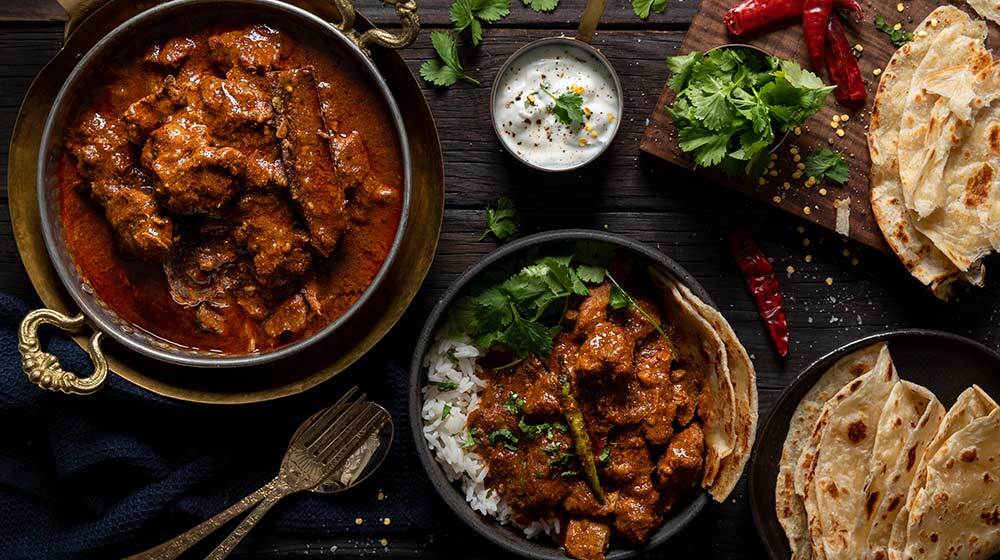
At this time of year, there is nothing that will warm you up quite like a curry. It really doesn’t take much convincing; with a hearty gravy, your choice of protein and some fluffy rice, a curry is the best way to fight those winter blues. And if you’re looking to leave the curry to the experts, then here are the best Indian restaurants in and around Cape Town…

Best Indian Restaurants in Cape Town

Bombay Brasserie at Taj

There’s no doubt that Bombay Brasserie, situated within the spectacular Taj Cape Town hotel, is not your regular curry spot. Its opulent decor alone will win you over, but it doesn’t end there. The concise menu is divided into veggie and non-veggie options and comprises of traditional, refined Indian fare. Executive chef, Surendra Kumar, offers patrons a feast for the senses with Indian regional dishes, from fragrant dishes like Lucknow Ki Lamb Nihari to Chingri Malai Curry, and more. Delectable desserts include the likes of Gulab Jamun and Masala Chai Crème Brûlée.

Good to know: they have set menus.
Why you’ll love it: the expert hospitality, the variety of curries and the divine desserts.
What we loved: endless options for both meat-eaters and vegetarians. We recommend getting the set menu if you want the full experience.
Location: Taj Cape Town, 1 Wale Street, corner of St. Georges Mall
Hours: Mon-Sat: 16h00–22h30 (Bar) | 18h00–22h00 (Dinner) *bookings essential
Contact: 021 819 2000 | Email

tajhotels.com | Facebook | Instagram


Bukhara

Merely stepping into Bukhara is an experience — the gorgeous aromas transport you right into the heart of Northern India. Having been around for yonks, Bukhara consider themselves curry experts, and we’re inclined to agree. The menu features classic Northern Indian dishes using spices sourced from India, all prepared by their designated tandoori, tapas and curry chefs. There is a variety of lamb, chicken, seafood and vegetarian options. Definitely one of our favourite Indian restaurants in Cape Town.

Good to know: slightly pricier than your average spot, so save this one for a good night out.
Why you’ll love it: the vast menu will have you struggling to choose, but you can order a couple of small plates to pick at while you decide. The Pani Puri is the ideal pre-dinner snack.
What we loved: being able to watch the chefs in action through the window.
Location: 33 Church Street, Cape Town City Centre
Hours: Wed-Sat: 11h00–23h00 | Sun-Tues: 11h00–22h00
Contact: 021 424 0000

bukhara.com | Facebook | Instagram


Curry Club

Located in Gardens, Curry Club is a London-style Punjabi flight kitchen featuring a mesh of modern Indian cuisine and family classics. The extensive menu showcases a range of curry styles, including all the fixings. If you can handle the heat, have at their ‘Lightning Lamb’ Vindaloo; for a fragrant and meaty delight, try the Mountain Goat Curry. Customers also have the option of ordering online; they deliver within the City Bowl and surrounding areas.

Good to know: deliveries usually take between 45 minutes and 1 hour.
Why you’ll love it: the unique style of Indian cuisine.
What we loved: the Auntie Samoosa.
Location: 50 New Church Street, Gardens
Hours: Tues-Sat 13:00-15:00 (Lunch) | Mon-Sat 17:00-21:30 (Dinner)
Contact: 021 300 3971 | Reservations

curryclub.co.za | Facebook | Instagram


Maharajah Restaurant

If anyone is an expert in perfectly made curries, it’s these guys. Having been around for 40 years, Maharajah must be doing something right! With a focus on Durban-style curries, the food on offer will ensure you satisfy that curry craving, and then some.

Good to know: don’t let the unassuming exterior deter you, the food will do all the talking.
Why you’ll love it: the generous food and welcoming vibe.
What we loved: the Lamb Curry on the Bone, with its fragrant spices and tender lamb.
Location: Corner of Woodside and Kloof Nek Road, Tamboerskloof | 87 Main Road, Rondebosch, Cape Town
Hours: Mon-Sun & Public Holidays: 12h15–21h00 (Tamboerskloof) | Mon-Sun: 12h00—21h00 (Rondebosch) *you can also order online
Contact: 021 424 6607/071 640 0261 (Tamboerskloof) | 021 685 0714/071 640 0261 (Rondebosch)

maharajah.restaurant | Facebook


Prashad Café

Prashad Café is sister restaurant of the Maharajah. This popular café offers strictly veggie and vegan Indian cuisine, with generous portions and bang for buck. It’s one of the best vegetarian Indian restaurants in Cape Town!

Good to know: only vegetarian and vegan cuisine sold here.
Why you’ll love it: everything on the menu is divine.
What we loved: the Paneer Korma and Vegetable Biryani.
Location: Shop 11b, Palmhof Centre, Kloof Str, Gardens | 6 Rondebosch Court, Fountain Place, Rondebosch | Shop 3, Old Village, Constantia Village, Constantia
Hours: Mon-Sat: 11h00–21h00 (Gardens) | Mon-Sun: 11h00–21h00 (Rondebosch) | Wed-Mon: 10h00–21h00 & Tues: 09h00—16h00 (Constantia)
Contact: 021 422 0264 (Gardens) | 021 685 7891 (Rondebosch) | 021 795 0049 (Constantia)

prashad.co.za | Facebook | Instagram


Thali – Chefs Warehouse

Thali Chefs Warehouse –Claire Gunn Photography

Thali may not be the place you randomly pick up a cheeky takeaway, but if you’re feeling like a fancy night out, it will tick all the boxes. Known as one of the best Indian restaurants in Cape Town, diners can expect many courses featuring North Indian-inspired dishes with a modern twist. Head chef, Nathanael Coe, nails the delicate and stronger flavours perfectly.

Good to know: the food offering is very generous – don’t make the mistake of filling up on all the naan and parathas. They also don’t take reservations, so get there early.
Why you’ll love it: the ever-changing menu is always delicious and exciting.
What we loved: the ‘Thali for 2’ menu. They also have vegetarian, vegan and gluten-free options.
Location: 3 Park Road, Gardens, Cape Town
Hours: Mon-Sat: 17h00–21h30 (Dinner only) | Mon-Sat: 17h00—close (Bar) | Closed Sundays
Contact: 021 286 2110

thalitapas.co.za | Facebook | Instagram


Vadivelu

If you want ‘Indian food with attitude,’ Vadivelu is the place for you. With a varied menu of classic Indian curries and South African favourites, this vibrant restaurant appeals to all tastes. The contemporary, cool interiors make it a fantastic spot for date nights and casual dinners with friends; the impressive wine selection also caters to wine lovers. Street food dishes include the likes of ‘65,’ hailing from Southern India, and pani puri ‘Curry Bombs.’ Vegetarian and dessert options are also a must at this popular Kloof Street locale.

Good to know: tables of 6  or more people require a R 100 deposit per person. The deposit will be deducted from the bill. 
Why you’ll love it: the fun vibe of the restaurant and the good food.
What we loved: the Prawn Curry (their top seller)!
Location: 151 Kloof Street, Gardens
Hours: Mon-Sat: 12h00—22h00 | Closed Sundays
Contact: 021 300 5777 | Email

vadivelu.co.za | Facebook | Instagram


Vintage India

Vintage India is a stalwart restaurant, and if you’re based in town, it’s one of the best places to pick up a no-frills curry. The interior is richly decorated in an Indo-Chinese style, with flecks of gold and plush materials. While you can find your traditional North Indian curries, there is a wonderful fusion of Chinese influences in some of the dishes.

Good to know: the Mango Lassi comes highly recommended.
Why you’ll love it: the kitschy-cool interiors and tasty food make the ideal setting for a casual evening of dining out.
What we loved: that time seems to stand still here and the food is consistently good.
Location: 10 Hiddingh Village, corner of Hiddingh Ave and Mill St, Gardens
Hours: Mon-Sun: 12h00–15h00 (Lunch) & 18h00–22h00 (Dinner)
Contact: 021 462 5106 | Email

vintageindiarestaurant.com | Facebook | Instagram


Indian Restaurants – Atlantic Seaboard

The Raj

The Raj almost needs no introduction; with chefs who proudly hail from India, bringing with them a vast knowledge of flavours and regional cuisines, you know you’re always onto a winner here. The menu covers everything you would ever want, including a fantastic seafood and vegetarian range.

Good to know: there is a large function venue available for hire, making this a great place to book out for your next celebration.
Why you’ll love it: you can always rely on The Raj; everything on offer is consistently good.
What we loved: the fearless spice in the Vindaloo! Phew!
Location: Shop 4, The Promenade, Victoria Rd, Camps Bay | Shop 259, V&A Waterfront | Dido Valley, Harbour Bay Mall, Simonstown
Hours: Mon-Thurs: 12h00–22h00 & Fri-Sun: 12h00–23h00 (Camps Bay and V&A Waterfront) | Tues-Sun: 10h00—20h00 (Simonstown)
Contact: 021 438 4555 (Camps Bay) | 087 470 0383 (V&A Waterfront) | 021 786 9484 (Simonstown)

therajindianrestaurant.co.za | Facebook | Instagram


Sundoo | Indian Tapas

Sundoo serves authentic, tapas-style South Indian cuisine in an intimate dining space with cosy and inviting booths. Owner and chef, Seelan Sundoo, hails from Kerala – better known as ‘The Land of Spices’ – and brings to Sundoo restaurant some of the traditional flavours of his hometown.

Good to know: they don’t take reservations.
Why you’ll love it: the tapas-style plates are perfect for sharing.
What we loved: the Anjuna Prawns.
Location: 77 Regent Rd, Sea Point | Dean Street Arcade, Newlands
Hours: Mon-Sun: 12h00–22h30 (Sea Point) | Mon-Sat: 12h00—21h30 (Newlands)
Contact: 021 300 5779 (Sea Point) | 021 672 0327 (Newlands)

sundoo.co.za | Facebook | Instagram


Best Indian Restaurants – Suburbs

Moksh

For authentic Indian food in Cape Town, look no further than Moksh. This local gem has several branches throughout Cape Town, and for good reason. All their chefs are trained and recruited from India, so you can expect some really great cuisine.

Good to know: you can order online – perfect for a cosy night in with delicious food.  
Why you’ll love it: they also host private functions and cater events. 
What we loved:
authentic Indian cuisine. 
Location:
Ipic Aurora Shopping Centre, 9 Burton Str, Durbanville | 309 Main Rd, Kenilworth | The Paddocks Shopping Centre, corner of Race Course & Grand National Blvd, Milnerton
Hours:
Tues-Sat: 12h00–21h30 & Sun: 12h00—20h30 (Durbanville) | Mon: 16h00—21h00, Tues-Sat: 12h00–21h00 & Sun: 12h00–16h00 (Kenilworth) | Mon: 16h00–21h00, Tues-Thurs: 12h00–21h00, Fri-Sat: 12h00—21h30 & Sun: 12h00—18h30 (Milnerton)
Contact:
021 979 5505/082 868 2515 (Durbanville) | 021 761 2245/082 868 2515 (Kenilworth) | 021 525 9343/082 868 2515 (Milnerton)

mokshrestaurants.com | Facebook | Instagram


Thava Restaurant

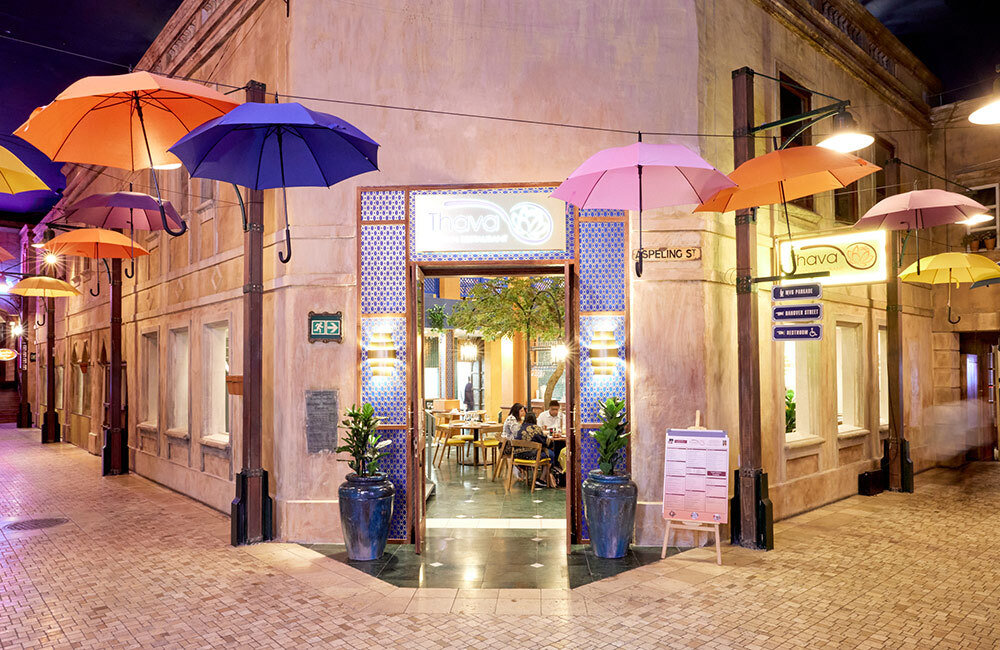
Inspired by the diverse range of provincial Indian cuisine, Thava offers traditional flavours presented in a unique way. They joined the Sun International group, and have a couple of locations – their most recent branch being Grandwest. Guests can expect great hospitality and delicious curries, naan and more.

Good to know: they sometimes have buffet specials. 
Why you’ll love it:
the atmosphere and setting is great for a family dinner. 
What we loved:
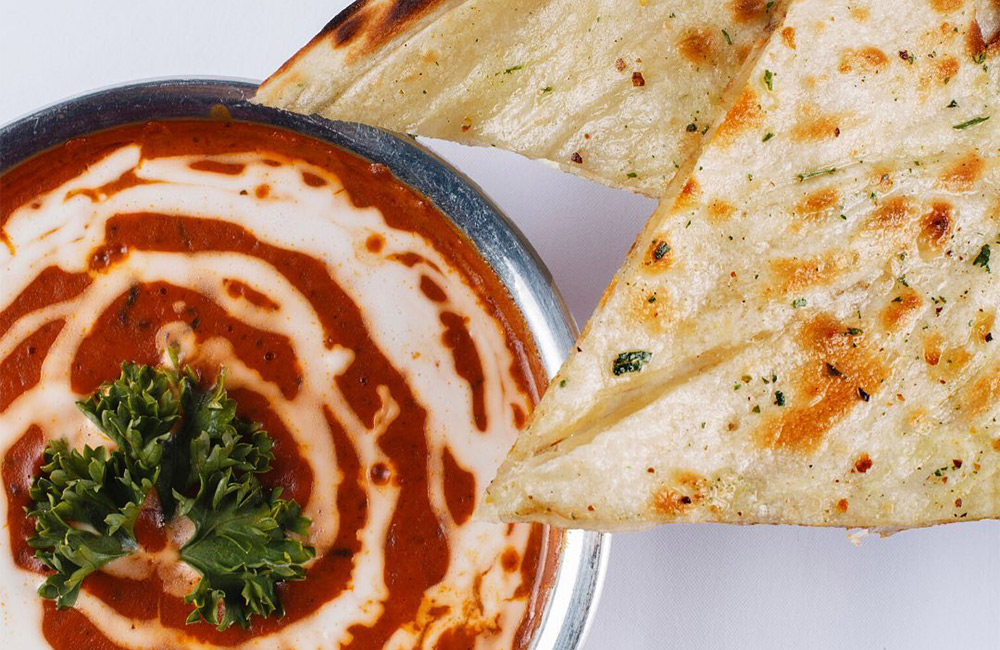
the lamb curry and the naan. 
Location:
GrandWest Casino and Entertainment World, 1 Jakes Gerwel Dr, Goodwood
Hours: Mon-Sun: 12h30–22h00
Contact:
021 591 0323 

suninternational.com | Instagram


Bihari Indian Restaurant

Situated in the Southern Sun Hotel in Newlands, Bihari is cosy, welcoming and the perfect place to escape the winter chills. This is the ideal spot for that last minute curry craving, as they offer an extensive traditional menu with North Indian-style curries, complete with some of the best onion bhajis Cape Town has seen.

Good to know: the interleading lounge has a fireplace – perfect for enjoying a nightcap.
Why you’ll love it: generous portions and honest food, making for a fuss-free night out.
What we loved: the highly-recommended Prawn Korma in a cashew nut gravy.
Location: Ground Floor, Southern Sun Hotel, Main Rd, Newlands
Hours: Mon-Sun: 12h00–15h00 & 17h00–21h00
Contact: 021 674 7186

bihari.co.za | Facebook


Punjab

This casual eatery has a menu that features an extensive Indian curry section, along with Punjab specialties, Tandoori and more. Of all the delicious offerings, word on the street is that their kebabs are truly special.

Good to know: the naan is delicious – be sure to get a few.
Why you’ll love it: it’s a great spot for a quick curry fix, or to pick up and enjoy at home.
What we loved: the laidback vibe and the butter chicken curry.
Location: Lakeside Centre, Main Rd, Lakeside
Hours: Mon-Sun: 11h30–21h00
Contact: 021 701 0504 | 082 824 9664

punjabrestaurants.co.za | Facebook | Instagram


The Indian Chapter Restaurant

This Blouberg locale is almost as well known as its owner – former radio and TV personality Prim Reddy – and seems to have amassed a bit of a cult following. The restaurant is known for its unbeatable hospitality, as well as their authentic, homemade curries.

Good to know: if you’re a table of two, you can book a prime spot near the fireplace.
Why you’ll love it: eating at The Indian Chapter is like eating in Prim’s home, she’s always there checking up on your meal.
What we loved: the Lamb Rogan Josh, it’s believed to be one of the best in the city.
Location: Carnaby, 9 Marine Circle, Bloubergstrand
Hours: Mon-Sun: 12h00–22h00
Contact: 021 557 5524 | 021 557 1100

Facebook


The Indian Oven

Indulge in a feast of flavour at The Indian Oven, one of the best spots to savour delicious Indian food in Hout Bay. With traditional Indian dishes, from Goan-style Vindaloo and Hyderabadi Biryani, and Durban curries, patrons are spoilt for choice. For those new to Indian cuisine, the menu descriptions make it easy to navigate the different options.

Good to know: they sometimes have live Jazz nights. 
Why you’ll love it: the delicious food.
What we loved: the Madras Curry with lamb.
Location: Shop 8, Red Sails Building, Hout Bay
Hours: Tues-Sun: 11h00—22h00
Contact: 021 791 4805 | Email

indianoven.co.za | Facebook | Instagram

Have hankering for a curry? Check out our guide to making the best chicken curry ever.

No Jitters, All Flavour – How Decaf Coffee Is Made

Decaf might seem pointless to caffeine-crazed java junkies, but for those seeking the flavour without the jitters, it’s one of the best alternatives while getting that slight boost out of your cuppa joe. But how is decaf coffee made, and is it worth making the switch?

What is Decaf Coffee?

Decaf coffee, short for ‘decaffeinated coffee,’ is a type of coffee that has undergone a process to remove the majority of its caffeine content. While it might not provide the same caffeine boost as regular coffee, decaf still boasts the same rich flavour and aroma, making it a popular choice for those who want to enjoy the taste of coffee without the stimulating effects of caffeine.

If you’re thinking ‘Why drink coffee in the first place?,’ it might come as a shock, but not all coffee drinkers are alike. Besides the obvious benefit of alertness and its seemingly energy-boosting properties, some might drink coffee for the taste and that slight ‘kick,’ making decaf a considerable option.


Who Invented Decaf?

Removing caffeine from coffee beans isn’t easy. Luckily, for 20th-century German coffee merchant, Ludwig Roselius, discovering the world’s first decaf product came naturally.

Legend has it that Roselius stumbled upon the decaffeination process by accident when a shipment of coffee beans was soaked in seawater during transit, removing their caffeine content. Intrigued by this discovery, Roselius and his team developed a method to decaffeinate coffee using a solvent called benzene – a method which thankfully halted, as benzene was later identified as a carcinogenic solvent.

The discovery of caffeine’s effects on humans is often attributed to Friedlieb Ferdinand Runge, a German chemist who identified caffeine in coffee beans during the early 19th century.

As with most food origins, there are different stories about the invention of decaf coffee. According to some, Roselius saw an opportunity to market decaf coffee as a healthier alternative for those sensitive to caffeine or suffering from health issues aggravated by its consumption. In 1906, he introduced the world’s first decaf coffee under the brand name Sanka, derived from the French words ‘sans caffeine’ meaning ‘without caffeine.’

However, the interest in decaf brewed long before Roselius’s direct solvent method was created. The discovery of caffeine’s effects on humans is often attributed to Friedlieb Ferdinand Runge, a German chemist who identified caffeine in coffee beans during the early 19th century. It was Runge who conducted experiments on caffeine’s effects and shared his findings with German poet, Johann Wolfgang von Goethe.

A coffee enthusiast himself, Goethe was fascinated by Runge’s discoveries and is said to have encouraged Runge’s ongoing research. Of course, coffee houses and manufacturers have come a long way since…


How Is Decaf Coffee Made?

Well, it depends on the maker and the method. Essentially, these methods have been perfected to extract caffeine, while preserving the intricate flavours of the coffee bean – consumers still want a cup of joe, not brown water.

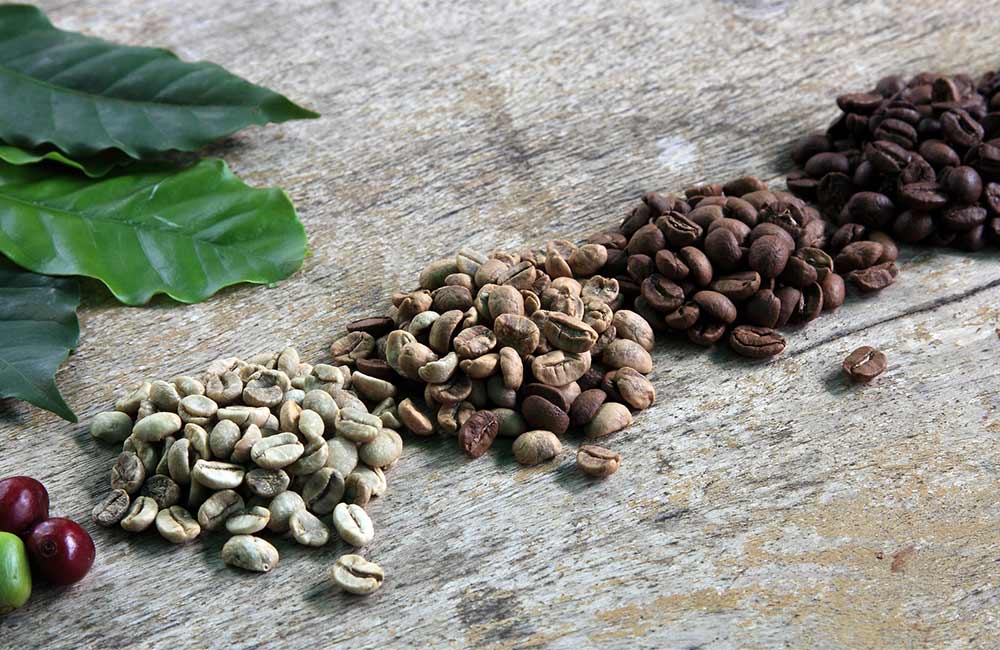
It all starts with green coffee beans (coffee beans are green before they are roasted), which undergo a series of steps to remove their caffeine content.

In the Direct Solvent Method, the beans are soaked in a solvent like methylene chloride or ethyl acetate. These solvents selectively bind with the caffeine molecules, extracting them from the beans. The beans are then washed to remove any solvent traces and dried before roasting. While this method was common, it has fallen out of favour due to health and environmental concerns associated with benzene, which was previously used as a solvent and proved to be carcinogenic.

Indirect Solvent Method: Similar to the direct method, green coffee beans are first steamed or soaked to open their pores. The hot water extracts both caffeine and flavour compounds. The water (containing caffeine) is separated from the beans and mixed with a solvent like methylene chloride or ethyl acetate. The solvent selectively bonds with the caffeine molecules, separating them from the water. The beans are then reintroduced to the water, allowing them to reabsorb the flavour compounds.

The Swiss Water Process appeals to those seeking a more natural decaffeination process without the use of chemical solvents. This method uses only water and osmosis to remove caffeine. Green coffee beans are soaked in hot water, allowing the caffeine and flavour compounds to dissolve into the water. The water, now containing both caffeine and flavour compounds, is passed through a charcoal filter, which removes the caffeine, while allowing the flavour compounds to remain. The caffeine-free water is then used to soak a new batch of beans; the process is repeated until the desired level of decaffeination is achieved.

The Carbon Dioxide (CO2) Method is favoured for its ability to preserve the flavour compounds in the beans, while efficiently extracting the caffeine. Green coffee beans are first steamed, and then exposed to pressurised carbon dioxide, which acts as a solvent. The carbon dioxide selectively bonds with the caffeine molecules, allowing them to be captured and separated from the beans. The beans are then depressurised, and the caffeine-rich CO2 evaporates, leaving behind decaffeinated beans.

Once the caffeine has been removed, the beans are dried, roasted, ground, and eventually brewed into a delicious cup of decaf coffee.


Is Decaf Completely Caffeine-free?

The appeal of decaf lies in its versatility – it can be enjoyed at any time of day without disrupting sleep patterns or causing caffeine-related side effects – but what you should know is that it still contains trace amounts of caffeine, as it’s nearly impossible to extract all the caffeine from the coffee beans.

Thankfully, there are regulations in place, and products undergo extensive quality control methods to ensure that they meet food and safety standards before being stocked on grocery store shelves. Decaffeinated coffee usually contains at least 1-3% caffeine, which is still 97% less caffeine than regular coffee.


Why Choose Decaf?

For some, the idea of drinking coffee ‘without’ the caffeine may seem counterintuitive – after all, isn’t the caffeine buzz part of the appeal? However, there are several reasons why one might consider making the switch to decaf.

… decaf coffee can be enjoyed at any time of day without disrupting sleep patterns or causing caffeine-related side effects.

First and foremost, decaf coffee offers all the flavour and aroma of regular coffee without the stimulating effects of caffeine. This makes it an ideal choice for those who enjoy the taste of coffee, but are sensitive to caffeine or prefer to limit their intake for health reasons. For those who need that first cup of coffee to ‘get their rear in gear,’ but don’t want to disrupt their cortisol levels, decaf could be the perfect morning brew.

Additionally, decaf coffee can be enjoyed at any time of day without disrupting sleep patterns or causing caffeine-related side effects. This makes it a versatile option for those looking to enjoy a cup of coffee without the worry of jitters or insomnia.

Decaf coffee might not provide the same caffeine kick as its regular counterpart, but it offers a flavourful alternative for coffee lovers, whether going full decaf or half decaf.

Here’s why you shouldn’t drink coffee first thing in the morning

Why You Shouldn’t Have Coffee First Thing In the Morning

We all need something to get up and go in the morning, whether it’s a cold plunge, meditation or, for most adults, a cup of joe. While that shot of espresso might ‘get your rear in gear,’ drinking coffee first thing in the morning could do more harm than good.

Drinking coffee first thing in the morning might seem like a good idea to help you wake up, but it can actually backfire…

Is Coffee Good For You?

Coffee offers incredible benefits, from increasing alertness and concentration to providing feel-good neurotransmitters like dopamine and serotonin, but knowing when to get your fix is equally important.

According to a National Institutes of Health study examining the effects of caffeine on cortisol secretion across waking hours, “Caffeine increases cortisol secretion in people at rest or undergoing mental stress. It is not known whether tolerance develops in this response with daily intake of caffeine in the diet.” During the double-blind study, cortisol levels were assessed eight times daily after participants received various caffeine doses per week (300, 600 and 750 milligrams), as well as a placebo (0 milligrams) for control.

Results determined that after 5 days without caffeine, an increase in cortisol was experienced. Interestingly, 5 days of caffeine intake (300 milligrams per day and 600 milligrams per day) counteracted the cortisol response to the initial 09h00 caffeine dose, although cortisol levels increased between 13h00 and 19h00 after the second caffeine dose was taken at 13h00.

Cortisol is important for many bodily functions, including regulating metabolism, controlling blood sugar levels, reducing inflammation, and helping with memory formation.

In the morning, your cortisol levels are naturally high. Consuming coffee first thing in the morning is not advisable, as you probably won’t experience the full effects. It’s best to wait a couple of hours.


How Caffeine Affects the Body

Caffeine is a stimulant that can affect cortisol levels in the body. When you consume caffeine, it triggers the release of cortisol, which can increase alertness and energy levels. However, if you consume too much caffeine or consume it late in the day, it can disrupt your sleep-wake cycle. Cortisol levels follow a daily rhythm, peaking in the morning to help you wake up and declining throughout the day to help you wind down for sleep.

Cortisol helps the body sense danger or stress. When cortisol is released, it helps your body deal with the stress by increasing your heart rate, boosting energy levels and sharpening your senses. This can be really helpful in situations where you need to react quickly.

This crucial hormone is produced by the adrenal glands, which sit on top of your kidneys. The process starts in the brain, where the hypothalamus sends a signal to the pituitary gland, which then sends a signal to the adrenal glands to release cortisol. Cortisol is important for many bodily functions, including regulating metabolism, controlling blood sugar levels, reducing inflammation, and helping with memory formation.


Reasons To Reconsider That First Cup

Drinking coffee first thing in the morning might seem like a good idea to help you wake up, but it can actually backfire, believe it or not…

Cortisol levels are already high in the morning, as part of the body’s wake-up process. Adding caffeine on top of this can lead to an overproduction of cortisol, which can contribute to feelings of anxiety and jitteriness. It can also disrupt your body’s natural cortisol rhythm, making it harder to relax later in the day. So, it’s best to wait until later in the morning to enjoy your coffee when cortisol levels start to naturally decline. Here are more reasons you might think twice before having that morning java.

Hydration Is Key

If you’re one of those people who would much rather opt for coffee than water, it’s important to drink just as much water. Without adequate water intake, increased caffeine consumption could lead to dehydration and induce migraines.

While headaches could have many different causes, the first thing you might want to ask yourself is, “Have I had enough water today?” Most experts recommend between 11.5 glasses (2.7 litres) per day for women and 15.5 glasses (3.7 litres) per day for men, but the amount depends on health conditions, weight, humidity and climate.

Quality of Sleep

You probably already knew this, but drinking coffee close to bedtime could interrupt your natural sleeping patterns and affect your circadian rhythms – your body’s internal clock which regulates the brain’s focus and alert levels. The same goes when you drink coffee first thing in the morning. That spike of caffeine disrupts your brain’s natural wake response – imagine being jolted out of bed by the obnoxious sound of a foghorn!

Peak Productivity

How you start your day could hugely impact your productivity throughout the day. Contrary to popular belief, chugging coffee first thing in the morning could hinder your performance. Since caffeine boosts focus, you’d figure that it would have the opposite effect, but because caffeine negatively impacts cortisol levels in the morning, it could be counterintuitive.


When Is the Best Time To Drink Coffee?

Instead of rolling out of bed and reaching for the coffee pot, try to wait at least 2-3 hours before having your first cup. Remember, your cortisol levels spike when you wake up and gradually dip as the morning progresses, then increase after 13h00. If you’re not that patient, try giving coffee a break for at least 90-120 minutes after waking up – your body will thank you in the long run.

Try to wait at least 2-3 hours before having your first cup.

When it comes to bedtime, the rule of thumb is that you should avoid drinking coffee or any caffeine intake 6-8 hours before you ‘hit the hay.’ That means fizzy drinks and energy drinks too. As for how much caffeine you should consume, the recommended daily intake for adults is 400 milligrams per day according to the FDA (Food and Drug Administration). That’s roughly 4-5 cups, depending on how strong you like your brew.

Trying to cut back on caffeine? Boost your cuppa joe with these coffee alternatives

Baking & Cooking with Coffee: 26 Must-try Coffee Recipes

At Crush, we’re crazy about coffee – not only do we love to drink it, we love baking and cooking with it too. There’s something about the earthy flavour that adds lovely toasted notes to a dish. Though coffee is often used in desserts, we think they belong in savoury dishes too… here are a couple of our favourite coffee recipes.

Savoury with a Kick of Coffee

Marinating or dry-rubbing your proteins with coffee is a great way to add extra flavour and tenderise meats. If you use ground coffee for your morning fix, instead of throwing it out, store it in your spice cabinet and add it to these delicious dishes.

coffee recipes
coffee recipes

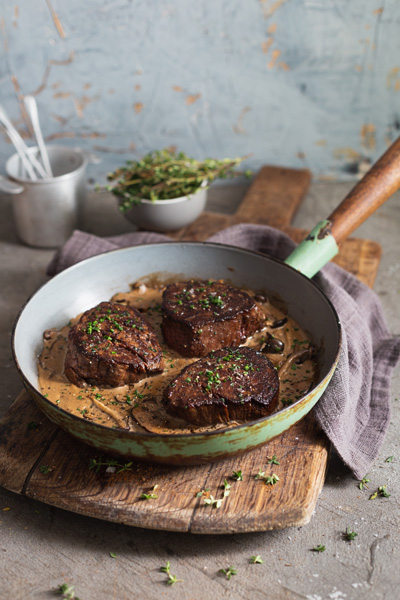
Fillet Steak with Café au Lait Mushroom Sauce

Like cream (and steak) with your coffee? The velvety café au lait mushroom sauce pairs perfectly with fillet steak in this coffee recipe.

Recipe for Fillet Steak with Café au Lait Mushroom Sauce

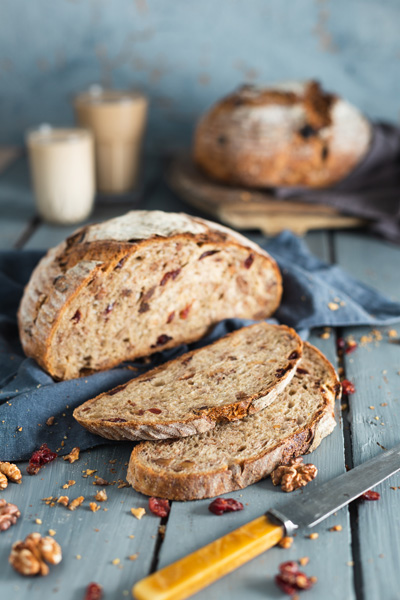
No-Knead Coffee Cranberry & Walnut Country Loaf

The only thing better than drinking coffee is this simple no-knead coffee country loaf.

Recipe for No-Knead Coffee Cranberry & Walnut Country Loaf

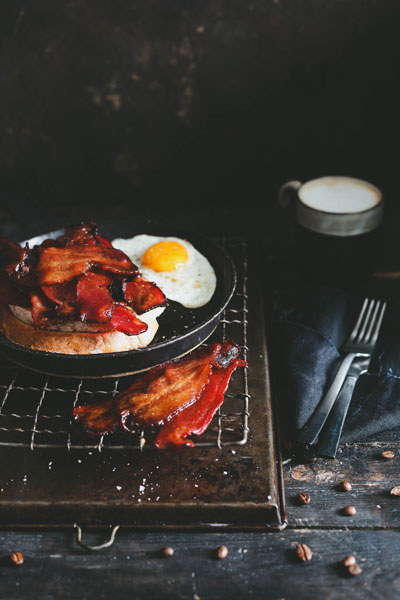
Coffee & Maple Glazed Bacon

Three titans of flavour come together to create the ultimate flavour bomb.

Recipe for Coffee & Maple Glazed Bacon

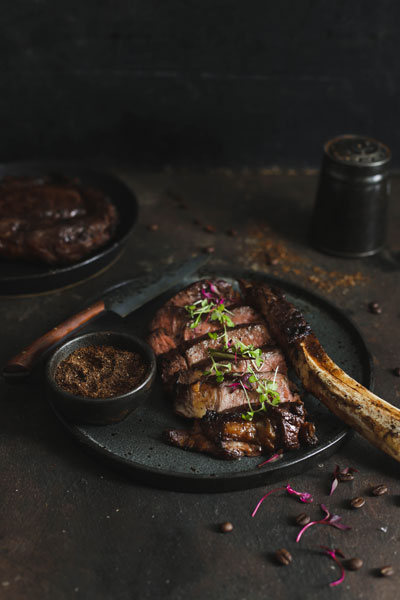
Coffee Rubbed Tomahawk

There are steaks, and then there are coffee-rubbed Tomahawk steaks. Besides being ridiculously tasty, they just sound cool too.

Recipe for Coffee Rubbed Tomahawk

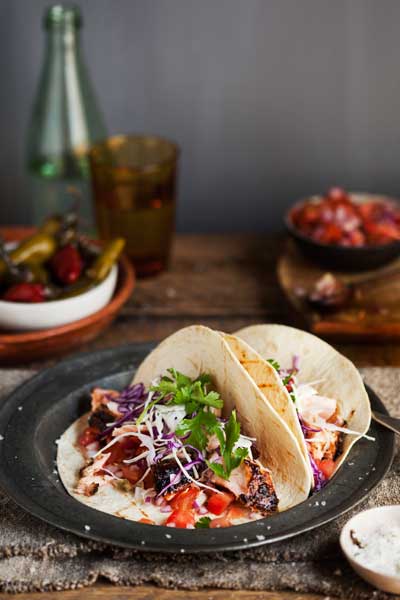
Coffee & Spiced Rubbed Salmon Tacos

Adding coffee to fish may seem counter-intuitive, luckily, salmon is a versatile fish and pairs well with the smoky and spicy flavours in this coffee recipe.

Recipe for Coffee & Spiced Rubbed Salmon Taco

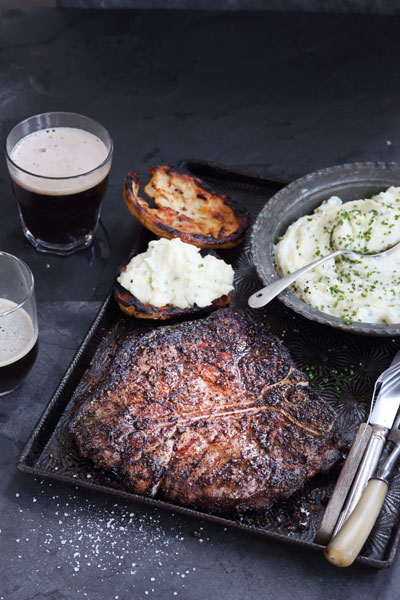
Coffee Rub T-Bone with Stuffed Potatoes

This coffee rub brings out a real depth of flavour – you’ll want to throw it on all your meats.

Recipe for Coffee Rub T-Bone with Stuffed Potatoes

coffee recipes
coffee recipes

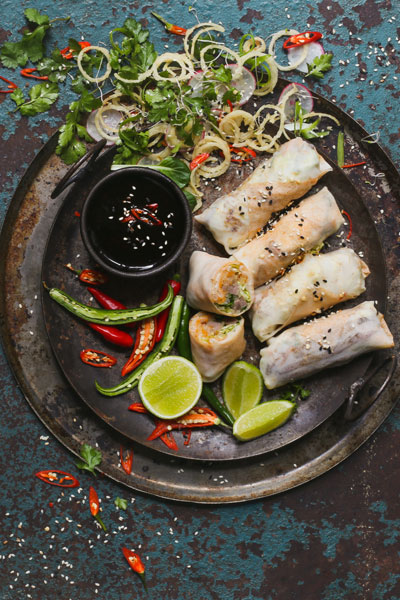
Duck Popiah

This popular Eastern street food is similar to spring rolls but much lighter and fresher. These are great for entertaining a hungry crowd.

Recipe for Duck Popiah

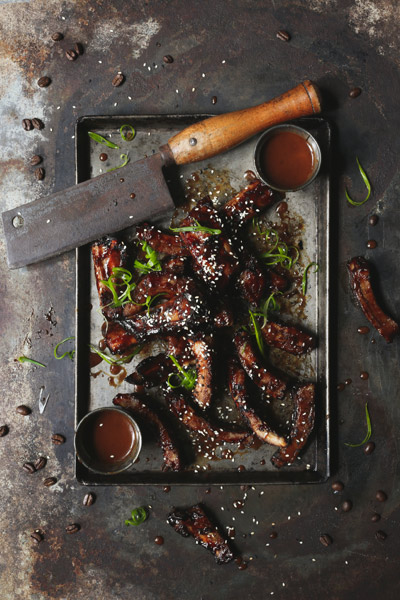
Pork Ribs with a Sticky Coffee Basting Sauce

Because one rib recipe is never enough, and who knew how well Asian flavours paired with coffee? We did!

Recipe for Pork Ribs with a Sticky Coffee Basting Sauce


Sweet Coffee Recipes

Coffee flavoured desserts are great, especially for those who don’t have a sweet tooth. It’s the perfect harmony of sweet and bitter, giving desserts a new level of sophistication.

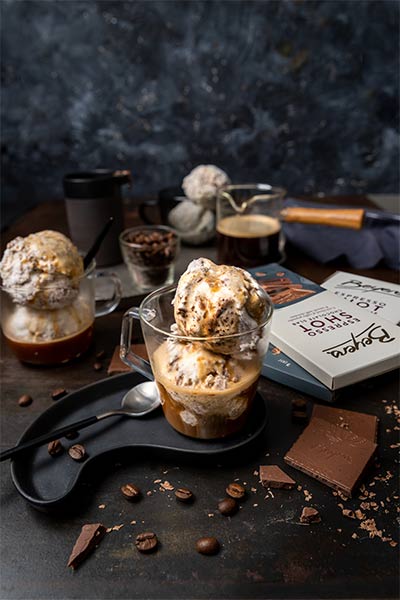
Affogatos with Espresso Chocolate Swirl No-Churn Ice Cream

Coffee, chocolate and ice cream are the makings of any delectable treat. We’ve combined all three in this no-fuss dessert that’s the ultimate nightcap!

Recipe for Affogatos with Espresso Chocolate Swirl No-Churn Ice Cream

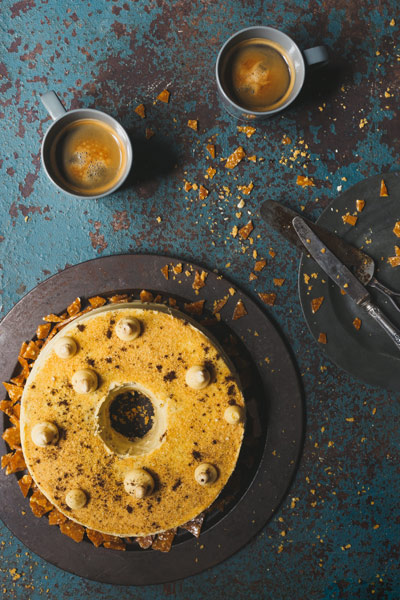
Coffee Chiffon Cake with Peacan Nut Brittle

A decadent dessert that’s perfect for sharing amongst friends.

Recipe for Coffee Chiffon Cake with Pecan Nut Brittle

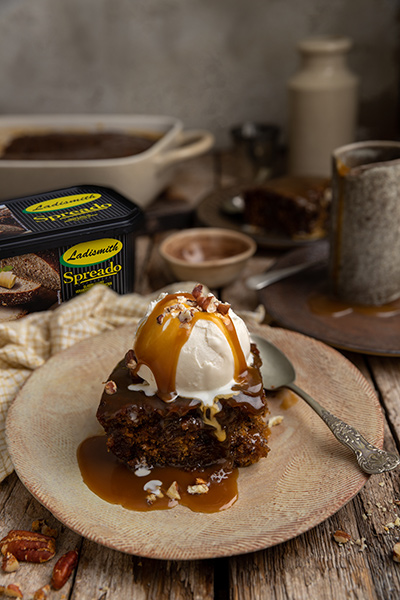
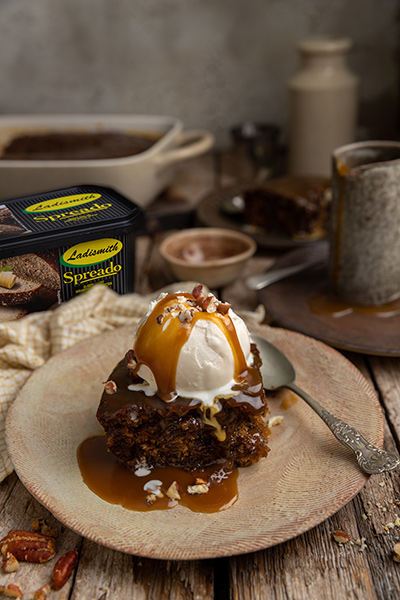
Sticky Toffee Pudding

Decadent and delicious, this date-filled pud balances bitter coffee and caramel notes.

Recipe for Sticky Toffee Pudding

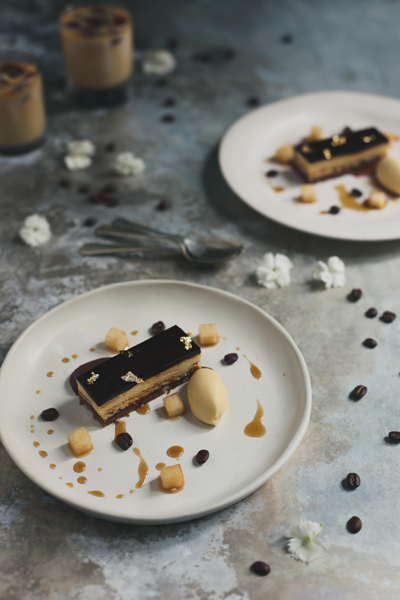
Coffee & Chocolate Delice

This dainty dessert is the ideal after-dinner indulgence.

Recipe for Coffee & Chocolate Delice

coffee recipes
coffee recipes

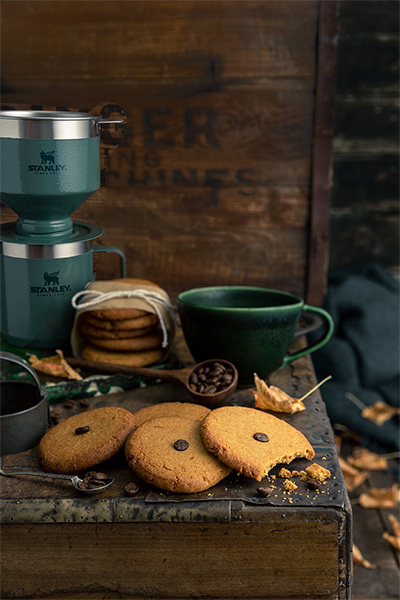
Moerkoffie Cookies

Forget about every biscuit you’ve ever had, these moerkoeffie cookies are the ultimate kick of espresso and condensed milk.

Recipe for Moerkoffie Cookies

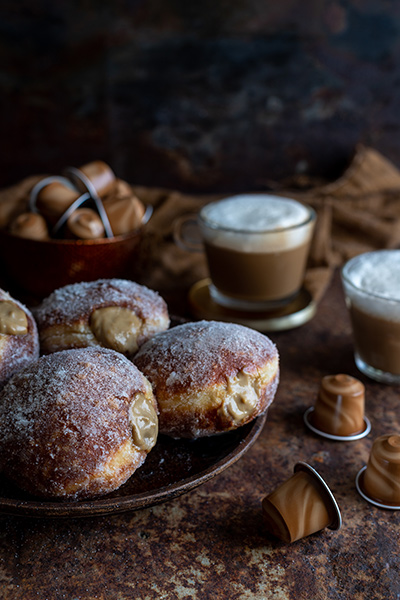
Doughnuts Filled with Coffee Crème Pâtissière

Nespresso-infused doughnut filling? Now, that’s the what we’re talking about!

Recipe for Doughnuts Filled with Coffee Crème Pâtissière

coffee recipe
caramel recipes

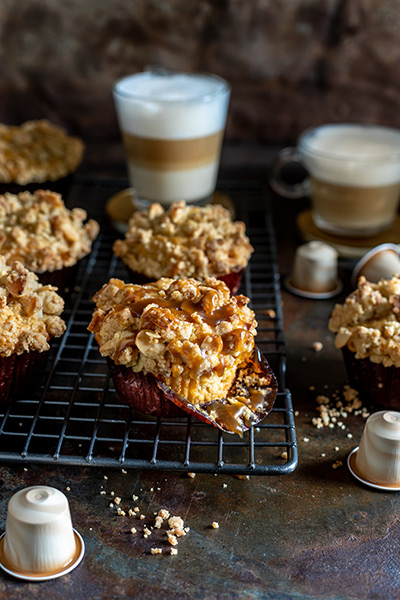
White Chocolate Muffins with Almond Streusel & Coffee Caramel

We love blueberry muffins, but a bit of white choc and coffee caramel never hurt nobody…

Recipe for White Chocolate Muffins with Almond Streusel & Coffee Caramel

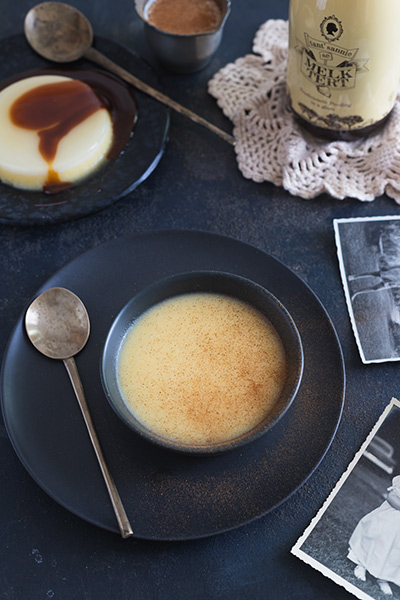
Tant’ Sannie Melktert Panna Cotta with Coffee Caramel Drizzle

All your faves in one delicious dessert. What more could you want from a coffee recipe?

Recipe for Tant’ Sannie Melktert Panna Cotta with Coffee Caramel Drizzle

coffee recipes
coffee recipes

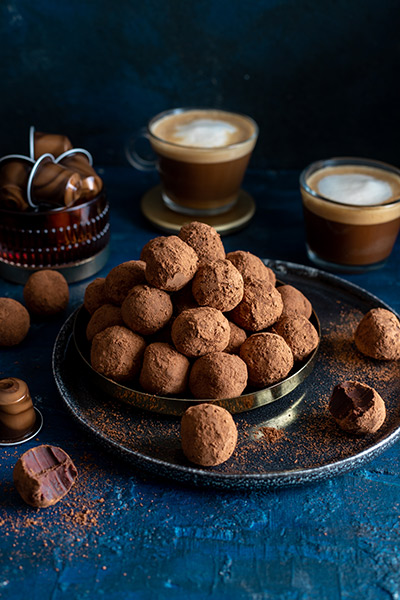
After-dinner Espresso Chocolate Truffles

This after-dinner indulgence will wow guests time and time again!

Recipe for After-dinner Espresso Chocolate Truffles

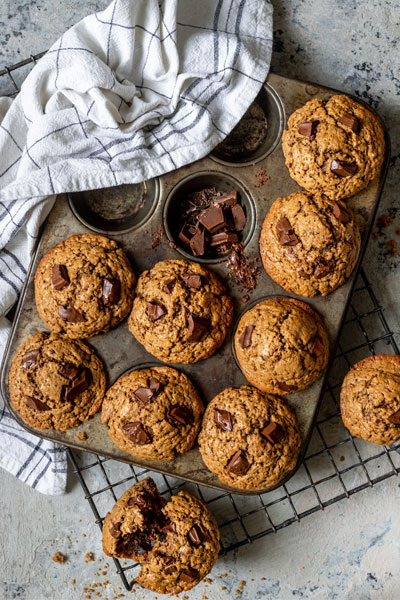
Cappuccino Chocolate Chunk Muffins

Cappuccino and chocolate – two of our favourite things in one muffin; serve with a steamy cup of coffee for maximum enjoyment.

Recipe for Cappuccino Chocolate Chunk Muffins

coffee recipes
coffee recipes

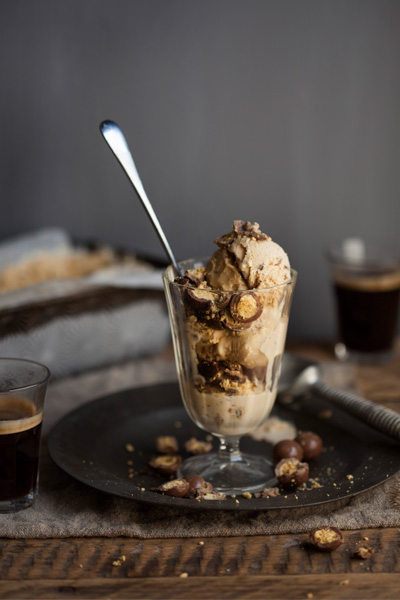
Coffee Tequila Ice Cream with Smashed Malted Puffs

Meet your new favourite coffee recipe… the coffee tequila takes it to a new level of indulgence and amplifies the coffee flavour in the ice cream. As far as the smashed malted puffs go, well, everyone loves those!

Recipe for Coffee Tequila Ice Cream

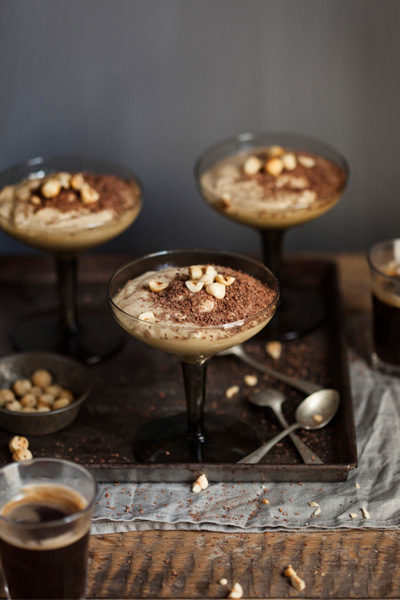
White Chocolate and Coffee Mousse

This decadent dessert, with its lovely light texture, will impress your party guests. The coffee gives it a sophisticated flavour and the hazelnuts add crunchy texture.

Recipe for White Chocolate & Coffee Mousse

flapjacks vida e mocha sauce

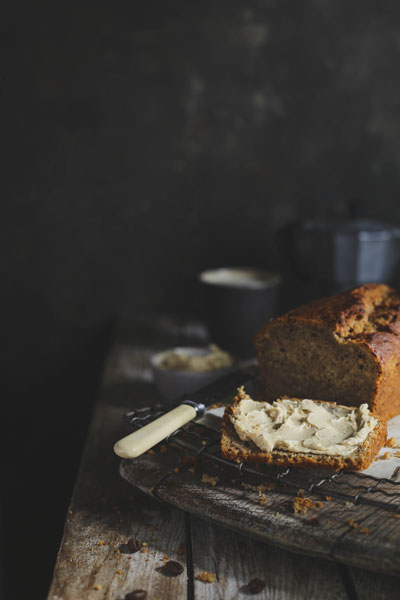
Coffee Banana Bread with Espresso Whipped Butter

This coffee banana bread is perfect for breakfast, tea, lunch, dinner and midnight snacking.

Recipe for Coffee Banana Bread with Espresso Whipped Butter

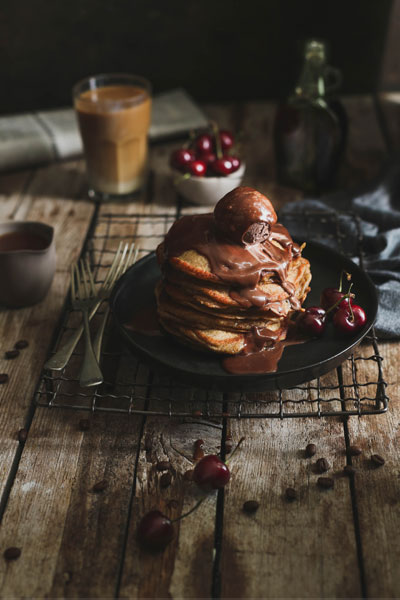
Coffee Flapjacks with Mocha Sauce

Pile em’ high and drench with sauce for maximum mocha flavour. We love the chocolaty and coffee notes of this treat.

Recipe for Coffee Flapjacks with Mocha Sauce

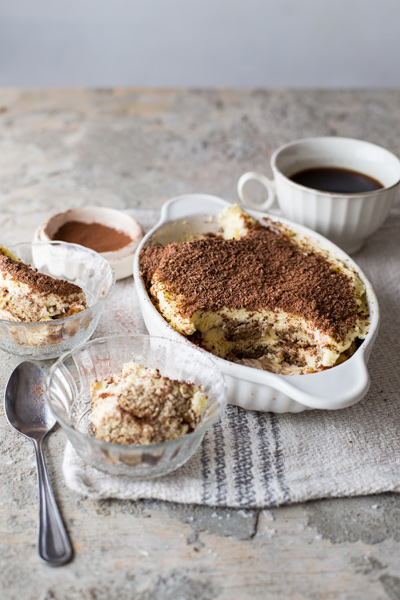
LCHF Tiramisu

A decidedly delicious low-carb take on tiramisu.

Recipe for LCHF Tiramisu

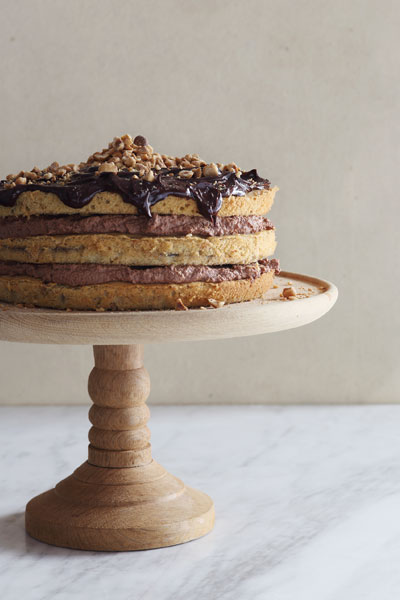
Hazelnut & Coffee Layered Cake

Have your cake and coffee in one bite, or a few…

Recipe for Hazelnut & Coffee Layered Cake

coffee cake recipe
coffee cake recipe

Irish Coffee Brownies with Whiskey Cream

We’ve taken one of our favourite drinks and made it into a brownie. Hell yes!

Irish Coffee Brownies with Whiskey Cream

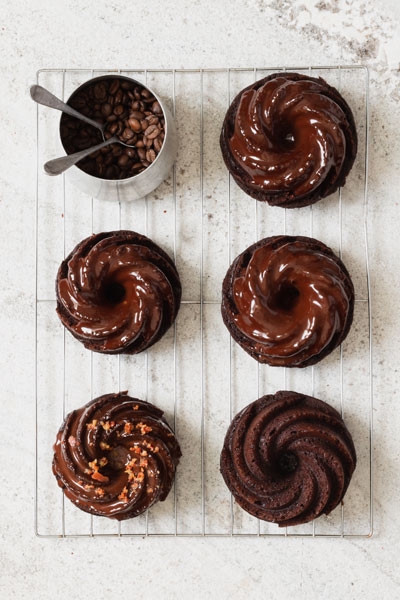
Coffee Choc Bundt Cakes with Ganache & Bacon Crumble

If you haven’t yet explored the world of coffee, chocolate and bacon, have you even lived?

Coffee Chocolate Bundt Cakes with Chocolate Ganache and Bacon Crumble

Ready to cook something coffee-licious? Here’s how to brew your best cup yet.
Follow us on Instagram for more tasty inspiration. 

Boost your Cuppa Joe with these Coffee Alternatives

As much as we love our trusty cuppa joe, it can be worrisome when you start to build a caffeine dependency. Of course, coffee has amazing health benefits, but like most things in life, it’s best consumed in moderation. Whether you’re trying to decrease your caffeine intake or boost your health, these coffee alternatives might provide the motivation you need to grind through the day.

Can’t I Just Drink Regular Coffee?

Caffeine is a psychoactive substance that alters the state of mind and neurological functioning, often resulting in increased energy, alertness and concentration.

Consuming too much caffeine could send the central nervous system into overdrive and result in feeling anxious, or having ‘the jitters.’

While coffee might make you feel more alert by boosting your physical energy, coffee also exerts the opposite effect and could result in a ‘caffeine crash’ once the caffeine starts to wear off. The below beverages could be consumed on their own or by using half the amount of coffee you would normally consume and substituting the rest with a coffee alternative.


Coffee Alternatives on the Market

Try these unique coffee alternatives and popular coffee blends on the market.

Broccoli Coffee

Broccoli coffee has existed for some time, but recently resurfaced – people have even gone so far as to create ‘broccolattes’ (yup, it’s a thing)! Broccoli coffee is made by drying raw broccoli florets, which are then made into a powder by grinding it in your blender; some drink it just as is steeped with hot water, while others consume it as a broccolatte with an espresso shot or regular coffee.

Sure, you might still end up drinking coffee if the broccoli powder is combined with coffee, but it’s a great way to get extra nutrients into your diet, as the raw broccoli powder is fortified with fibre, calcium, zinc, magnesium and selenium.

Broccoli is high in retinol – great for promoting eye health and the immune system; vitamin B in broccoli provides energy, while vitamin E helps prevent cell damage.

Interestingly, broccoli coffee was started by an Australian Commonfolk Café in response to shocking health report stats from the Commonwealth Scientific and Industry Research Organisation back in 2017 – they discovered that approximately four out of five adults weren’t getting the daily recommended intake of vegetables and fruits in their diets – which speaks volumes about our caffeine dependency. The trend was also a sustainable effort to minimise food waste by using neglected broccoli punnets at grocery stores deemed ‘unattractive’ that are usually discarded – a double-win strategy. While coffee purists might boycott the broccolatte, the health benefits are hard to deny.


Chaga Coffee

Chaga has been used in Chinese medicine as treatment and enjoyed as a tincture for centuries. Mushroom coffee incorporates functional mushrooms. Although Reishi, Turkey Tail or Cordyceps coffee substitutes are also commercially sold, Chaga is arguably the most popular mushroom coffee on the market.

The benefits of Chaga mushrooms are vast and are said to boost immune system functioning and anti-inflammatory responses in the body; they also promote heart health and may improve cholesterol and hypertension. These adaptogenic mushrooms are effective in managing pain and stress levels, making this beverage a convincing coffee alternative.

The nutty, earthy and woody flavour of Chaga is reminiscent of coffee, and its dark appearance also resembles coffee.

To turn it into coffee, the mushrooms are cleaned, dried and then made into a powder by grinding and mixing it with coffee and boiling water. Chaga powder can also be consumed as tea. But it’s also crucial that those with cardiovascular issues and hypoglycaemia consult a physician before ingesting this coffee alternative, as it’s a medicinal mushroom.

Chaga coffee curious? Four Sigmatic has a delicious Ground Mushroom Coffee containing Lion’s Mane and Chaga mushroom extract. Purchase it from Faithful to Nature.


Chicory Root

Even if you’re not sure what chicory is, chances are that you’ve probably consumed it. Chicory has been used since ancient Egyptian times, and is the root of the perennial blue flowered plant. Endive and radicchio are types of chicory; both have that distinct bitter taste associated with coffee, and the flavour is modified when roasted. It’s commonly used in instant coffee brands – the popular South African coffee brand, Ricoffy, contains a blend of coffee granules and chicory.

Interestingly, combining coffee with chicory is something that dates back to Great Depression and Civil War times. When trade ports were blocked in New Orleans during the American Civil War, coffee became scarce and expensive.

To make coffee supplies last longer, Louisianians started bulking it up with roasted chicory root; in some cases, beet and acorns were also used. Traditionally, chicory root has been used to treat jaundice, liver enlargement, gout and rheumatism.

If you’ve ever tried chicory or endive, you’ll be familiar with the slightly bitter, liquorice-like taste. Chicory mainly consists of prebiotic fibre inulin which feeds microflora and promotes gut health, but some may struggle to digest this high FODMAP food. It also purportedly assists with managing blood sugar levels due to the inulin present. While roasted chicory smells similar to coffee, the taste is closer to a watered-down version of coffee – a healthy compromise nonetheless.

Get your fix of chicory root in your coffee with Anthony’s Instant Chicory Root


Matcha

Although matcha has existed for centuries, matcha lattes have gained popularity in recent years with people ordering them at cafés all around the world. Matcha is derived from the green tea plant, Camilla Sensis, which is commonly consumed in Japanese tea culture; the leaves are processed and turned into a powder – ma means ‘rubbed’ and cha is ‘tea’ in Japanese. The green powder is loaded with health benefits and, like most teas, it’s filled with antioxidants — particularly catechins and polyphenols.

Matcha has less caffeine than a regular cup of coffee, but this also depends on the strength of the brew.

A standard cup of coffee can contain between 95-200 milligrams of caffeine, whereas matcha has 25 to 130 milligrams less. It obviously won’t taste like coffee, but it might help you cut down on your caffeine consumption, while boosting your energy.

Start your day with a matcha latte, try Faithful to Nature’s Matcha Green Tea powder.


Okra Coffee

Okra is a popular vegetable in West African and South Asian cuisines; one of the most popular dishes using okra is gumbo – a dish widely consumed in Louisianna, New Orleans. In South Africa, okra crops are harvested in Limpopo, where they thrive in warm climates and grow throughout the year. The green, long vegetable is also called ‘lady fingers’ due to its appearance when cut longitudinally. The seeds are extracted from fresh okra pods and cleaned before roasting them in the oven and grinding them to a fine powder.

Okra coffee was made popular in Nebraska and used as a substitute during the Civil War era when coffee was a commodity.

Other ingredients like carrots and grains, namely barley, wheat and rye, were also used as coffee alternatives, but okra was favoured for its coffee-like taste. In their natural form, okra seeds have a vegetal taste; when roasted, the seeds develop a nutty flavour – some liken it to popcorn, toasted nuts, or even black tea. Although this trend emerged from necessity, this caffeine-free invention might be worth adding to your morning routine.

Whole okra can be purchased at selected Woolworths stores.

Prefer tea? Add these unique types of tea to your collection.

How to Brew Your Best Cup of Coffee at Home

We can all agree that coffee is the bittersweet nectar of the gods – without which we would all be inefficient zombies. There is nothing like that first cup in the morning, especially when made by a true barista who knows what they’re doing. But, what’s one to do when you can’t get your hands on that perfect flat white? As the saying goes, when the going gets tough, the tough get to making their own coffee.

These days, it’s never been easier to make a quality cuppa joe at home, and it’s possible… whether you have a French press, a pour over or a standard filter coffee machine, we show you how to brew your best cup of coffee at home.

It’s probably worth mentioning that you can’t start with bad beans and expect a miracle, so with all of these coffee makers, you’ll need to source good beans.

Brew Your Best Cup of Coffee in an Automatic Filter Coffee Maker

This is the one we all recognise from all those classic American office scenes. The automatic drip coffee maker is almost iconic, with its glass jug and plastic handles. The way this machine makes coffee is that cold water is heated by an element, which bubbles over onto the ground coffee beans.

The coffee then drips through into the jug, which is heated underneath the base. The best way to brew your coffee with this machine is to ensure that you grind your beans to about a medium fineness and use clean (preferably filtered) cold water. Then you add your ground beans to the filter compartment, switch on the machine and let it do the rest.

Best Cup of Coffee

Image credit: bankskitchenboutique.co.za

Brew Your Best Cup of Coffee using a French Press

This method of at-home-coffee-making is probably the easiest way to learn about making your best cup. Start off by grinding your beans to resemble breadcrumbs, and use a tablespoon of coffee for about 200 ml of water.

Add your grounds to the French press and freshly boiled water (again, let it sit for 30 seconds after boiling) to come roughly halfway up the side of the cafetière. Let this sit for about a minute, then give it a stir before topping up the rest of the water. Leave to brew for about 4 minutes, then press down the plunger, nice and slowly. Congratulations, you’ve nailed the French press method.

Best Cup of Coffee

Image credit: bankskitchenboutique.co.za

Brew Your Best Cup of Coffee using a Pour Over

Let’s get real here, a pour over requires a little precision, so we’re really hoping that you bought one knowing how to use it. If you’re struggling with quantities, a good rule of thumb is roughly 30-35 g of ground coffee beans to 500 ml water. Have some water boiling, and once it comes to a boil, remove it from the heat and let it sit for about 30 seconds. The trick with pouring your water is that you want your initial pour to soak the beans, and the water poured after that to add enough pressure to force the coffee through the beans.

Initially, pour just enough to soak your beans, wait about 30 seconds, and then continue pouring the rest of your water. This sounds really science-y, but you want your overall brew time to run between 3 and 4 minutes, depending on how dark your roast is. Ensure you hit this time by keeping a timer going and make sure you don’t pour too quickly. This includes the time it takes for all of your water to drip through, which can take up to a full minute.

Best Cup of Coffee

Image credit: quaffee.com

Brew Your Best Cup of Coffee in a Stove Top Espresso (Moka Pot)

Is there anything more European than brewing your coffee in a stove top espresso machine? In our opinion, it is the most chic way to get your caffeine fix at home. To ensure you’re getting the best out of your Moka Pot, grind your beans to the same texture as table salt and start with freshly boiled water. Placing cold water in the base means that as the water heats up, it cooks the beans, which can lead to a metallic, bitter taste.

Pour enough hot water to come up to the fill line in the base, and add the grounds to the filter basket and gently level out the grounds. Place the basket into the base, screw on the top and place on a medium-high heat. Leave the coffee to bubble and brew, and once you hear it spluttering, open the lid to check the colour. When the liquid changes to a honey colour, remove it from the heat. Once it stops bubbling, pour into cups and enjoy.

Best Cup of Coffee

Image credit: bankskitchenboutique.co.za

Brew Your Best Cup of Coffee using an Aeropress

Your Aeropress will come with all the equipment you need, so don’t be a dingus and lose any of the parts, as this will greatly affect your coffee outcome. Firstly, measure one rounded Aeropress-spoonful of beans and grind to a fine table salt texture.

Then, set your press up by placing a filter in the basket and running freshly boiled water through it – this ensures there is no lingering flavour from the paper. For extra points, heat your mug up too, then chuck out the water. Put your Aeropress together by affixing the basket to the bottom of the brew chamber, then place it on top of the mug.

You’re looking to pour about 200-220 ml (or enough to reach the number 4 mark on the side) of freshly boiled water to the coffee. Make sure you’re saturating each part of the beans. Start a timer as you begin to pour, then place the plunger over and wait about a minute before removing the plunger (this just helps keep the coffee warm) and giving everything a stir. Replace the plunger and, very gently, press down to release the coffee into the mug.

Best Cup of Coffee

Image credit: capecoffeebeans.co.za

Now that you know how to brew the perfect cuppa, you’ll want one of these dunkable biscuits and rusks to go with it. 

Celebrating Syrah, Friends & Food with La Motte

Over many years, the French dined with Syrah at their tables and many types of cheese, saucisson and dishes were adapted to enjoy with the peppery, full-bodied red wine made from Syrah. As gastronomy evolved, extraordinary Syrah and food combinations were developed and Syrah found its friends in food. Today, that bond is still celebrated – not simply in the Rhône Valley of France but among the vines of the Franschhoek Valley. Raise a glass and feast with friends, as we celebrate Syrah with La Motte and these paired recipes.

Syrah & Friends

La Motte Wine Estate’s reputation for the consistent quality of its Syrah wines is not the only reason why red wine lovers often opt for the estate’s popular La Motte Syrah, acclaimed Pierneef Syrah Viognier or treasured Hanneli R Syrah blend. Syrah made in such an elegant style, is an easy wine to love. No wonder it has a large circle of friends when it comes to blends, food and people!

Shiraz or ‘Syrah’ as it is known in France, developed from two antique grape varieties in France’s Rhône wine-growing area. In the warmer, Southern parts of the Rhône, Syrah has a different persona — one that is even more intense and charismatic. Local folk who enjoyed wine throughout the day wanted a lighter style and thus incorporated other grapes with Syrah to make it less full-bodied. These blending components depended on the area and the vintage, but in the Southern Rhône, Syrah found its friends in blends.

Today, that bond is still celebrated – not simply in the Rhône Valley of France but among the vines of the Franschhoek Valley.

In South Africa, Shiraz is the second most planted red variety, and the Cape Winelands can truly be seen as a home for Shiraz. While a pure Shiraz or ‘Syrah’ is something to treasure, small percentages of blending partners add to the complexity and intrigue of the wine. We can learn a lot from the French, but in South Africa, Syrah has found its own friends. With our local food culture and wine history, it is easy to gather friends to enjoy a glass of Syrah. These French-inspired dishes paired with La Motte Syrah are ideal for those occasions.


Roast Beef French Dip Sandwich

Indulge in comfort food with a sophisticated twist. Drenched in jus and filled with roast beef, this gourmet delight pairs exceptionally well with a full-bodied La Motte Syrah.

The hearty flavours of this French dip sandwich harmonise beautifully with the subtle spice and red berry notes of this Syrah.

Pepper-crusted beef is roasted to perfection along with garlic, onions, beef stock and fragrant rosemary and thyme, creating the ultimate dip for a crispy baguette. Smothered with creamy horseradish and filled with tender roast beef, Gruyère cheese and braised onions, the hearty flavours of this French dip sandwich harmonise beautifully with the subtle spice and red berry notes of this Syrah. Ideal for casual yet elevated gatherings, this unexpected pairing celebrates the versatility of Syrah. Sip and savour every bite!

Recipe for Roast Beef French Dip Sandwich


Smoked Trout Chowder

Inspired by French cuisine and local produce, this Smoked Trout Chowder is the perfect partner for La Motte Syrah, offering a true expression of the Franschhoek terroir.

For a burst of acidity, top the chowder with capers and enjoy with a glass or two of La Motte Syrah.

With its natural fruitiness and delicate spice, this wine cuts through the richness of the chowder and enhances its smoky undertones. Fluffy potatoes, flakes of smoked trout and aromatic leeks, garlic and dill come together in the velvety sauce. For a burst of acidity, top the chowder with capers and enjoy with a glass or two of La Motte Syrah. The wine’s depth and the chowder’s creamy texture create a pairing that’s both sophisticated and comforting — the perfect serve for an intimate dinner party with friends.

Recipe for Smoked Trout Chowder


Mushroom Galettes

These French-inspired Mushroom Galettes are a delightful start to any meal, offering savoury, earthy flavours that pair wonderfully with the Pierneef Syrah Viognier.

The Syrah provides structure and spice, while the Viognier adds floral notes and a touch of elegance…

For a sensational starter or light meal, enjoy these rustic galettes with this rich wine. With its blend of red and white grapes, this versatile Syrah brings a unique complexity to the table. The Syrah provides structure and spice, while the Viognier adds floral notes and a touch of elegance, making it ideal for this pairing. From the flaky, buttery crust to the Portabellini, herby ricotta and Parmesan filling, these gorgeous galettes are filled with umami, savoury notes. Friends will marvel at these sophisticated and satisfying starters.

Recipe for Mushroom Galettes


Brown Butter & Hazelnut Financiers with Chocolate Ganache

End dining occasions on a sweet note with these decadent yet dainty Brown Butter & Hazelnut Financiers. Guests will swoon over these elegant treats!

These delectable treats are paired with the Hanneli R, a blend of Syrah and Petit Sirah that’s as luxurious as the dessert itself.

Drizzled with chocolate ganache and topped with toasted hazelnuts, these delectable treats are paired with the Hanneli R, a blend of Syrah and Petit Sirah that’s as luxurious as the dessert itself! The wine’s rich aromas and perfumy notes, derived from its Syrah vineyards in Elim, offer a beautiful contrast to the buttery sweetness of the financiers. The rich dark chocolate ganache brings out the wine’s fruity undertones, while the hazelnuts and beurre noisette complement its creamy, smooth finish. Top this delicious dessert with delicate gold leaf for the ultimate after-dinner indulgence. Simply divine!

Recipe for Brown Butter & Hazelnut Financiers with Chocolate Ganache

Celebrate Syrah & Friends with La Motte. Explore their Syrah selection and exclusive offers available at the website link below. 

la-motte.com | Facebook | Instagram

The Ultimate Comfort Food Recipe Round-up

It’s a tough time of the year. The weather is dampening our mood, and even the warmest of blankies, layers of clothing and hot-water bottles won’t bring us the warmth that summer has to offer. You can, however, find solace in hearty comfort food, curl up on the couch and give the gloomy weather the middle finger. Enjoy these comfort food recipes this winter.

Hearty Soups, Stews & Dishes

A warm, comforting and saucy dish is the perfect antidote to a cold winter’s day.

Country Rustic Dijon Chicken

Comforting and flavoursome, this Country Rustic Dijon Chicken embodies the charm of French cooking. Dip into the sauce with chunks of fresh baguette and be transported to comfort food heaven.

Recipe for Country Rustic Dijon Chicken

Pork Chops Au Poivre

Succulent pork chops with a peppery and creamy sauce, served with buttery mash – what more could you possibly want?

Recipe for Pork Chops Au Poivre

Lentil Dhal

Filled with flavour and heaps of protein, this is one of our go-to comfort food recipes.

Recipe for Lentil Dhal

Irish Pork Stew with Colcannon

A treasured dish for many reasons. It doesn’t get better than this!

Recipe for Irish Pork Stew with Colcannon

Creamy Coconut, Sweet Potato & Bean Soup

A curried, creamy and comforting soup filled with chunky sweet potato and cannellini beans.

Recipe for Creamy Coconut, Sweet Potato & Bean Soup

Cumin Roasted Cauliflower Soup

A warming bowl of soup made delicious with cumin-spiced, roasted cauliflower.

Recipe for Cumin Roasted Cauliflower Soup

Rogan Josh Tomato Soup with Yogurt Flatbreads

One of your fave curries made into a soup. Dip some flatbread into it and revel in the flavour.

Recipe for Rogan Josh Tomato Soup with Yoghurt Flatbreads

Broccoli & Crème Fraîche Soup

Nutrient and delicious, this Broccoli Crème Fraîche soup will have you licking the bowl.

Recipe for Broccoli & Crème Fraîche Soup

Split Pea Soup with Smoked Pork

There are few things more satisfying than a bowl of split pea soup on a cold winter’s day – smoked pork makes it even better.

Recipe for Split Pea Soup

Roasted Mushroom, Chorizo and Old Brown Sherry Soup

A delicious recipe blending the flavours of roasted mushrooms and chorizo with the warmth of Old Brown Sherry. A real chest and winter warmer.

Recipe for Roasted Mushroom Soup

Chorizo, Bean & Tomato Soup with Crunchy Chickpeas

A hearty soup packed with bold flavours that only good chorizo can impart!

Chorizo, Bean and Tomato Soup

Kate’s Roasted Red Pepper & Tomato Soup

The delicious roasted flavour of the red pepper makes for an incredibly yummy soup.

Recipe for Kate’s Roasted Red Pepper & Tomato Soup

Cauliflower, Sweet Potato and Chorizo Soup

A tasty soup filled with blended cauliflower and sweet potato; sprinkle crispy chorizo bits for extra flavour and a bit of texture.

Recipe for Instant Pot Cauliflower, Sweet Potato and Chorizo Soup

Thai Chicken & Carrot Noodle Soup

Chicken noodle soup with a spicy spin… the slurp-able noods and spicy Thai red curry flavours in this soup is everything.

Recipe for Thai Chicken & Carrot Noodle Soup

Creamy Red Pepper Soup

You say cheese, we say yes please. Almost any dish in the world can be made better with a good helping of melted cheese. This creamy red pepper soup is decadently rich with the addition of melted Brie.

Recipe for Creamy Red Pepper Soup

Hungarian Goulash soup with homemade dumplings

If you’ve ever had the fortune of spending time in Europe during winter, you’ll know that Goulash is a staple winter meal. This slow-cooked, gorgeous goulash is beaming with meaty flaves, and you don’t have to travel across the globe to savour it.

Recipe for Hungarian Goulash Soup

Chinese Chicken Noodle Soup

You can’t really have the phrase ‘comfort food recipes’ without chicken noodle soup. It’s basically the common tongue for comfort food, used all around the globe for its magical healing properties or just because it makes you feel so damn happy.

Recipe for Chinese Chicken Noodle Soup

Thick Pumpkin Soup with Blue Cheese Crumbs

One of the quintessential winter soups in SA is a good ol’ butternut. We vamp-up this traditional soup by switching our ‘nutterbuts’ with pumpkin, and add in some blue cheese crumbs and sage to complement our sweet ‘n smooth pumpkin.

Recipe for Pumpkin Soup with Blue Cheese Crumbs


Comforting Curries

Spicy curry is the ultimate winter fix.

Thai Green Vegetable Curry with Lentils

A fragrant Thai Green Veg Curry loaded with spicy, gingery and zesty lemongrass notes and packed with protein. Serve with basmati rice for the perfect midweek meal.

Recipe for Thai Green Vegetable Curry with Lentils

Pork Neck Vindaloo Curry

If you appreciate a good curry, look no further – this Vindaloo curry is steeped with flavour and the tender pork neck makes it more delish.

Recipe for Pork Neck Vindaloo Curry

Comfort food recipes

Instant Pot Coconut Chicken Curry

This spiced coconut curry sauce is so good, you’ll want to slather it on absolutely everything.

Recipe for Instant Pot Coconut Chicken Curry

Lamb Rogan Josh

These unbelievably tender Rogan Josh spiced lamb shanks will be the best shanks you’ve ever had. The juicy fall-apart lamb and fragrant spices will have you smiling from ear to ear.

Recipe for Lamb Rogan Josh

Comfort food recipes

Chicken Korma Bunny Chows

Whoever invented the bunny chow is our hero. It doesn’t get more satisfying than filling your tum with a warming curry housed inside a quarter loaf of soft bread, does it?

Recipe for Chicken Korma Bunny Chows

Aloo Gobi

This potato and cauliflower curry is so satisfying. One of our favourite vegetarian curries!

Recipe for Aloo Gobi

Green Veggie Curry with Mini Parathas

An Indian-spiced green curry made from potatoes, cabbage, coriander and spinach, topped with crispy nugget bits.

Recipe for Green Veggie Curry with Mini Parathas

Thai Green Chicken Curry

This is the kind of curry you can make over and over again and it just never gets old. A classic, light, coconut-based curry with homemade Thai green curry paste.

Recipe for Thai Green Chicken Curry

Cariema Isaacs’ Goan Beef Vindaloo

Rich, hearty and filled with flavour, this Goan Beef Vindaloo pairs perfectly with a Leopard’s Leap Chardonnay.

Recipe for Cariema Isaacs’ Goan Beef Vindaloo

Pork & Pink Lady Apple Meatballs in Thai Red Curry

Pork and apples are a match made in heaven, especially in these juicy meatballs served with a spicy Thai red curry sauce.

Recipe for Pork & Pink Lady Apple Meatballs in Thai Red Curry


Perfect Pies

Whether it’s in the form of a deliciously flaky crust or silky mash, nothing says ‘comfort’ better than pie!

Creamy Malay Chicken Curry Pie

Golden brown and flaky puff pastry with a Cape Malay-spiced chicken curry filling – the ultimate winter dish and comfort food recipe.

Recipe for Creamy Malay Chicken Curry Pie

Moroccan-spiced Lamb Mince Phyllo Pie with Dried Fruit Compote

This Moroccan-inspired pie will soon become a fave. The combination of aromatic spices, crunchy phyllo and the dried fruit compote is a revelation.

Recipe for Moroccan-spiced Lamb Mince Phyllo Pie with Dried Fruit Compote

Lamb Shank Potjie Pies

Impress guests with these potjie-inspired lamb shank beauties, which are topped with flaky, golden puff pastry.

Recipe for Lamb Shank Potjie Pies

Bobotie Pork Pot Pies

Everything you love about Sunday lunch bobotie and yellow rice transformed into one delish pie.

Recipe for Bobotie Pork Pot Pies

Country Pulled Pork & Pink Lady Apple Pie

Nothing says homestyle comfort like a hearty pie, and this Country Pulled Pork & Apple Pie is just that! Topped with thinly sliced apples and potato, and fragrant sage, it’s delicious!

Recipe for Country Pulled Pork & Pink Lady Apple Pie

Pork Shank & Vegetable Pot Pie

Easy to make and incredibly comforting, this meat and veg delight will make the whole family happy.

Recipe for Pork Shank & Vegetable Pot Pie

Pork Ragù Country Cottage Pie

Creamy mash and deliciously cooked pork ragù – this is what comfort food is all about.

Recipe for Pork Ragù Country Cottage Pie

Beef Short Rib Pie with Mielie Bread Topping

This beef short rib pie is perfect for feeding the family. The rich and succulent short rib and the fluffy mielie bread topping is to-die-for!

Recipe for Beef Short Rib Pie with Mielie Bread Topping

Smoked Fish Pie

Melt-in-mouth snoek with a creamy sauce, topped with flaky pastry – this is perfection.

Recipe for Smoked Fish Pie

Oxtail Shepards Pie with Parmesan Mash Topping

From the fall-off-the bone oxtail to the rich Parmesan mash, this dish is steeped with flavour.

Recipe for Oxtail Shepards Pie with Parmesan Mash Topping

Beef Short Rib Pie

This pretty pastry is filled with tender shredded meat and topped with thinly sliced ’tatoes for that ‘something a lil’ different.’

Recipe for Beef Short Rib Pie

Cottage Pie

Growing up, cottage pie was a weekly household menu item during the cold winter months. This recipe mixes up the classic mince-and-peas filler and replaces it with a steak, kidney, silky onions and yummy mushroom filling, all under a blanket of buttery potato crust.

Recipe for Cottage Pie

Oxtail Pie with Chive and Red Pepper Savoury Scone Topping

What’s better than a delicious, creamy oxtail stew on a cold winter’s night? A delicious, creamy oxtail stew with scones on top. Seriously, if you haven’t tried this, you have not lived!

Recipe for Oxtail Pie

Chicken Pie

It doesn’t get more nostalgic than this. A classic chicken pie is all the comfort you need.

Recipe for Chicken Pie


Slow Cooks

Low and slow is the way to go.

Comfort food recipes

Instant Pot Pulled Pork

Tender, fall-apart pulled pork that’s perfect for wrapping up in toasted soft tacos.

Recipe for Instant Pot Pulled Pork

Instant Pot Sticky Ribs

These gingery sweet-and-sour glazed ribs are tender, intensely flavoured and pretty much impossible to stop eating once you start.

Recipe for Instant Pot Sticky Ribs 

Pork Ragù with Pappardelle

This is basically love in a bowl and the ultimate comfort food recipe. A meat ragù is one of those dishes that takes time to prepare, but the result is so worth it.

Recipe for Pork Ragù with Pappardelle

The Ultimate Whole Braised Beef Shin

This whole-braised beef shin with gravy and crunchy potatoes will probably change your life. You can thank us after you’ve reaped the rewards for your time and effort.

Recipe for The Ultimate Whole Braised Beef Shin

Tex-Mex Chilli with Nacho Chips

Try this vibrant con carne full of warmth from smoky chipotle chillies. Serve with guacamole and your favourite nacho chips.

Recipe for Tex-Mex Chilli with Nacho Chips

Sticky Asian Pork with Egg Noodles

Slow-cooked sticky pork and a bowlful of noodles – we can’t get enough of this dish.

Recipe for Sticky Asian Pork with Egg Noodles

Comfort food recipes

Slow Braised Oxtail in Orange Fennel & Thyme

We love anything cooked with vino, so it’s no surprise that we’re drooling over this oxtail slow-cooked in red wine, with subtle citrus notes and thyme. Another homely classic!

Recipe for Slow Braised Oxtail

Chipotle Beef Brisket on Cheddar Biscuits

This slow-cooked beef brisket is the jaw-dropping kinda stuff, and the Southern-style mature cheddar buttermilk biscuit that sandwiches it is to-die-for.

Recipe for Chipotle Beef Brisket on Cheddar Biscuits


Real Good Roasts

A good ol’ classic roast is the ultimate comfort food.

Beef Wellington

This timeless dinner dish is the perfect comfort food recipe. Serve alongside freshly baked Yorkshire puds and warm gravy.

Recipe for Beef Wellington

Pork Belly Porchetta with Roasted, Pears & Onions

This porchetta is everything that’s good about food, all rolled into one crispy, herby, succulent flavour bomb.

Recipe for Pork Belly Porchetta with Roasted, Pears & Onions 

Comfort food recipes

Simple Roast Chicken

A roast chicky is one of the easiest and most comforting meals that you can make. This is our humble yet delicious Simple Roast Chicken recipe – comfort food at its best.

Recipe for Simple Roast Chicken

Roast Lamb Greek Style

This Greek-style leg of lamb is juicy, tender and full of herby flavour. One of our favourite roasts to make.

Recipe for Greek Style Roast Lamb

Roast Pork Belly

Pork belly roast flavoured with sage is a match made in porky heaven. The tender meat paired with crispy crackling is the stuff dreams are made of.

Recipe for Roast Pork Belly

Roast Bone Marrow

This probably wouldn’t be the first dish to come to mind when you think ‘roast,’ but man-oh-man is this a comforting snack!

Recipe for Roast Bone Marrow

Mediterranean Chicken Tray Bake

Level up your midweek chicken game with this super easy one-tray dinner, it’s packed with Mediterranean flavour.

Recipe for Mediterranean Chicken Tray Bake

Crispy Pork Crackling

There’s nothing better than crispy pork crackling. The satisfying crunch and that silky layer of fat underneath – simply delicious!

Recipe for Crispy Pork Crackling


Classic Comfort Food Recipes

Indulge in these comfort food staples.

Boerewors Bobotie

A different take on the Cape Malay classic, Bobotie. We’ve used boerewors (casing removed) instead of regular mince to bolster the flavour. Serve with yellow rice and a glass of red.

Recipe for Boerewors Bobotie

Slow Cooked Lamb Ragù with Gnocchi & Salsa Verde

One of our favourite comfort food recipes. The lamb ragù is cooked to perfection and the salsa verde adds freshness – you’ll want to savour every bite, trust us.

Recipe for Slow Cooked Lamb Ragù with Gnocchi & Salsa Verde

Beef Meatball Tomato Bredie

‘Tamatie’ bredie will always be a fave in our hearts and tummies. The herby pap is peak comfort food.

Recipe for Beef Meatball Tomato Bredie

Easy Chicken Biryani

The most comforting dishes often take time to make; this Easy Chicken Biryani recipe takes the effort out of cooking while being super delicious.

Recipe for Easy Chicken Biryani

Comfort food recipes

Mac ’n Cheese

You can’t mention comfort food recipes without mac ’n cheese. This pastime fave is really just a hug in a bowl, filled with all the good stuff and a Parmesan gratin to top it off.

Recipe for Mac ‘n Cheese

Southern Fried Chicken and Waffles

Soul food is synonymous with comfort food, and this spicy and crispy chicken with syrupy waffles is life-changing!

Recipe for Southern Fried Chicken and Waffles

Mustard Cream Vertical Potato Bake

A traditional potato bake that’s the ideal comfort food recipe. This recipe places the potato slices vertically to maximise that crisp factor – yum!

Recipe for Potato Bake

Traditional Spaghetti Bolognese

A good ol’ spag bowl has the power to make all your winter blues go away, and that’s a fact.

Recipe for Spaghetti Bolognese


Decadent Desserts

We all know calories don’t count in winter…

JAZZ™ Apple Crumble

Warm apple crumble paired with vanilla bean ice cream – we can’t think of a more comforting and delicious dessert.

Recipe for JAZZ™ Apple Crumble

Amagwinya with Chocolate Crème Pâtisièrre & Cherries

A local fave with a Parisian twist. Be sure to give it an extra drizzle of cherry sauce for the ultimate bite, and swap out the cup of tea for a glass of Nederburg red.

Recipe for Amagwinya with Chocolate Crème Pâtisièrre & Cherries

ClemenGold Fudgy Dark Chocolate Skillet Brownie

Sunday dessert just got more satisfying with this zesty and chocolaty brownie. Serve straight out of the skillet and watch everyone ask for seconds.

Recipe for ClemenGold Fudgy Dark Chocolate Skillet Brownie

Sticky Toffee Pudding

When it comes to winter puddings, this one takes the cake!  A decadent pud’ filled with dates, served with vanilla ice cream and drizzled with a buttery caramel sauce. Divine!

Recipe for Sticky Toffee Pudding

Comfort food recipes

Country Pumpkin Pie

Although this is more of an American classic, it’s still an absolutely bang-on comfort food favourite. Sweet pumpkin pie encased in a coconut crust, topped with crispy salty bacon and crunchy pecan nut brittle, and drizzled with maple syrup. Mmmm… staaahp.

Recipe for Country Pumpkin Pie

Mississippi Mud Pie

Would you like more chocolate with that? Our American friends know a thing or two about making some sweet-ass pies, and inspired us to make our own version. This bad boy is drenched in all the variations of chocolate you can dream of.

Recipe for Mississippi Mud Pie

Peanut Butter Brownie & Pretzel S’mores Skillet

All your fave treats smooshed into one decadent dessert. Enjoy as a campfire dessert, or pop it in the oven and dig into all that peanut-buttery and chocolaty goodness at home.

Recipe for Peanut Butter Brownie & Pretzel S’mores Skillet

Mini Malva Puddings

A favourite South African dessert in mini form. Use a giant muffin tin or individual moulds to take your malva to dinner-party-ready status.

Recipe for Mini Malva Puddings

Comfort food recipes

Guava & Quince Crumble with Salted Caramel and Ice Cream

A wintry crumble with lightly spiced guava and quince, served with homemade salted caramel sauce and vanilla bean ice cream.

Recipe for Guava and Quince Crumble with Salted Caramel and Vanilla Bean Ice Cream

Irish Coffee Brownies with Whisky Cream

We’ve had a few brownies in our day, but these might just the best we’ve ever tasted… rich and decadent, with the perfect cake-to-fudge ratio.

Recipe for Irish Coffee Brownies with Whisky Cream

Want more? Check these comfort food picks from the Crush team.

From Persia to Bo-Kaap – The Layered History of Biryani

Biryani is one of those dishes that is a global sensation, and for good reason. It’s a symphony of flavours, textures and aromas, all layered together in a way that tells a story of cultural influence, culinary evolution, and the sheer brilliance of one of the hardest-working grains, rice. To understand the layered history and rich origins of biryani, we have to travel back in time to ancient Persia, where the roots of this iconic dish began to take hold.

origins of biryani

The story of biryani starts with the Persian word ‘birinj,’ meaning rice or ‘birian,’ which translates to ‘fried before cooking’ referring to the process of frying the rice in ghee…

From Persia With Love

While it is widely considered an Indian dish, the origins of biryani can be traced to ancient Persia – now recognised as ‘Iran’ – where rice is a diet staple and forms the basis of popular dishes such as pilaf and tahdig. The story of biryani starts with the Persian word ‘birinj,’ meaning rice or ‘birian,’ which translates to ‘fried before cooking’ referring to the process of frying the rice in ghee before other ingredients are added. The word ‘berya’ meaning ‘roast’ or ‘fry,’ has also been linked to biryani’s origins.

Persian cuisine was known for its aromatic rice dishes, often cooked with meat and a few spices, and it’s here that the foundation of biryani was laid. These early versions were quite different from what we know today – simpler and less complex, but they introduced the concept of layering rice with meat, which is central to biryani. As Persian influence spread across the Middle East and into the Indian subcontinent through trade, conquest and migration, so did their culinary traditions.


The Origins of Biryani

When the Mughals arrived in India in the early 16th century, they brought with them Persian culture, art and cuisine. It was under the Mughals that biryani truly began to take shape. The Mughal emperors were known for their lavish feasts and their love for richly spiced, aromatic foods. In the imperial kitchens, the Persian rice dish was transformed, infused with vibrant spices and flavours of India. Saffron, a luxury spice, became a signature ingredient, giving the dish its golden hue and fragrant aroma. Indian cooks began to add layers of marinated meat, ghee, and a complex blend of spices, creating a dish that was a feast for the eyes and the palate.

origins of biryani

As the Mughal Empire spread across India, so did biryani, and each region began to adapt the dish to its own tastes and local ingredients. In Hyderabad, the Nizams, who were great patrons of the arts and cuisine, developed their own version of biryani, known for its fiery spices and the use of basmati rice. The Lucknowi or Awadhi biryani, on the other hand, is known for its subtlety, with meat that’s cooked separately and then layered with rice in a method known as ‘dum pukht,’ where the dish is slow-cooked in a sealed pot. In Kerala, biryani took on a coastal flavour, with the addition of seafood and coconut milk, while in Kolkata, the dish became less spicy, with potatoes, boiled eggs and mutton or chicken typically added to the mix.

The journey of biryani didn’t stop in India. During the 19th century, under British rule, Indian labourers were taken to various parts of the world, including Southeast Asia, the Caribbean and Africa, and with them, they carried their culinary traditions.


The Biryani World Tour

In South Africa, which has a large Indian community, biryani is a beloved dish, particularly among the Cape Malay community, where the dish is often referred to as ‘breyani.’ South African breyani is known for its unique blend of spices and many variations; the beloved dish is often served at special occasions, religious holidays like Eid and family gatherings. Mutton, lamb, chicken, fish, frikkadel (meatball), mince and mixed vegetable, and tuna breyani are some locally adapted variations created since the rice dish was introduced to South Africa.

origins of biryani

Similar to Kolkata-style biryani, the meat is usually marinated in cultured yoghurt or buttermilk and aromatic spices such as ginger, garlic, cardamom, breyani masala, turmeric (borrie), whole cloves, and pimentos (allspice), saffron, and grated tomato are added before it is cooked and layered with the parboiled basmati rice, brown lentils and crispy onions and boiled eggs. The addition of turmeric and saffron gives it a vibrant yellow colour. Served alongside tomato and onion sambal (salad) or cucumber raita and topped with fresh coriander (dhania), this dish is as iconic as it is delicious.

In South Africa, which has a large Indian community, biryani is a beloved dish, particularly among the Cape Malay community, where the dish is often referred to as ‘breyani.’

In Southeast Asia, biryani found a new home as well. In Malaysia and Singapore, biryani is often cooked with local spices and served with a variety of side dishes, reflecting the multicultural influences of the region. Even in the Middle East, where the dish originated, biryani has been reintroduced with new flavours, becoming a staple in the Gulf countries, where it is enjoyed by both locals and expatriates alike.

Today, biryani is a global dish, loved in every corner of the world. From the streets of Karachi to Bo-Kaap, biryani has become synonymous with celebration and comfort.

Craving biryani? Try this recipe for Easy Chicken Biryani. Want more? Learn about the history of bobotie

More than a ‘mondvol’! Andriette de la Harpe’s baking journey & cookie empire

Launching a business might feel like you’re biting more than you can chew or it could lead to a mouthful of possibilities. At least, that was Andriette de la Harpe’s experience when she started mondvol™ with nothing but her Ouma’s Kenwood mixer and love for baking. With her blind belief and talent, Andriette not only became a MasterChef SA runner-up contestant, but also created a female-owned and run business that sells delicious cookies, nationwide. This Women’s Month, we chat with de la Harpe about all things mondvol™, her Cookie Club, and the women who inspire her in work and life.

What inspired you to create mondvol?

In 2021, I became part of a statistic and was retrenched during COVID. I was completely devastated. I’ve been playing around with cakes [for a while], and as a way to keep the lights on, I started selling my cakes and baked goods in the estate where I was staying. Creating these treats brought me so much joy during a tough season, and so mondvol was born!

We love the name! Is there a story behind it?

I was sitting with one of my best friends during this tough season when she suggested I start a food blog. She was the one who came up with the name — I wish I could take credit for it! I love the play on words. Mondvol means ‘mouthful’ in Afrikaans, but it can be used in many different ways: ‘dit was ‘n mondvol,’ meaning ‘that was quite the story!’ And, of course, a mouthful of cake, cookies, and all the lovely things.

Many people watched your MasterChef journey. How did that experience impact your career?

MasterChef taught me to believe in myself. It gave me the fire to grow even bigger and chase my dreams. I am extremely proud of my business, mondvol — the ups and downs, risks and rewards — and where it stands today. From creating new products to getting a website and starting cake decorating classes and the mondvol cookies range, these small milestones are shaping into one big and beautiful one. All these moments lead to continuous achievement, a success that is still growing.

I am also proud to have a female-owned business supporting other women. I am passionate about spreading joy and making people feel worthy of being celebrated.

Did you face any challenges when starting mondvol?

Being an entrepreneur is not for the faint-hearted. It is a rollercoaster of a journey! I started in my small kitchen with a bar fridge and my Ouma’s Kenwood mixer. Slowly but surely, I could get better equipment. Taking risks is also a massive part of it. [Knowing] when to take a risk, mainly financial, can be daunting. As an entrepreneur, you have to get used to the constant tension of making your business a success. There will always be a need to improve, new marketing strategies, and new ways of growing. The biggest way to overcome these challenges is to trust in your vision. Do not wander away from it. Stay true to your authentic self and believe enough that it outweighs the risks.

When you’re not busy baking and running a business, what do you do in your spare time? If that even exists…

Haha! Spare time is just that… it comes sparingly, so I try to honour that free time and spend it with my family. I have the most incredible family — a little girl and a fiancé. My favourite thing is to spend time with them. And yes, that involves me cooking — I can’t seem to stay away from it!

Secret tips for baking the best cookies?

It sounds so silly, but by adding the best quality of chocolate, you are guaranteed a delicious cookie. And when baking, don’t be in a rush. When the recipe says ‘wait an hour’… wait; if it needs to be frozen, freeze it! I know it is tough, but I promise you, it is worth it.

Ultimate guilty pleasure?

A mondvol cookie!

Current food obsession?

A mondvol cookie, hehe! Other obsession… ginger and lemongrass. At the moment, I am living for Vietnamese flavours.

What makes mondvol treats distinctly delicious?

Using the best ingredients (I don’t hold back), as well as creating unique flavour profiles. Sometimes [incorporating] proudly South African [flavours] makes my baked goods different in all the right ways.

Any exciting products or projects coming up?

I am extremely excited about the mondvol Cookie Club! Being a part of this club will give you so much joy; you get 4 drops of mondvol cookies a year. [With this] special and limited gift, you can build your own box and get a 10% discount on everything. But most of all, you are a part of a community that values joy, loves celebrating others, and supports local. Now that is lekker!

For Women’s Month, we launched our ‘ Get it, Girl!’ Box. Customers will get to experience four new limited-edition flavours (Eclair, Granadilla Cheesecake, Smore’s & the Crolo) that guarantee a smile with every bite. With two classics (Peppermint Crisp and Nutella) joining this box, we really are living in our cookie era. We only use Lindt Chocolate, locally sourced butter, and the highest quality ingredients. We also make, shape, and bake each cookie by hand. The ‘Get it, Girl!’ box is almost sold out. If you’re on the fence, grab it today!

Who are some women who inspire you in work & life?

I am inspired by so many local businesswomen: Minki van der Westhuizen, Hannah Lavery, Madri Scherman from Masch, Errieda du Toit; Jandri van Zyl of The Velvet Cake Co.; Nikki Albertyn from Sweet LionHeart, and many more. Internationally, I look up to other bakeries that have done incredibly well, like Brooki & Levain; all female-owned businesses are rock stars to me! They have inspired me a lot in building the brand I have today.

Of course, an honourable mention to my mamma. She taught me how to work hard. Within her industry, she has made a name for herself. She also fights for what is right, and for that, I love her and look up to her.

What’s been the most rewarding aspect of this journey?

Spreading joy! The feedback from people – experiencing so much joy when eating my mondvol cookies – gives me life. I love knowing they feel loved and valued. Being celebrated is such a beautiful part of being human. I am also so proud of my team. Equipping them and seeing them grow has become my favourite part of my business.
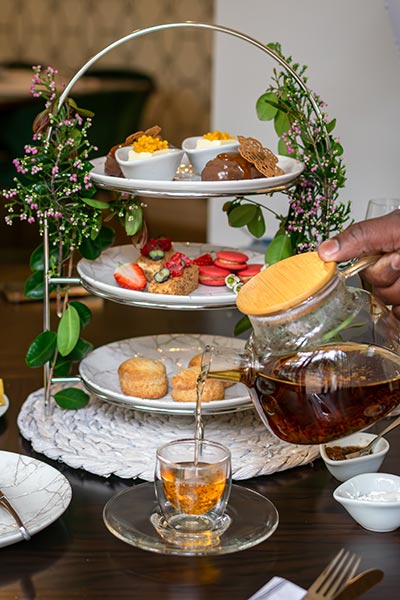
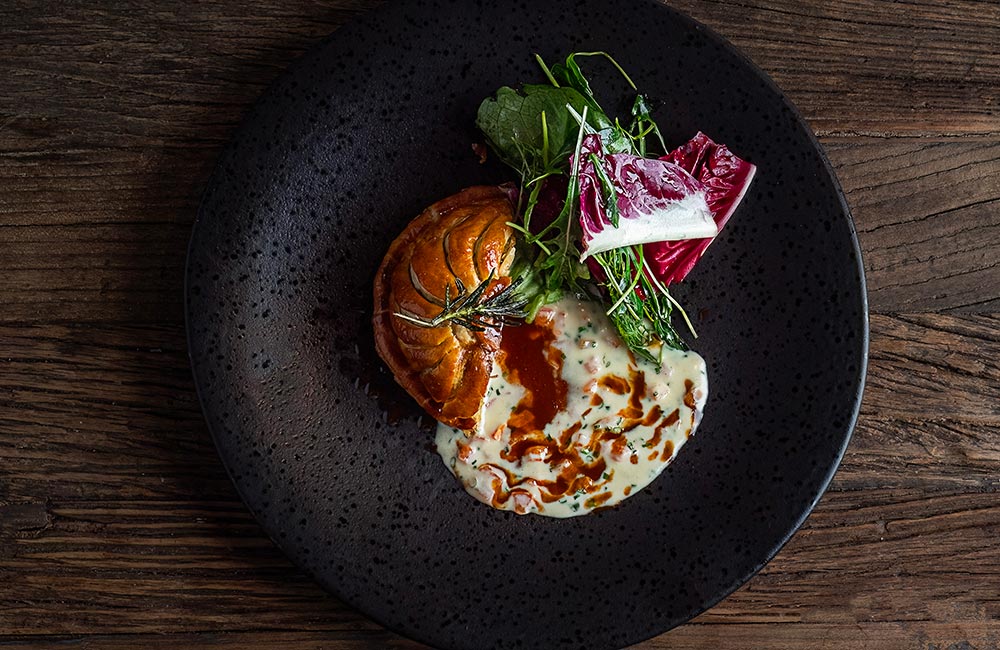
Best advice for aspiring entrepreneurs?

Believe enough in yourself and your vision that the risks are worth it. Surround yourself with people who believe (even more than yourself) in you and always be generous. Be kind and see the kindness in others. Most people want to help and want you to succeed. It is hard and it won’t get much easier, but it is so worth it!
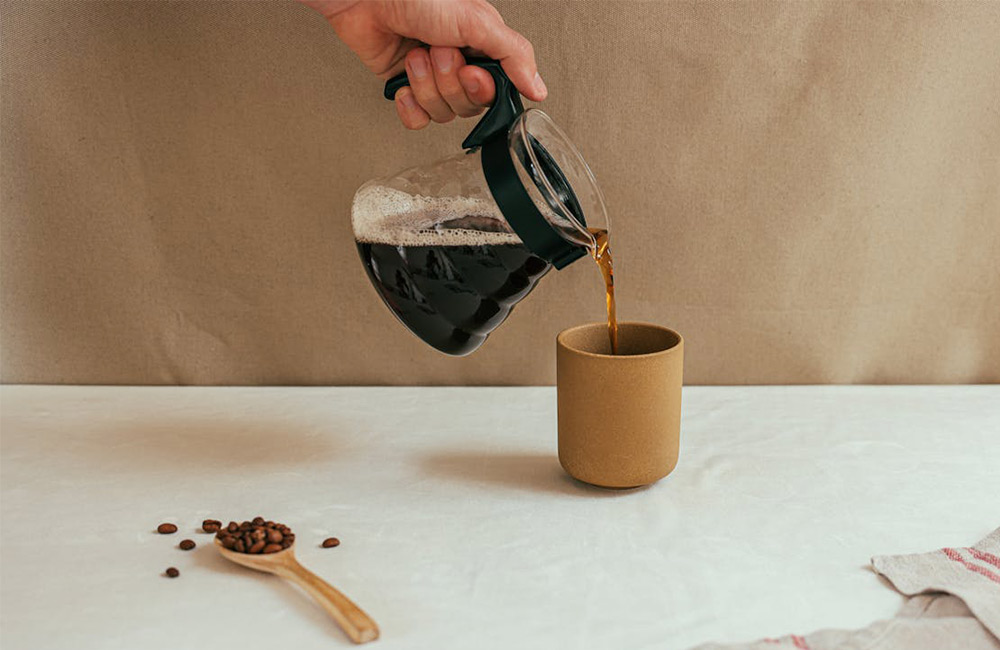
For delicious treats, order mondvol™ cookies and more at their online store

mondvol.co | Facebook | Instagram