Brookdale’s Kiara Scott Farmer crowned 2024 Diners Club Winemaker of the Year

Kiara Scott Farmer’s tenure at Brookdale Estate ends on a high note, as she was crowned 2024 Diners Club Winemaker of the Year for her 2022 vintage of Brookdale Estate’s Old Vine Chenin Blanc, which was judged to be the best in the Chenin Blanc category.

Diners Club Winemaker of the Year

Since joining the young, innovative Paarl wine estate, working alongside consultant winemaker Duncan Savage and being appointed winemaker in October 2019, Kiara has been instrumental in the successes achieved by Brookdale. This includes winning the coveted Rosa Kruger Trophy for best Old Vine Wine with the 2020 vintage of the Brookdale Estate Old Vine Chenin Blanc 2020, which took Gold with a top score of 97/100 in the Trophy Wine Show of 2022.

Brookdale proprietor Tim Rudd says that it is a bitter-sweet moment for Brookdale. “We are incredibly proud of Kiara and what she has achieved at Brookdale over the past five years. It has been a real pleasure to create a platform for Kiara’s talent as a winemaker and a launching pad for her blossoming career, and so it is fitting that her Brookdale chapter concludes with this phenomenal accolade. Congratulations and thank you Kiara – we wish you everything of the best with your future endeavours!”

For restaurant reservations and wine-tastings, contact The Bistro at Brookdale at +27 87 183 3919 or book via Dineplan. To book accommodation at the Manor House, call +27 87 057 4508.

brookdale-estate.comInstagram | Facebook | Twitter

How Different Glasses Affect the Taste of Wine & Champagne

Have you ever had a beer and noticed the difference in taste when drinking out of a glass bottle compared to a can? Well, the same applies to wine, except it’s a little more nuanced. Not only does the type of glass affect the taste, but the shape and size also contribute. Here’s how different types of glasses affect the taste of wine.

Wine Glasses

Before we get into how your glass affects your drink, you should know that the part of the glass that holds the wine is the ‘bowl,’ and the bottom part is called the ‘foot’ or ‘base.’

The shape of the bowl differs for white and red, with red wine glasses having a wider or curvier bowl. Why, you ask? Well, while most people would crack open a bottle and ‘pour one out’ straight after a trip to the liquor store, you’re actually meant to let the wine ‘breathe.’ If you’re guilty of this, don’t worry – red wine glasses naturally have a wider bowl and rim for this exact reason.

Shape

The wider bowl/rim allows the wine to be more exposed to the air, a process otherwise known as ‘oxidation.’ Because red wines have more prominent flavours, allowing the wine to breathe softens the flavours and essentially ‘wakes up’ the aromas of the wine – the wider bowl design enables this. Besides colour being the most obvious difference between white and red wines, other sensory factors also affect the perceived taste…

Temperature

Take temperature for example – red wines are consumed at room temperature, while white wines are first chilled to accentuate the acidity and fruity aromas. White wine glasses thus have longer stems compared to red wine glasses, for better temperature control. The longer stems create a greater distance between the bowl of the glass and your hand, which gives off heat. Here’s how different types of wine glasses further affect the taste of wines…


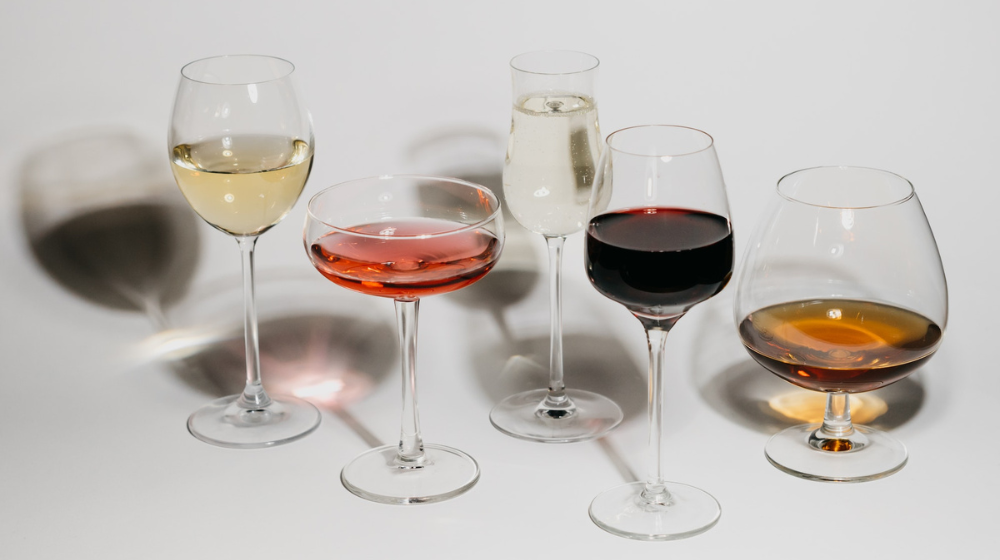
Different Types of Red Wine Glasses

Most household cabinets house two types of wine glasses – standard red and white wine glasses – and perhaps Champagne flutes. But, there are actually three types of red wine glasses: Bordeaux, medium-bodied wine glasses and Burgundy wine glasses.

Bordeaux Red Wine Glasses

Bordeaux red wine glasses are better suited for dry red wines that are high in alcohol (ethanol) and tannins – this typically includes your Merlots, Cabernets, Petit Syrah and, of course, Bordeaux wines. These wines contain more ethanol and bold, dark fruit notes, so they need more room to breathe.

The wider rim and the larger/longer bowl offer more room – this helps create a larger distance between your nose and the wine, which results in enhanced fruity aromas and a smoother mouthfeel.

Medium-bodied Glasses

This type of red wine glass is noticeably smaller than a Bordeaux glass, as the rim is more narrow. Medium-bodied wine glasses are naturally reserved for medium-bodied and full-bodied wines like Chianti, Syrah, Shiraz, Malbec and Rhône. These wines have more pronounced spices and flavours; the narrow rim design compensates for this, as the flavours are less overwhelming when they hit your palate.

Burgundy Glass

Burgundy glasses are ideal for wines with lighter tannins, this includes bright red wines that aren’t as harsh as Bordeaux wines. This type of red wine glass is the smallest of the three, and although Burgundy-style wines don’t require as much room to breathe, the larger bowl allows the flavours to collect at the bottom of the glass. The wider rim is cleverly designed to channel varying flavours to specific parts of the palate – the wine you’re drinking might have a  perceived sweeter taste because of this. If you don’t have Champagne flutes, Burgundy glasses are also acceptable to drink from, and even preferred by some.


Types of White Wine Glasses

Red wines usually have bolder flavours, whereas white wines are more subtle in comparison. The bowl and rim of white wine glasses are thus smaller, as they need less room to breathe.

Riesling Glasses

White wines such as Riesling and Sauvignon Blanc, which have a higher acidity and lower alcohol content, are normally consumed out of glasses with a smaller bowl and longer stem.

A smaller bowl helps concentrate aromas/acidity, while a more narrow rim directs flavours of the wine to the middle of the tongue.

Chardonnay Glasses

White wine glasses with a shorter stem and wider rim/bowl are used for full-bodied white wines like Chardonnay. The wider rim allows the rich aromas to breathe, while showcasing the complexity of buttery and fruity flavours; this is especially true for oaked Chardonnays.


Best Glass to Serve Champagne?

Sure, Champagne flutes might make for Instagram-worthy content and Boomerang clips, but they aren’t always the best choice for serving Champagne.

Flutes

There’s more to Champagne than the bubbles… if you’re drinking Champagne on a ‘beer budget’ and the bubbles are what you’re after, then use flutes – they’re great for preserving the bubbles and the long stems ensure that the Champagne remains chilled. But if you’re drinking a more expensive/vintage Champagne, you’ll want a glass with a wider bowl that goes narrow at the top – this allows the aromas to breathe while keeping the bubbles fizzy.

Most Champagne aficionados would recommend serving Champagne out of a regular white wine glass, similar to the one you would serve Riesling or Sauvignon Blanc in. If you want something similar to a flute, certain Champagne flutes are designed with narrow ‘scratches’ (unseen to the eye) around the insides of the glass; they enable the bubbles to travel up the glass and allow more notes to come through.

Coupes

Hosting a party and want a more stylish glass? Before you consider using coupes, don’t. The bubbles will fizzle out faster than a summer fling. While coupe glasses look super fancy, they have a wide top, meaning that the bubbles have ample room to escape.

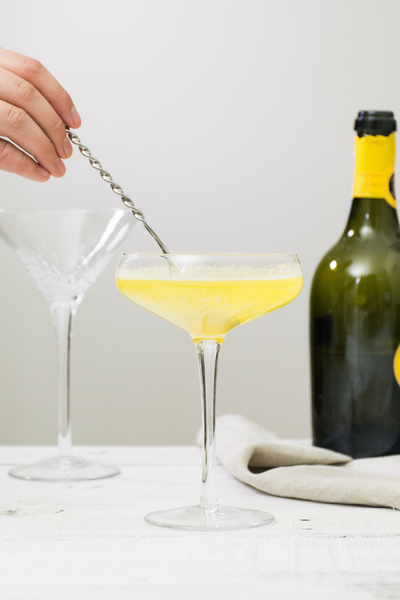
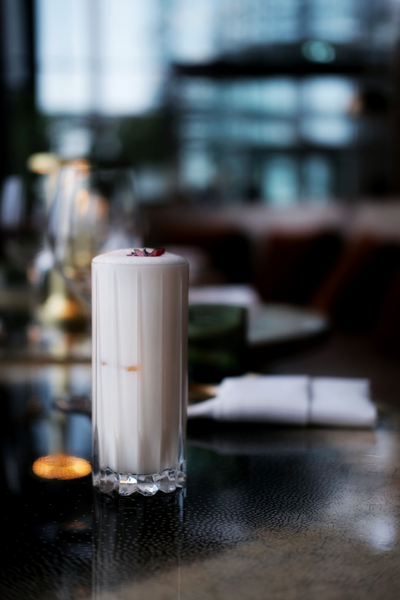
Coupes are best for serving old-timey cocktails that only need a dash of MCC or Champagne to top up. These Pink French 75 cocktails are the perfect choice for this style of serving.

French 75

Now that you’re clued up on wine glasses, get to know these lesser-known wine varietals.

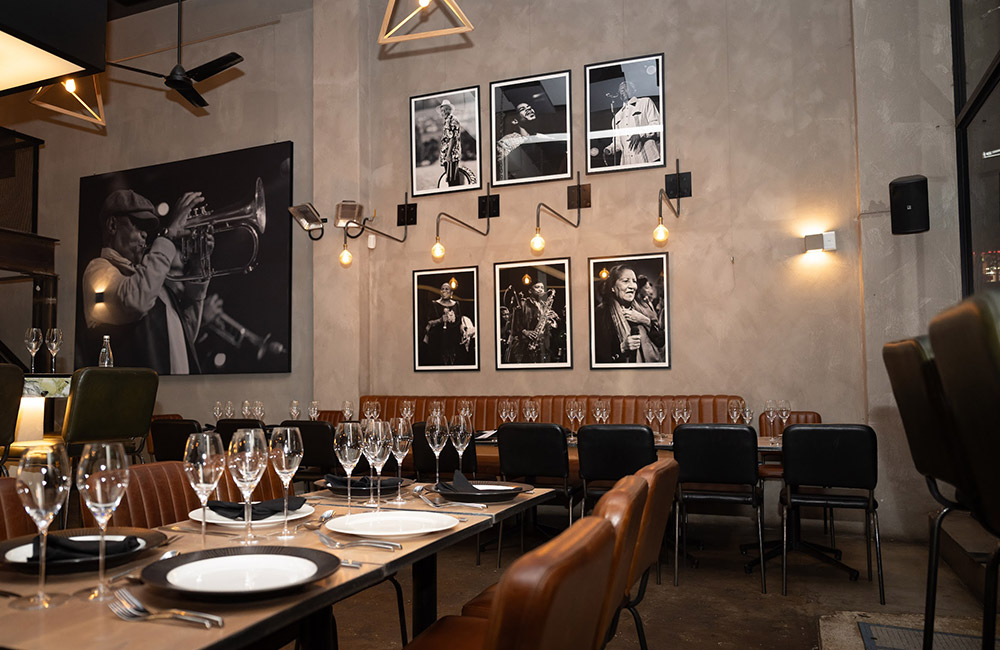
A Night of Sumptuous Secrets – SecretEATS Hosts Dazzling Dinner in Cape Town

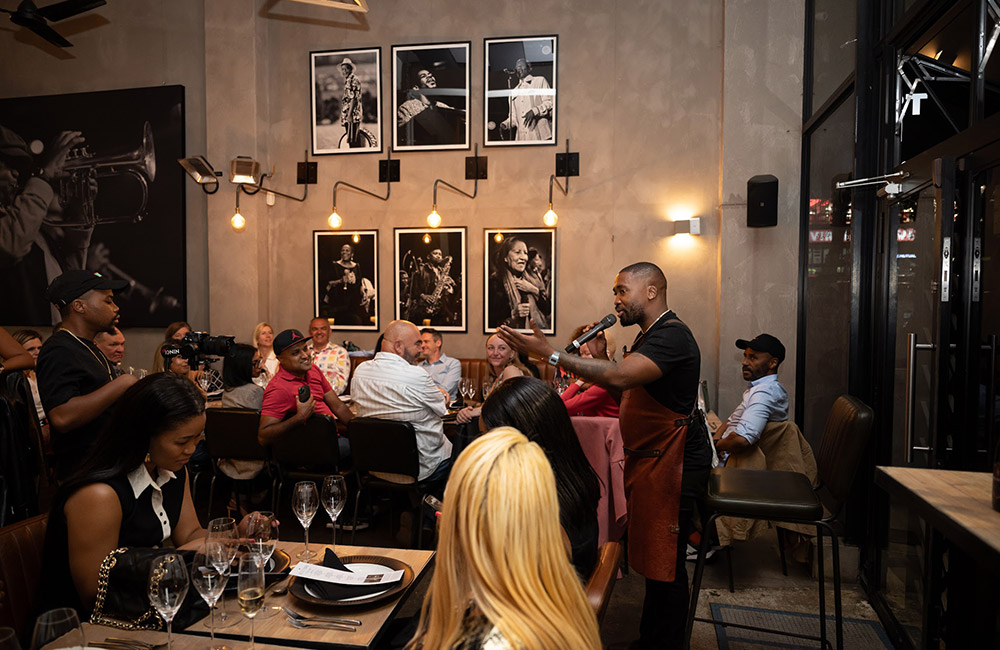
SecretEATS South Africa is back with yet another dazzling dinner experience, and this time, they’re raising the bar to unprecedented levels of culinary intrigue. Known for transforming ordinary dinners into delicious escapades, SecretEATS curates exclusive dining events that combine exceptional food, hidden locations and a dash of mystery. Their last instalment for the year, A Night of Sumptuous Secrets, will be hosted in Cape Town on 30 November 2024, and the event promises to be nothing short of spectacular!

Secure your place at this one-of-a-kind table and prepare for an evening of exquisite flavours, mystery and pure culinary magic.


SecretEATS Sets the Stage

Diners will experience one of the world’s most exciting culinary shows. As you step onto ‘the set’, you’ll be immersed in an evening that blurs the lines between fine dining and theatrical production. While the venue remains under wraps (as always with SecretEATS), it’s safe to say it will be a unique location to match the intrigue.

At the heart of the evening is the enigmatic ‘Secret Chef’ – a culinary master who has spent over two decades making waves in the food world. This decorated chef is stepping out of their usual kitchen, taking their culinary repertoire to innovative heights.

To give you a taste of the talent, previous participating chefs include Amori Burger of Upper Union, Vusi Ndlovu of EDGE Group and Mlilo ‘Fires of Africa’, and MasterChef South Africa judge and Food Network chef Katlego Mlambo.


A Night of Sumptuous Secrets

Beyond the incredible food, the event promises a host of secret revelations throughout the night. Whether it’s unexpected pairings, a thrilling reveal, a live music performance or interactions that bring you closer to the artistry behind the meal, one thing is certain – it will be an experience to remember.

Seats for ‘A Night of Sumptuous Secrets’ are limited, and SecretEATS events have a reputation for selling out quickly. Secure your place at this one-of-a-kind table and prepare for an evening of exquisite flavours, mystery and pure culinary magic.

When: Saturday, 30 November 2024
Where: Cape Town. Exact location details will follow once bookings are confirmed.
Tickets: R1,700.00 per person | Reserve your seats
Note: All dietary requirements will be catered for; non-alcoholic options will be available.

For more information, visit the website and follow SecretEATS on social media. 

secreteats-joburg.shopstar.co.za | Facebook | Instagram

Pét Nat – New Trend, or a Return to Old Ways?

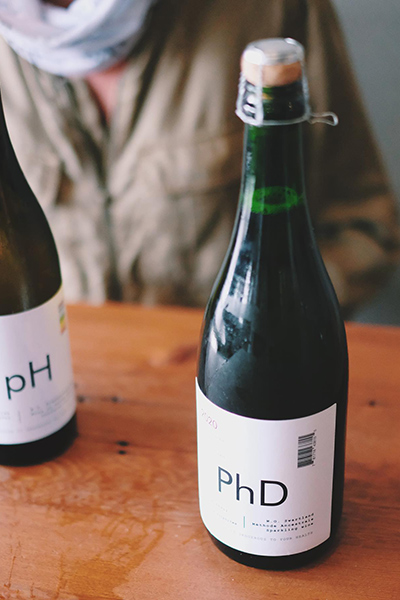
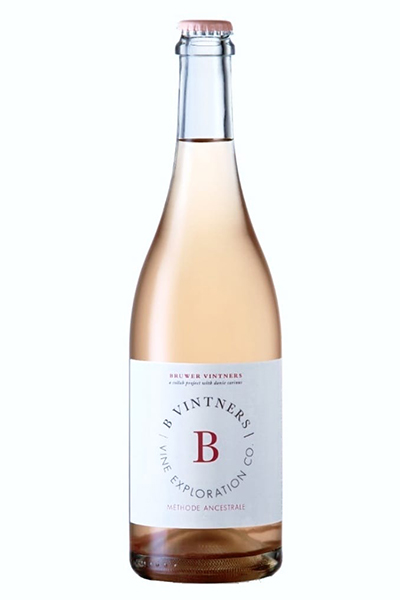
Pétillant naturel, or pét nat, may seem trendy, but this method of winemaking is as old as time itself. Its recent surge in popularity is probably due to the natural wine trend, but if you are still a bit unsure of this natural bubbly, then read on to find out exactly how it’s made and, more importantly, why it’s so delicious.

What Is Pét Nat?

Pét nat is a naturally sparkling wine produced in the ‘methode ancestrale,’ or ‘artisanale.’ This method involves bottling the wine prior to it completing its first fermentation, which allows the natural sugars from the grapes to produce carbon dioxide (the fizz!). This method is in contrast to méthode champenoise (Champagne), which involves allowing the base wine to fully ferment before bottling it, with the addition of yeast and sugar for a second fermentation. The main difference here is that pét nat has no additional sugars or yeast added, resulting in a completely natural bubble. It is also not disgorged and can often be unfiltered, resulting in a cloudy wine with sediment at the bottom of the bottle.

Disgorged refers to the process of removing sediment from sparkling wine once it’s completed fermentation.

What Does It Taste Like?

Pét nat doesn’t have any additional sugar, which means it is naturally low in alcohol. It has a light fizz and somewhat rustic taste and is slightly sweeter than a Cap Classique or Champagne. It’s a delicious summertime drink — light and perfect for an afternoon tipple at a picnic or a braai.

It won’t give you a headache (less sugar, remember), but can often feel quite rich, so we recommend pairing it with lighter foods. Some versions benefit from slightly spicier, acidic, food pairings as the spice cuts through the richness and balances out the drink.

The Local Market

Lucky for us, South African winemakers have gone back to the old ways and there is an abundance of choice available for South African wine drinkers looking to try something different.

Want more? Learn about the difference between Champagne and Cap Classique.

Everything you Need to Know About Champagne

There’s a reason Dom Pérignon said, “Come quickly, I am tasting the stars,” the first time he tried Champagne. From the sound of the cork popping to the heady complexity to the sensation of bubbles, Champagne is captivating, but not all are made equal. Learn everything you need to know about this bubbly beverage with our comprehensive Champagne guide.

Champagne guide

Much like still wine (non-sparkling), Champagne has different varietals like Chardonnay and Pinot Noir, meaning they result in different styles with varying tasting notes.

To help guide you through the world of Champagne, we explain the difference between Blanc de Blancs and Blanc de Noirs, as well as the difference between vintage and non-vintage Champagnes, and everything in between – like what people actually mean when they say it tastes ‘dry.’


Champagne Guide

Tasting notes for each Champagne type depends on certain factors – like the vintage year, vineyard classification, and sweetness – but there are usually common tasting notes.

Champagne guide
Champagne guide

Blanc de Blancs: Translates to ‘white from whites’ in French, meaning that white wine is made from white grape varietals. Chardonnay grapes are used to make Blanc de Blancs.

Blanc de Noirs: Wine connoisseurs will know that ‘blanc’ usually refers to white wines (Chenin Blanc), whereas ‘noir’ refers to red wine (Pinot Noir), but Champagne or Cap Classique are classified as ‘Blanc de Noirs’ or ‘white from black’, meaning that white wine is made using red or black grapes.

During the fermentation process, red grapes are pressed, but the juice remains clear. If a winemaker wants colour, it would be derived from contact with the grape skins. In the case of a Blanc de Noir, there is no skin contact – therefore, a clear/white wine is produced from red grapes, hence the ‘white from black’ reference in the name.

Did you know? Because Champagne has a specific set of requirements, only Pinot Noir and Pinot Meunier grapes can be used to make a Blanc de Noirs Champagne. Blanc de Noirs are usually full-bodied and fruity. If made with Pinot Noir grapes, flavours of apple, lemon and honey present on the palate. Pinot Meunier grapes often produce more acidic, light and fruity-tasting Champagnes.

Rosé Champagne, the prettiest of them all, has a distinct pink hue and is either made by blending red and white wine, or the Champagne maker could allow white grape juice to ferment along with red grape skins to produce a Rosé. Tasting notes differ depending on the type of white grape varietal and the red grape skins used during blending, but Rosé Champagne typically has berry/red fruit, citrus and cherry-like notes.


The Difference Between Vintage and Non-vintage Champagne

Champagne is sourced from one of three grape varietals – Chardonnay, Pinot Noir, or Pinot Meunier (a red grape varietal) grown in Champagne, France. They can be either vintage or non-vintage depending on harvesting methods. While ‘vintage’ usually refers to the age of something in the general, with Champagne, it refers to the source of the grapes.

Champagne guide

Vintage Champagnes are made from grapes harvested within a specific year; the year stamp should be clearly labelled on the bottle. Another requirement is that the harvested grapes need to be of exceptional quality – the French refer to this as ‘Millesime’ or ‘a great vintage’. Vintage Champagnes must also be aged for a minimum of three years; sometimes the length of maturation is extended.

Non-vintage Champagnes are created from specific grape varietals from more than one year and harvest. The blended wine must be aged for a minimum of 15 months. Non-vintage variations account for 90% of most Champagne Houses’ profits, as it has a higher yield than vintage versions.


Vineyard Classifications

Champagne is an AOC or Appellation d’Origine Contrôlée, meaning that for sparkling wine to be classified as ‘Champagne,’ it needs to meet standard rules controlled by its origin. In this case, it needs to originate from the Champagne region of France. The standard or status is further judged based on the growth (cru) standards of the respective vineyards, according to the quality of soil and growth conditions.

Champagne vineyards France

Did you know? There are three main vineyard types within Champagne, namely Grand Cru – venerated for producing the highest quality of Champagne – followed by Premier Cru. The last is Autre Cru, and though these vineyards are capable of producing good-quality Champagnes (some at the level of Premier Cru), Autre Cru is thought to have the lowest quality of the three.

Sweetness/ Dryness

The final factor is the level of sweetness. When tasting wine or Champagne, people often refer to it as ‘dry’. If you’ve ever wondered how a liquid could taste ‘dry’, they aren’t referring to the moisture content, but rather the level of sweetness.

This actually refers to the process of fermentation, during which the sugar is converted into alcohol, resulting in the ‘dry taste.’ The less residual sugar present, the ‘drier’ the taste – but this also depends on the type of Champagne.

Brut: Brut means ‘raw’ or ‘unrefined’ in French, and has less than 12 grams of sugar. While Champagne Brut is one of the drier types, it does retain a slight sweetness.
Brut Nature has the least amount of sugar (0–3 grams); making it the driest.
Extra Brut is extra dry and contains between 0 and 6 grams of residual sugar.
Extra Dry Champagne is also called ‘Extra Sec’, meaning ‘off-dry’ and can contain anywhere between 12 and 17 grams of residual sugar.
Demi-Sec Champagne is one of the sweeter Champagnes or sparkling wines and contains between 32 and 50 grams of residual sugar.
Champagne Dry: Although dry, this isn’t the driest type, as it contains 17–32 grams of residual sugar.
Champagne Doux: If you’re looking for a dessert wine, Doux is the sweetest type of Champagne, ranking with a high of over 50 grams of residual sugar.

Learn about the difference between Champagne and Cap Classique. Want more? Follow us on Instagram for more food and wine content. 

We’re Hiring:
Social Media Coordinator

Is Social Media the jam in your sandwich? Does writing sharp, savvy copy and engaging with followers give you the warm and fuzzies like a bowl of good ramen? We have an opportunity for a Social Media Coordinator who is passionate about creating engaging social content. Because much of our content is food-related, the person in this role must have an understanding and passion for food and living the good life.

  • Please email for salary details.
  • Although the role is remote, we require the candidate to be Cape Town-based. 

What You’ll be Doing

Social Media Coordinator Responsibilities

  • Plan, create, and schedule engaging content across all Crush social media channels, including Facebook, Instagram, Pinterest, X, TikTok and more. This includes handling stories, reels, grid posts, and platform-specific content formats.
  • Continue to film and edit the current Behind the Door series on the Crush Instagram account – visiting restaurants and shooting footage and editing. Look for opportunities to create new series and pitch content ideas.
  • Manage social media accounts for clients, ensuring posts reflect their brand tone and objectives while remaining aligned with social media best practices. Plan, create, and schedule this content.
  • Drive engagement on all platforms by actively responding to comments, direct messages, and mentions in a timely and friendly manner, fostering strong relationships with the community.
  • Collaborate closely with the Content Creator, Editor, and other team members to ensure all Crush content aligns with brand strategy, resonates with the audience, and meets the objectives outlined in client briefs.
  • Assist with editing video content that is shot on shoots by the production team into short social media videos. 
  • Help Crush and clients create consistent and visually appealing multimedia assets (photos, videos, and graphics) by liaising with the creative team, making sure they are tailored to each platform.
  • Plan and execute paid social media campaigns to boost posts, enhance reach, and increase engagement for both Crush and clients, while optimising the return on investment (ROI) through strategic targeting and audience selection.
  • Monitor, track, and report on the performance of both organic and paid social media campaigns, providing actionable insights and recommendations for improving results.
  • Consistently work towards growing the social media presence of Crush and its clients across all channels, ensuring a steady increase in followers, engagement, and brand awareness.
  • Stay updated with the latest social media best practices, trends, tools, and technologies, applying them to both Crush and client accounts to ensure maximum effectiveness.
  • Ensure brand consistency for Crush and clients in terms of voice, tone, and visual style across all platforms.
  • Work with clients to understand their goals and develop customised social media strategies that meet their business objectives while maximising engagement.

What We Need from You

  • Excellent command of written English.
  • Ability to plan and execute responsibilities without constant supervision.
  • Paid media experience is a must.
  • Ability to multitask.
  • Knowledge and experience using Premier, Canva, CapCut, Inshot or similar content creation apps. 
  • Experience using Hootsuite or a similar scheduling tool would be a bonus. 

The Need to Know

Crush is a dynamic digital media agency specialising in lifestyle content, offering a blend of editorial excellence and client-focused creativity. Our services include a thriving lifestyle website, crafting engaging food, wine, and lifestyle content, and delivering bespoke content creation, including stills, videos, copy, and social media assets, tailored to our clients’ needs. Additionally, we provide expert social media management to amplify brands and connect with their audiences.

This is a remote role and the individual must be comfortable working independently and with less supervision than a traditional office environment. The successful candidate must be able to thrive in a busy role, should be adaptable to last-minute changes, and able to work on multiple projects simultaneously. 

Candidates who are successful in the interview process will need to create a piece of video content. Topics will be provided with a time frame to submit. 

To submit your application, send a concise CV via email and put your favourite junk food secret indulgence in the subject line. Please include a notice period if you have one and give us a bit of background about your food knowledge/experience/understanding.

Dinner on the Dot! Honey & Soy Pork Belly in the Instant Vortex Air Fryer Oven

Why do it all when you don’t have to? If you enjoy entertaining friends or have dinner duty most nights, then the Instant Vortex Plus Air Fryer Oven is the easiest way to be versatile and efficient in the kitchen. With multiple functions and a smart design, it’s the all-in-one appliance you didn’t know you needed. Make more time to mingle and prep dinner with ease, from midweek meals to festive feasts. This delicious Honey & Soy Pork Belly shows you how to make the most of this must-have kitchen appliance.

The Taste of Convenience

Upgrade your cooking experience with the next-generation Instant Vortex Plus Air Fryer Oven. This is the ultimate kitchen companion, combining the versatility of a traditional oven with the speed and efficiency of an air fryer. Look out for this incredible appliance at Yuppiechef from the end of November!

… and with a good cut of pork, you’re guaranteed deliciousness!

Designed for families, busy people and creative home cooks, this spacious 13-litre capacity oven features three multi-level cooking trays, allowing you to prepare multiple meals simultaneously. With nine versatile functions, including Air Fry, Rotisserie, Roast, Grill, Bake, Toast, Reheat, Dehydrate and Proofing, you can effortlessly whip up delicious meals, from crispy fries to Sunday roasts, or even freshly baked treats for teatime occasions.

… it’s the all-in-one appliance you didn’t know you needed.

The rotisserie spit ensures perfectly cooked roasts that are crispy on the outside and tender on the inside, while the 360 °C hot air circulation and perforated cooking trays deliver fast, even cooking results – entertaining friends and family has never been easier! This nifty kitchen appliance preheats in a couple of minutes, so you can enjoy up to 50% faster cook times and up to 80% lower energy costs than traditional ovens. User-friendly and efficient, it features a simple touchscreen interface with customisable smart programs, a progress indicator and a message bar, as well as a ClearCook window to monitor your food without losing heat. The convenient side-opening door ensures less mess and is easy to clean, too!

This versatile appliance is ideal for everyday dinners or feasts, and with a good cut of pork, you’re guaranteed deliciousness! Not only is pork one of the most versatile and economical protein choices, but it also boasts rich nutritional value.


Simple Yet Sumptuous

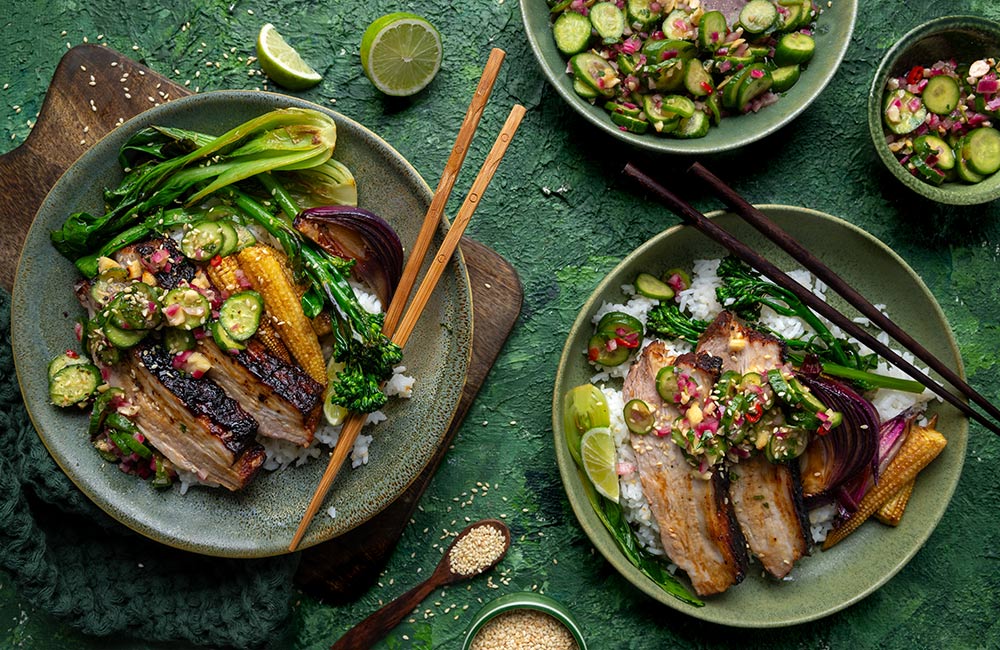
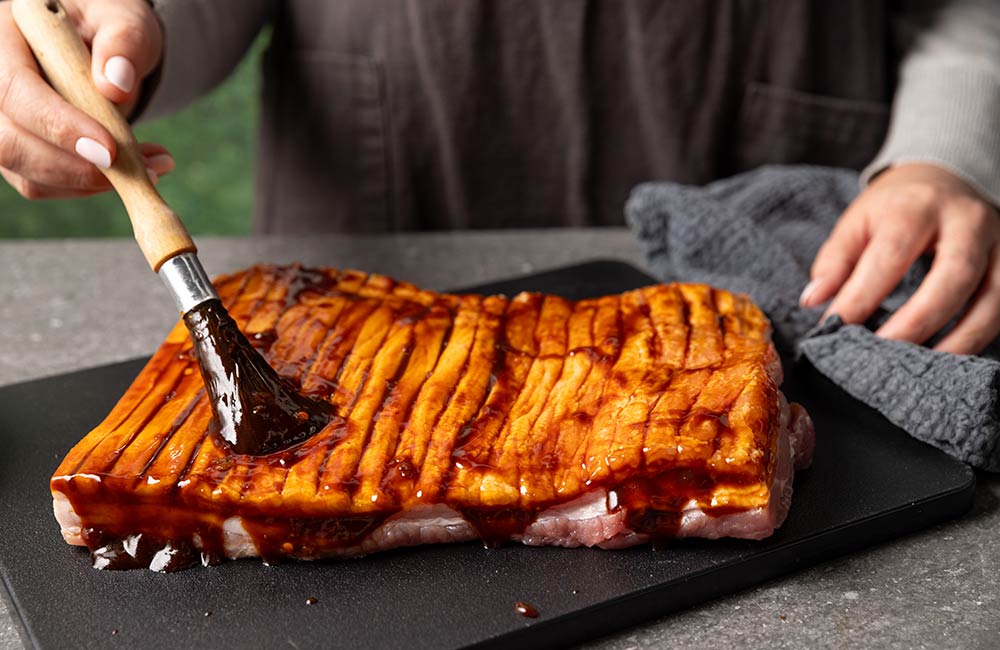
This Honey & Soy Pork Belly perfectly showcases the versatility of the Instant Vortex Plus Air Fryer Oven. The mouthwatering pork belly is basted with a mixture of gochujang, soy, honey, sesame oil and apple cider vinegar, and roasted in the Air Fryer Oven until fork-tender and succulent. For an irresistible meal, place some bok choy, tenderstem broccoli and baby sweetcorn on the tray below to catch the pork belly drippings.

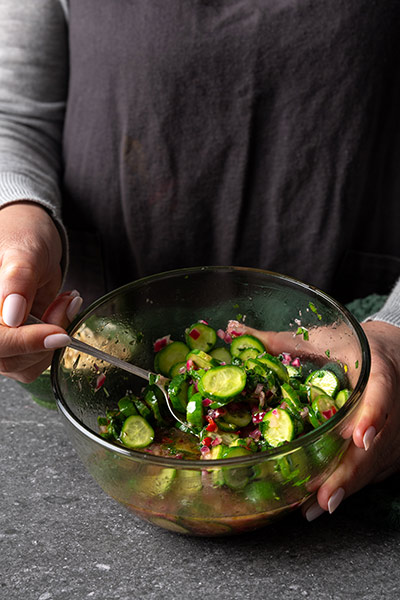
Simple yet sumptuous, this dish requires minimal preparation and exudes maximum flavour. Take it to another realm of deliciousness and serve the mains and roasted veggies on a bed of sticky rice. Enjoy it with a spicy yet refreshing cucumber salad, loaded with chopped cashews, red chilli and fresh coriander. Absolutely divine!


A Fuss-free Feast: Honey & Soy Pork Belly with Cucumber Salad

Inspired by Asian flavours, this spectacular dish is ideal for casual yet elevated dinner parties. Plate everything in the centre of the table and enjoy it family-style. 


Serves: 6 | Prep time: 20 minutes | Cook time: 1 hour | Difficulty: easy

Honey & Soy Pork Belly

2 kg boneless pork belly
2 Tbsp (30 ml) cornflour
¼ C (60 ml) water
1 C (250 ml) Soy sauce
½ C (125 ml) honey
2 Tbsp (30 ml) apple cider vinegar
2 Tbsp (30 ml) gochujang paste
2 Tbsp (30 ml) sesame oil
4 cm piece fresh ginger, finely grated
6 garlic cloves, finely grated
1 tsp (5 ml) chilli flakes
1 large spring onion, white part finely sliced, green part reserved for garnish

Grilled Vegetables

3 large bok choy, halved
200 g tenderstem broccoli
100 g baby sweetcorn, halved lengthways
1 red onion, peeled and quartered
drizzle of olive oil
salt and pepper

Cucumber Salad

2 Tbsp (30 ml) sesame oil
1 Tbsp (15 ml) fish sauce
1 Tbsp (15 ml) olive oil
2 Tbsp (30 ml) lime juice
1 garlic clove, finely grated
1 cm piece fresh ginger, finely grated
½ red onion, finely diced
1 Tbsp (15 ml) sugar
½ tsp (2.5 ml) fine salt
1 small red chilli, finely sliced
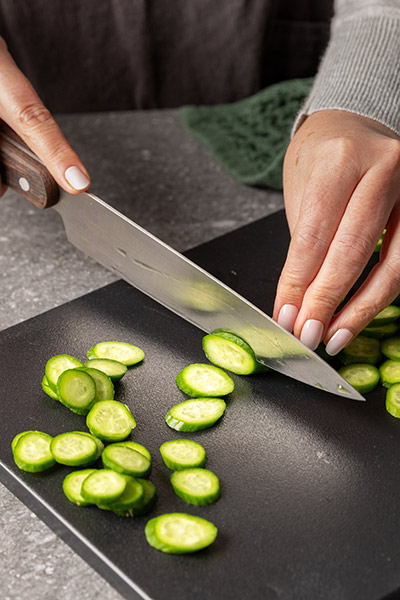
350 g mini cucumbers, roughly chopped
¼ C (60 ml) finely chopped coriander, plus extra for serving
50 g roasted & salted cashews, roughly chopped

To Serve

600 g sticky rice
reserved green spring onion greens, sliced on the diagonal
3 Tbsp (45 ml) white sesame seeds, lightly toasted

Honey & Soy Pork Belly

Pat the pork belly dry with a kitchen towel; gently remove the skin without cutting away the fat, and discard. Use a sharp knife to score the fat of the pork belly. Set the pork aside. Mix the cornflour and water together in a small bowl to form a slurry; place the rest of the ingredients into a pot over medium heat. Once the sauce has started to simmer, add the cornflour slurry and stir continuously until thickened, about 5 minutes. Set the sauce aside to cool slightly before using.

Once cooled, pour the sauce over the pork belly, covering the meat completely on all sides, and then cover and place into the fridge to marinate overnight. Remove the pork from the fridge an hour before cooking to allow it to come to room temperature.

Pork Belly & Grilled Vegetables

Preheat the Instant Vortex Plus Air Fryer Oven to 180 ºC on the Air Fry setting and place the pork belly on the drip tray. Arrange the vegetables on the cooking tray beneath the pork, drizzle with olive oil and season with a pinch of salt and pepper.

Cook for 45 minutes, tossing the vegetables twice during the cooking time. If they need a bit more colour, switch the tray around once the pork belly is done and grill for 5 minutes.

Cucumber Salad

Mix all the ingredients, except the cashews, together in a large bowl. Allow to marinate for 20 minutes. Add the fresh coriander and cashew nuts right before serving.

To Serve

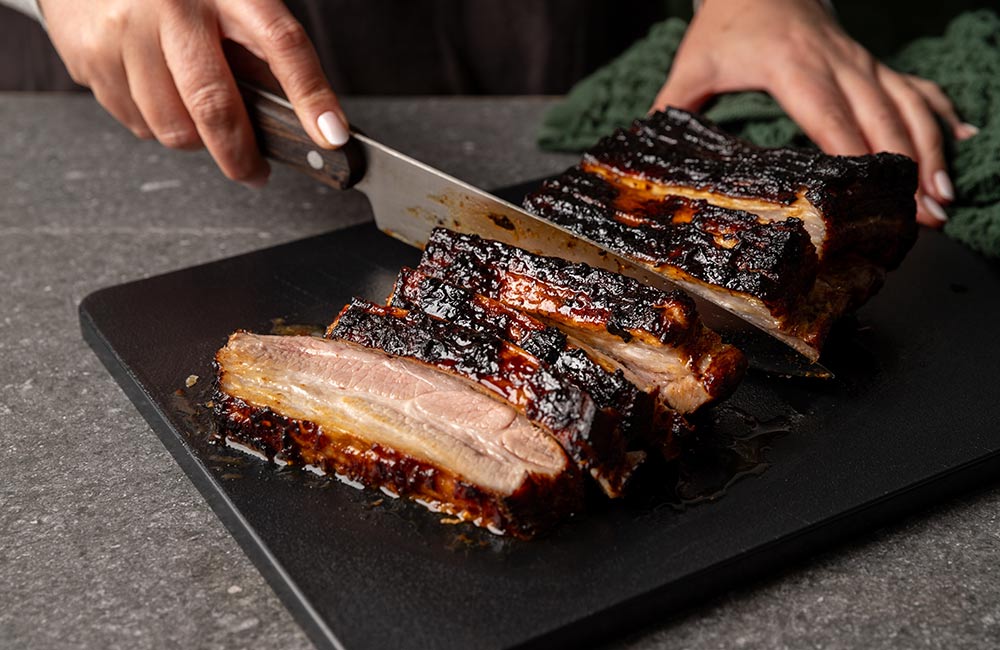
Allow the pork to rest for 10-15 minutes, then slice. Portion the rice into bowls and add a half bok choy to each. Divide broccoli, sweetcorn and red onion between the bowls and add a portion of pork belly to each. Garnish with pickled cucumber salad, spring onion greens and toasted sesame seeds.

For more tasty inspiration, try these pork recipes and air fryer-friendly recipes.

sapork.co.za | instantpot.co.za

Sundowners & Poptails – The Best Summer Cocktails

Summer means cocktail time, right? There’s nothing better than lazing in the sun, with a refreshing frozen margarita or spritzer in hand. Whether you’re in the mood for a classic sundowner or something different, simmer down with our best summer cocktail recipes; they’re ideal for those hot days by the pool.

Classic Cocktail Recipes

Classic cocktails are the same the world over. These are for the people who know what they want, and love it done properly.

cocktail recipes
cocktail recipes

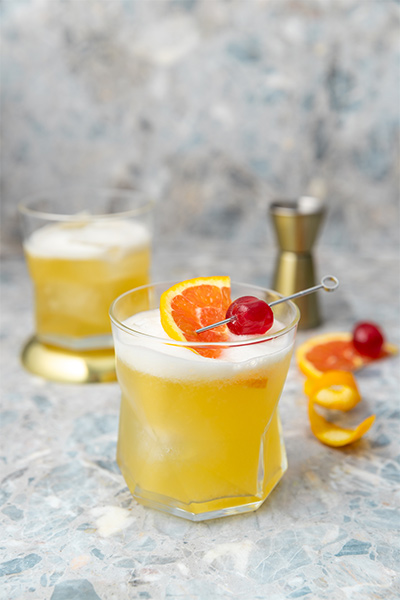
Classic Whiskey Sour

This Bourbon beauty is bound to become your new favourite summer drink – some classics just never grow old.

Recipe for Classic Whiskey Sour

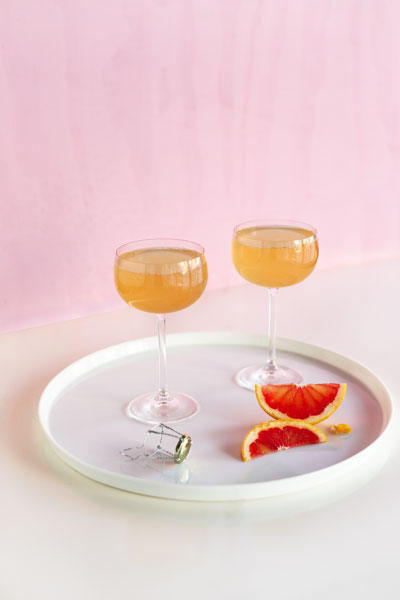
Pink French 75

The classic gin cocktail recipe gets a romantic twist.
Recipe for Pink French 75

cocktail recipes

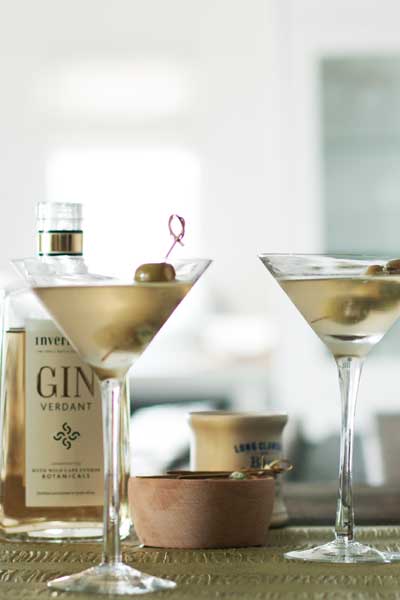
Dirty Martini with Stilton Stuffed Olives

This pungent but creamy cheese cuts through the strong alcohol and pairs well with the olive brine.
Recipe for Dirty Martini with Stilton Stuffed Olives

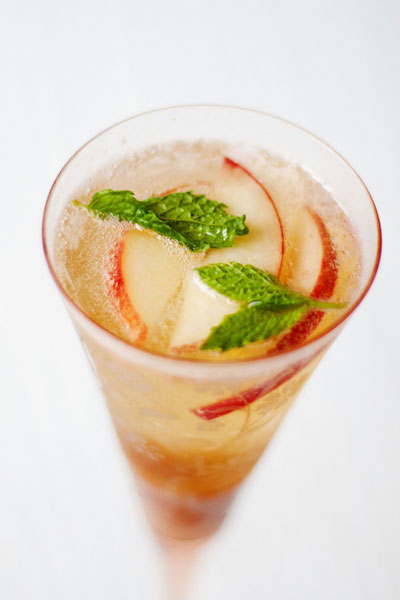
Peach Bellini

A classic, peachy pleasure, and one of our favourite cocktail recipes.
Recipe for Peach Bellini

summer cocktail recipes

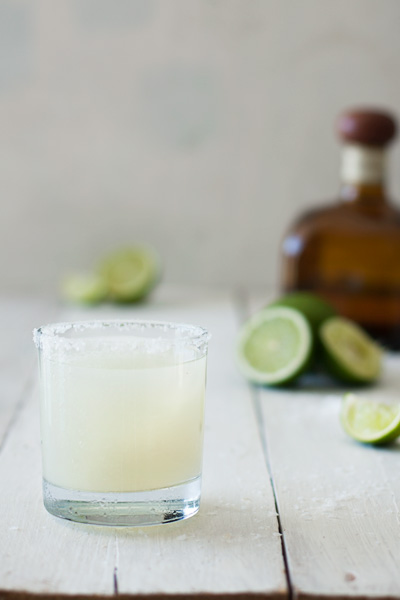
Classic Margarita

This iconic drink needs no introduction. Boozy and tart – this is a real margarita.
Recipe for Classic Margarita

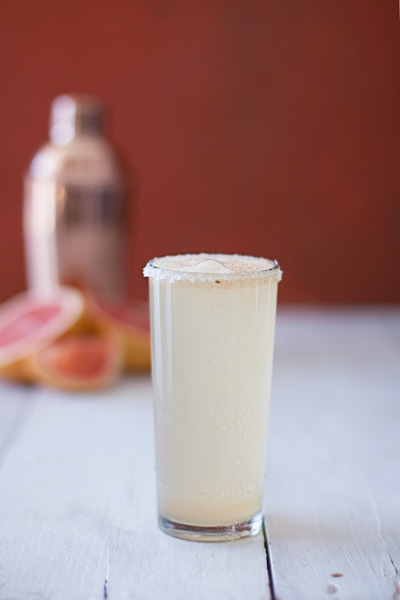
Paloma

Grapefruit cordial, soda water and tequila – what more encouragement do you need?
Recipe for Paloma


The Classics… with a Twist

Sometimes it’s okay to mix things up a bit…

summer cocktail recipes

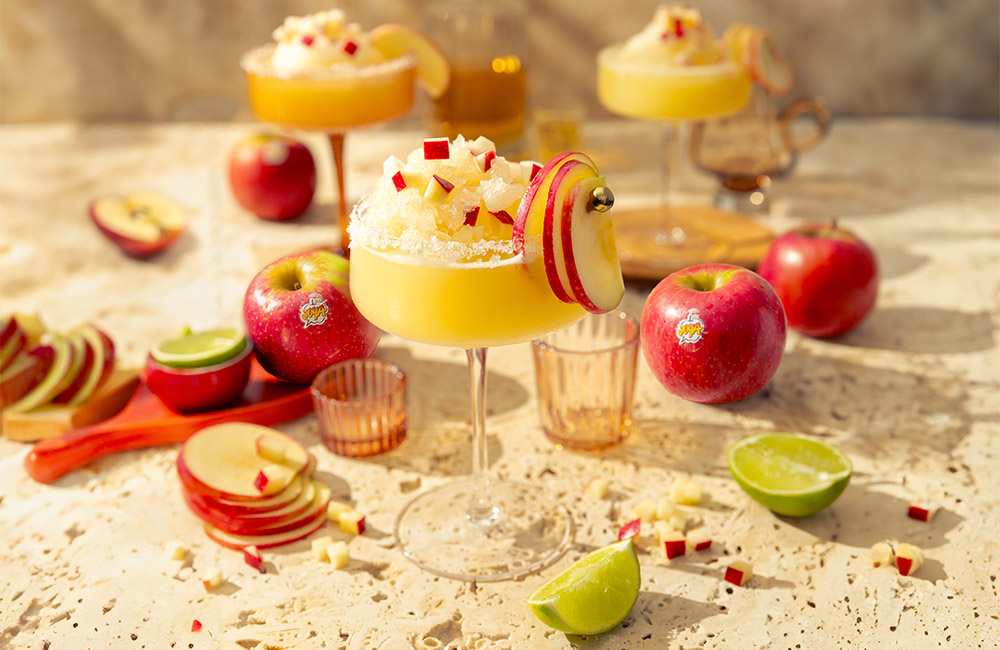
Frozen JOYA Apple Margarita

Sip your way through summer with this refreshing slushie-inspired apple margarita.
Recipe for Frozen JOYA Apple Margarita

cocktail recipes
summer cocktail recipes

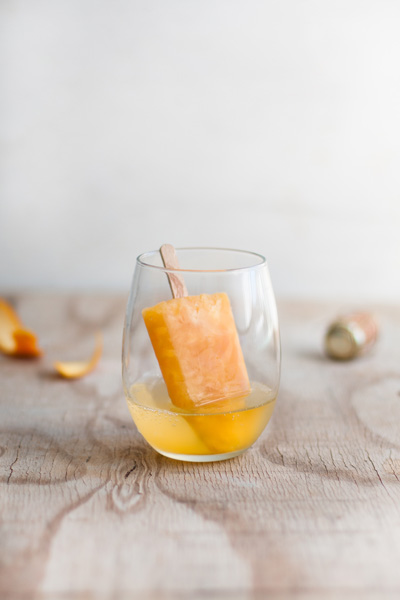
Negroni Sbagliato Poptail

Boozy lollies are seriously the most fun way to enjoy your drink!
Recipe for Negroni Sbagliato Poptail

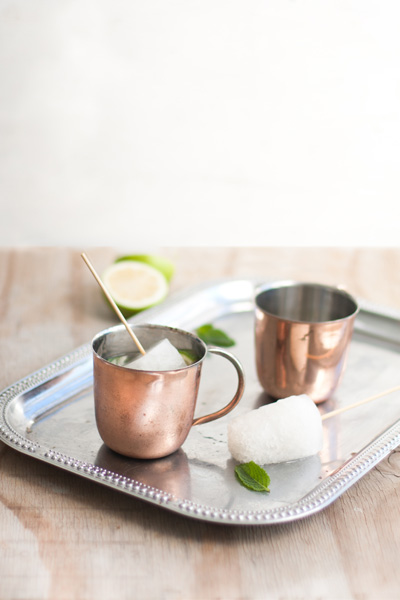
Moscow Mule Poptail

This cocktail recipe makes the refreshing Mule even more thirst-quenching.
Recipe for Moscow Mule Poptail

cocktail recipes
summer cocktail recipes

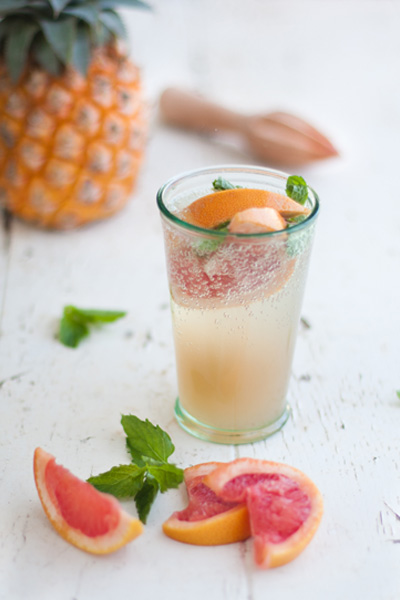
Pineapple & Grapefruit Mojito

This mojito recipe may not be entirely traditional, but it will definitely hit the spot on a warm summery afternoon.
Recipe for Pineapple & Grapefruit Mojito

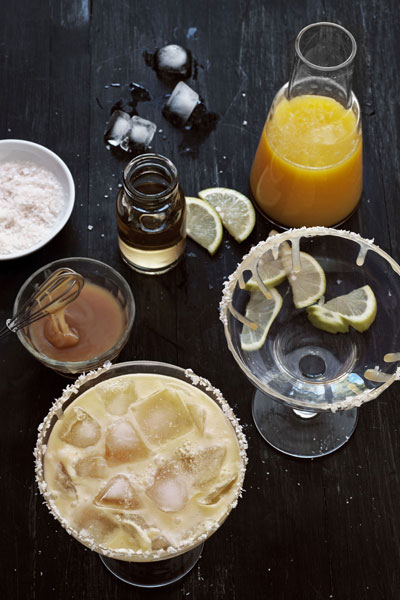
Salted Caramel & Orange Margarita

A sinful cocktail that combines the tang of citrus with the sweetness of caramel.
Recipe for Salted Caramel & Orange Margarita

cocktail recipes
cocktail recipes

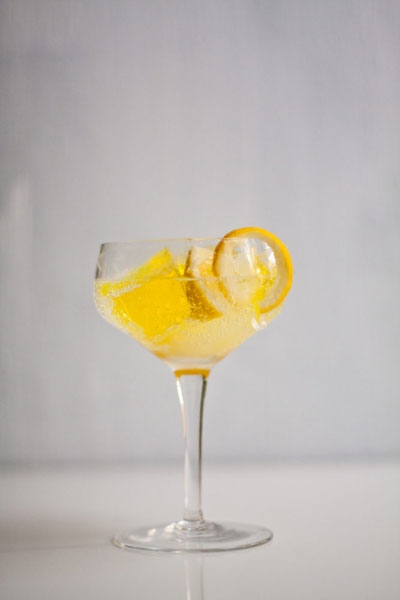
Gin & Tonic with a Twist

Gin and jellies that’ll get you jiving!
Recipe for Gin & Tonic with a Twist 

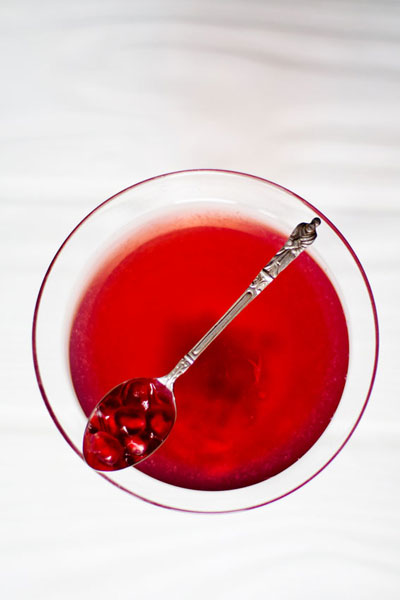
Pomegranate Cosmopolitan

Swap out cranberry for pomegranate for the perfect punch.
Recipe for Pomegranate Cosmopolitan

mojito cocktails
summer cocktail recipes

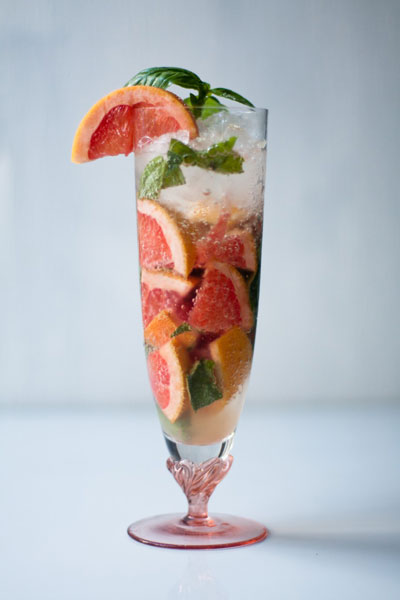
Ruby Grapefruit Mojito

This ruby grapefruit cocktail will definitely get you revved up for a night out!
Recipe for Ruby Grapefruit Mojito

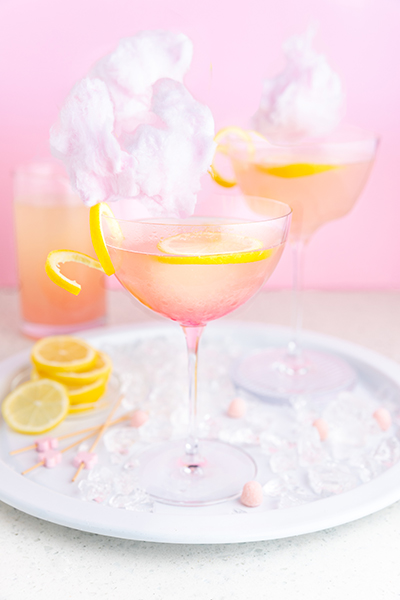
Pink Lemonade Candy Floss Cocktail

Pretty-as-a-picture and totally divine, this cocktail has the ideal balance of sweet and sour.
Recipe for Pink Lemonade Candy Floss Cocktail

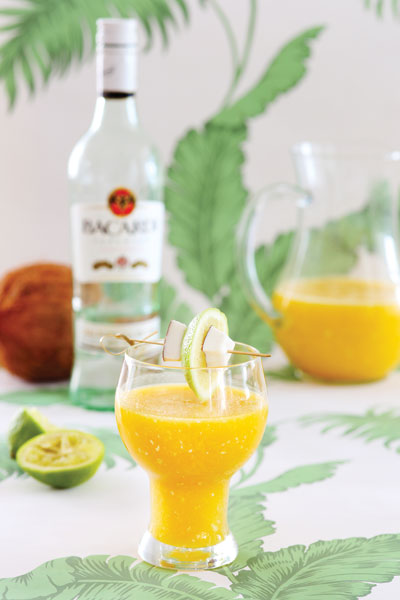
Mango & Coconut Daiquiri

Forget about strawberry daiquiris, this tropical mango and coconut version is all you need this summer.
Recipe for Mango & Coconut Daiquiri

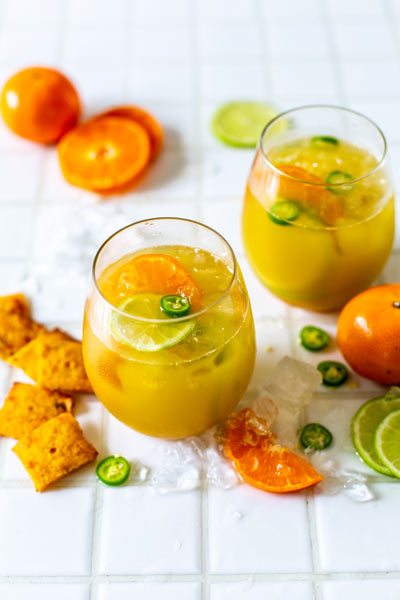
ClemenGold Gin & Tonic

Add a little kick to your regular tipple with some jalapeños and a dash of ClemenGold Gin.
Recipe for ClemenGold Gin & Tonic

Spruce up your cocktails with these delicious Cocktail Infusions, or try these refreshing Summer Frozen Desserts.

The Stories Behind Weird Cocktail Names

From Sex on the Beach to Screwdriver, obscure drinks have graced cocktail menus and been ordered by many around the world. But have you ever wondered about the weird and wonderful stories behind their names? Like, why is it called a Screwdriver or a Moscow Mule and why do we love naming cocktails after Marys?

Bloody Mary

cocktail names Bloody Mary

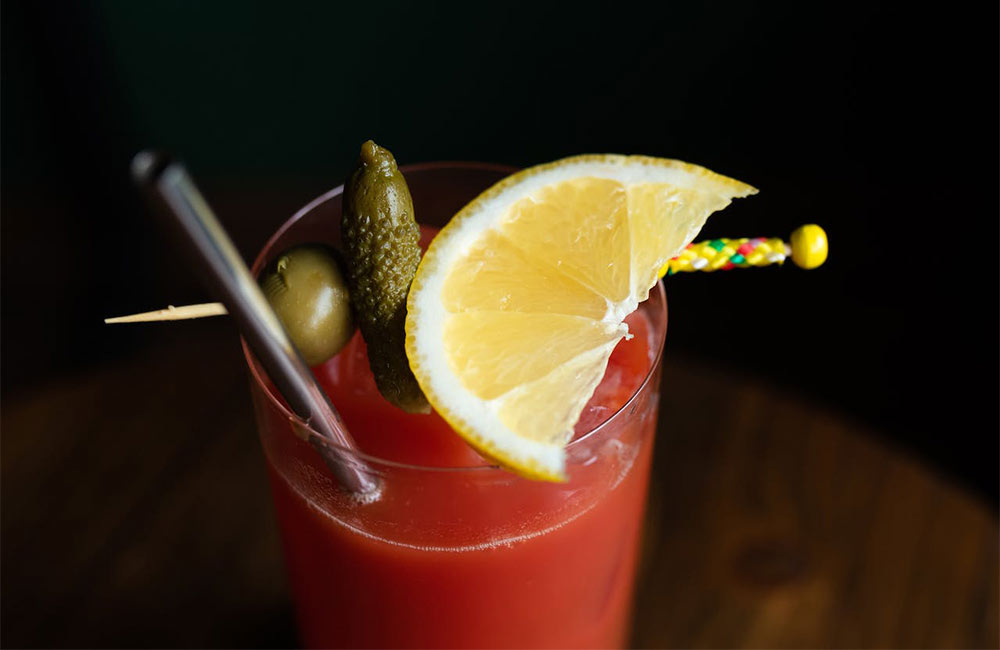
If there was ever a recipe to cure a hangover, it’s a Bloody Mary. The vile tomato juice and Worcestershire sauce-filled drink certainly isn’t for everyone and neither was the Queen it was apparently named after.

The Blood Mary has ties to the first queen of England, Mary I, better known as ‘Mary Tudor.’ The reviled royal is historically remembered for wreaking havoc and burning people at the stake for heresy.

During her reign of terror, Mary Tudor ordered the killings of those with Protestant beliefs, resulting in the bloodshed of at least 280 people burned at the stake – labelling her ‘Bloody Mary.’  According to another tale, the drink was named by author, Ernest Hemingway, and entertainer, George Jessel, after their mutual friend, Mary Geraghty.


Mary Pickford

If there’s one thing we can thank the Prohibition era for, it’s the invention of cocktails. Apparently, America endured the Prohibition during this cocktail’s inception. Cuba was influenced by American culture and decided to pay homage by naming the cocktail after Hollywood star, Mary Pickford.

cocktail names Mary Pickford

The Mary Pickford cocktail was named after the Hollywood actress, who rose to fame during the Roaring Twenties.

The origins of its name are widely rumoured. One tale claims that the signature cocktail was invented during the actress’ trip to Havana, Cuba, as she and her husband, Owen Moore, frequently visited for filming. A Mary Pickford is made with two-thirds pineapple juice, one-third rum and a dash of grenadine – a popular cocktail ingredient during this era.


Moscow Mule

If you’ve never had a Moscow mule, you’re missing out. This vodka-based, ginger and lime-infused cocktail is super refreshing. As for the moniker, apparently, alcoholic drinks that are infused with ginger and citrus are referred to as ‘buck drinks’ because the alcohol has an extra kick, much like a mule.
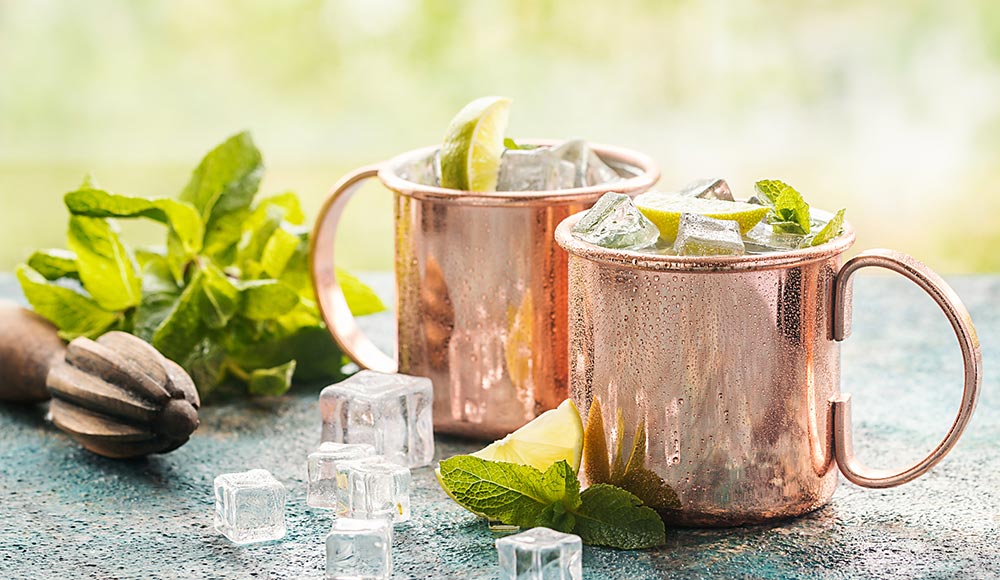
cocktail names - Moscow MuleThe ‘Moscow’ part derives from the fact that the drink is vodka-based. As we know, Russians love their vodka, and Moscow is, of course, the capital of Russia. A Moscow Mule is commonly served from a copper mug, as it helps regulate cold temperatures; it’s also believed to keep the drink fizzy and carbonated.

Try this Moscow Mule Poptail for a refreshing drink.


Long Island Iced Tea

Despite its name, the Long Island Iced Tea does not contain any tea – but to be fair, who would want tea in their cocktail?
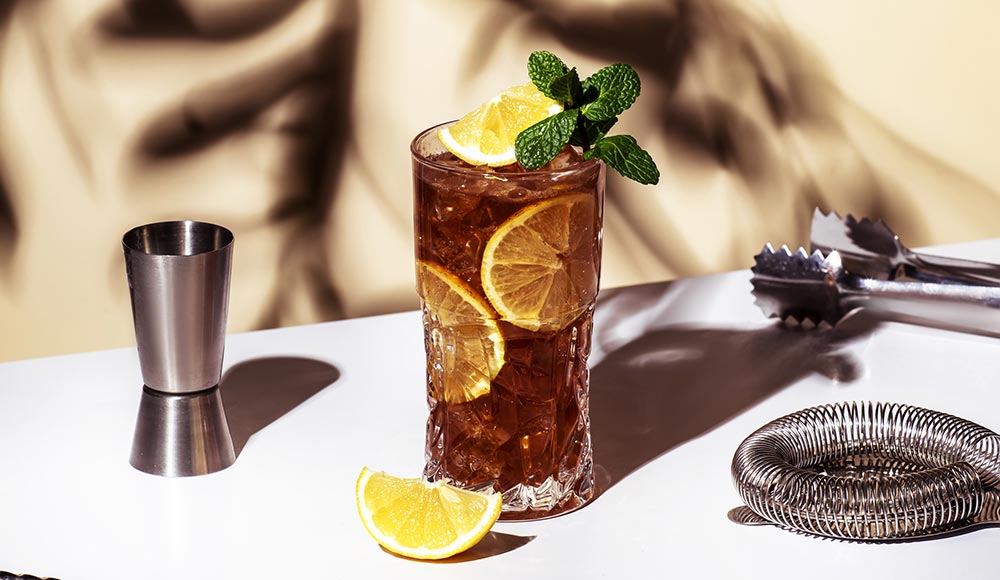
cocktail names Long Island Iced Tea

It is a strong cocktail made with a combination of vodka, rum, tequila, gin, triple sec, lemon juice, simple syrup and topped up with cola. The cocktail is believed to have been invented in the 1970s by a bartender named Robert ‘Rosebud’ Butt in Long Island, New York. The name ‘Long Island’ is derived from its place of origin, and the ‘Iced Tea’ part is a nod to the drink’s appearance, as it closely resembles a glass of iced tea.


Harvey Wallbanger

The Harvey Wallbanger is a tall cocktail with vodka, Galliano liqueur and orange juice.
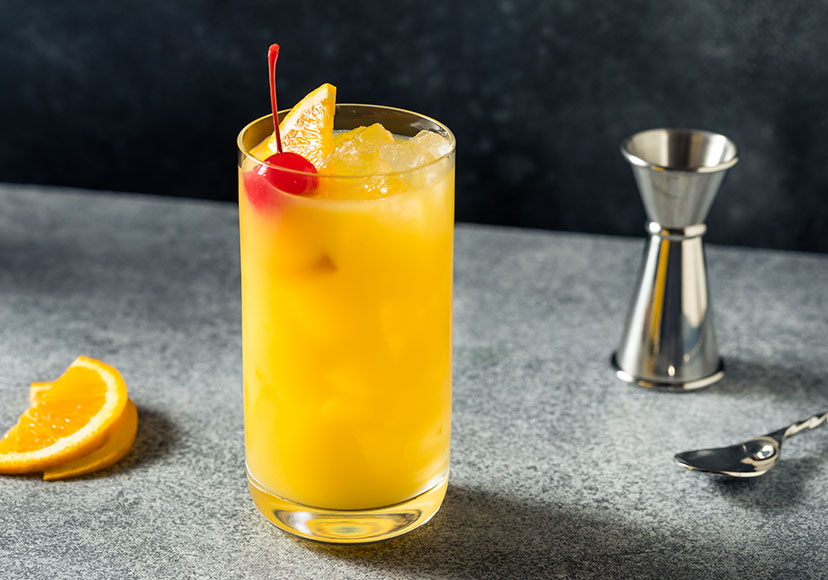
cocktail names Harvey Wallbanger

The exact origin of the name is unclear, but it is believed to have been popularised in the 1950s and 1960s. The most common story behind the name is that it was named after a California surfer named ‘Harvey,’ who would frequently bang against walls while drinking this cocktail. Be careful of these, as they live up to their namesake!


Fuzzy Navel

The Fuzzy Navel is a simple cocktail made with peach schnapps and orange juice.
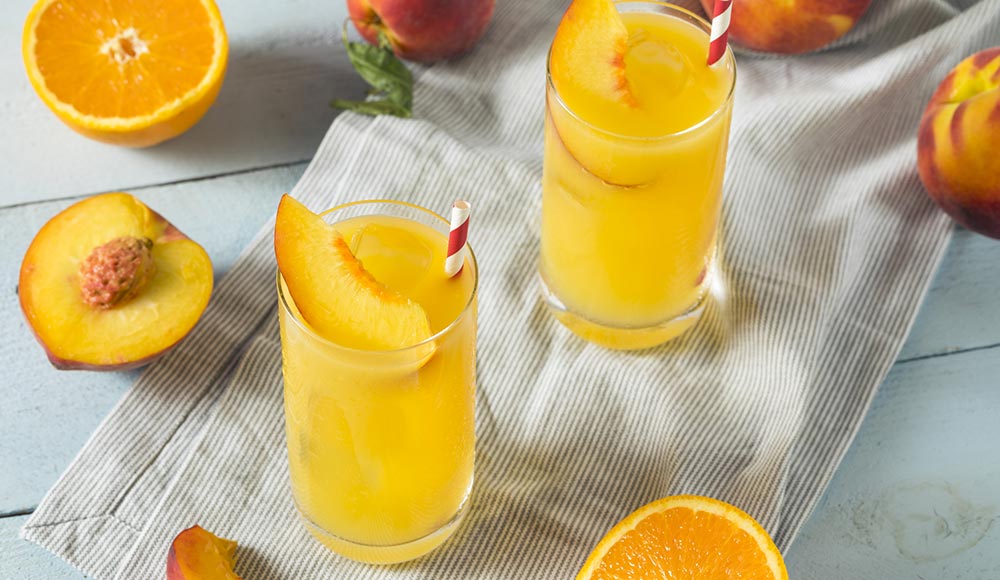
cocktail names Fuzzy Navel

Its name is a playful reference to its two main ingredients. ‘Fuzzy’ comes from the peach schnapps, as peaches are often described as having a fuzzy or velvety texture, and ‘navel’ comes from the orange element, as navel oranges actually grow a second ‘twin’ fruit opposite its stem, which resembles a human belly button. This one spells hangover to us!


Rusty Nail

The Rusty Nail is a classic cocktail made with Scotch whisky and Drambuie, a honey and herb liqueur. The name is believed to have originated in the 1960s, and may have been inspired by the rusty colour of the Drambuie when mixed with Scotch.

cocktail names Rusty Nail

The combination of the smoky Scotch flavour and the sweetness of the Drambuie creates a balanced and flavourful drink.


Screwdriver

When it comes to cocktail recipes, the Screwdriver is as simple as they come, it requires no more than two basic ingredients – vodka and orange juice – in fact, this is exactly what it’s referred to in the UK. The vodka-based cocktail was created during the First World War.
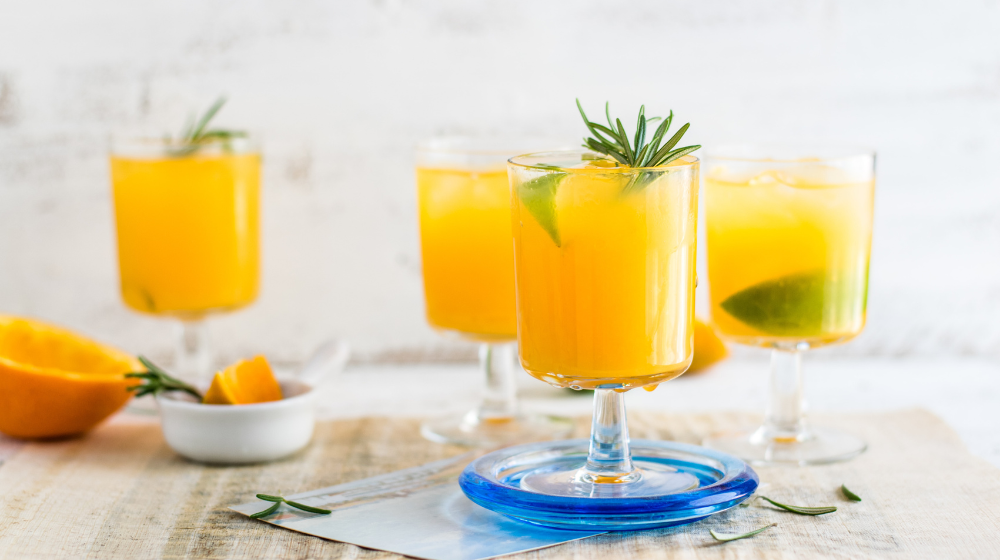
cocktail names ScrewdriverOne story recalls that American workers in China and Turkey apparently drank on the job and made cocktails with orange juice and spirits. Having no utensils to stir their drinks, they resorted to using a grimy screwdriver. As they say, necessity is the mother of invention.


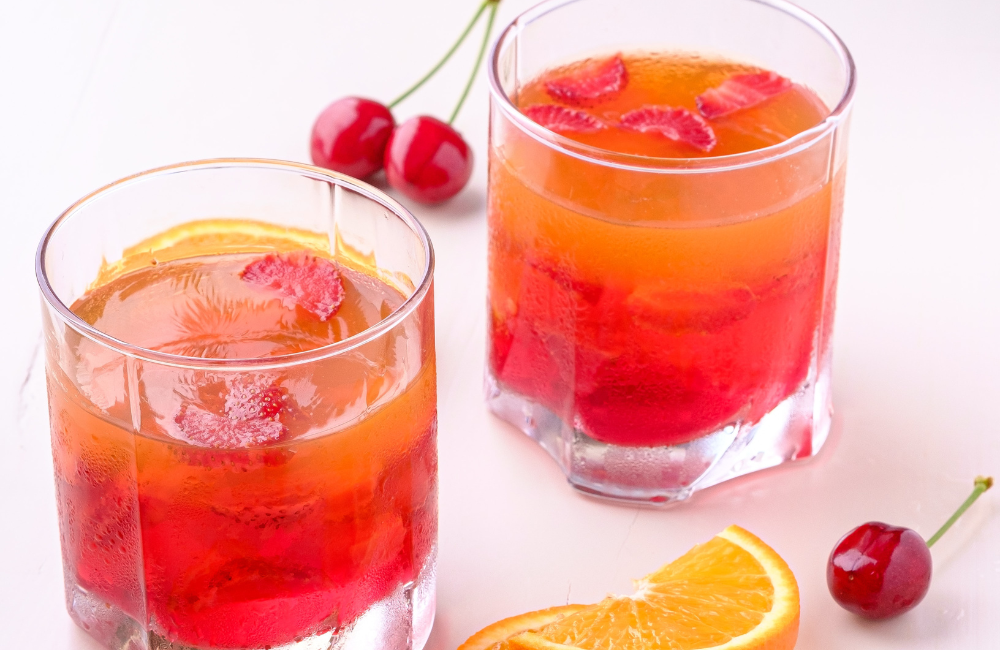
Shirley Temple

This cocktail was naturally named after popular Hollywood child star, Shirley Temple. The young’un started her acting career at the tender age of three and later went on to be a singer before being made Ghana and Czechoslovakia Ambassador of the United States.
cocktail names Shirley Temple

Legend has it that Shirley once went out to dinner at Chasen’s Restaurant in California with her grownup entourage who ordered alcoholic drinks. Their bartender apparently fixed young Shirley a drink, so that she wouldn’t feel left out, sans alcohol, of course.

The non-alcoholic drink – made using lemon-lime soda, lemon juice and grenadine – has an adult version that definitely contains booze…

Dirty Shirley

The Dirty Shirley is a variation of the Shirley Temple above. The ‘dirty’ version adds vodka to the mix, giving it an adult twist. The name is a playful and suggestive reference to the original Shirley Temple drink, with the addition of alcohol.


Sidecar

The history of this Cognac-based drink aren’t exactly clear, but its rumoured origins place it at the end of the First World War. Apparently WWI veteran, Henry MacElhone, left the London Royal Navy Air Service after serving to become a bartender in 1919.
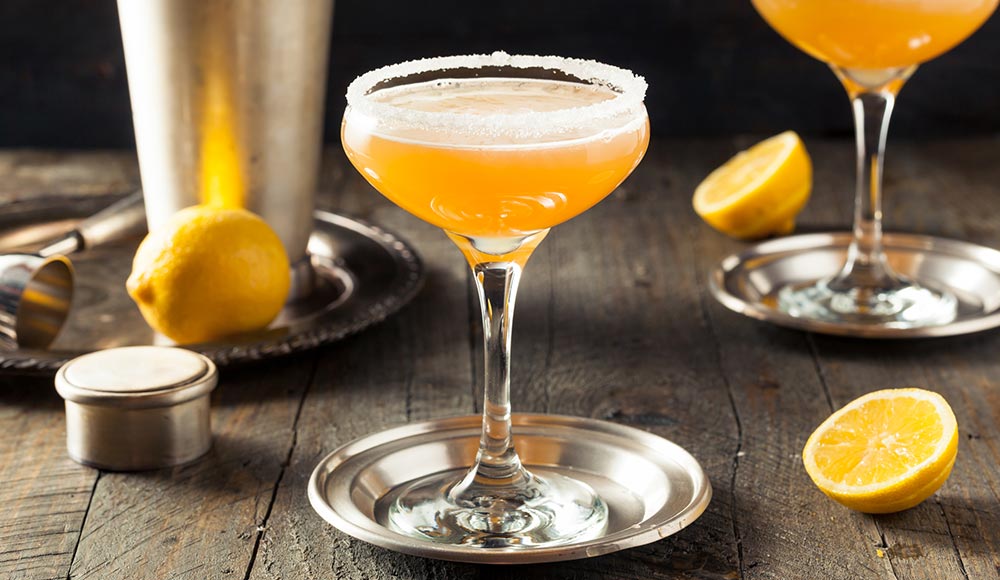
cocktail names Sidecar After concocting a variety of cocktails, he later move to Paris and eventually bought a bar, which he named Harry’s New York Bar. The Sidecar was one of the many cocktails he created, which gained popularity and shaped the cocktail culture in France.

Henry named the cocktail after his former captain during the war, who frequently rode ‘sidecar’ on a motorcycle.

The combination of Cognac, orange liqueur (typically Cointreau, triple-sec, Grand Marnier or dry curaçao) and lemon juice gives this drink its distinct sour taste.


Sex on the Beach

Based on blockbusters, we know that most Spring Break ventures never lead to anything good – this delicious cocktail might just be the exception. In the U.S. Spring Break of 1987, a peach schnapps company went around pitching different bars to promote their product. Barmen were asked to create interesting peach schnapps-based drinks.
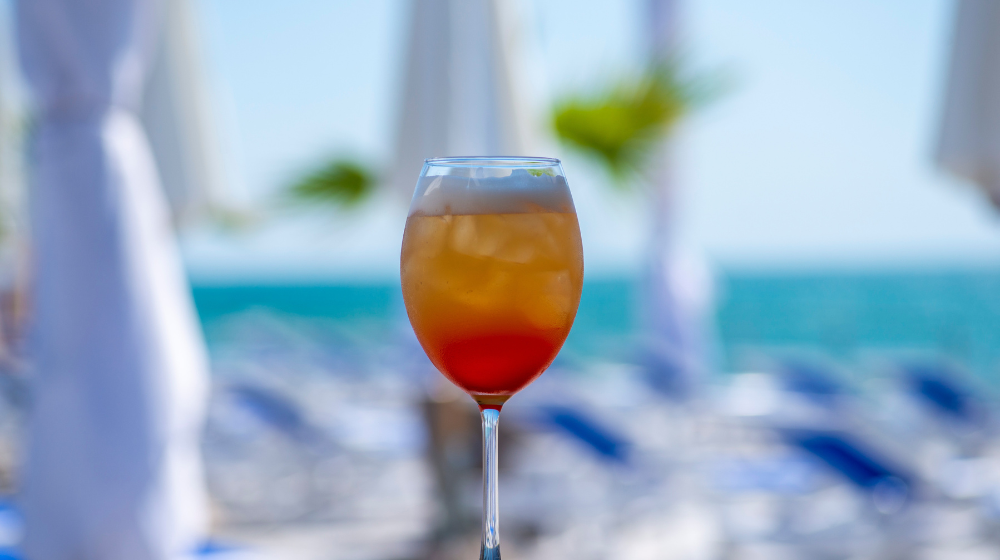
cocktail names Sex on the BeachThe bar that created the best drink was based in Florida and mixed peach schnapps with vodka, orange juice and grenadine. They ended up naming the drink ‘Sex on the Beach’ in honour of the two things Florida was best known for – their beaches and …

Now that you know about the origins of cocktails, get to know these alcohol spirits.

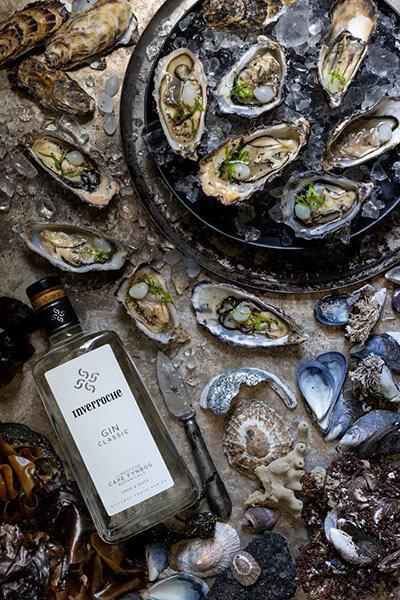
Signature Gin Cocktails You Must Try & Their Origins

There’s no doubt that gin is here to stay. It’s lived through the Jazz Age, Prohibition, and even defied Lockdown bans, making it the drink of champions. We take a look at the origins of some gin-based cocktails that go beyond gin and tonic. From Negronis to French 75s, these classic gin cocktails have stood the test of time and are all a must-try.

French 75

Can’t decide whether you want gin or Champagne? Have a French 75. This effervescent, Champagne-filled and gin-based cocktail was named after its potency, which was believed to be as intense as the shell-shocking French 75mm field gun.

Created by World War I veteran-turned-bartender, Harry MacElhone, the French 75 would become a favourite to many and feature in classic films like Casablanca.

The cocktail recipe is pretty similar to a Tom Collins, with the difference being that a French 75 is made with Champagne. It can be served out of a Champagne flute or coupe if you want a fancier appeal; it’s also common to serve a French 75 out of a highball glass. This gin-based cocktail also has a Brandy variation, better known as a French 125.

Add a dash of pink gin to your drink and make this Pink French 75.


Gibson

You may or may not know this drink from the popular Netflix show, Queen’s Gambit. In the series, the main character, Beth, asks her adoptive mother whether she’s drinking a martini, to which her mother responds “A Gibson, I find the onion more refined than the olive.” This classic cocktail has one very distinguishable ingredient – apart form the inclusion of gin and vermouth, it contains er, pickled onion. Interestingly, most pre-Prohibition drinks omit olives and the fancy ‘schmancy’ garnishes we use today.

The origins of the Gibson cocktail are widely rumoured; it’s believed that the drink was invented in the 20th century. A fellow by the name of Charles Dana Gibson once asked a bartender to fix him a drink better than a Martini and to swap out the olive for an onion pickle.

Another story, and probably one of our favourites, involves an investment banker by the name of ‘Gibson,’ who frequently treated his clients to those famous ‘three-martini business lunches.’ He would ask the bartender to pour water in a martini glass and replace the olive with pickled onion, so he could tell his drink apart from the crowd, but also so that he wouldn’t get pie-eyed during business deals.

Try these inspired Gibson Cocktail Oysters with Lime.


Gimlet

Gimlets have a distinct limey taste, given by the addition of Rose’s Lime Cordial. In fact, that limey taste is what earned similar citrus mixed cocktails the name ‘Limeys.’

The Gimlet’s origins date back to the 19th century, when rear admiral, Sir Thomas Desmond Gimlette, served sailors gin chased with lime juice. This apparently masked the bitter taste of lime juice, which was served as a treatment for scurvy – shoutout vitamin C.

Due to the lack of fresh food supplies, sailors often didn’t have access to fresh limes nor lemons. An 1867 law was instated where Rose’s Lime Cordial had to be stocked on ships and a daily serving administered to sailors as anti-scurvy medication. If we look at the history of gin itself, mixers used to make gin cocktails were thought to have medicinal properties, like the quinine in tonic water believed to treat malaria. Nothing cures like a G&T or Limey!

To make a Gimlet, you need half gin (Plymouth gin is often used) and half Rose’s Lime Cordial. Ice can be added, after which the mixture is stirred and strained into a martini glass.


Gin Fizz

An effervescent and creamy cocktail that bears resemblance to the Tom Collins. There are actually a couple of gin cocktails that are a spin-off of the Tom Collins, Gin Fizz is one of them. While a Tom Collins is made with lime cordial, a Gin Fizz can be made using either lemon or lime, as well as simple syrup, a dash of soda, gin and egg white.

Originally known as the ‘Ramos Gin Fizz’ after the inventor, Henry C. Ramos, a New Orleans-based bartender and preacher!

The first Ramos Gin Fizz was apparently made from cream, gin, milk and orange-flower syrup that was shaken to the core, to produce the unmistakable creamy texture for this signature gin cocktail. Legend has it that the cocktail became so popular that Ramos employed twenty barmen as designated cocktail shakers to get the desired creaminess.


Negroni

Negronis have been around for some time, and while it’s a tipple with an acquired taste, we say bitter is better. There are many Negroni variations available, with minor substitutions – in fact, that’s how this drink was created.

An Italian guy by the name of Count Camillo Negroni, ordered an Americano – the cocktail not the coffee – which is made from Campari, sweet vermouth and club soda. This time, he wanted ‘something stronger’ and asked the barman to replace the soda with gin, and so the Negroni was born.

The most important part of a Negroni is the gin, you don’t want to skimp on quality. You could easily make it at home with only three ingredients – equal parts Campari, sweet vermouth and gin. Famed actor and director of Citizen Kane, Orson Welles, was a notorious Negroni lover and helped spike its popularity. He was once quoted saying “The bitters are excellent for your health, the gin is bad for your liver.” We’ll drink a Negroni to that!

Try this Negroni Sbagliato Poptail; it’s the ultimate refresher.


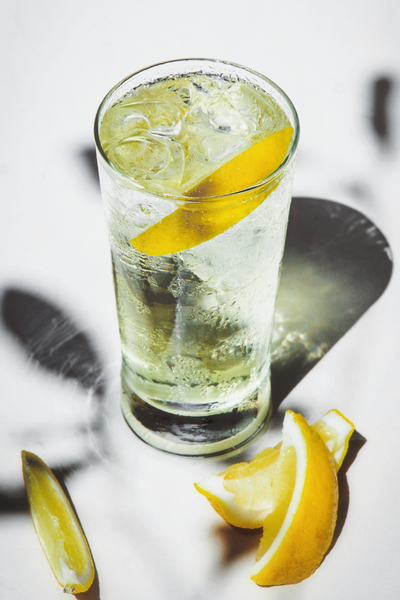
Tom Collins

Traditionally, a Tom Collins is stirred, not shaken – combining lemon juice, sugar, carbonated water and gin in a highball or Collins glass. A whisky version of this gin cocktail also exists, known as a ‘John Collins.’ Some believe that the Tom Collins actually stemmed from the whisky version, as one recipe had the option of making it with Old Tom gin. Alas, the origins of Tom Collins are widely speculated, with the first official recipe recorded in 1876 by bartender, Jerry Thomas, also known as the ‘Father of American mixology.’

According to the widespread rumour, the Tom Collins cocktail was named after one of the biggest practical jokes of 1874 in New York.

The nature joke was to prank someone and tell them that a ‘Tom Collins’ talked smack about them, which would send the person off in a tizzy searching for the illusive Tom Collins. The butt of the joke was that Tom Collins never really existed – to anyone’s knowledge that is. If there ever was a man by that name, they deserve a lifetime supply of Tom Collins’.

Curious? Learn all about the stories behind these weird cocktail names.

SANCCOB opens The Coffee Fountain, a new café overlooking Table Mountain

The Southern African Foundation for the Conservation of Coastal Birds (SANCCOB) is thrilled to announce the opening of The Coffee Fountain, a brand-new coffee shop situated in SANCCOB’s beautiful new Visitor Centre in Table View.

Indulge in a coffee break that helps make a difference in the lives of South African seabirds.


Brewing Conversations About Conservation

Overlooking the scenic Rietvlei Nature Reserve and offering expansive views of Table Mountain, SANCCOB’s Visitor Centre offers an educational, immersive experience aimed at raising awareness about the critically endangered African penguin and other seabird species – many of which are also endangered and in urgent need of public support. With informative exhibits, displays and daily tours, the centre offers something for everyone, whether you’re an avid nature lover, a curious learner or simply looking to entertain visitors with a meaningful and memorable experience.

Visitors can also participate in guided tours of the seabird hospital, where they can observe these fascinating seabirds up close, learn about the organisation’s conservation efforts, and even witness the charming penguin waddle. There is also a beautiful curio shop filled with wonderful gifts for all ages, just in time for the festive season.


Visitor Centre Tours

Tours are conducted daily at SANCCOB’s centres, and for an optimal experience, visitor groups are limited to 10 people per group. Bookings are essential to guarantee your tour spot; walk-ins will only be accommodated if space is available.

The Coffee Fountain

SANCCOB is open daily from 08h00 to 17h00. Can’t make it in person? No problem! The education team can provide you with guided virtual tours of the facility. You can also explore their online shop and support SANCCOB from wherever you are.

Join them at The Coffee Fountain and discover a peaceful oasis with a purpose. Indulge in a coffee break that helps make a difference in the lives of South African seabirds. Whether you’re there to learn, relax or explore a career in conservation, SANCCOB’s Visitor Centres offer a chance to connect with and give back to nature.

For more information on booking tours and how to donate, visit SANCCOB’s website at the link below, call 021 5576155 or send an email

sanccob.co.za | Facebook | Instagram

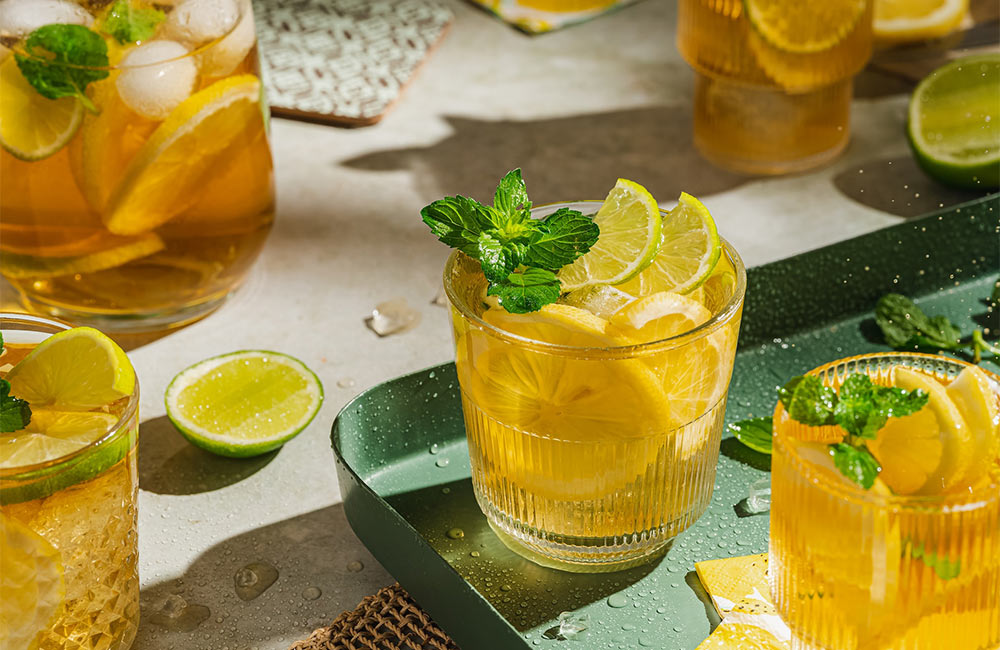
Cocktail Infusions To Keep Cool This Summer

Everyone has their cocktail – some prefer the classics, while others enjoy the element of surprise. Simmer down with these summery cocktail infusions, from pickle juice to granadilla pearl cubes and punchy poptails.

Frozen Fruit Infusions

Keep cool with these icy and fruity infusions.

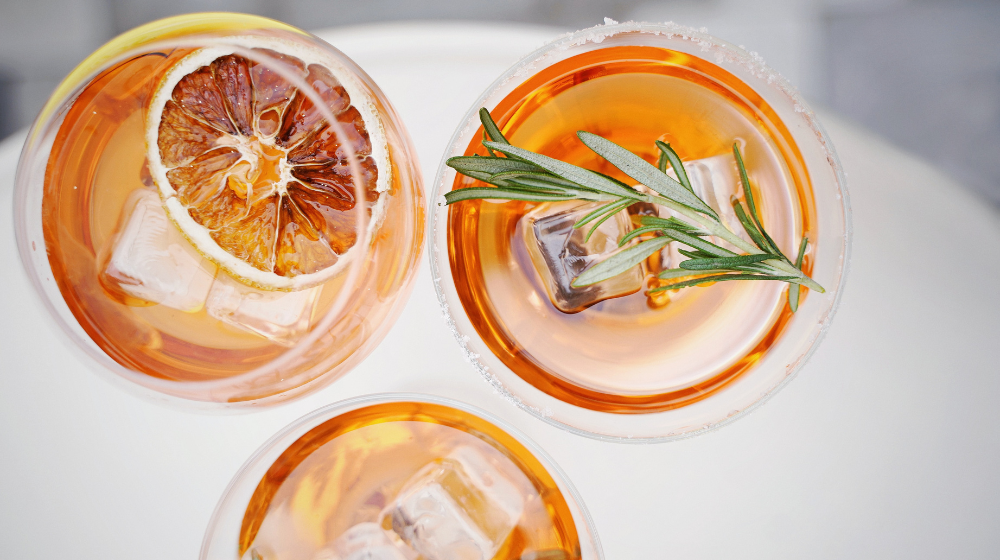
Citrus slices

Infuse zingy and zesty goodness into your cocktails with frozen citrus fruits. You don’t need to spend hundreds on fancy ice moulds. Simply cut whole lemons, oranges or grapefruits into wedges or slices and store them in Ziploc bags in your freezer.

Granita

Elevate cocktails with a granita infusion. Instead of plonking ice into your drinks and watering them down, create an adult slushie. Make some simple syrup, blitz fresh fruit with your favourite spirit, mix the two and place in a container to freeze. Break up the ice particles (using a fork) every hour for four hours. Add a couple of scoops to a glass and violà.

We love this Pineapple & Lime Granita with the addition of vodka. For a dessert version, enjoy this Frosé Raspberry Granita made with a touch of Rosé.

Granadilla Pearls

Give your cocktails a burst of juicy goodness with granadilla pearls. These tiny, tart orbs can be added to any drink for an explosion of tropical flavour. Freeze them into ice cubes or let them mingle freely in your glass for an unexpected pop in every sip.

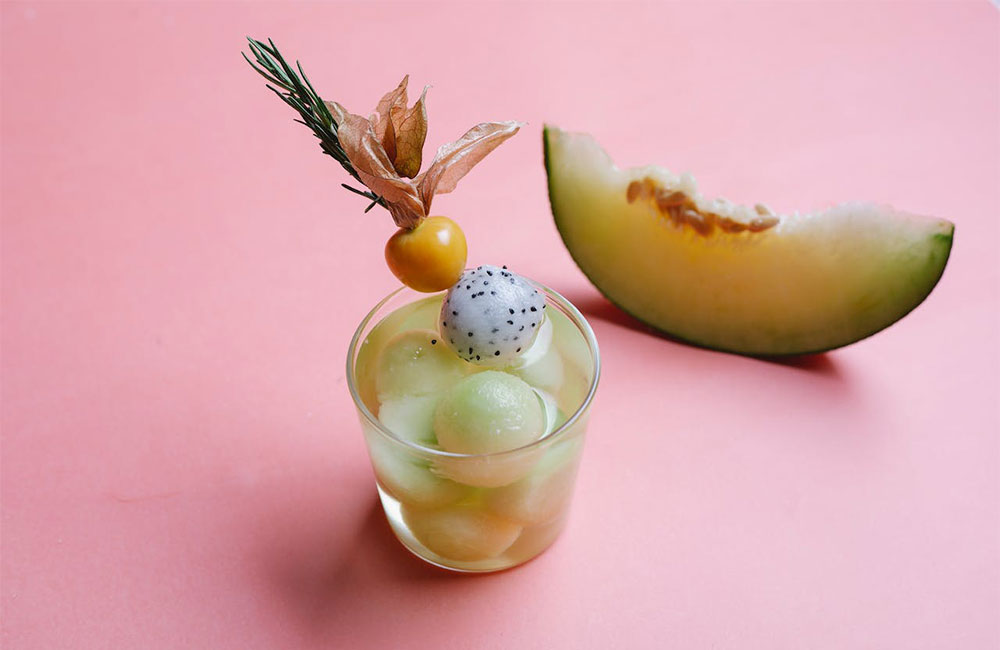
Melon balls

Freshen up drinks with frozen melon balls. For a vibrant cocktail, use a variety of melons – sweet, water or winter melon. Tropical fruits like paw-paw and mango also work really well; all you need is a melon baller/ball cutter to scoop them.

Popsicles & Poptails

Surprise guests with this fun take on cocktails; they’ll make you feel like a kid again but remind you why it’s fun being an adult. Plus, it’s the ultimate way to cool down on hot days. All you need are popsicle moulds; use a blender to blitz your favourite cocktail ingredients and add fresh fruit like berries, pineapple, kiwi or mango – whatever you like. Pour the mixture into the mould and freeze until ready. Pop in a glass and top up sparkling wine, or tonic water/ginger ale/lemonade if your poptails already pack a boozy punch.

Simmer down with this Negroni Sbagliato Poptail or Moscow Mule Poptail

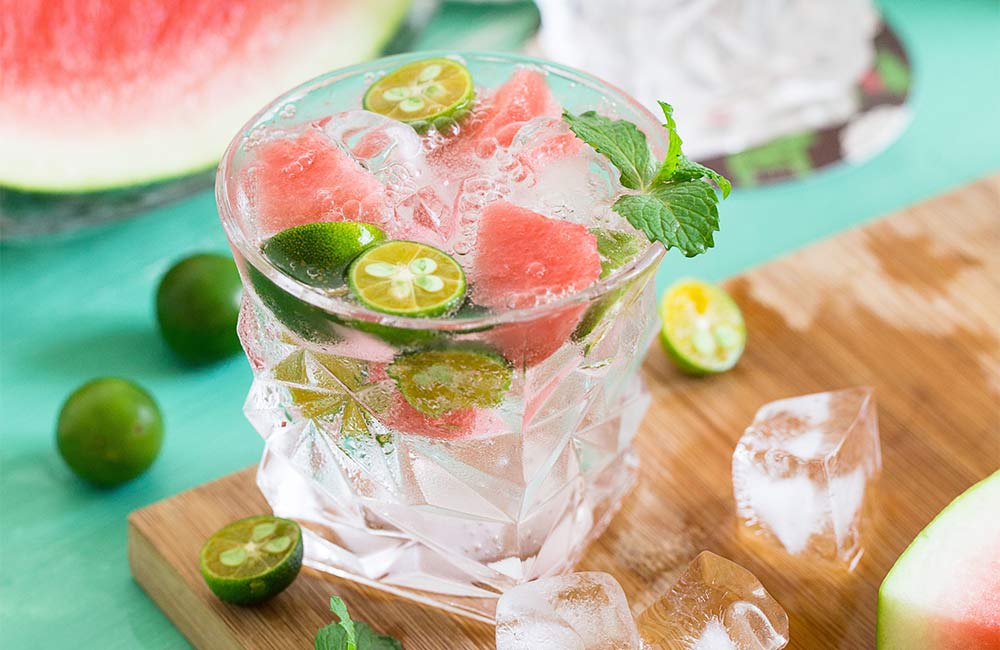
Watermelon Cubes

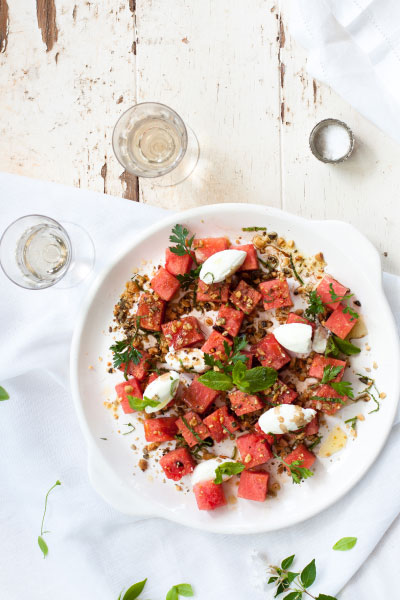
Beat the summer heat without watering down your drink by freezing watermelon juice into cubes. These cubes not only keep your beverage cool, but infuse it with the taste of everyone’s favourite summer fruit. It’s also a great way to use up all your watermelon if you have a surplus, or if your watermelon is too floury.


Fresh Herbs

Add a herbaceous flavour to your drink.

Basil-infused Ice Cubes

Transform your cocktail by infusing ice cubes with fresh basil. Simply freeze basil leaves in water; as they melt into your cocktail, they release a fragrant and herbaceous essence that complements a variety of spirits, from gin to vodka.

Thyme-infused Simple Syrup

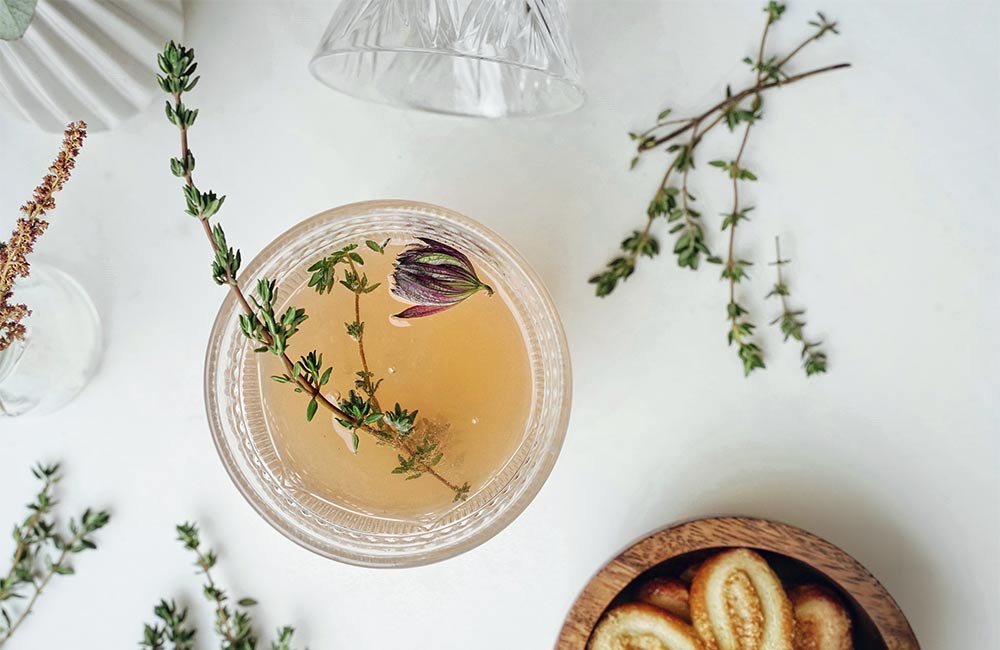
Elevate your cocktail’s sweetness with a thyme-infused simple syrup. Let thyme sprigs simmer in equal parts water and sugar, creating a syrup that adds a subtle herbal note to your drinks. It pairs exceptionally well with citrus-based cocktails and even margaritas.


Brines & Cordials

Balance sweeter flavours with these delicious brines.

Elderflower cordial with edible flowers

Glam-up cocktails with floral flavour. Elderflower adds a fragrant and delicious note to drinks, and instantly makes them more sophisticated. Elderflower can be quite intense, so add tonic to mute the flavour slightly. Simply fill your ice cube tray with elderflower-infused mixture; before placing it in the fridge, add a couple of edible flowers to your cubes.

Limoncello & Mint

The only way you could possibly make limoncello more delicious is by chilling it. Add to your favourite tonic and a few sprigs of fresh mint for a refreshing and tasty cocktail.

Olive Brine

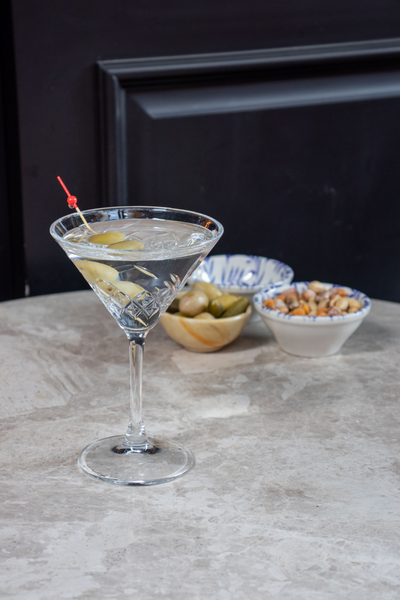
Move beyond the classic dirty martini and experiment with olive brine. Infuse your favourite spirits with olive brine for a savoury kick, or add a splash to a citrusy cocktail for a salty yet pleasant surprise.

Kimchi Juice

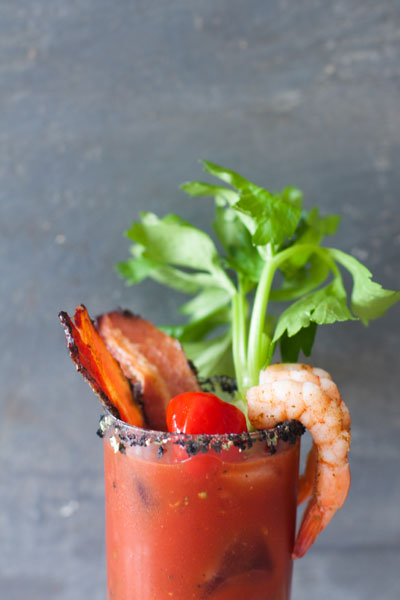
Take your Bloody Marys to the next level with kimchi juice; the spicy kick will leave guests wanting more. There’s a method to this madness – trust us.

Pickle/Gherkin Juice

Another odd but delicious infusion. The tangy notes add a depth of flavour that pairs wonderfully with various spirits. Try it in a unique variation to G&Ts or tequila-based cocktails – feel free to garnish with a whole pickle as a tasty snack.

Want more? Check out these summer cocktail recipes.

14 Rice Recipes You’ll Want To Make Again & Again!

Jasmine, basmati or sushi? Short grain or long grain? Whichever you prefer doesn’t matter, as long as you go with the grain. If you love this versatile cereal as much as we do, then you’ll be obsessed with these rice recipes. Whether craving chicken biryani, sticky rice or classic Italian risotto, this round-up shows you how to make the most of this cultural staple.

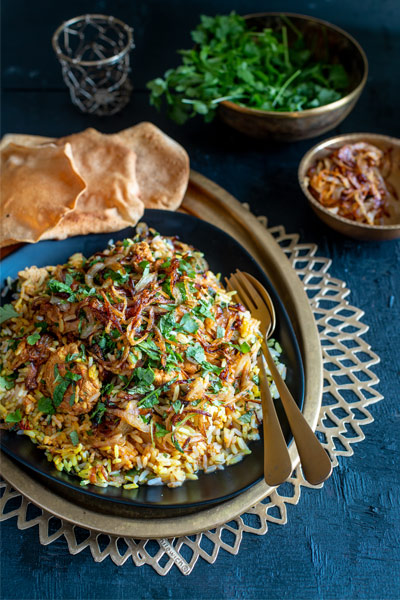
Easy Chicken Biryani

Biryani is a dish that’s a labour of love, but this recipe makes it simple.

GET THE RECIPE

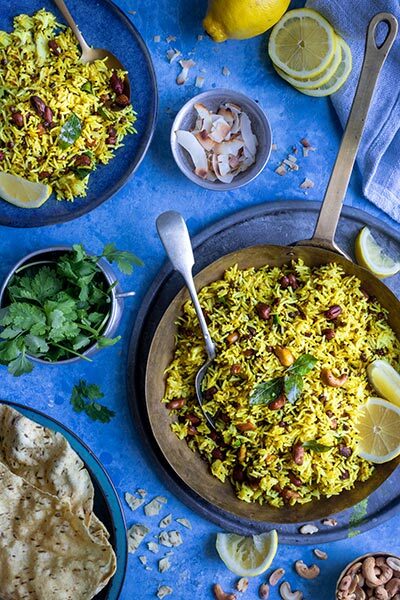
South Indian Lemon Rice

Fragrant and zesty, this South Indian-style rice will be a hit with everyone!

GET THE RECIPE

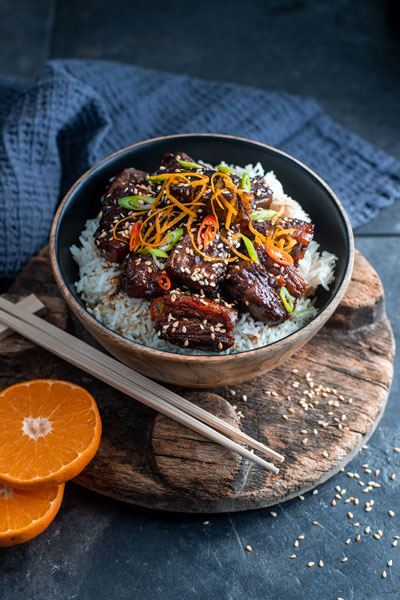
Sticky Asian Pork Belly with ClemenGold Glaze

Pork belly and sticky rice – we couldn’t name a better duo, even if we tried.

GET THE RECIPE

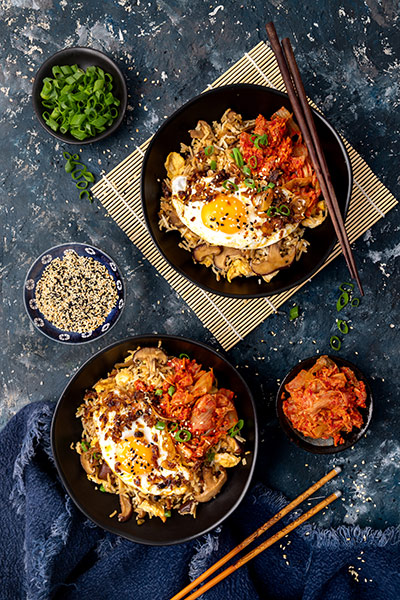
Chilli Crisp Fried Egg Rice Bowl

Egg-fried rice is always a winner! This version is packed with mushrooms and topped with sunny-side-up eggs fried in chilli crisp oil – one of our all-time favourite rice recipes.

GET THE RECIPE

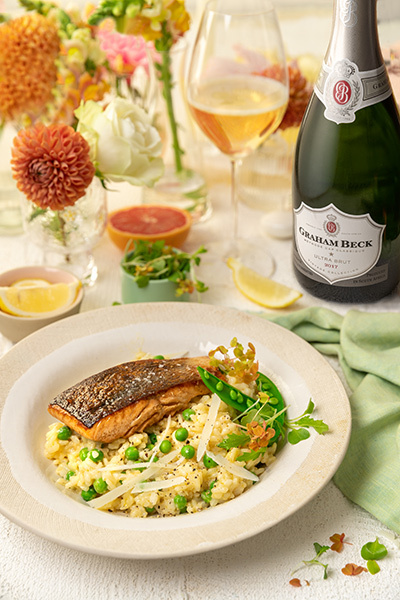
Pan-fried Salmon on Pea & Lemon Risotto

Impress guests with this elevated risotto. The salmon and zesty rice complement each other perfectly.

GET THE RECIPE

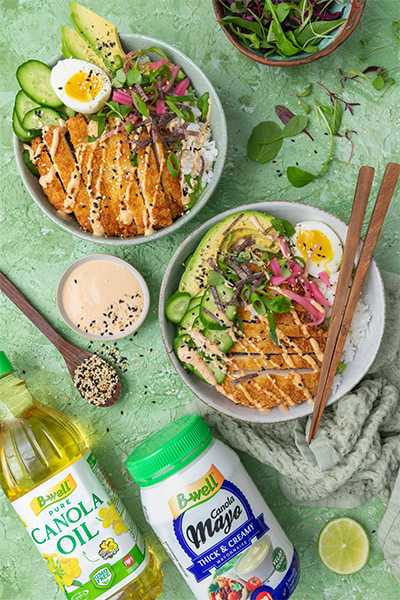
Chicken Katsu Bowl with Sticky Rice

Simple yet satisfying! The crispy chicken and jammy egg are the ideal pairing for the sticky rice; drizzle with sauce for the ultimate bite.

GET THE RECIPE

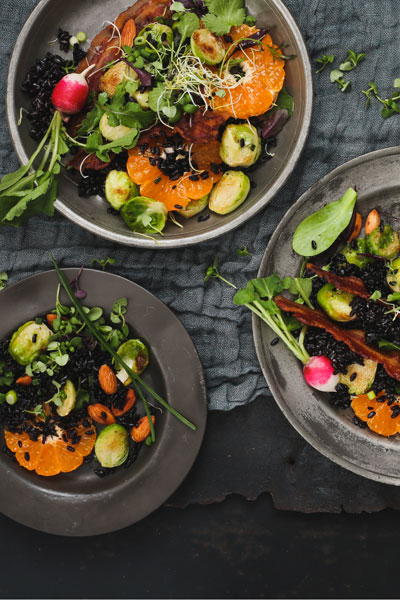
Brussels Sprouts, ClemenGold & Black Rice Salad

A tasty salad packed with zesty goodness, Brussels sprouts and crispy bacon.

GET THE RECIPE

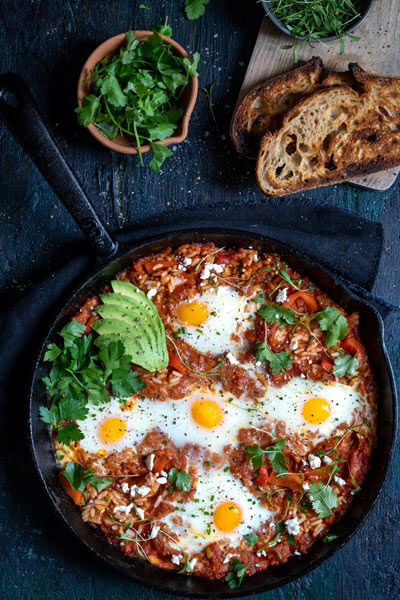
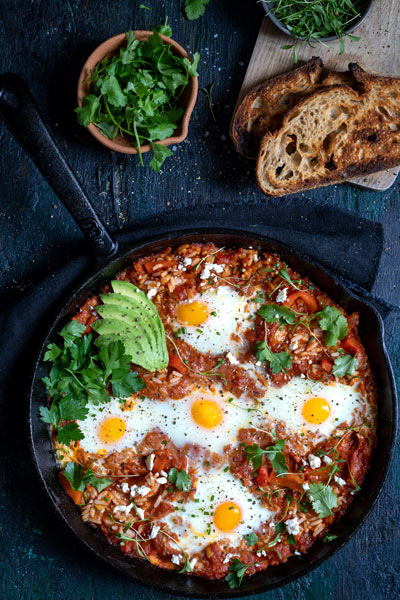
Rice Shakshuka

Next time, add rice to your shakshuka for a fragrant and filling feast.

GET THE RECIPE

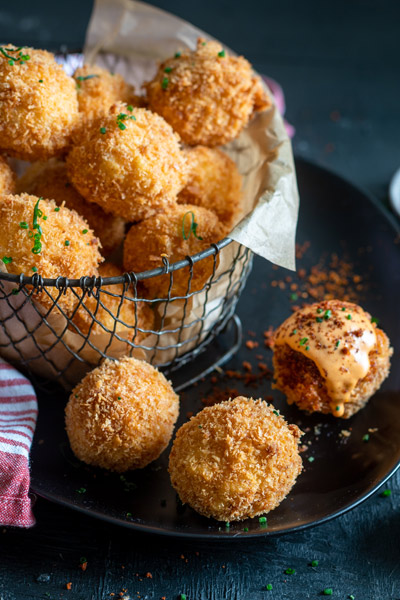
Deep-fried Rice Balls with Chorizo Dust & Chipotle

These rice-filled balls are deliciously crunchy and make for the ideal snack. Dip into the chipotle sauce for a spicy kick.

GET THE RECIPE

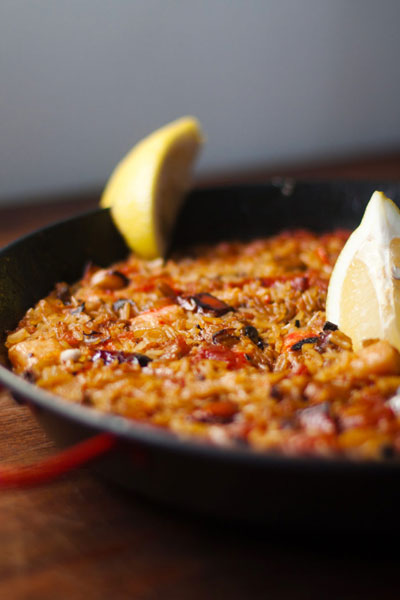
Seafood Paella

You don’t have to visit Valencia for the perfect paella. This one-pot wonder is filled with Mediterranean flavour.

GET THE RECIPE

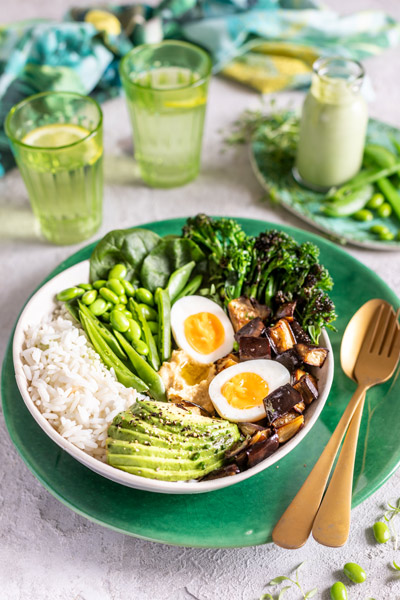
Green Veggie Bowl with Green Goddess Dressing

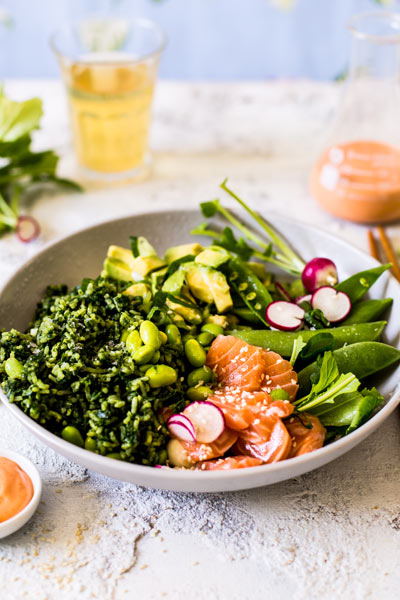
Rice has saved many a dinner dilemma; this wholesome bowl is one way to repurpose last night’s leftover rice and eat all your greens in one go.

GET THE RECIPE

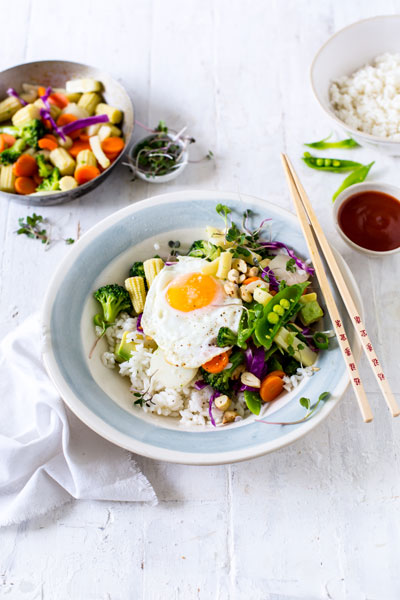
Sticky Asian Rice Bowl

This classic will become your go-to rice recipe for easy midweek dinners.

GET THE RECIPE

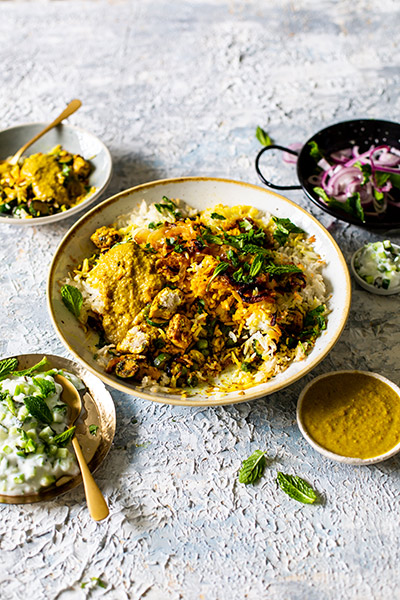
Vegan Saffron and Veggie Biryani with Onion Salsa

Vegan or not, this saffron-infused biryani will swoon your taste buds.

GET THE RECIPE

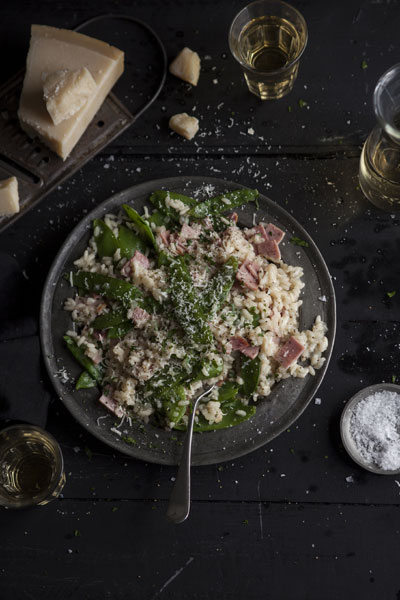
Pea and Gammon Risotto

Got gammon? Make this rice recipe for a classic pea and ham risotto.

GET THE RECIPE

Want more? Learn how sticky rice beats the hull out of the plain, parboiled kind

Spice Up Summer! The Best Braai Recipes For Outdoor Feasts

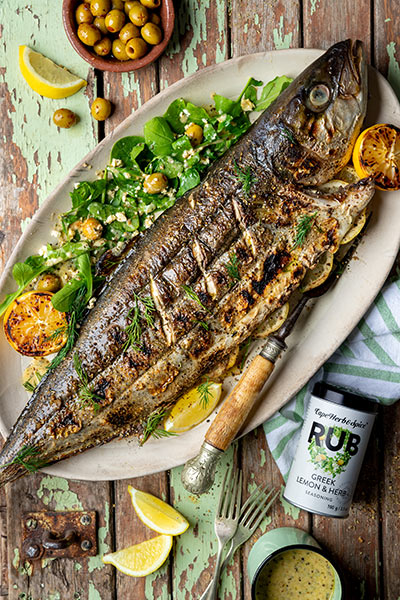
Everyone deserves a taste of travel this summer, even if it’s in your backyard. Savour the flavours of Greece with pork souvlaki or experience Louisiana through Southern-style comfort food with Cape Herb & Spice and these braai recipes. From casual dinners with friends to festive family gatherings, spice up summer and elevate outdoor entertaining.

Taste the Possibilities

Inspired by flavours from across the globe, the Cape Herb & Spice range of Rubs and Seasonings are ideal for making marinades, spicing mains and sprucing up sides. Try the Greek Style Lemon & Herb Rub for fragrant feasts, keep it classic with the Texan Steakhouse Rub, or add smoky flavour with the Smokehouse BBQ. If you truly want to shake up your braai menu this summer, pork is the way to go.

From tenderloin to succulent steaks, pork is one of the most versatile protein choices. Indulge in Bourbon BBQ Pork Belly Rashers or Pork Chops with Cajun Butter; these braai recipes will take your taste buds on a journey.


Bourbon BBQ Pork Belly Rashers & Baked Potatoes

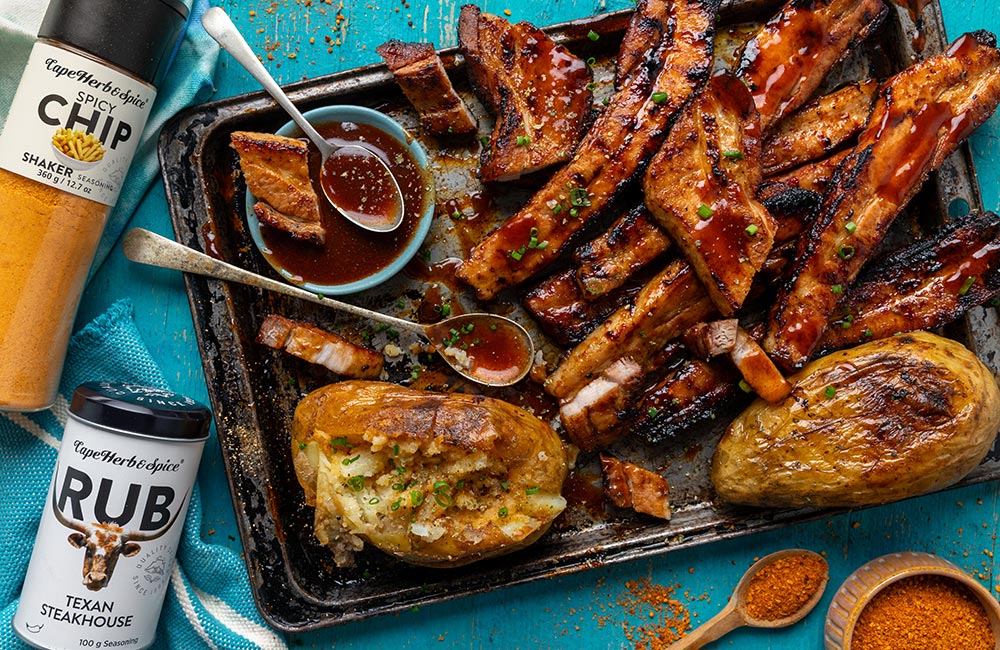
Basted with a sweet Bourbon barbecue sauce and charred to perfection, these sticky pork belly rashers are served with baked potatoes for the ultimate braai hit!

Spruce them up with Cape Herb & Spice Spicy Chip Seasoning Shaker and butter, and savour every bite.

Inspired by steakhouse-style ribs and jacket potatoes, this dish is elevated for a flavourful feast. Pork belly is doused with a Bourbon BBQ sauce that will have guests asking for more. The pork belly is seasoned with Cape Herb & Spice Texan Steakhouse Rub, a balanced blend of sea salt, brown sugar, garlic, mustard and paprika, then sliced into rashers and grilled. Infuse smoky flavour into the potatoes by placing them on the braai. Spruce them up with Cape Herb & Spice Spicy Chip Seasoning Shaker and butter, and savour every bite.

Recipe for Bourbon BBQ Pork Belly Rashers & Baked Potatoes


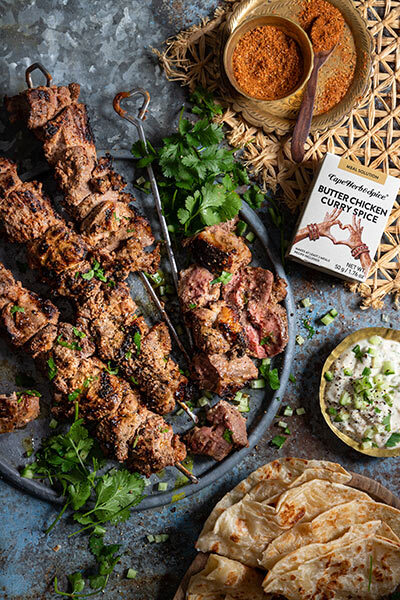
Braaied Pork Souvlaki

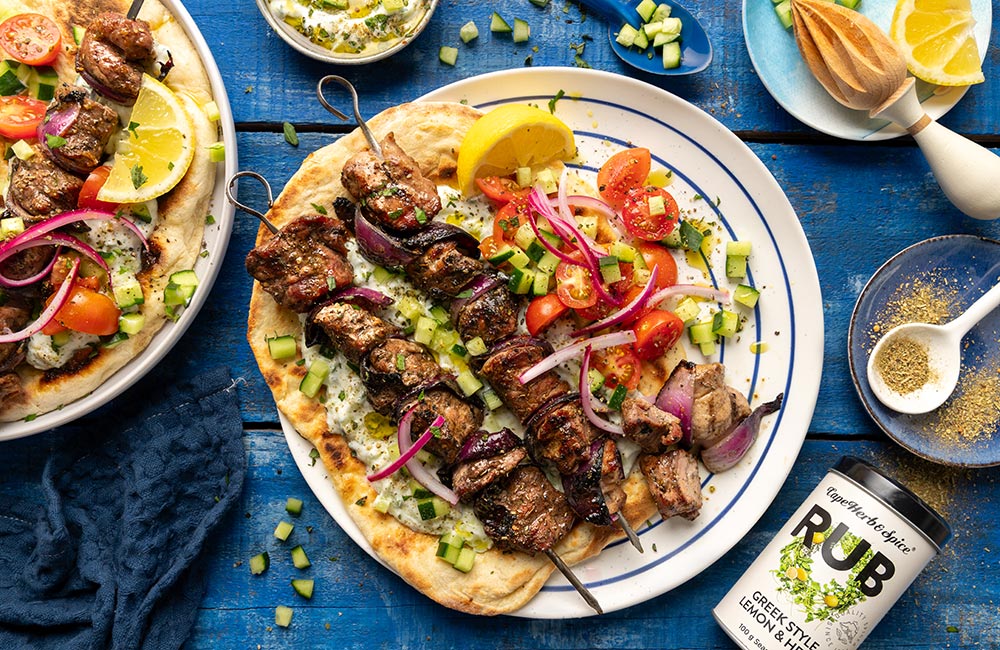
Enjoy the best of Greek street food with this take on souvlaki. For a true taste of Mediterranean magic, savour with friends and ouzo on blissful summer evenings.

Season with Cape Herb & Spice Greek Lemon & Herb Rub… infused with lemon zest, roasted garlic, rosemary and spearmint…

Pork neck steaks are incredibly tender, making them the perfect cut for this moreish meal. Season with Cape Herb & Spice Greek Lemon & Herb Rub; this fragrant and versatile rub is infused with lemon zest, roasted garlic, rosemary and spearmint – you’ll want to rub it on almost everything! Skewer the pork neck steak chunks with red onion petals in between and grill to perfection. Enjoy with flatbread topped with garlicky tzatziki, pickled red onion and a vibrant chopped tomato salad for a sumptuous feast.

Recipe for Braaied Pork Souvlaki


Smoky Pork Tenderloin with Pineapple Chilli Salsa

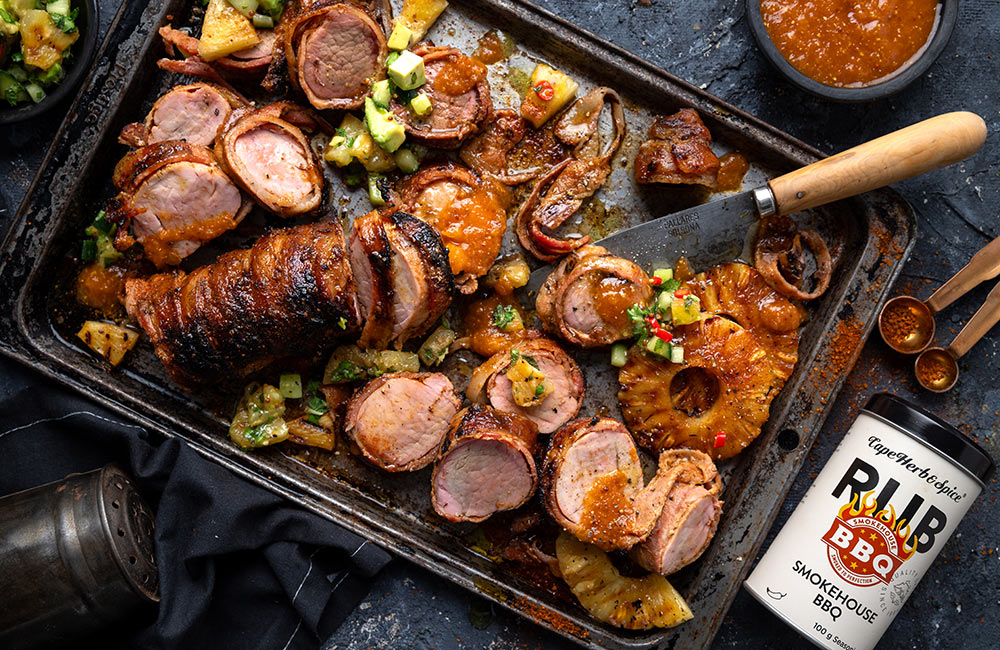
Elevate outdoor entertaining with this smoky pork tenderloin. Enjoy it with pineapple chilli salsa for a spicy kick and crisp slaw for a cooling contrast.

This lean cut is exceptionally tender and ideal for show-stopping roasts, whether served at a bougie braai or a casual festive feast.

Roasting tenderloin is trickier than your average cut, but with this recipe, you’ll get great results every time! This lean cut is exceptionally tender and ideal for show-stopping roasts, whether served at a bougie braai or a casual festive feast. To make it smoky and succulent, the tenderloin is seasoned with Cape Herb & Spice Smokehouse BBQ Rub and barded with bacon before being braaied. Baste with pineapple glaze for a sweet-tangy flavour, and enjoy with pineapple chilli salsa and green slaw for a memorable meal.

Recipe for Smoky Pork Tenderloin with Pineapple Chilli Salsa


Pork Chops with Cajun Brown Butter & Cornbread

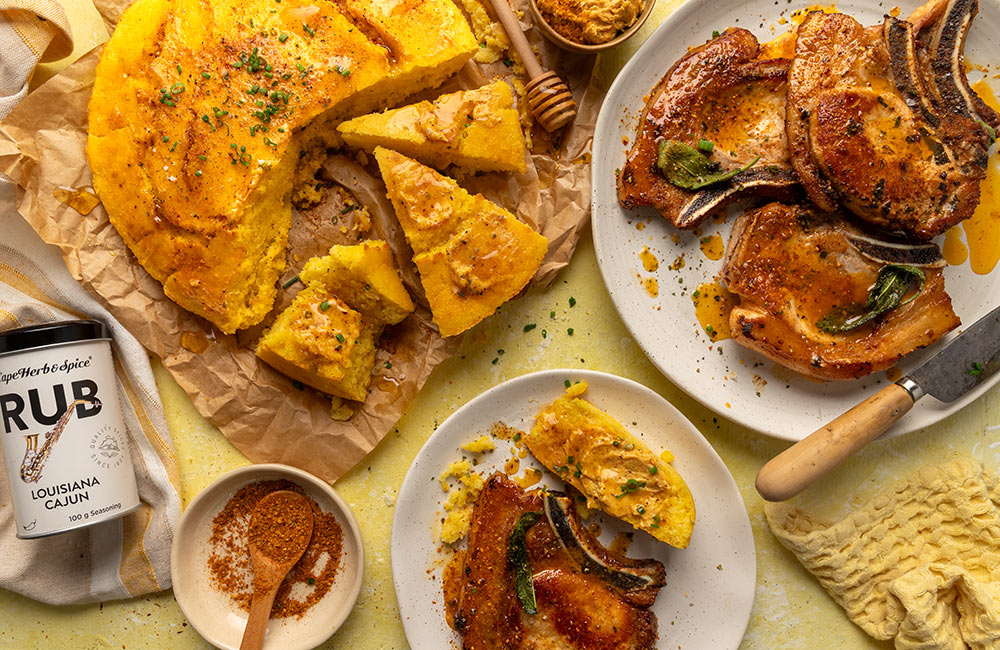
Folks from the South do it differently! Inspired by Cajun cuisine and South African braai flavours, this dish celebrates the best of comfort food and family feasting.

For a scrumptious spread, serve the pork chops with golden cornbread smothered with garlicky, cajun-spiced butter…

Southern comfort food and South African shisanyama – this is what Southern hospitality is all about! Drizzled with brown butter and infused with sage and Cape Herb & Spice Louisiana Cajun Rub, these juicy pork chops are unmatched! This Southern-style spice combines coriander, paprika, yellow mustard, chillies, cumin, marjoram and more, creating the perfect spice blend. For a scrumptious spread, serve the pork chops with golden cornbread smothered with garlicky, cajun-spiced butter and drizzled with honey.

Recipe for Pork Chops with Cajun Brown Butter & Cornbread

For more tasty inspiration, try these pork recipes and these fragrant delights

sapork.co.za | capeherb.co.za

Lightweights for the Win! Local Wine Producers Crack Down on Heavy Bottles

Heavier bottles, though they may feel luxurious or hint at high quality, carry a greater carbon footprint than their lighter counterparts – something that more local and international wine producers are considering as they try to phase out heavy bottles.

Some wineries are rethinking packaging altogether. Certain producers are investing in lightweight, eco-friendly bottle designs…


Heavy-handed Carbon Footprint

When picking up a bottle of wine, most people focus on the label design or the tasting notes promised within. Rarely do we consider the weight of the bottle, yet this often-overlooked detail has a substantial environmental impact.

It’s all linked to production. Heavier bottles require more raw materials, particularly glass, which demands significant energy to produce. Additional fuel is required for transportation due to the increased weight, resulting in higher greenhouse gas emissions every step of the way, from winery to warehouse to wine lover.

Transportation is one of the biggest contributors to this elevated carbon footprint. Simply put, the more a truck, ship or aeroplane carries, the more fuel it consumes, and heavy wine bottles take up more of these valuable resources. And for an industry that ships globally, this quickly becomes an issue on a large scale. While heavy bottles might create an impression of elegance, their environmental toll is increasingly at odds with the growing trend of conscious consumerism and sustainability practices.


Less Is More!

Thankfully, it’s not just up for debate – some forward-thinking wine estates and manufacturers are actively seeking solutions. Many are embracing lighter bottles, which reduce the amount of raw material required and lower transportation emissions.

Some wineries are rethinking packaging altogether. Certain producers are investing in lightweight, eco-friendly bottle designs and exploring alternative packaging formats, like cans or eco-cartons, which have a smaller carbon footprint and are easier to recycle. Others are creating closed-loop systems by working with glass manufacturers who use high percentages of recycled materials, reducing the need for new glass.

… lighter bottle formats don’t impact the quality of wines…

“From an environmental perspective, the benefits of lighter bottles are significant. The bottle in which wine is packaged accounts for as much as half of the total environmental impact of wine as a product. The proposed reduction in bottle weights from a current average of about 550g to the proposed 420g represents a more than 25% saving in carbon emissions,” as mentioned in the 2023 report by the Sustainable Wine Roundtable (SWR).

The weight of a standard 750ml bottle of wine you would buy at your local bottle store is approximately 550g, however, some international manufacturers are pushing for the lowest possible safe weighting, 330g for still wines.


How the Industry Is Lightening the Load

Wineries are teaming up with industry associations and sustainability coalitions to advocate for and educate on greener practices. Organisations like the International Wineries for Climate Action (IWCA) bring wineries together to set industry-wide carbon reduction goals, promote the use of eco-friendly packaging and encourage transparency in carbon reporting. This collective effort demonstrates a shared commitment to sustainability, one that emphasises the idea that premium wine doesn’t have to come at the environment’s expense.

In July 2024, ImpactSA reported that The Winery of Good Hope, Radford Dale’s sister wine label, re-launched their lighter bottles; the standard 750ml now weighs 410g per bottle. Obikwa wines, which claim to be one of the first local wine producers to adopt lightweight bottles, also switched to the 350g ultra-lightweight green bottles, which are about 25% lighter compared to standard bottles, say sources.
… their environmental toll is increasingly at odds with the growing trend of conscious consumerism and sustainability practices.

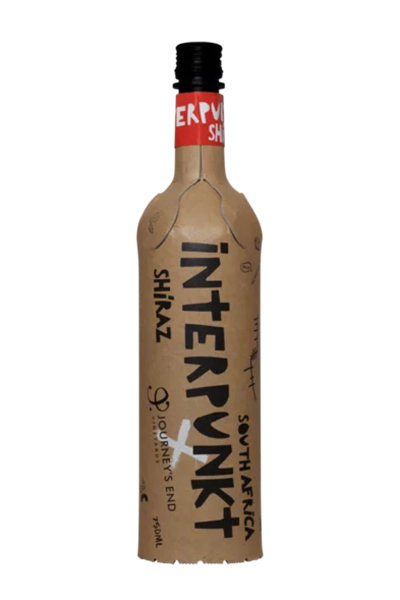
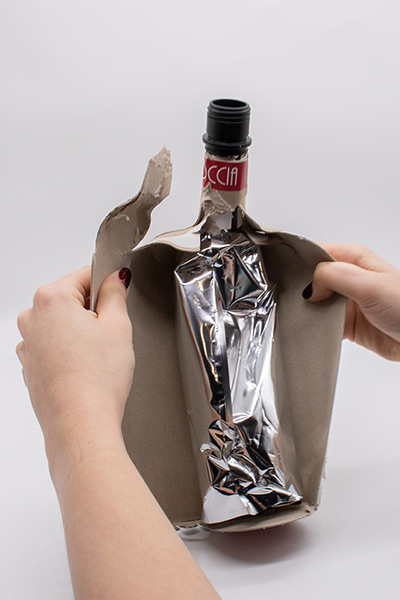
Last year, Journey’s End and Interpunkt launched their wine range, which is sold in paperboard bottles. The innovative product is locally available at Checkers. Leading manufacturer Frugalpac recently discussed plans to bring paper bottles to South Africa. They have made major strides in combatting the negative impacts of heavy wine bottles. According to the brand, “Frugalpac’s Frugal Bottle is made from 94% recycled paperboard with a food grade pouch to hold the liquid, is five times lighter than a glass bottle and crucially has a carbon footprint 84% lower than bottles made from glass.”

Pictured left: Journey’s End Interpunkt Shiraz; Image source: Checkers | Pictured right: Frugal Bottle; Image source: Frugalpac

Many local retailers are also encouraging consumers to make considered choices as the bevy of canned wines becomes increasingly popular across the board.

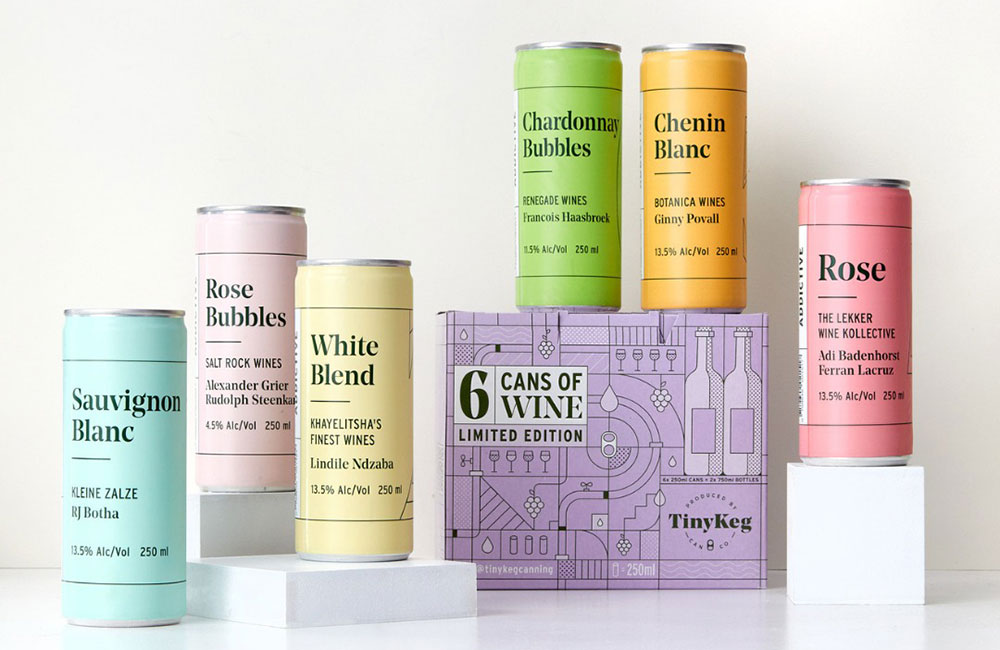
Tiny Keg Can Co., released a limited edition canned wine box in collaboration with six local labels and producers. Khayelitsha’s Finest Wines by Lindile Ndzaba, Kleine Zalze by RJ Botha, The Lekker Wine Kollective by Adi Badenhorst, Botanica Wines by Ginny Povall, Renegade Wines by Francois Haasbroek, and Salt Rock Wines by Alexander Grier formed part of the successful project.

Pictured: Tiny Keg Can Co. limited edition canned wine box (Image source: Tiny Keg Can Co. Facebook).

Local retailer Woolworths also recently announced a similar initiative in partnership with prominent wine estates, including Haute Cabrière, Kleine Zlaze, Beyerskloof, De Wetshof, Ken Forrester and Diemersdal. The canned wines, which come in a nifty pack of four, will join their trendy range of wine products.

These are just a few examples, but there is clearly a growing trend – one that signifies improved sustainability practices in the wine world. Though commonly associated with low-end labels, lighter bottle formats don’t impact the quality of wines, so we say less is more!

Want more? Meet Nongcebo Langa, Delheim Estate’s talented winemaker.

13 Sizzling Tips for Summer Entertaining

Summer is the season to kick back, enjoy the sun, and invite friends and family over for some good ol’ fun. But hosting can sometimes be daunting; the good news is that with a few tips and tricks, you can host a fantastic summer gathering without sweating the small stuff. Here are our best summer entertaining tips that’ll make your next get-together a breeze!

Remember, the point of entertaining is to have a great time with friends and family – it’s in the name.

1. Plan Ahead

Planning is your best friend when it comes to stress-free entertaining. Think about your guest list, create a simple menu, and make a to-do list. Don’t overcomplicate the food, a braai is usually your best bet. Think ‘easy’ and ‘tasty’ – you can’t go wrong.

Picking a good time is one of the most important deciding factors; as much as you love your friends and family, no one wants to stand on their feet all day. Make sure you start early enough to give everyone time to mingle before you serve the food. You also don’t want hangry guests, so plate up at least 2-3 hours after their arrival.


2. Prep Starts in the Kitchen

Chop those veggies, marinate the meat, and set the table early the day of or the night before if you want to make things easier for yourself. You don’t want to be sweating it out in the kitchen while your friends are having all the fun outside.


3. Keep it Simple but Elevated

If you’re not braaing, one-pot dishes are great; they require minimal effort and pack a bunch of flavour, plus you don’t have to fuss with a million and one food elements apart from sides.

Braais are another story, especially if you’re having a bring and braai, which can be a group project. Spare yourself the time and stick to your staple dishes like braaibroodjies, salads and mains – focus on flavour and you can elevate any dish.

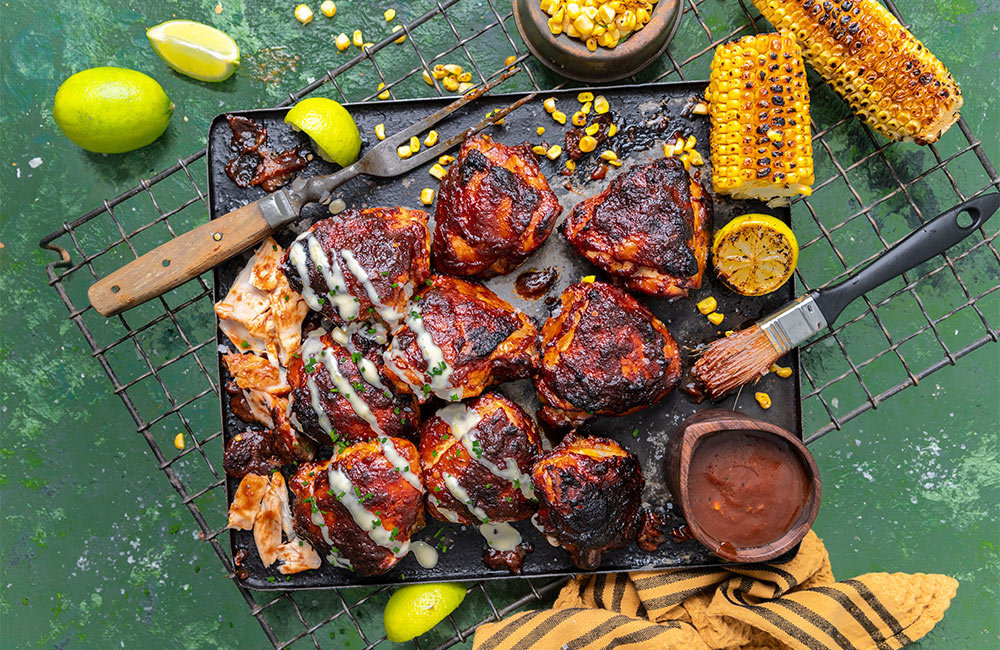
Store-bought, pre-marinaded meats and sosaties can often be heavily seasoned with an insane amount of sodium. Infuse maximum flavour into meat dishes with homemade marinades. Make these Chicken Thighs with Bourbon BBQ Sauce, or these Chilli Rocket Pesto Lamb Chops with Yoghurt for a fresh flavour.

The same goes for salads – you can convert staunch salad haters with a good dressing. Take advantage of extra ‘hands’ in the kitchen like your microwave to nuke veggies, and your air fryer to crisp and warm up food just before serving; toss ingredients into a blender for a quick dressing. That way, all there’s left to do is assemble everything before serving guests.


4. Food for All Tastes

Bear in mind that some of your guests might have dietary restrictions or preferences. Have a few vegetarian, vegan or gluten-free options available to cater to everyone’s tastes. It’s a thoughtful touch that shows you care about your friends’ enjoyment. If you don’t want to make extra work for yourself, this is where pre-party prep counts. Make fixed elements that can be shared across the group like salads and sides; mains can be customised.

Try these carb-free Aubergine Braaibroodjies with Cheese & Tomato. Keep meat-eaters and vegan friends happy with these Balsamic Marinated Steak & Mushroom Kebabs


5. Keep the Drinks Flowing

It’s summer, so you’ll need to keep everyone hydrated. Have a self-serve station so that guests can help themselves to drinks, unless you enjoying playing bartender. Don’t exclude certain guests, make sure that you have non-alcoholic drink options in addition to your wines and ciders. Teetotalers, designated drivers and conscious eaters will appreciate zero-cal and non-alc drinks.

Check our list of favourite local non-alcoholic drinks


6. The Cool Side of the Party

Let’s face it, no one wants to be sweating at a shindig. Set up some shaded areas; it’s a simple way to keep the party comfortable and cool. Remember some sunscreen and bug spray to keep everyone happy.


7. Finger Foods for the Win

To encourage mingling, serve finger foods. Things like springrolls, bruschetta, tartlets, or charcuterie boards are perfect for nibbling and socialising simultaneously; no one likes feeling tied to their plate! During summer, critters and flies can also be pesky, so make sure to cover your appetisers with a cloche or ‘food umbrella’.

Serve up these tasty appetisers and finger foods


8. Music Makes the Mood

Music sets the vibe for any gathering. Create a group playlist on Spotify where everyone can add a couple of songs instead of subjecting the whole squad to your music taste. For a laid-back braai, chill tunes are ideal. For a pool party, something more upbeat could be just the ticket. Keep the volume at a level that allows conversation without shouting.


9. Games and Activities

It doesn’t matter how old you are – everyone loves games. Entertaining isn’t all about food and drinks, incorporate some fun games to keep the good times rolling. Try 30 seconds, or Uno if your friendships are strong enough to withstand +4 power moves. There are also a bunch of conversation-starter card games out there, like Cards Against Humanity; this could help different friend groups interact beyond small talk.


10. Fire Up the Grill

For South Africans, braaing isn’t just about cooking food; it’s the main event. Encourage your guests to step in and help with the grilling. It’s a wonderful way to bond, chat and enjoy the outdoors together. Plus, those braai fumes will have everyone salivating.


11. Embrace Imperfection

Here’s a secret: it’s okay if everything isn’t perfect. In fact, a casual vibe can make your gathering feel more authentic. So, don’t stress if the tablecloth gets wrinkled or the salad starts to wilt. Your guests are there for the company, not a Michelin-star dining experience.


12. Get Everyone Involved

Don’t feel like you need to do it all – ask your guests to bring a dish or drinks. Most people are more than happy to contribute, and it takes some of the burden off your shoulders.


13. Go Easy on Yourself

Remember, the point of entertaining is to have a great time with friends and family – it’s in the name. If you find yourself spending a little extra time in the kitchen or the table settings aren’t exactly as you envisioned, don’t sweat it. Your loved ones are there to enjoy your company, and a little imperfection can make the party feel more genuine.

Need some braai recipe inspiration? Try these mains and desserts. Complete your menu with these sides and salads.

How To Build Your Own Compost Garden At Home

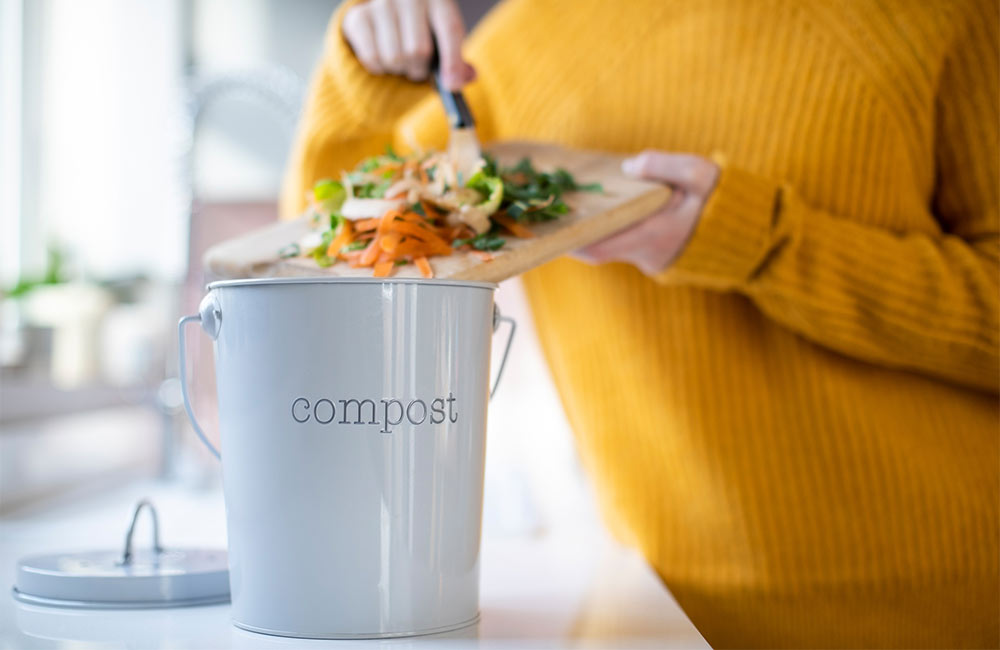
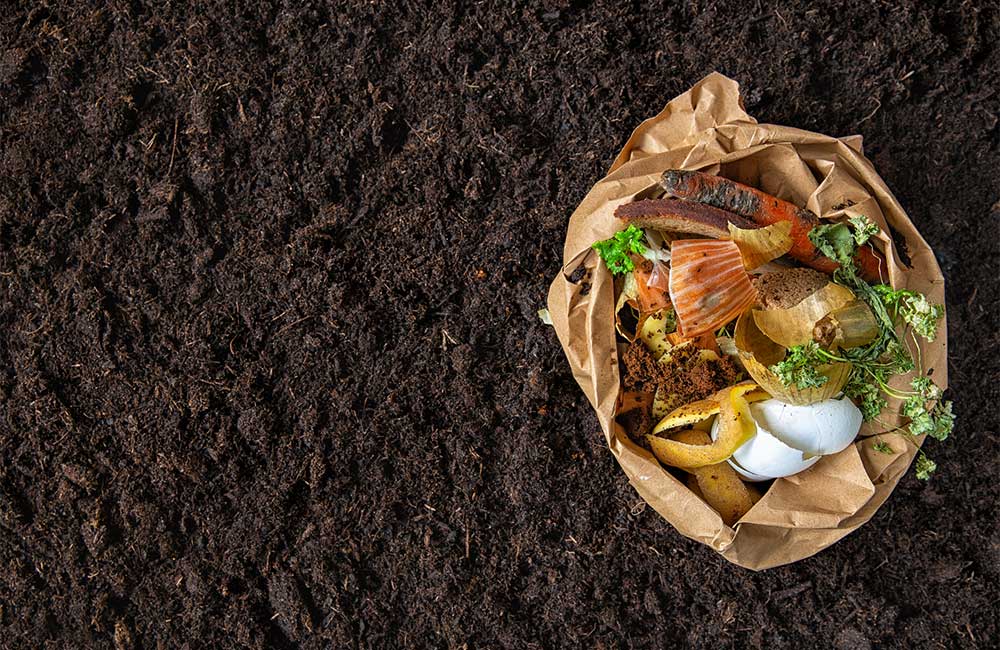
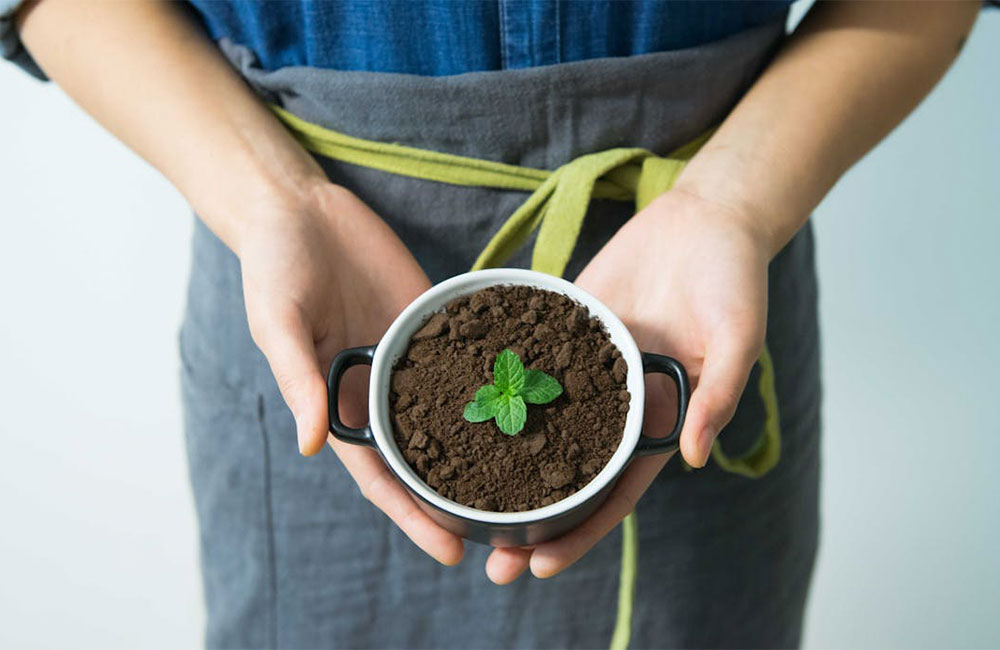
Those banana peels, eggshells and potato skins you’re tossing in the trash? Save them for your compost heap. Composting is like magic for your garden, transforming food waste into nutrient-rich soil. We dish the dirt on the best composting tips for beginner green thumbs. Here’s how to turn those kitchen scraps into gardening gold!

More Than Just ‘Dirt’

Composting is the natural process of decomposition, where organic materials break down into a dark, crumbly substance known as ‘compost.’ This process is fueled by microorganisms, such as bacteria, fungi and insects, that thrive in aerobic (oxygen-rich) environments. By providing the right conditions, you can speed up this decomposition process and produce high-quality compost for your garden.

Composting is the best way to increase yield and grow healthier/tastier crops when it’s time to harvest.

Not only does composting promote zero-waste cooking, it also reduces the amount of organic waste sent to landfills, where it would otherwise contribute to methane emissions. By diverting organic materials from landfills and returning them to the soil, composting helps mitigate climate change and supports sustainable waste management.

This natural, nutrient-rich fertiliser improves soil structure, fertility and moisture retention. If you have a home vegetable garden, composting is the best way to increase yield and grow healthier/tastier crops when it’s time to harvest. Not to mention, it eliminates the need for store-bought fertilisers and soil conditioners, saving you money in the long run.


How to Start a Compost Garden

Before you get started, consider the space available to you — do you have a sprawling garden or a modest plot? Choose a composting method that fits your environment, whether it’s a traditional bin, a compact tumbler or a worm-powered vermicomposter.

Gathering Your Materials

Composting is more than just dumping your leftover onion peels and veggie scraps in a pile of dirt. A good compost pile requires the perfect blend of ‘browns’ and ‘greens.’

Browns are carbon-rich materials, such as dried leaves, shredded paper and cardboard. These ingredients serve as the structural framework of the compost pile, providing aeration and absorbing excess moisture. Why cardboard you ask? Cardboard is rich in carbon, making it an excellent ‘brown’ material; it also helps maintain the carbon-to-nitrogen ratio, ensuring proper decomposition and preventing odours – the last thing you want!

Greens, which are rich in nitrogen, include kitchen scraps like fruit and vegetable peels and fresh grass clippings. These materials provide the necessary nutrients to fuel the microbial activity responsible for decomposition.

A good compost pile requires the perfect blend…

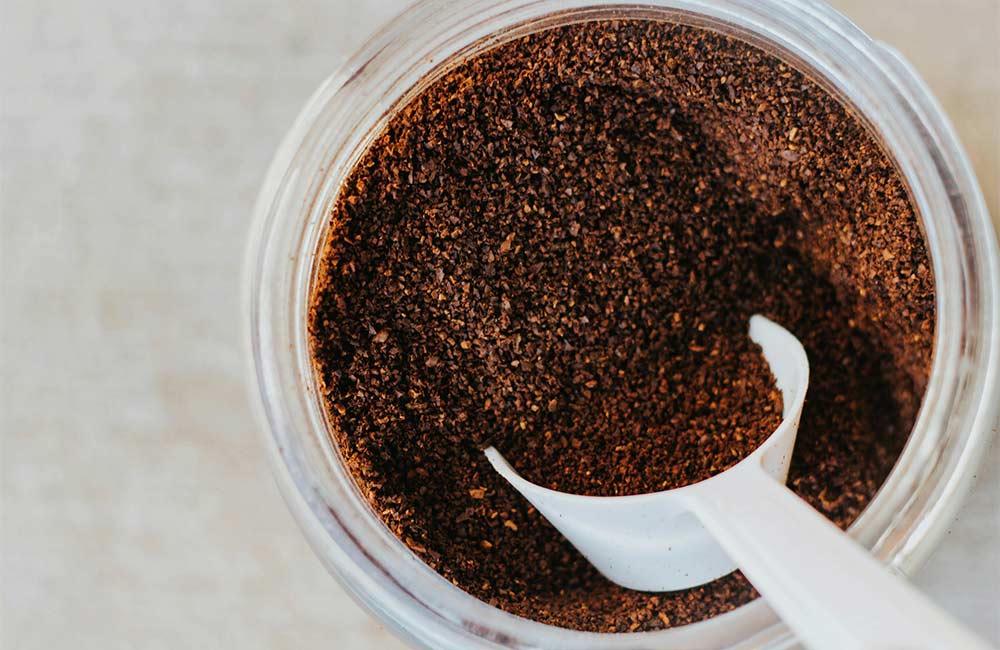
Browns vs Greens

While there’s no one-size-fits-all ratio for composting, a general guideline is to aim for a balance of roughly 2 parts browns to 1 part greens by volume. This ratio provides the optimal conditions for microbial activity and helps prevent odours and pests. However, it’s essential to adjust the ratio based on the conditions of your compost pile. For example, if your compost pile becomes too odorous or attracts flies, it may indicate an excess of greens – you’ll need to add more browns to restore balance.
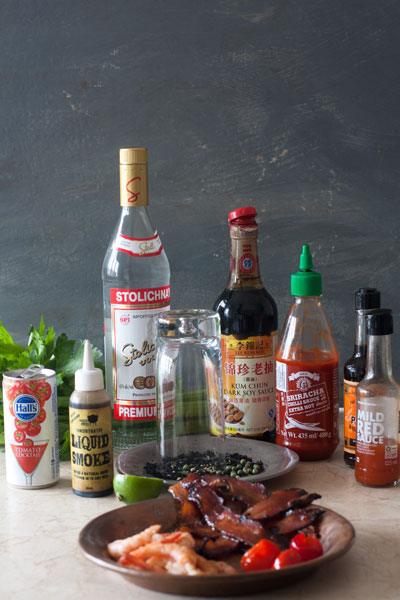
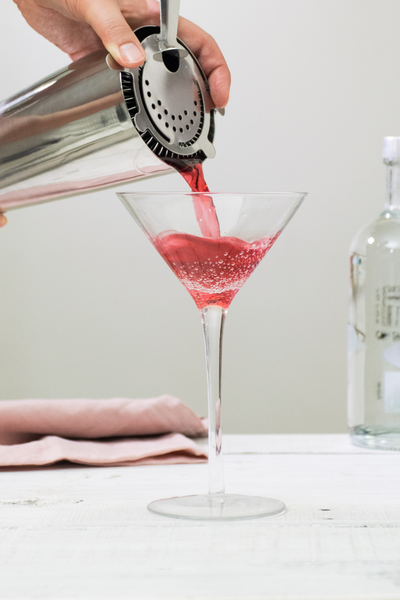
Tailoring Your Heap

When it comes to using compost for growing fruits and vegetables, a well-balanced compost pile can benefit a wide range of plants. A standard compost mix is suitable for most plants, but you can further customise your compost by incorporating specific ingredients or tailor it depending on the needs of your crops. Adding crushed eggshells can provide calcium for tomatoes, while mixing in aged manure can boost nitrogen levels for leafy greens.
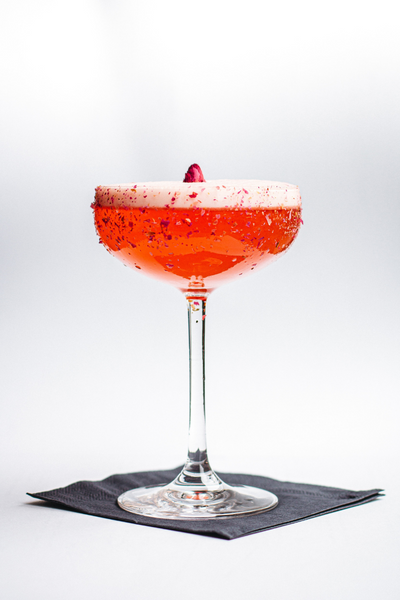
Coffee grounds are also a fantastic addition to compost. Contrary to popular belief, coffee grounds are only slightly acidic and might help balance the pH of your compost pile. While fresh coffee grounds may have a mildly acidic pH, they become neutral or slightly alkaline as they decompose. This can be beneficial, especially if your compost pile contains acidic materials like fruit waste. Believe it or not, coffee grounds are also a natural pest repellant.

Time To Harvest

Compost is ready to use when it becomes dark, crumbly and resembles rich soil. This process can take anywhere from a few weeks to several months, depending on factors like temperature and moisture levels.

Throughout the composting process, the temperature of your pile will fluctuate. Initially, it will rise as microbial activity increases, potentially reaching temperatures of 54-71°C. As the compost matures, the temperature will gradually decrease. When the pile stabilises and remains consistently cool, it’s a sign that decomposition is complete.

As composting progresses, you may notice changes in the appearance of your pile. Initially, distinct layers of materials may be visible, but over time, these layers blend into a homogeneous mixture. Finished compost will have a uniform consistency throughout, with no recognisable pieces of organic matter remaining.

There are plenty of ways you can utilise your compost heap.

For a finer, more uniform compost, consider sieving the finished product to remove any remaining large particles or undecomposed material. This step is optional, but can result in a higher-quality compost suitable for use in potting mixes or as a top dressing for container plants. You’ll need a few simple materials to sieve your compost, including a sturdy frame (such as a wooden or metal frame with wire mesh), a piece of fine mesh or hardware cloth, and a container to catch the sifted compost.

Make the Most of Your Compost

Once harvested, store your compost in a covered container or bin to protect it from moisture and pests. There are plenty of ways you can utilise your compost heap. Most people might add them to garden beds to improve soil structure, fertility and moisture retention. Simply mix it into the top few inches of soil or use it as a mulch around plants.

If you’re looking to keep those Monsteras or Fiddle-leaf Fig home plants healthy and vibrant, you can use your compost heap to create a potting mix. Consider blending a portion of compost soil with perlite and peat moss for extra nutrients and adequate aeration.

Now that you know how to make compost, check out these zero-waste cooking tips

Himalayan to Hawaiian: Different Types of Salt

Salt has the ability to impact the outcome of any dish. You could have the fanciest dish at a fine dining restaurant, prepared with high-quality ingredients by the world’s greatest chef, but only the perfect amount of salt could bring the flavours home. While table and sea salt are the usual pantry suspects, there are plenty more types of salt. They differ in origin, texture and sodium content. Some are shaped like the pyramids of Egypt, or look like sapphire diamonds, and some are as old as the seas.

Whether seasoning steak, or improving the taste of your cake batter, the type of salt used makes all the difference. Here are some of the most popular types of salt:
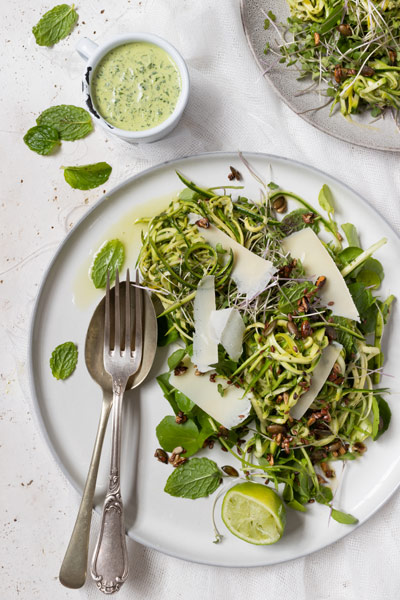
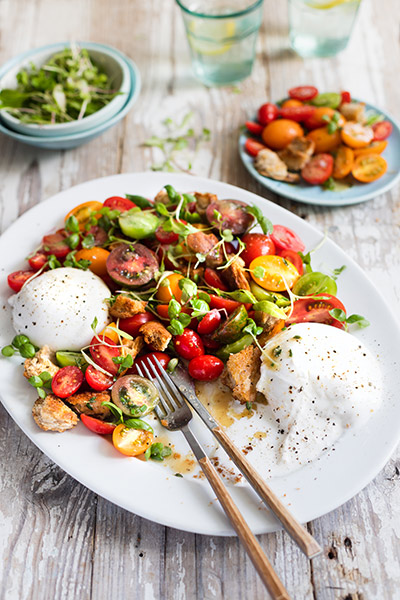
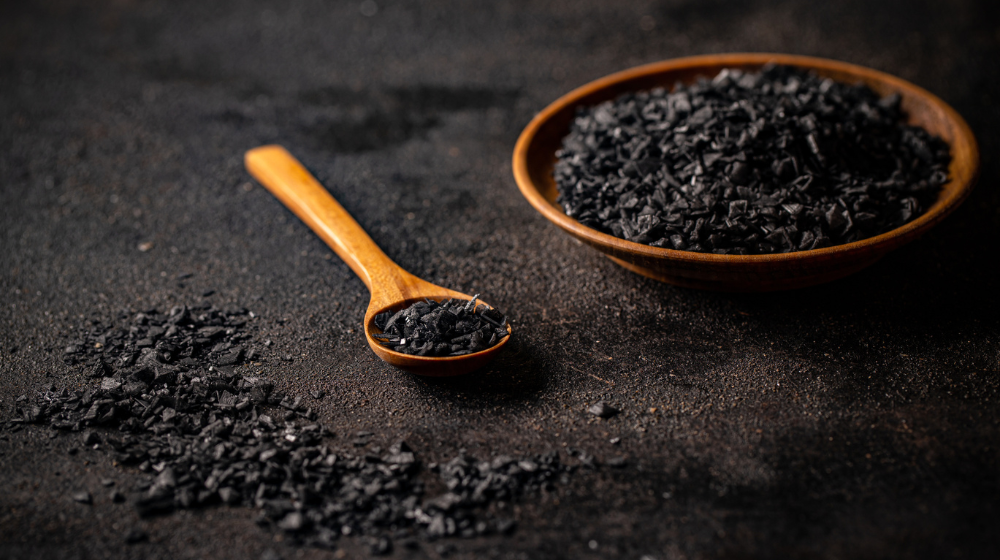
Fleur De Sel

Fleur de sel is extracted from certain parts of France. In ancient times, it was used as a salve (ointment) and, surprisingly, as a laxative. It’s one of the rarest and most expensive types of salt due to low annual yields and labour-intensive harvesting required. Fleur de sel is sourced from the surfaces of seawater using a salt panning method, where pyramid-like crystals are extracted.

Fleur de sel translates to ‘flower of salt’ in French due to the flower-like appearance formed by salt deposits on seawater surfaces. It was once believed that in order to preserve the structure and delicate nature of the salt, it should be harvested by ‘gentle’ female hands!

Many confuse Maldon salt with fleur de sel due to the appearance; apart from price, the main difference between the two is that fleur de sel has a greyish colour, and Maldon salt has a white hue. It also has a more oceanic, ‘moist’ taste, whereas Maldon salt has a distinct dryness. Fleur de sel is typically used as a finishing salt on most dishes instead of seasoning during the cooking process, this is because it loses its characteristic texture once dissolved.

Add texture to this Mint, Lemon Olive Oil Marinated Zucchini Salad  or this Toasted Panzanella Salad with Burrata & Thyme Vinaigrette with fleur de sel.


Hawaiian Black Salt

Hawaiian black salt is sourced from the Pacific Ocean, specifically off the Hawaiian island of Molokai. Traditionally, salt is held sacred in Hawaiian culture and used in cleansing rituals. It contains approximately 84% sodium chloride, the rest is believed to be electrolytes and natural minerals. Although it’s also known as ‘black lava salt,’ it doesn’t actually contain lava; the distinct black colour is created by mixing evaporated seawater and coconut shell activated charcoal.

type of salt

Hawaiian black salt is said to have detoxifying benefits that improve circulation and overall skin appearance, as charcoal contains absorption properties, thus helping draw out toxins.

This type of salt has a coarse sea salt texture and is typically used as a gourmet finishing salt due to its rich mineral taste, adding depth of flavour to chicken and fish dishes.

Season this Salmon Poke Bowl or Braai Whole Yellow Tail with Hawaiian black salt.


Himalayan Black Salt

This unique type of salt is sourced from the rocks of the Himalayas, like its pink counterpart. Apart from colour, the main difference between Himalayan pink and black salt lies in the taste. Himalayan black salt has an umami flavour and is often likened to the taste of ‘rotten eggs’ – in a good way, we suppose. Himalayan black salt is enhanced with charcoal and spice, which is then cooked to enhance the umami flavour. During the cooking process, it undergoes a chemical change whereby the sodium chloride in the salt transforms into sulphites and hydrogen sulphide, which produces the ‘rotten egg’ flavour.

Himalayan black salt doesn’t contain iodine – necessary for regulating thyroid health. Although not commonly sold at general grocery stores, it could be found at specialist stores.

Praised for its appearance, some manufacturers sell counterfeit Himalayan black and pink salt. The only way to discern whether what you are being sold ‘the real thing’ is by confirming the source on the label – it should be either India or Pakistan. Himalayan salt should contain 100% Himalayan salt and no other ingredients. Benefits of Himalayan black salt include being rich in antioxidants and aiding digestion. This type of salt is also low in sodium – potentially useful for people with hypertension.

Use Himalayan black salt to sprinkle over fresh fruit for a contrasting umami flavour in this refreshing Watermelon Salad. It also works well in dips like raita.


Himalayan Pink Salt

The prettiest of them all, Himalayan pink salt is praised for its distinct rosy hue. As the name suggests, it’s derived from the Himalayan mountainous region, specifically the Khewra Salt Mine in the Punjab region of Pakistan. In terms of sodium content, Himalayan salt is similar to table salt and contains 98% sodium chloride.

types of salt
types of salt

Another characteristic is that while table salt is fortified with iodine, Himalayan pink salt could contain iodine, but not large amounts. The pink colour comes from the ground from which it’s mined, and contains trace minerals like iron and zinc. Himalayan pink salt is odourless with a subtle and slightly sweet taste, making it good for baking and everyday cooking.

Himalayan Pink Salt is perfect for sprinkling on these Pink Salt Praline Cookies.


Kosher Salt

You might have wondered what makes kosher salt ‘kosher.’ The term ‘kosher’ refers to food prepared in accordance with traditional dietary standards for those of certain Jewish faiths – kosher salt thus doesn’t contain impurities. It has a coarse texture and is also commonly referred to as ‘kitchen salt’ or ‘flaky salt’ due to its large grains.

Kosher salt isn’t usually fortified with iodine or additives.

This type of salt is often used to pickle and preserve vegetables and meat. Traditionally, kosher salt is used for removing blood on the surface of raw meat. Everyday uses include seasoning meat or sprinkling over salads; it isn’t normally used in baking.

Sprinkle kosher salt over this Rice Shakshuka or Healthy Homemade Hummus.


Maldon Salt

Maldon salt is a special brand of sea salt from the UK coastal town, Maldon. The sea salt crystals have a unique pyramid-like structure, not to be confused with fleur de sel, which is purer and rarer. Although Maldon salt is still relatively expensive compared to other types of salt, fleur de sel can be up to three times more costly than Maldon salt. In order to get the pyramid structure, sea salt is first purified, then crystalised.

types of salt

Despite similarities, fleur de sel is used for last-minute seasoning and garnishing, whereas Maldon salt can be used as an all-purpose salt.

The crunchiness of Maldon salt makes it great for lending texture to certain savoury dishes and baked goods. Many chefs favour Maldon salt for these properties.

Maldon salt is ideal for sprinkling in Salted Caramel Sauce or this Salted Dark Chocolate, Pretzel & Caramel-rippled Ice Cream.


Persian Blue Salt

Persian blue salt almost looks like sapphire diamonds and is considered to be one of the rarest and oldest types of salt; it’s typically sourced from salt ponds in the Ergourz mountainous region of the Semnan province of Iran (previously known as Persia) that has dried up over the years. This mystical sapphire blue salt is extracted from a special type of rock salt, which is made of sylvinite and halite, formed in salt-concentrated water bodies.

types of salt

Sylvinite rocks are present as both pink and blue – the blue kind is the rarer of the two. Persian blue salt’s characteristic colour comes from magnesium; it also contains minerals and nutrients such as iron, sodium, calcium and potassium. Health benefits of using Persian blue salt include lowering blood pressure, maintaining cardiovascular health and more.

Persian blue salt is slightly sweet yet salty and imparts a light lemon flavour to certain dishes. Its beautiful blue hue is aesthetically pleasing and often used to elevate the appearance of dishes.

Persian blue salt pairs well with fish or tomato-rich dishes like this Lemon Labneh with Roasted Tomatoes, Pine nuts & Toasted Pita or Roasted Red Pepper & Tomato Soup.


Sea Salt

Sea salt is harvested from evaporated saltwater lakes and oceans, anywhere in the world. Unlike table salt, sea salt isn’t normally processed, meaning it retains most minerals and nutrients. Sea salt is available in ground and crystal form.

types of salt
types of salt

Naturally, it doesn’t contain iodine, but some types have been fortified with iodine for the purpose of regulating thyroid health. When it comes to saltiness, both table and sea salt contain approximately 40% sodium by weight, but because table salt is finer, the sodium content would differ when measured by volume.

Sea salt is used to season many dishes, especially steak. Try it on this New York Strip Steak.


Table Salt

Probably the most popular type of salt in many households, table salt is mined from underground salt deposits and is processed in a similar way to table sugar. Besides iodine, table salt usually contains anti-caking agents to prevent the grains from clumping.

Gnocchi in a Creamy Basil Pesto Sauce
Use table salt for seasoning pasta water to make this Gnocchi in a Creamy Basil Pesto.

Learn about different types of African indigenous grains.