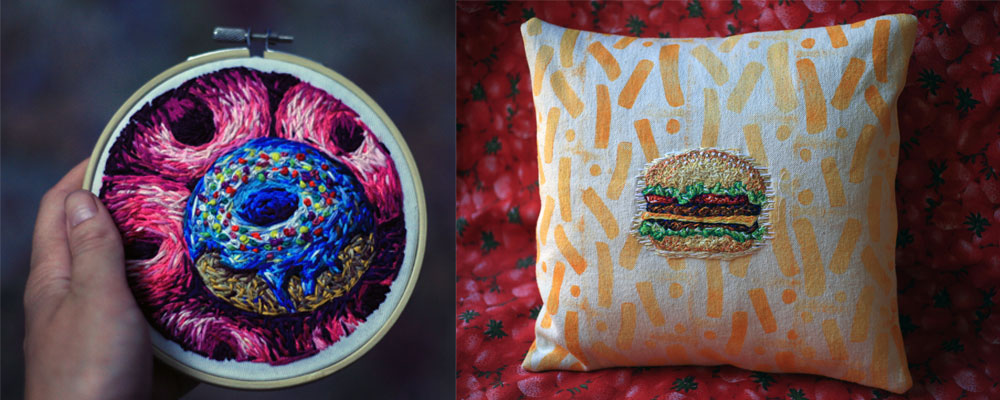
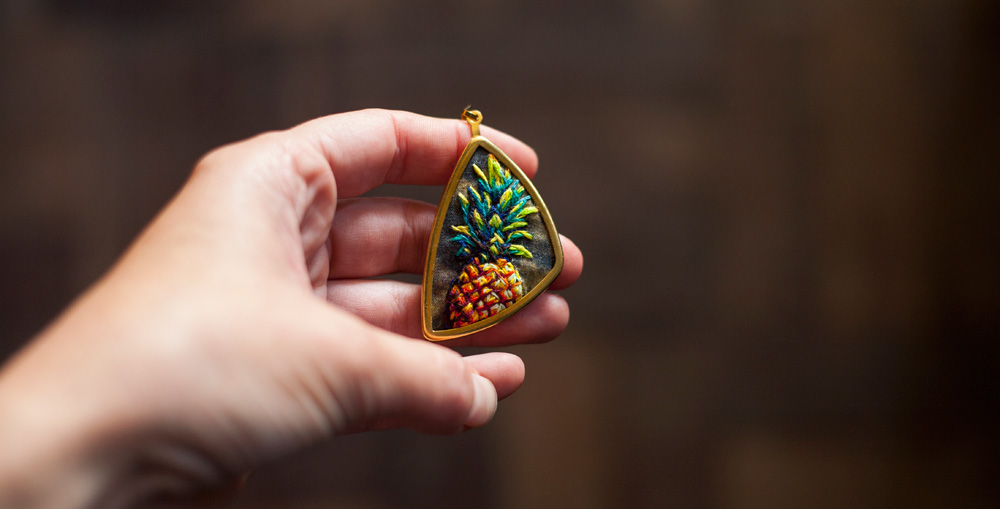
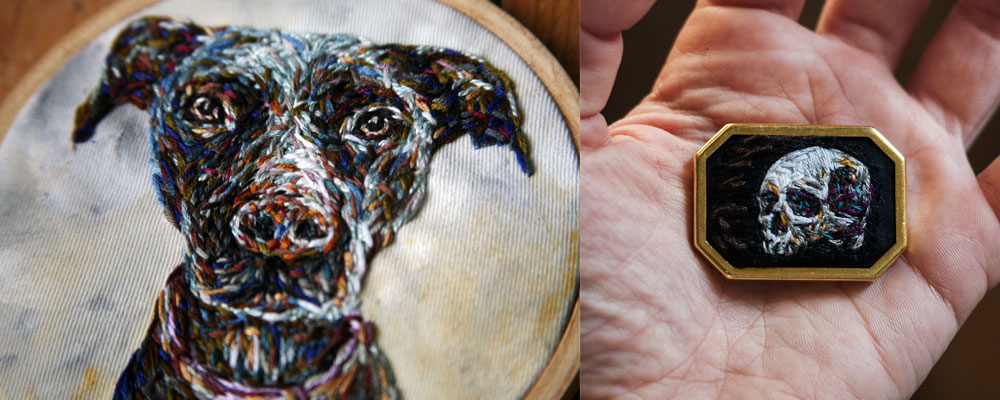
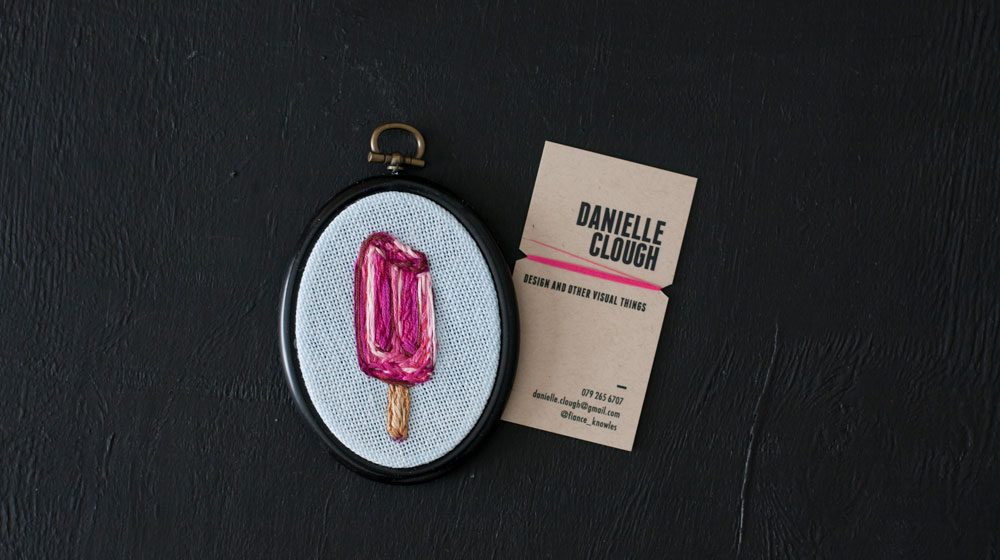
Danielle Clough Embroidery Artist

Embroidery is considered to be rather an antiquated hobby. What piqued your interest in needlework?

I never really pursued an interest in needlework as such. My mother taught me to sew when I was young and while I was studying I was making plush toys for spending money. I’ve always had fabric and thread around me, and through a sequence of accidents and opportunities, needlework became my favourite medium.
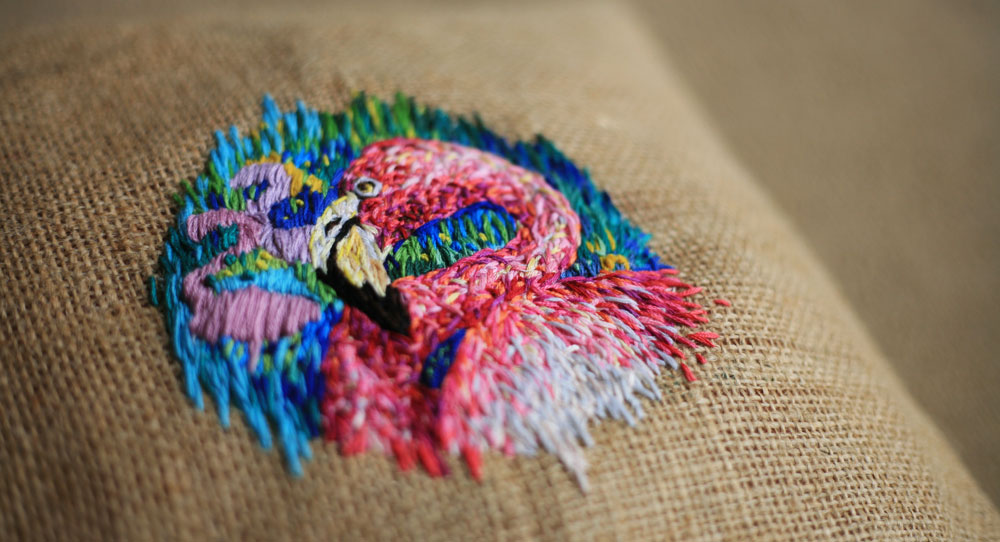
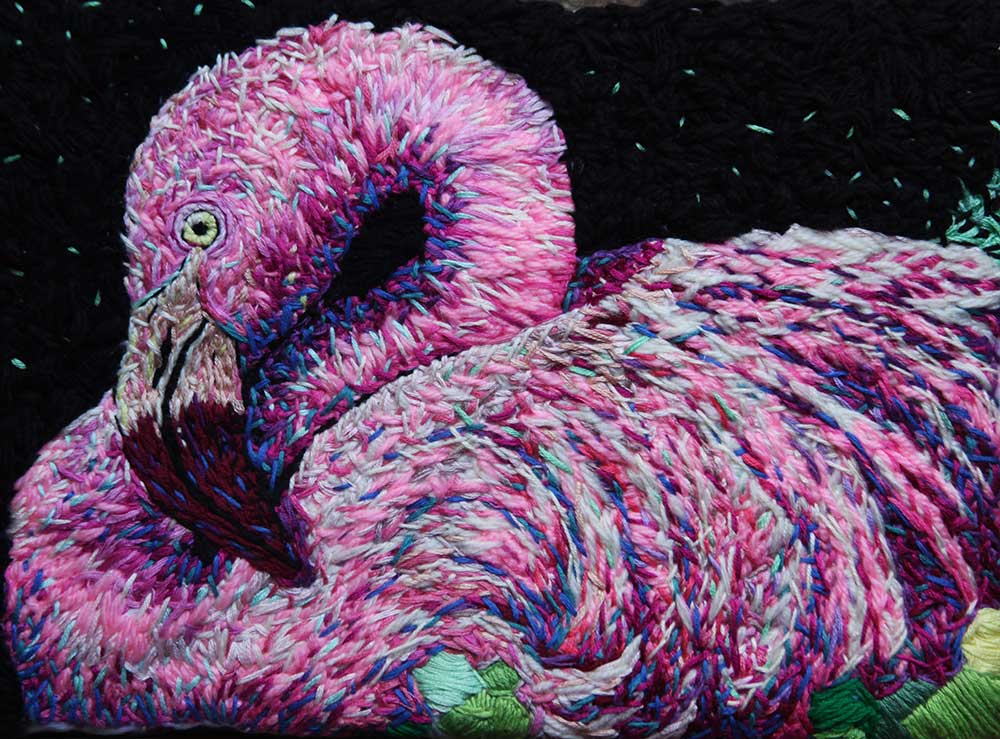
flamingo-full-danielle clough
How do you think your choice of subject matter has brought embroidery into the 21st century?

Perhaps it seems that it is a new way of looking at embroidery, but I think of it more as an alternative way of looking at painting.

That being said, what inspires you?

Colours inspire me.

Embroidery Art by Danielle Cloughdanielle-clough-embroidery
Your pieces range from pendant size to large wall artworks, tell us a bit about this.

Yes, I work in all sizes. I’m busy working on two pieces, a tiny Protea pendant and a large portrait. Traditionally embroidery is small – details on napkins etc. My choice in size just depends on the project and what I have time for.

On average, how long does it take you to complete one of your embroideries?

Size dependent it can be anything from 2 hours to 2 months.

What has been your most challenging piece to complete so far?

Mostly I feel like everything I’ve done so far has been practice and experimenting. I don’t start out with an idea and an end result in mind. There is a lot of freedom in working like that. Commissions are a bit more challenging because I want my clients to be happy, but I’ve been lucky with people who trust me.

Danielle-Clough-flamingo
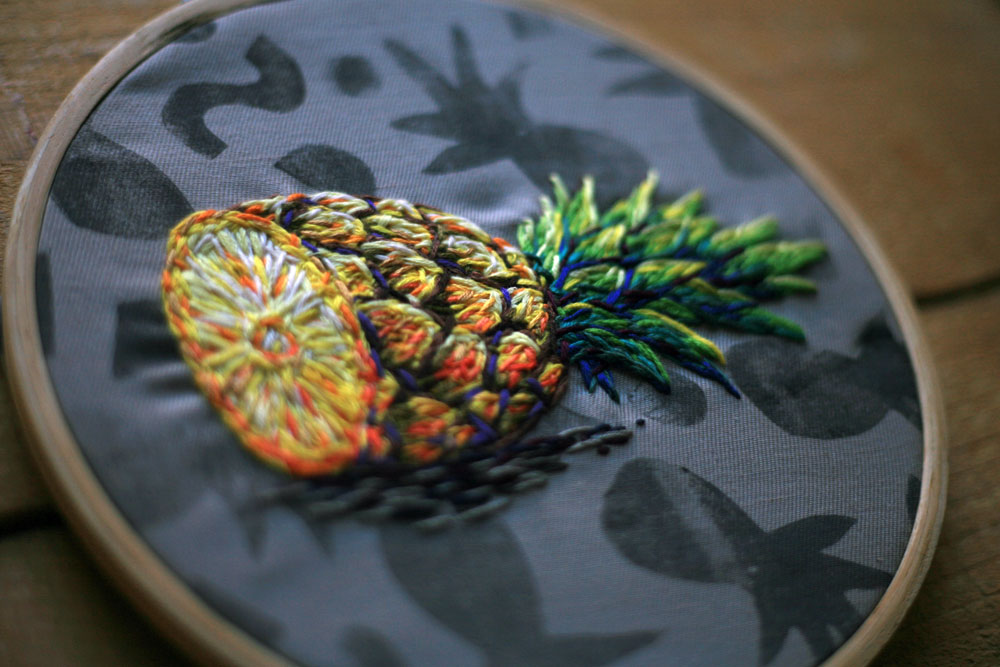
pino-danielle-clough
You’re also a talented photographer — do you allow these two mediums to interrelate?

Definitely. I shoot my own reference images and feel much more content when I am part of the full process of the work. Photography has taught me about light and colours, which informs a lot of what I do.

Many of your pieces are sold as jewellery. Where did the idea for that come from?

I wish it was just my idea! I was looking for miniature embroidery hoops and found some online. There is a small, but very supportive embroidery community out there. Have a look at Dandelyne, Kailea and ewoodstory. You’ll be pleasantly surprised.

dandelyne.com | Kailea | ewoodstory

Any new projects or collaborations in the pipeline?

I have an exhibition currently running at a girls’ group show called ‘Welcome to my Garden’ at the Space Between Gallery. It runs until the 3rd September. I am being sent frames from the States for a collaboration with ewoodstory and have some other things in the works, but I don’t want to jinx it!

Your favourite thing about being a creative in Cape Town?

My favourite thing is how encouraging my friends and family have been in every one of my endeavours – no matter how ridiculous. One of the best gifts you can give someone is relentless support. I feel very loved and supported in this city.

Embroidery Art by Danielle Clough
Danielle-clough-2
Quickfire Questions

Dream travel destination? Japan.

Dogs or cats? Dogs.

Fast food or slow cooked? Slow cooked, delivered quickly.

motherclougher.blogspot.com  |  Facebook  | Instagram

Eating With Your Eyes – A Feast of Colour

Miele leaderboard-banner

When people say we eat with our eyes, they’re not kidding. We’re visual beings and our sight has a huge role to play in how we enjoy our food. Research done on the matter said that the better looking a plate of food is, the higher the expectation is for that food to taste good. It’s also assumed that a more intricately plated dish requires more skill and better quality ingredients. Naturally, being able to see individual ingredients helps you discern each flavour and enjoy it more.

There’s also a healthy aspect to eating beautiful, colourful food. ‘Eating the rainbow’ is a trendy phrase being thrown about, and while it sounds silly, it really does have some weight. The term essentially relates to the idea that the more variety of colours of fruits and vegetables you eat, the better it is for you, because colours indicate an abundance of nutrients. In fact, some colours denote certain vitamins. Green veggies usually contain vitamins K, B and E. Purples are packed with C and K. Vitamin C, along with A, is also found in yellow and orange. It’s quite simple really, the more colours you eat, the more nutrients you take in.

With the weather looking grey and dreary, and bringing with it a susceptibility to flu and colds, we figured why not brighten things up a little? And if that brightening up brings along some nutrients, then we’re on to a winner.
Eating With Your Eyes – A Feast of Colour

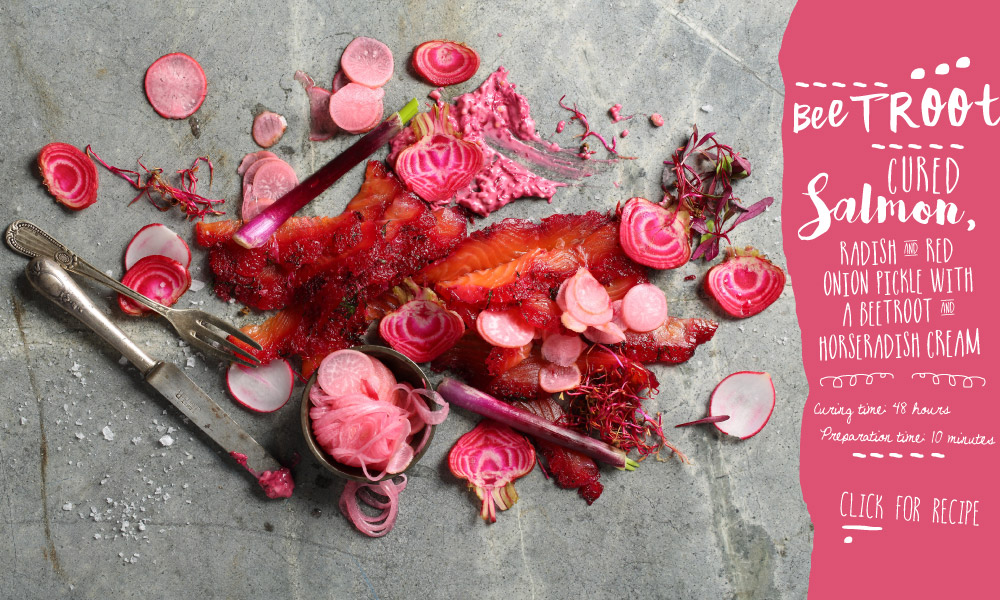
Beetroot Cured Salmon, Radish and Red Onion Pickle with a Beetroot and Horseradish Cream

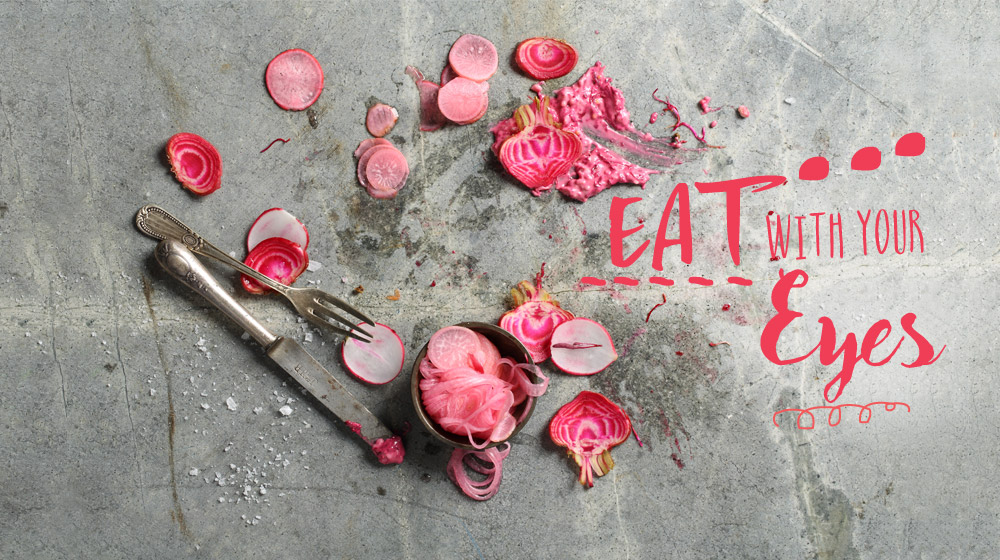
The mighty beetroot. It’s no meagre root vegetable. As part of the spinach family, they’re completely edible from leaf to bulb. The root itself is an excellent source of folic acid, fibre, manganese and potassium, while the leaves are packed with calcium, iron and vitamins A and C. The fibre in beetroot has been known to increase antioxidant enzymes, as well as the number of abnormal cell-fighting white blood cells. Salmon is delicious and nutritious, as an oily fish it is high in omega-3s, which assist in healthy brain functions. We love the rich tones of this seasonal dish, making this a perfect first course for dinner or even a light, wintery lunch.

Click here to see the recipe.


Eating With Your Eyes – A Feast of Colour

Winter Naartjie, Thyme and Marigold Cake with Walnut Praline

Naartjies (and citrus in general), how would we survive a winter without you? We all know that naartjies are a great source of vitamin C, but did you know that they contain high levels of folate and beta-carotene? Well, they do, along with potassium and magnesium. When it comes to citrus, whatever ails you, they can cure. This cake is a celebration of winter, we love the suggestion to serve it slightly warm. It makes a great dessert after an equally wintry, slow-cooked dinner, possibly accompanied with a luscious blob of yoghurt. Never mind all the immune boosting ingredients in this cake, the appearance alone will perk you right up.

Click here to see the recipe.


Eating With Your Eyes – A Feast of Colour

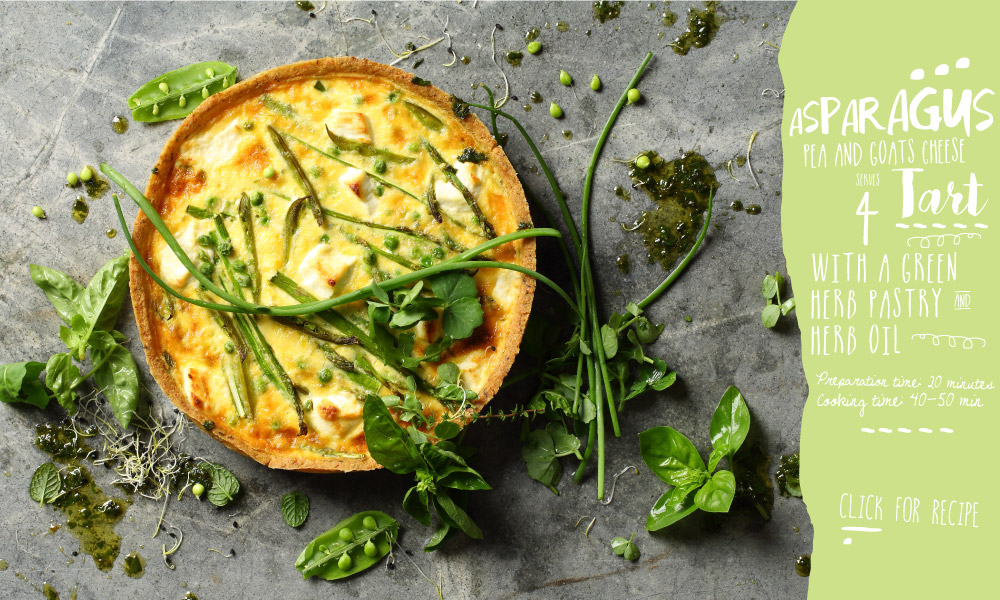
Asparagus, Pea and Goat’s Cheese Tart with a Green Herb Pastry and Herb Oil

Asparagus, surprisingly, is exceptionally good for you. In fact, it’s even believed to be able to help fight cancer. Asparagus is a particularly rich source of glutathione, a detoxifying compound that helps break down carcinogens and other harmful nasties like free radicals. This is why eating asparagus may help protect against and fight certain forms of cancer, such as bone, breast, colon, larynx and lung cancers. So it’s not only delicious, but really good for you too! And when it comes to peas, you can understand why mom was always trying to get you to eat them. They are one of the best ways to take in Vitamin K, and are also packed with manganese, dietary fiber, vitamin B1, copper, vitamin C, phosphorus, and folate (phew!). They are also a good source of vitamin B6, niacin, vitamin B2, zinc, protein, magnesium, iron and potassium, to name a few.  This dish really is an ode to springtime, and is the best way to welcome warmer weather. So just when you think there is no end to winter, make this dish with first of the season asparagus and you’ll realise there is a light at the end of the tunnel.

Click here to see the recipe.


Eating With Your Eyes – A Feast of Colour

Polenta Pizzas with Roasted Yellow Peppers, Yellow Tomatoes and Parmesan Corn

When the craving for pizza hits, be sure to put this saucy little number together. If you needed some encouragement, you’ll be happy to know that yellow peppers are very good for you. One yellow pepper will get you to your daily vitamin C requirement, and also has high levels of skin boosting niacin and folate. Tomatoes are well known for their vitamin C levels, and their yellow counterpart is no different. They also contain loads of zinc, potassium and lycopene which has been linked to helping fight cancer. This pizza is a fun, flavoursome way to shake up your next dinner. We love that you get all the comfort of a pizza, with the chewy crust and cheesy accoutrements but not so much of the guilt. Plus all these healthy veggies are good for you. This is definitely a dish to put together the next time you’re feeling a little blue, the sunshiney colours will remind you sunshine and warmer days.

Click here to see the recipe.

Eating-with-your-eyes

Eat_with_your_eyes

miele.co.za | Facebook

Miele leaderboard-banner

Beetroot Cured Salmon with a Radish and Red Onion Pickle

Miele leaderboard-banner

Beetroot Cured Salmon, Radish and Red Onion Pickle with a Beetroot and Horseradish Cream

Beetroot and salmon are a classic pairing, there’s something about the way the beetroot adds a sweet earthiness to the fish that is complementary and delicious. This dish highlights how well these two ingredients work together, as well as just how easy it is cure fish. Don’t be afraid of the horseradish, it adds a wonderful spiciness to everything.

Serves: 4
Difficulty: easy
Preparation time: 
10 minutes
Curing time: 48 hours

Beetroot Cured Salmon
1 kg salmon fillet with skin on, rinsed and patted dry
3 medium beetroots, finely grated
240 g course salt
110 g light brown sugar
½ Tbsp (7.5 ml) freshly ground fennel seeds
½ Tbsp (7.5 ml) freshly ground whole black peppercorns
zest of 1 lemon and 1 orange
10 g fresh dill, coarsely chopped

Radish and Red Onion Pickle
8 radishes, thinly sliced
1 red onion, thinly sliced
½ C (125 ml) white vinegar
2 C (500 ml) water
1 Tbs (15 ml) salt
¼ tsp (1.25 ml) pepper
55 g castor sugar

Beetroot and Horseradish Cream
½ beetroot, peeled and finely grated
¼ C (60 ml) Horseradish sauce (store-bought)

Beetroot Cured Salmon
Start with the salmon two days prior to serving. Place the salmon skin side up and lightly score the skin evenly to reveal the flesh below. Turn the fish over onto a plastic wrap-lined baking sheet large enough to lay the salmon skin side down.

In a medium-sized mixing bowl, combine the grated beetroot, salt, brown sugar, spices, citrus zest, and dill. Spread the mixture over the salmon and firmly pack it onto the fish. Wrap the entire baking sheet in plastic wrap ensuring that the fillet is covered tightly. Place another baking tray on top of the salmon and weight the tray down evenly with a few tin cans. Leave to cure in the fridge for 48 hours. Once cured, unwrap the fish and gently scrape off the beet mixture. Rinse the salmon under cold water and pat dry.

Radish and Red Onion Pickle
Thinly slice the radishes and onion using a mandolin or a sharp knife. In a jar, combine the rest of the ingredients for the brine and shake to mix. Add the radishes and onion and shake to coat and submerge everything evenly. Place the jar in the refrigerator for at least 4 hours before serving.

Beetroot and Horseradish Cream
Add the the finely grated beetroot to the horseradish sauce and mix well to combine.

To serve
Serve the cured salmon with the pickle and beetroot and horseradish cream, fresh radishes, thinly sliced fresh beetroot and spring onions.

See other “colours” here.

miele.co.za | Facebook

Miele leaderboard-banner

Polenta Pizzas with a Crushed Yellow Tomato Sauce

Miele leaderboard-banner

Polenta Pizzas with Roasted Yellow Peppers, Yellow Tomatoes and Parmesan Corn

Just because you’re having a pizza doesn’t mean you have to over indulge. This light and fresh take on a classic is a wonderful and easy way to spruce up mid-week meals. The crushed tomato sauce is so good, you’ll be putting it over everything.

Serves: 6
Difficulty: easy
Preparation time: 
30 minutes
Cooking time: 40 minutes

Creamy Polenta
2 C (500 ml) milk
salt and freshly ground black pepper
85 g instant polenta
25 g butter
50 g Parmesan, finely grated

Roasted Yellow Peppers
2 yellow peppers, cut in half and deseeded

Crushed Roasted Yellow Tomato Sauce
350 g yellow tomatoes, halved
1 bulb garlic
¼ C (60 ml) olive oil
1 tsp (5 ml) castor sugar
salt and freshly ground pepper

Parmesan Corn
2 ears of sweet corn
30 g butter
salt and freshly ground black pepper
50 g Parmesan cheese, grated

Polenta
Preheat the oven to 180 ºC.

Heat the milk, salt and pepper in a large pot and bring to a simmer. Gradually add the polenta, whisking continuously until the polenta has thickened. Add the butter and Parmesan and stir until incorporated. Adjust the seasoning if necessary.

Divide the mixture into six portions and spoon onto a prepared baking sheet lined with baking paper. Flatten into circles to form the base of the pizzas. Allow the polenta to set.

Roasted Yellow Peppers
While the polenta sets, start on the roasted peppers. Cut in half and remove the cores and seeds. Place cut side down on an oven tray and roast for 40 minutes until the skins have charred. Place in a bowl of water and leave to stand for 5 minutes. Peel the peppers and cut into strips. Brush with oil and season with salt and freshly ground black pepper.

Crushed Roasted Yellow Tomato Sauce
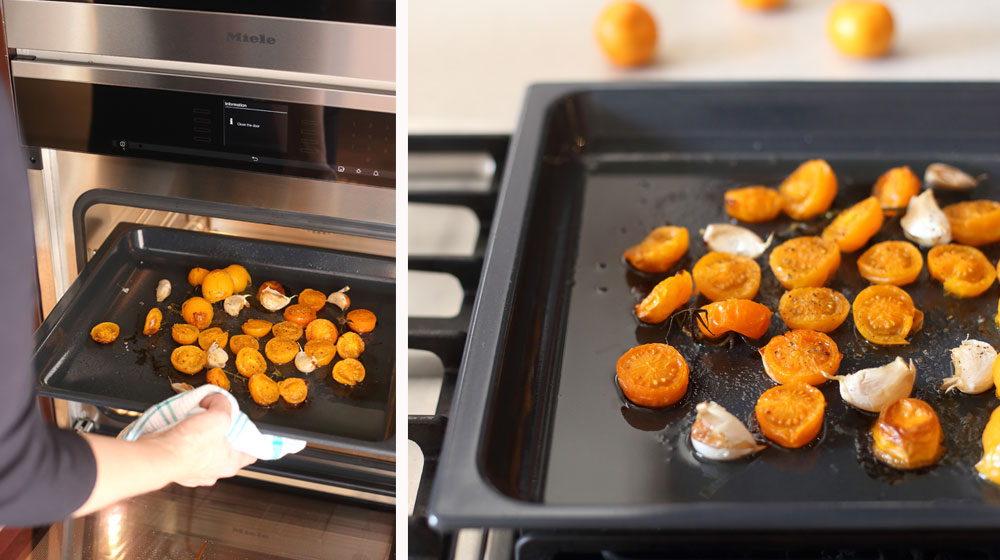
Place the yellow tomatoes and garlic cloves in a roasting pan, drizzle with the olive oil, sprinkle with the sugar and season with salt and pepper. Roast for 30-40 minutes until the tomatoes are soft and roasted throughout.

Parmesan Corn
Cook the corn in boiling water until tender, drain and cut the corn off the cob. Melt the butter and mix it into the corn, season with salt and pepper and sprinkle with grated Parmesan.

To Assemble
Brush the polenta bases with oil and grill for 5-10 minutes. Top with the yellow tomato sauce, roasted peppers and Parmesan corn and add extra grated Parmesan.

See other “colours” here.

miele.co.za | Facebook

Miele leaderboard-banner

Asparagus, Pea and Goats Cheese Tart

Miele leaderboard-banner
Asparagus, Pea and Goats Cheese Tart with a Green Herb Pastry and Herb Oil

Tarts don’t have to be scary or difficult. This one is very easy to put together and the results are worth it – delicious.

Serves: 4
Difficulty: easy
Preparation time:
 20 minutes
Cooking time: 40-50 minutes

Herb Oil
¼ C (60 ml) olive oil
10 g basil
1 clove garlic, finely chopped
¼ tsp (1.25 ml) salt

Herb Pastry
130 g flour
100 g butter
100 g cheddar, grated
2 Tbsp (30 ml) basil pesto

Filling
100 g asparagus, cut in half lengthways
100 g peas
100 g chevin goat’s cheese
1½ C (375 ml) cream
2 eggs
salt and freshly ground black pepper

Herb Oil
Make the oil the day before serving the tart. Roughly chop the basil and place it in a pestle and mortar with the garlic and salt. Grind for 1 minute. Pour the oil over the basil mixture, mix well to form a loose oil. Add a little more salt if necessary and pour into an airtight container and refrigerate for 24 hours to infuse.

Pastry
Heat the oven to 180 ºC.

Place all of the ingredients in a food processor and pulse until everything comes together to form a ball. Press the pastry into a loose-bottomed tart tin and refrigerate until needed.

For the filling, mix together the asparagus and peas and fill the tarts shell and dot with the pieces of Chevin goats cheese. Mix the cream and eggs together and season with salt and pepper. Pour the cream mixture into the filled tart shell and cook for 40-50 minutes or until the cream mixture has set. Remove from the oven and allow to cool slightly.

To Serve
Remove the cooled tart from the tart tin. Drizzle with herb oil and serve.

See the other ‘colours’  here.

miele.co.za | Facebook

Miele leaderboard-banner

Naartjie, Thyme and Marigold Cake with Walnut Praline

Miele leaderboard-banner
Winter Naartjie, Thyme and Marigold Cake with Walnut Praline

This cake would make a wonderful dessert for any meal. It’s fresh, while still retaining some richness. Absolutely lovely!

Serves: 8
Difficulty: easy
Preparation time:
 15 minutes
Cooking time: 40-50 minutes

Naartjie topping
60 g butter
3 sprigs thyme, stems removed and discarded
110 g brown treacle sugar, tightly packed
½ tsp (2.5 ml) salt
6-8 naartjies, unpeeled and cut in 1cm slices
8 marigolds, washed

Cake
285 g flour
½ Tbsp (7.5 ml) baking powder
½ tsp (2.5 ml) salt
110 g butter, room temperature
100 g castor sugar
2 large eggs
1 tsp (5 ml) vanilla extract
3/4 C (180 ml) milk

Walnut praline
200 g castor sugar
100 g walnuts

Naartjie Topping
Line the bottom of a 22cm round loose-bottomed cake tin with baking paper and set aside.

In a small saucepan over medium heat, melt the butter. Once the butter has melted, mix in the thyme, brown treacle sugar and salt. Continue cooking just until the sugar begins to bubble, about 1 minute. Pour the mixture into the prepared cake tin and swirl around until the mixture spreads evenly across the bottom of the pan. Arrange the naartjie slices on top of the brown sugar mixture.

Cake
Preheat the oven to 180 ºC.

In a medium bowl, whisk together the flour, baking powder, and salt until well combined.

In the bowl of an electric mixer, cream the butter and castor sugar until light and fluffy. Add the eggs one at a time, beating after each addition.

Add the vanilla extract, half of the flour mixture and beat until it has been incorporated and then add the milk. Continue mixing for about a minute and then add the remaining half of the flour mixture.

Pour the cake batter over the naartjie slices in the cake tin and bake for 40 to 50 minutes, or until a toothpick inserted in the centre comes out clean. Remove the cake from the oven and allow it to cool for 10-15 minutes.

Run a knife around the edge of the cake. Place an upside down plate on top of the cake tin and flip it over.

Walnut Praline
Melt the castor sugar in a saucepan, stirring continuously, allowing it to caramelise. Add the nuts, mix together and pour it out onto a sheet of baking paper and allow it to set.

To serve
This cake is delicious served slightly warm. Just before serving garnish with marigold flowers and crack the praline and scatter over the cake.

See the other ‘colours’ here.

miele.co.za | Facebook

Miele leaderboard-banner

Trash to Table: Minimising Your Food Wastage

Reliance Compost

You’ve heard about nose-to-tail eating, but now it’s time to embrace trash to table eating. Don’t worry, it’s not as scary as it sounds, no one expects you to be dumpster diving for dinner. What the term means in theory is trying to use up every single scrap of a food product, even something that was originally headed for the trash. In a food-scarce country such as South Africa, we shouldn’t be wasting a single thing. It is estimated that South Africans waste up to one-third of the food produced, which is shameful because 13 million people go to bed hungry in our country every day. It’s also incredibly thrifty to reuse your food scraps, and it will save you money – and that’s always great! Here we break down what you can save and how to use scraps in a delicious and ethical way. Think before you bin it!

Fruit and Vegetables

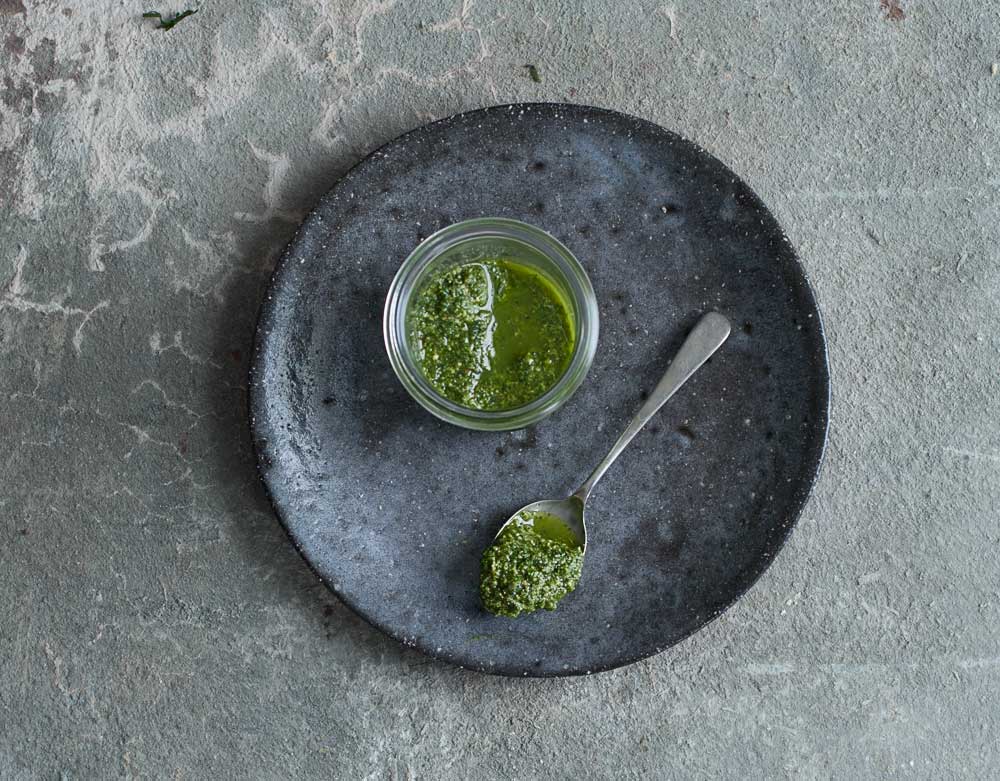
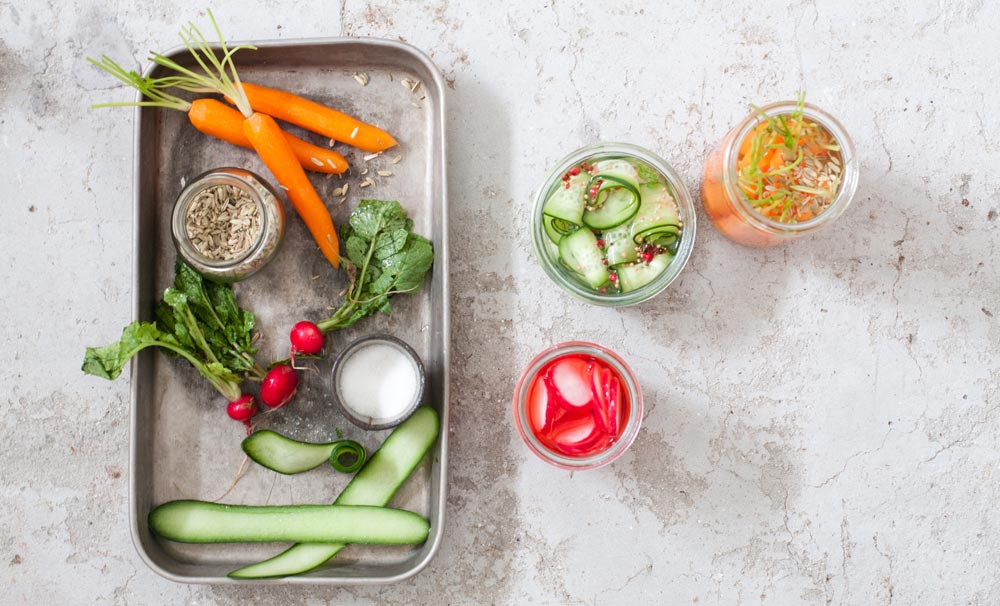
Vegetables are the first thing to be used inefficiently. Think of a carrot, firstly if you’re making something like a rustic soup you don’t necessarily need to peel your them, a thorough scrub will do the trick. If you are peeling them, think of scattering those peels amongst your garden. The tops are another wasted item and are actually delicious. Use the fronds in salads, as another leaf, you’ll be surprised at the mild carrot-y taste. You can also blend the leaves to make a pesto, with basil, garlic, oil, pine nuts (or actually any nut of your choosing) and some seasoning. It simply adds more of that fresh flavour to the pesto. In fact, pestos are a great way to use up most vegetable leaves that would otherwise be tossed.
carrot_top_pesto
Don’t overlook your radish tops, they’ll add a wonderfully pepperiness to the sauce. Beetroot stalks are often sliced off and chucked, but can be cooked along with the beetroot – they have the same flavour as beetroot but have a different texture. Wonderful when thrown all together in a large salad with a creamy dressing. Celery leaves also seem to be thrown away, when all they really need is a good, punchy, Asian-inspired dressing to highlight their flavour. You really could slip them into your soups or stew bases by finely chopping them and adding them with your celery stalks. They’re also great battered and deep-fried, something that was even made at The Test Kitchen.

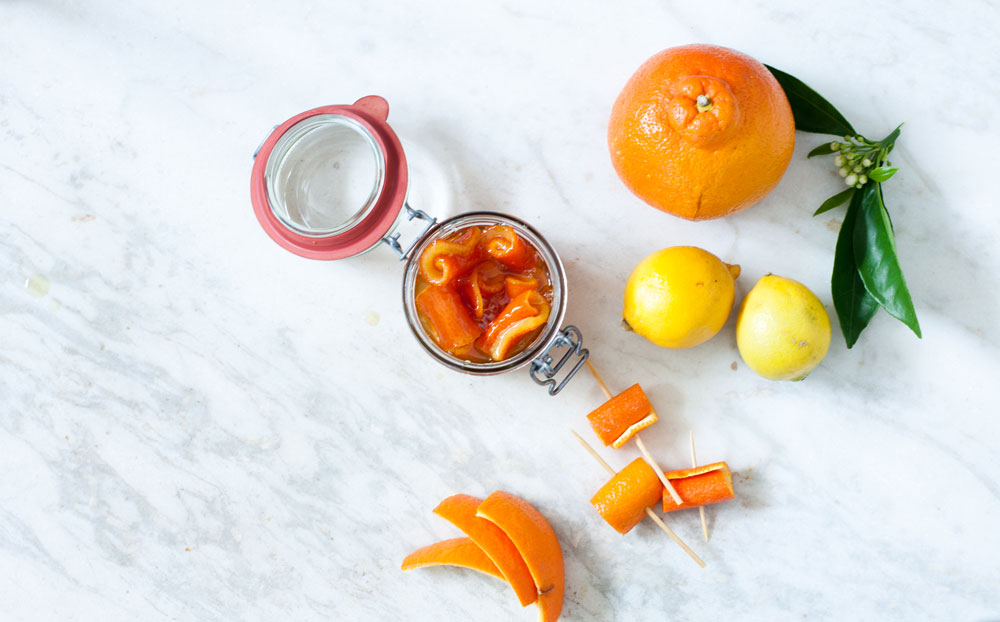
Love fruit but can’t eat it all before it turns? Well there are many uses for less than stellar fruit. Old, brown bananas are necessary for a rich banana bread and if the bananas are ready to be used but you’re not ready to bake, pop them in the freezer until you’re ready to make the bread. Berries past their prime (provided they aren’t mouldy) can also be put in the freezer to add to cakes and baked goods, or used for chutneys and jams. Also remember that citrus peels can be candied and preserved to be used for topping cakes and desserts.
jars_citrus-peels
Bread

There is nothing better than a fresh loaf of bread, but the next day? It can be a little stale, a little less-inspiring. Whatever you do, don’t ever throw stale bread away. It’s probably one of the handiest ingredients in any kitchen. Need to thicken up a soup? Add some of the bread, let it soften and then whizz for the desired texture. Want to add something special to a salad? Make croutons by cutting up the bread into cubes, tossing them in olive oil and salt and toasting them in hot oven until crisp. Make breadcrumbs for crumbing schnitzels or toasting and sprinkling over pastas to add a little crunch. There are endless uses for stale bread, so wrap it up and pop it in the freezer until you need it.

Brines, oils, etc

Who doesn’t love a sneaky gherkin while standing at the fridge? But when all those pickles are finished, don’t even think of pouring the liquid (the brine) down the drain. Gherkins are just cucumbers, so what do you think makes those cucumbers go from boring to irresistible? The brine! It’s got loads of herbs, spices and all around flavour so all you need to do is pick up some more cucumbers, slice them and pop them in the brine. Leave them to pickle for about a week or so and enjoy homemade pickles for half the price and none of the effort. You can also add a few drops of the brine to boost salad dressings, Bloody Marys and marinades for meat and fish. It will keep adding flavour. The same can be said of the oil preserved foods. Sun-dried tomatoes will leave behind a wonderful roasted tomato-flavoured oil. Drizzle it over pastas, soup or even use in a salad dressing. The oil left behind from anchovies is packed with flavour, so make sure to throw that into whatever you’re making with anchovies.
homemade pickles
Cheese and other dairy goods

How many of us are guilty forgetting about the last bit of Parmesan at the back of the fridge, only to discover it hardened and crusty? How many of us have sadly tossed into the bin, deeming it unusable? Well, those days are over. Parmesan and other hard cheeses are actually very forgiving, so toss them into anything liquid like to unlock their umami-packed flavour. If you’re making a bolognese or even a simple tomato pasta sauce, add the heel of cheese once the sauce is cooking down. It will add a deep richness. If you’re making minestrone, a bit of Parmesan is completely necessary so keep all cheese scraps. Even soft cheese scraps can be added to cheese sauces for pastas or crumbled over home made pizzas

Yoghurt is another misunderstood dairy product. Even past it’s sell-by it’s mostly fine it might just be slightly more tangy due to the cultures, just smell it before you eat it. Even ‘off’ yoghurt can be kept in the fridge and used in place of buttermilk or sour cream in baking recipes, so don’t chuck it. Even sour milk can be a good substitution for buttermilk, if you’re making something like pancakes and are in a pinch. Think even as far as your egg shells. They are natural pesticides for your garden if you have a snail problem and can be used in things like consommés to clarify your stock.

The point of this all is to make you think further than a single use of something. If you stop to think, you could not only make something delicious and inspiring. If these sound scary, they’re not. Think about it this way, if you liked the original ingredient then chances are that you’ll like the bit headed for the trash. If you like carrots, you’ll like their tops. If you like Parmesan, you’ll like the way it boosts your pasta sauce. If you’re serious about minimising you waste, think too about your plastic consumption. Shopping bags are one of the biggest environmental scourges of the earth, so think about buying one or two reusable bags. They’re studier and better for the environment. Online delivery companies, such as Harvest of Hope, drop their organic veggies off in recyclable and earth-friendly packaging. See more on our list . If you don’t have to throw it away, then it won’t end up in a landfill polluting our planet.

For more ways you can live a little greener, and save money, read here.

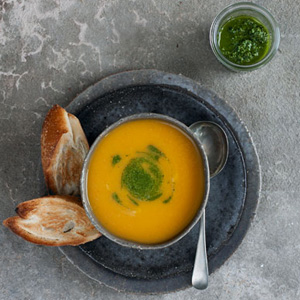
Make this delicious carrot soup drizzled with carrot top pesto.
Trash to Table: Minimising Your Food Wastage

Delicious produce is grown in healthy, living soil. #Harvesttotable series brought to you by Reliance Compost.

Reliance Compost

BrewDog Elvis Juice

Ah BrewDog, how do you get it so bloody right so bloody often? Yes if you haven’t already tasted Elvis Juice then stop what you are doing right now- no wait, I mean finish reading this first then go get some. Like many of BrewDog’s beers, this one started out in their Prototype range. From there they played with the recipe adding more grapefruit peel and less juice and before you can say, “love me tender”, The King’s juice was ready.
brew_dog_elvis_juice
Elvis Juice is an American IPA infused with grapefruit peel. Cracking a can of this stuff is the equivalent of smashing your face into a fresh grapefruit. Yup it has a powerful aroma and the natural grapefruit notes in the hops are amplified by the infusion.  As we’ve come to expect from BrewDog, Elvis Juice is rammed full of hops including: Amarillo, Citra, Magnum, Mosaic and Simcoe. From there Elvis swivels on the palate with intense grapefruit, orange and pine flavours that are supported by a caramel malt backbone. The overall bitterness seems to be ramped up by the lingering grapefruit finish.

Let’s face it, grapefruit on its own sucks but in IPA it’s a revelation. If the social media love it’s receiving is anything to go by, this beer is definitely going to be a crowd favourite. It’s already flying off the shelves faster than it can be stocked so if you see it, get it. Get all of it.

Did you know?

BrewDog launched Elvis Juice in its bars with a Grapefruit Pay initiative. Customers could trade the barman a grapefruit for a half pint of the new brew. All the grapefruits were then sent to the brewery to be used in the next batch of Elvis Juice.

brew_dog_elvis_juice


Local: Facebook | Twitter | Instagram   |   International:  Facebook | Twitter | Instagram

All Kinds of Feels For Dayfeels

Miele leaderboard-banner
To be able to express one’s emotions and innermost thoughts is the most important form of self-respect that a person can have. To allow yourself to feel, without your own judgement or doubt is powerful. To then be able to transform those sentiments, thoughts and feelings into a physical thing, such as a piece of art, is incredible. This is what makes Cape Town-based Dayfeels brand that little bit more special and unique. And for Amor Coetzee, the owner and designer, it has always been about making something that feels like a part of her.

Creative Choices

Amor was bitten and inspired by the creativity bug from a young age. Growing up in Gonubie, in the Eastern Cape, with two very different, but creative parents, led her to live a life surrounded by beautiful aesthetics and truly great music.

When it came time to make a decision about her career, she chose to study photography in Port Elizabeth, and, having moved to Cape Town after graduating, she became quickly immersed in the creative, artistic world of the Cape. She had chosen to go into photography for practical reasons, because it was creative but also because she could make a living out of it.

Being a struggling artist is only romantic for so long. And while fine art is where her arty heart lay, she enjoyed photography and the work involved.

She was assisting with a various range of industries, such as fashion and lifestyle shoots and then found herself doing a bit of retouching work. It was here, one day, when sitting at her computer, working on her photos that she realised she missed working with her hands. She felt somewhat removed from her roots.
Dayfeels
Dayfeels

Venturing into Ceramics

So, to reinvigorate herself, she took up ceramic classes after work and began expressing herself through her drawing again. As she was finishing her pieces she would post pictures of them on Instagram and soon enough people began to email her to place orders for her work.

As interest grew for her ceramics and art, she began to have to juggle between her 9-5 and her passion. This all became somewhat overwhelming and she took a leap of faith, quit her day job to focus on her art full time.
Dayfeels

The Birth of Dayfeels

Being that Amor’s work is acutely personal, choosing the name of her company was no different and had to be as equally close to her heart. As she was sketching roughly a piece a day, she was taking note of her feelings and emotions and how they differed from day to day. And how these feelings came through in the sketch. She almost had a different feeling each day, and from there the name Dayfeels was born.

Her work itself truly is a reflection of and an ode to where she grew up. Gonubie, being the lush seaside town that it is, is where Amor spent a lot of her childhood surrounded the beauty of nature. And this forms a lot of inspiration for her. She translates the textures of sand, sea, moss, rocks, grass, and everything in between into these beautiful pieces of stoneware, of varying shapes and sizes.

While Dayfeels is only a year and a half old, Amor’s aesthetic and style has always been quite clear and defined in her photography. She leans towards soft, muted, monotone shades, with an occasional blush of pink. She uses earthy, emotive words like seaspray, current and seafoam, as names for each work.
Dayfeels
Dayfeels

Getting all Touchy Feely

She has a few pieces that feature quite often but differ thanks to the clay and the texture that’s used to make them, as well as the mood that Amor is in when she’s working on them. Every single thing is handmade which means that each item is slightly different and unique from the last one, a little token of how she’s feeling on that day.

The piece she’s becoming most well-known for is the Touchy Feely, a small dish made from a outline of Amor’s own slender and elegant hand. It would make the perfect trinket dish, for coins or keys. This may be one of the best thing about the Dayfeels ceramics, that they’re functional and well-crafted, but also that they’re so beautiful and personal.

Dayfeels
Dayfeels
While Amor is busy stocking a few niche stores in Cape Town, she also takes orders and commissions via her website. In an innovative and imaginative place such as Cape Town, it can difficult to find your place and establish yourself as an individual brand.

Amor has managed to create a range of drawings and stoneware that are completely intimate and true to herself. When you buy something from Dayfeels, you’re not just buying another bowl or sketch, you’re buying a piece of Amor and her sentiments, and that makes her work all very, very special.
Dayfeels
Dayfeels
dayfeels.co.za | Instagram | Facebook | Twitter | Pinterest
miele-logo-banner

Meet the Designer behind Van Cappellen Jewelry

Miele leaderboard-banner

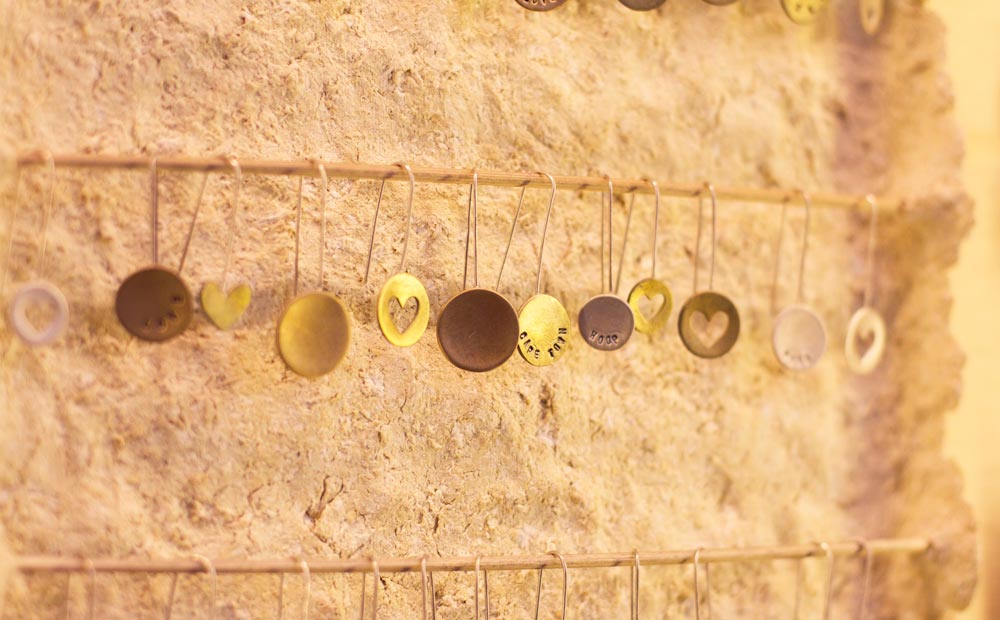
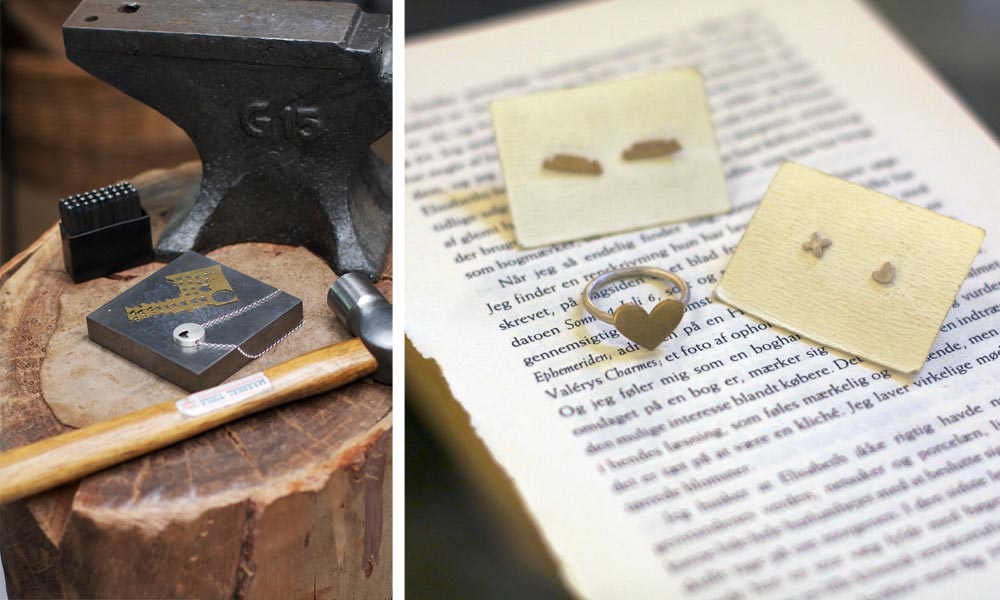
Liesbet van Cappellen is the creator of the Van Cappellen Jewelry brand and is forging her own way in the local design scene. Liesbet studied at the CPUT and Ruth Prowse School of Art before deciding to open her own workshop. She works with a variety of materials to create her range such as silver, gold, brass, copper, woods, plastics and all kinds of gemstones, and she designs for both men and women. You can find her stunning pieces at the Watershed Market at the Waterfront, as well as MeMeMe at 117A Long Street. You can also browse her website and order directly online. We chat to Liesbet to find out what inspires her design and pushes her to perfect her craft…

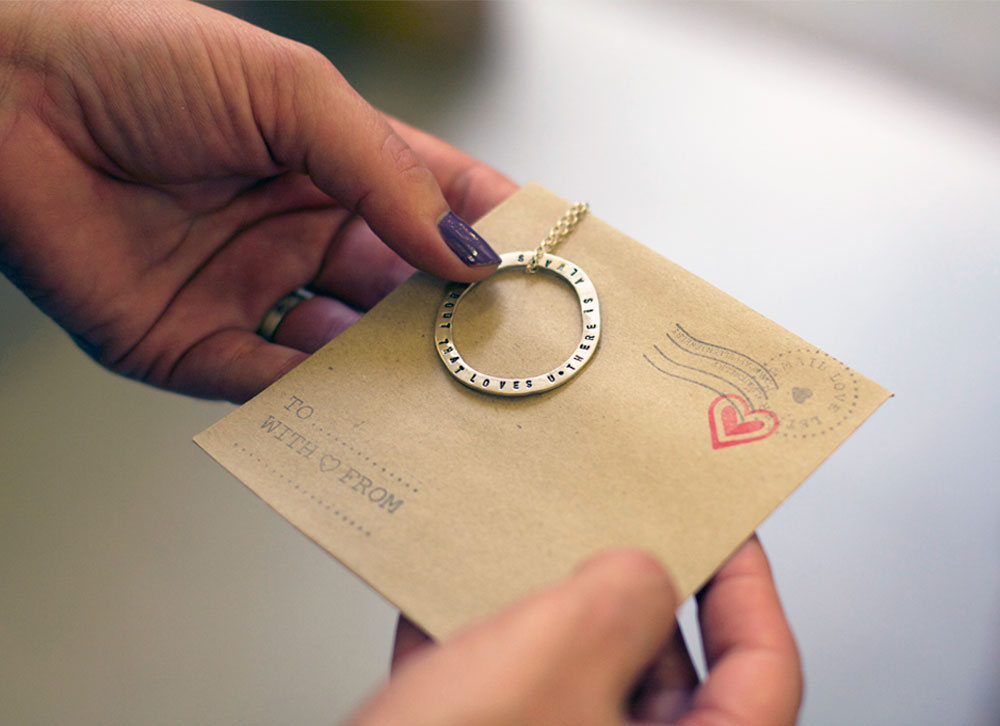
So Liesbet, we know that your Love Letters range is all about story-telling and wearable history. Tell us, what jewellry means to you?

To me jewellery tells a story, a life story, or a family story that has been passed down for generations. It is something that grows with you and your family. Jewellery can also give you comfort and take you back to a memory from when you were a child. For example, I’ll never forget that my mom always wore an oval ivory ring when I was a child. Jewellery that has been passed down from generation to generation is something so special, and has so much meaning to the whole family. I just hope that one day my jewellery will be part of someone’s family story.
Liesbet-Van-Cappellen-1000x2 Liesbet-Van-Cappellen
We spotted Karen Zoid sporting one of your ring necklaces in her new music video with François van Coke… how does it feel when you see a stranger walking around with something you created?

It is super special! It almost feels like seeing a long lost friend, and what makes it even more special, is when that person wears the piece all the time.

I have just come back from Kamers vol Geskenke in Johannesburg; I have been showing at Kamers events around the country for the past 3 years. A lot of the same people come to visit these shows and often people come up to me wearing a piece they purchased previously. It is such an overwhelming feeling to see the joy they still have in the piece when they show it off, and especially when they tell me that they wear it everyday. When I hear and see that, I have a little voice in my head that whispers, “ Mission accomplished!”

What does it mean to be a stylish woman in today’s South Africa?

The design world in South Africa is so vibrant and alive; it is extremely exciting to be a part of it. There are still so many opportunities and aspects to the design world that need to be discovered and that still need to grow. To be a small part of it, and its development, is basically like living the dream.
Liesbet-Van-Cappellen
What kind of woman/man do you have in mind when you design?

This is always a little difficult to answer as I feel like I design for everybody. In the beginning, I always thought I designed jewellery for the younger generation, girls between 15 and 35. I thought my jewellery would be given as a gift, or bought as a little treat for oneself. But when I started doing big trade shows, I noticed that my jewellery spoke to so many people, across many generations. Even men showed an interest and asked me to create a men’s range. That resulted in me launching a whole new men’s range this year. My business actually grew around these people; they are the inspiration behind it. Every single piece in my collection is customisable, and that makes it really fun. I can work on designs with my clients, which makes them unique. I just love giving my pieces a personal touch – it breathes life into them.

As someone who lives and breathes design on a daily basis – where do you look to stay inspired and curious about the world around you?

So many things around me inspire me. People are my biggest source of inspiration. Often it’s a story that I hear, or advice that someone gives me, that sparks that light bulb. I find inspiration in small things, like going to the park with my dog, or having a gin and tonic with my friends. These day-to-day activities really get the juices flowing! I am also very lucky to have very creative friends around me – if I ever feel stuck with a certain design I spend some time with them and something always pops into my head.
Liesbet-Van-Cappellen
Take us through ‘just another day at the office’…

Just another day at the office… that would be Feier and myself, at the workshop. I met Feier at Ruth Prowse, where we both studied. We immediately became good friends, and now we share a workshop. She is extremely funny and when we are at the workshop together, we sing, dance and laugh the whole day! I sometimes have to step out of the workshop to go to visit the girls at the shop I opened in the Watershed at the Waterfront. The shops there are owned by some of the best designers in Cape Town and it is overwhelming to see it all come together and work so well. My staff are also always vibrant and happy. I am very fortunate to work with my team; they always put a spring in my step and inspire me.

Tell us about the most influential person in your life?

That would have to be two people – my mom and dad. They both have an amazing sense of design. I love talking to them about my everyday challenges. They always have something to say, good or bad. And following their advice has never let me down.

Does your Belgian/Flemish background influence your designs and provide inspiration?

I am not sure whether it is my Belgian background that influences me, or that I have been fortunate to have travelled as much as I have. I think the fact that I have seen as much as I have, and experienced so many different cultures, has really shaped my sense of design.

I lived in America for a year and ‘Love Letters’ grew out of that. Again, it was the small things that I felt when I was there that inspired the range. I really missed the personal touch of family and friends. We had so much contact through Facebook, Skype and emails, but I always felt a little distanced. I thought of old romantic movies where, in the old days, people relied on hand written letters. You would have to wait next to the post box for days or weeks until he wrote back. I always thought that the feeling of receiving something as personal as a hand written letter after an excruciating wait, must be the most wonderful feeling in the world. So hence, the love letter range came about.
Liesbet-Van-Cappellen
What was the first piece that you ever made? How has your design aesthetic changed over the years?

The very first piece that I ever made was a silver ring with a striped pattern that looked like a bar code – my sister still has it, I think! The second one, was a silver ring that I made for Mother’s Day, with an orange resin heart. My style used to be very colourful and playful. My designs always included some kind of rubber, resin or plastic. I was, and still actually am, very drawn to realism. My thesis project at Ruth Prowse was about the 60s. I made flowers and peace signs – Jimi Hendrix and the Beatles inspired all of my pieces. I even made a piece that represented the landing on the moon! It was great fun to be a ‘hippie’ for a year! Nowadays I think my jewellery is realistic, but has been toned down a bit in the sense of colours and playfulness. I do sometimes miss it though, and then I will design a piece that takes me back to that time…

What is next for you?

Next up is Europe – I am going to Belgium to find some outlets. I launched my brand new website and online store as well. I’m looking forward to seeing how my work is received in international markets. Also, I will be launching a children’s range – so, busy times ahead, but all very exciting!

And now, a little more light-hearted – some quick-fire questions. Answer the first thing that pops into your head.

Best advice ever received? ‘Make mistakes’.
Favourite movie moment? “Did you say… Billy… I love you…?” from 2 Weeks Notice. Hugh Grant asks Sandra Bullock if she loves her boyfriend… not the best movie, but a line that
has my sister and I rolling on the floor laughing every time!
One thing you can’t live without? A hammer, my favourite tool.
Doing the cooking or doing the dishes? Cooking!
What’s your signature dish? Lasagne.
If you could only eat one thing for the rest of your life what would it be? Salmon… anything with salmon!

vcjewelry.co.za | FacebookTwitter | Instagram
miele-logo-banner

Woodstock Brewery & Masala Club: A Village Idiot Sunday Collab

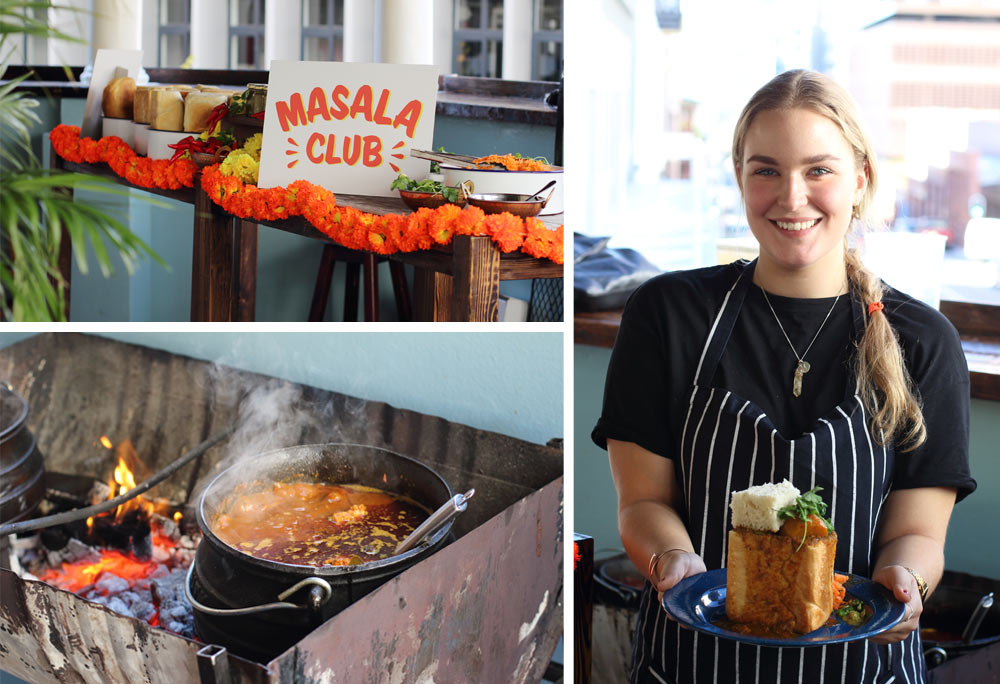
Ever since we heard that Masala Club and Woodstock Brewery were joining forces at The Village Idiot, we’ve been counting down the minutes. I’m not going to lie – it was a tough week but we made it! Who would have thought that seven days could feel like an eternity? As we made our way up The Village Idiot stairs for the sixth Sunday Collab, we were greeted by the unmistakable whiff of curry. It was time for bunny chows and brews.

Out on the balcony we got our first look at the herd of bunnies, and we liked what we saw. If you listened carefully you could hear the potjies bubbling slowly, while whispering promises of curried deliciousness. As we always say, cooking in cast iron is good for the soul, so it seemed fitting that this was going to be our Sunday lunch. First things first though, it was time for a beer.
Village-idiot-masala club collab
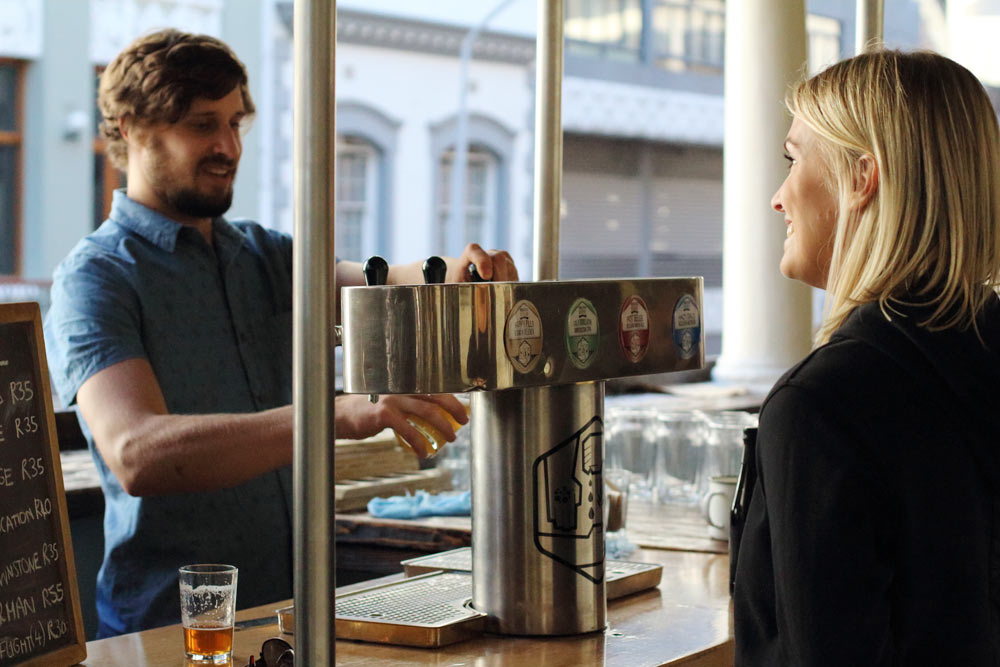
These days it doesn’t come much better than Woodstock Brewery. They have taken their rightful place as the newest member of craft SA’s big five, and they have done so by putting their money where their mash-tun is. They make big, bold beers and they’re made the way they want to make ’em.

We started with their thirst-quenching Hazy Daze, the perfect way to get the afternoon going. Made with fresh oranges and crushed coriander seeds, this unfiltered Belgian Wit is awesome on a hot day, or any other day for that matter. Their other three taps included Happy Pills (Pilsner), Pot Belge (Belgian Amber), and what is turning out to be the local king of the IPA castle, Californicator.
Woodstock Brewery Hazy Daze
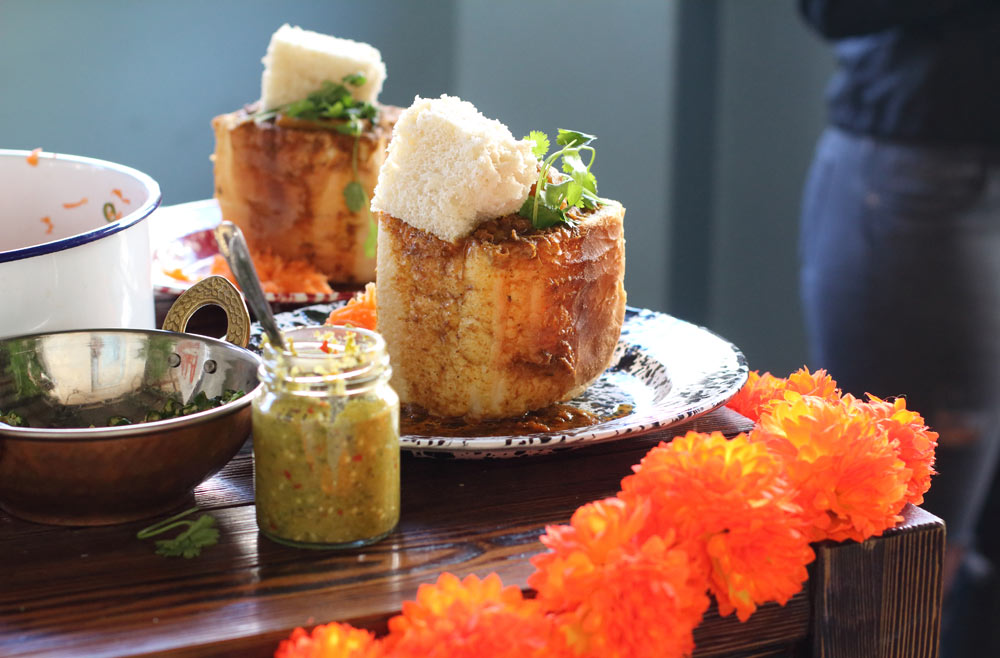
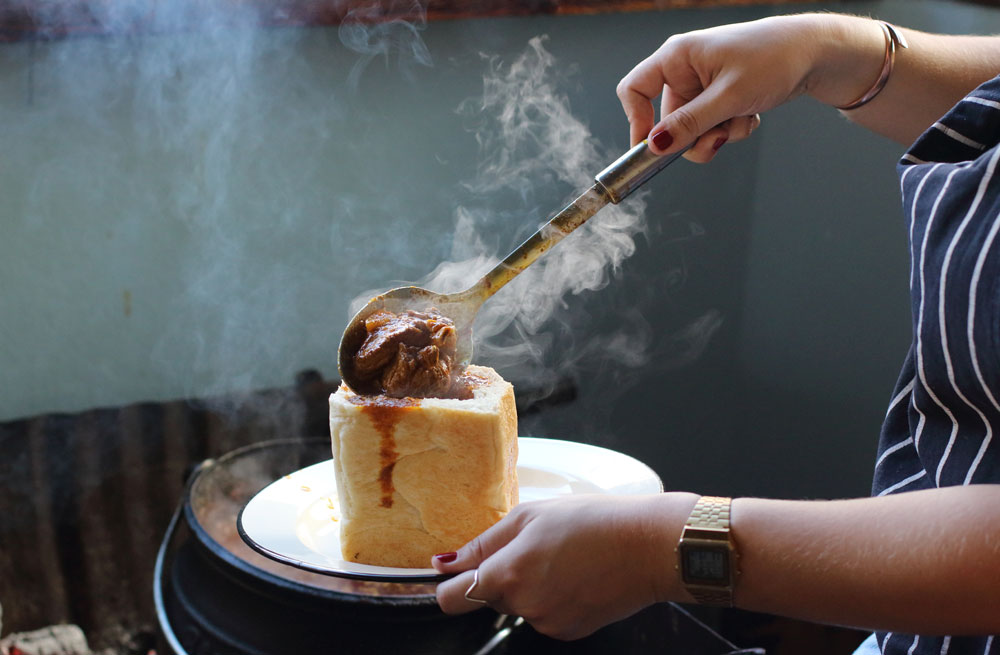
It was all hands on deck as Masala Club manned the coals. Bunny after bunny hopped across the counter and every now and then, Max the family dog, would trot past to keep an eye on quality control. He must know a thing or two about Mikala’s cooking, and we reckoned it was about time to find out for ourselves. There were a few options on the menu: lamb, bean, or a combo of the two. Carbs be damned, we went for broke with the lamb bunny. It was served with authentic grated carrot salad, sliced green chilli, fresh, coriander and to that we added a Californicator to wash it all down.
Village-idiot-masala club collab
As far as we’re concerned, a bunny chow is arguably the perfect meal. It is form, function and awesomeness all rolled into one. We know more than a few people who would choose it as a last meal. Get it wrong and it can be a slog of note, but get it right and the doors to spice-filled nirvana open up before you. Mikala had this one spot on! The bunny was perfect, with a soft, fresh ‘government’ loaf, hollowed out and filled to overflowing with tasty curry. “Would you like some extra gravy?” she asked – if anyone ever says no to that question then they are no friend of ours.

By that stage we were onto our second Californicator. The big tropical and citrus aromas from the hops were the perfect match for the curry spices. The more you have, the better everything tastes. Before we knew it, what once seemed a monumental task was reduced to crumbs on a plate and saucy fingerprints on an empty beer glass. Ten outta ten Masala Club, we love your work.
Village-idiot-masala club collabVillage-idiot-masala club collab
Full and satisfied we moved on to dessert – Woodstock’s newest beer, Mr. Brownstone. This brown hazelnut ale is everything it promised to be and then some. It was rich and robust with flavours of hazelnut, vanilla and chocolate. To quote Guns & Roses’ Mr. Brownstone, “He’s been knocking, he won’t leave me alone!” This beer’s going to stir a few things up on the local scene we can promise you that.
Woodstock Brewwet Mr Brownstone
The other great thing about The Village Idiot is that it seems you never know what’s going to happen next. Just like that, we found ourselves in the Sunday pool competition. Without going into too much detail, we managed to scrounge up the last remnants of a misspent youth and walk away with first prize. What a result. It was time to celebrate and what better way to do it than with Woodstock’s last offering of the day, a barrel-aged Belgian quad aptly named, Sugarman. It was a beautifully rich and boozy way to end the day.
sugarman-woodstock-brewery
All in all, great chow, ridiculously good beers and great company – we can chalk up that up as another massive win for the Village Idiot. If there is a better place to be on a Sunday afternoon in Cape Town, we haven’t found it. Who knows, soon we may have to light a fire or three on the balcony – watch this space!
Village-idiot-masala club collab
The Village Idiot, 32 Loop Street | thevillageidiot.co.zaFacebook | Twitter | Instagram
Masala Club | Facebook | Twitter | Instagram
Woodstock Brewery | woodstockbrewery.co.za | Facebook | Twitter | Instagram

Mama Nancy and The Moyo we Khaya Garden

Reliance Compost
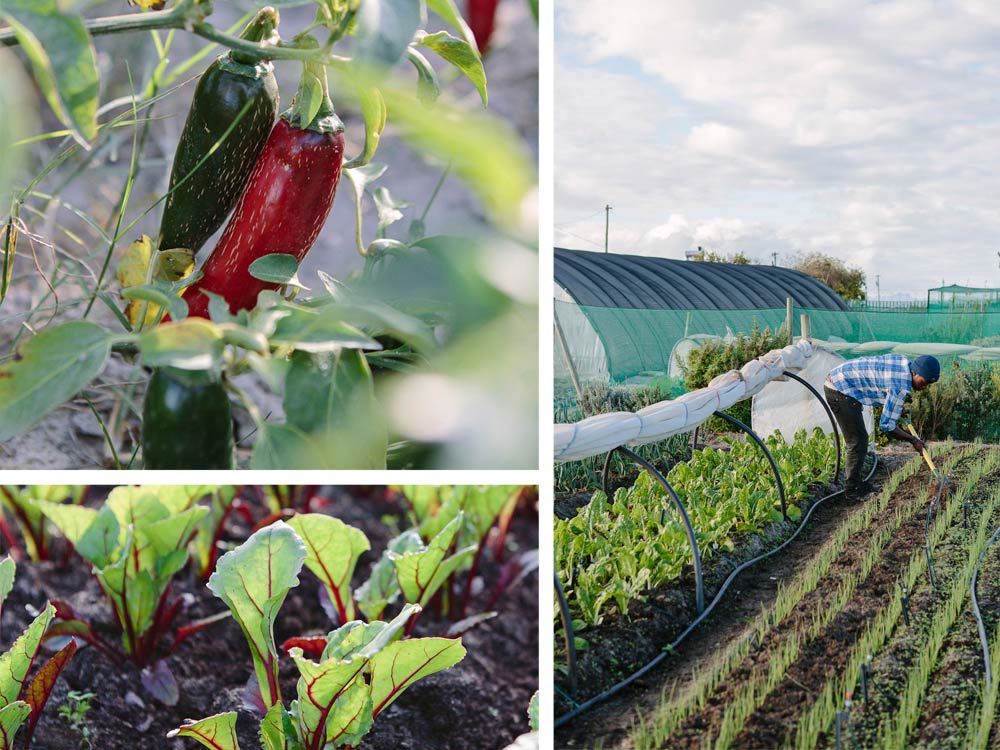
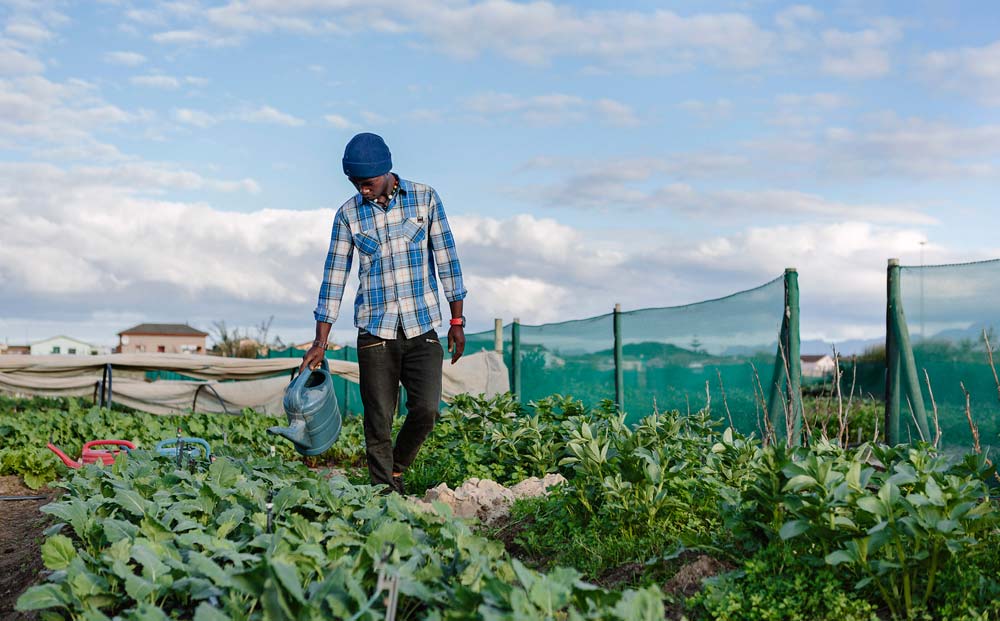
Abalimi Bezekhaya, the non-profit urban agriculture organisation, has a far and wide reach. They’re responsible for ‘greening’ much of Khayelitsha and Philippi, as well as enabling residents to grow vegetables for themselves and their families. Any excess produce is bought for the Harvest of Hope weekly vegetable boxes. It’s an incredible set-up, one that has changed the lives of many.

We met Mama Nancy, who is a pillar within the Abalami project, she’s been chairperson for the organisation for about the last ten years, and was part of the driving force that made the Moyo We Khaya food garden in Khayelitsha such a success. The garden was actually set up by Abalimi stalwart Christina Kaba, who then got Mama Nancy on board.
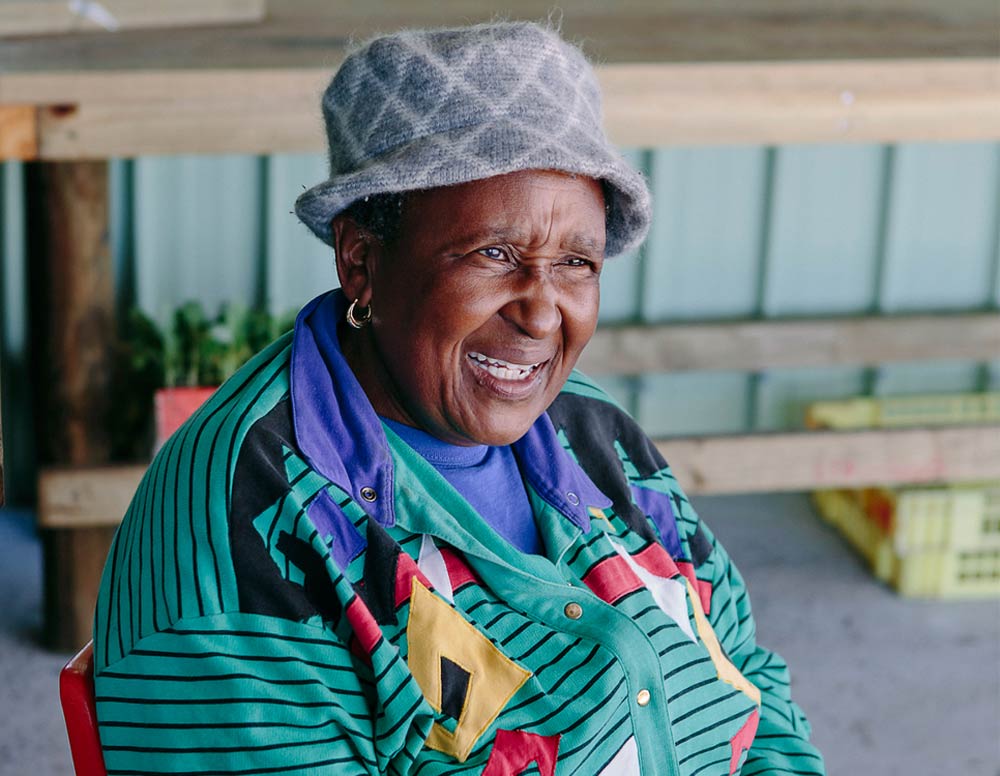
Mama-Nancy Moyo We Khaya food garden
First things first, we’d love to hear the story of how you got into gardening and your role at Abalimi?

It was Christina Kaba who recruited me into Abalimi, and she also recruited me into the garden. We met when I was still working [as a school principal] and Abalimi organised greening for the school. That was where Christina and I met and became friends. It was then that she recruited me for Abalimi in about 92/93, and then I subsequently joined the garden when I retired.
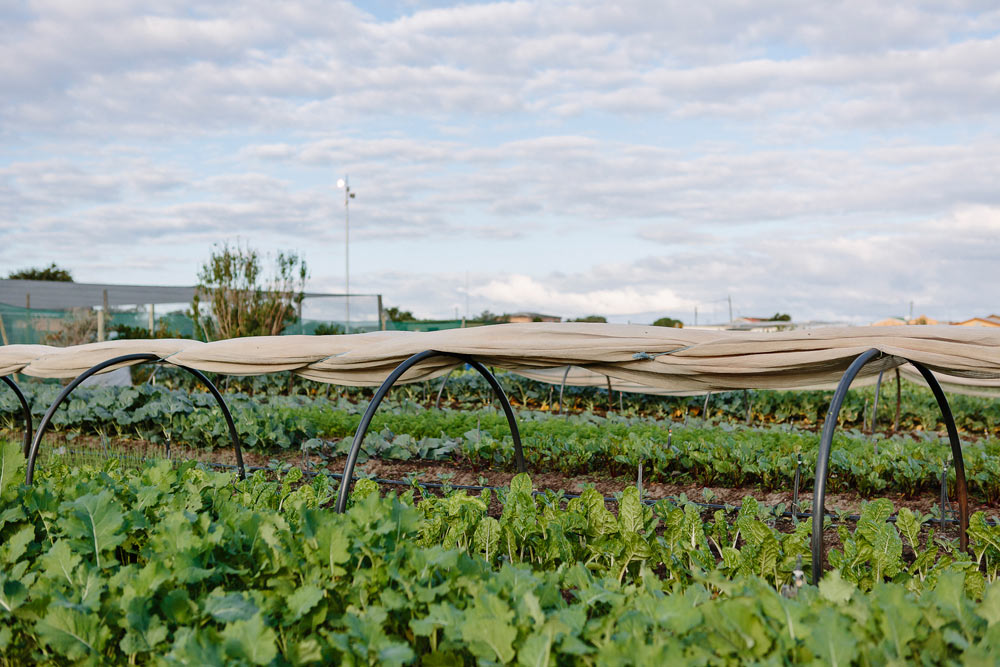
Moyo We Khaya food gardenMoyo We Khaya food garden
What did you know about gardening before you started? How did you learn so much?

I was born in the Eastern Cape, and I grew up there too. My parents worked in Cape Town and when they retired, they returned home to the Eastern Cape and they began growing vegetables. But before I moved to Cape Town for my own work, I unfortunately didn’t ever take part in the growing but I enjoyed eating the vegetables that they grew. I could appreciate them but I didn’t know much. When Christina wanted to recruit me, I said “Ok, but why?” and she kind of dangled a carrot in front of me to tempt me. She offered me things like aubergines, which I would always see in the shops, but never bothered to buy because they were expensive and I didn’t know how to cook them. I would stick to the usual vegetables that I knew. Christina let me taste lots of new vegetables, which I liked, and I decided to join the garden because I had retired and had nothing to do.

She initially asked me to help with managing the people working in the garden, because I had experience with that. But once I got here, I just started growing vegetables and I became very interested in gardening and I learned about all the varieties of each vegetable. I then went on to the internet and began to look up recipes, which I shared with the group here.

Through that, I began to learn a lot about the vegetables. I also began to learn a lot about the indigenous veg, which my mother used to cook in the Eastern Cape, but that I didn’t take note of, and then began to cook them for myself. What was very interesting to me is that the veggies have quite a lot of pests and they have lots of different troubles – just like humans! They need nurturing as well – just like humans! It’s very interesting. They are all different in many ways, they’ve even got companions, like humans! But I’m still learning, life is a learning curve, but I find this all very interesting. Now I’ve developed an interest in herbs and spices, and so I’ve been googling everything about them. I even had a problem with my lumbar, it had been hurting for a very long time and I read about using cayenne pepper. Cayenne pepper is good for a number of things, I even lost weight when I was using it for my back. All I was doing was mixing it with a little bit of water in the morning, and for the rest of the day, I never felt hungry and had loads of energy. It also helped my back beautifully! I can bend and do everything now! I’ve learned so much, but still have a lot to learn in the garden.

How big is this plot of land and what did it take to set it up?

The plot is one hectare. When we started, it was very difficult. It was completely covered in sand and I never thought that anything could grow here. But then I read a book about a woman who went from one country to another because God told her to grow vegetables. And despite the land being barren, and people doubting her, she grew them. People thought she was crazy. We had the same thing, people questioned us the whole time, but here we are. The garden is two years old now. And this was my first garden!

Why do you enjoy gardening so much and what positive changes has it brought into your life?

I love it because I’m enjoying eating organic vegetables. Because I used to go to Woolworths and I would always see organic veggies and would wonder what does that mean? What is the difference? But now I understand! I come here, pick up some fresh veggies and go home and cook! I love veggies!

So, what is your favourite vegetable to grow?

That’s a hard one. I like spinach, because you can use it in quite a number of things. And we use spinach in our culture, in umfino [mixture of maize meal and chopped spinach, cabbage and potatoes]. So I like spinach, but I eat everything, even if I’m seeing it for the first time. I have to taste everything. I love them all! They all have different vitamins and tastes, and I know that using some herbs can enhance the taste of other veggies. I’m going to write all my recipes down and paste them on the wall to share the information. You teach a woman, you teach a nation!
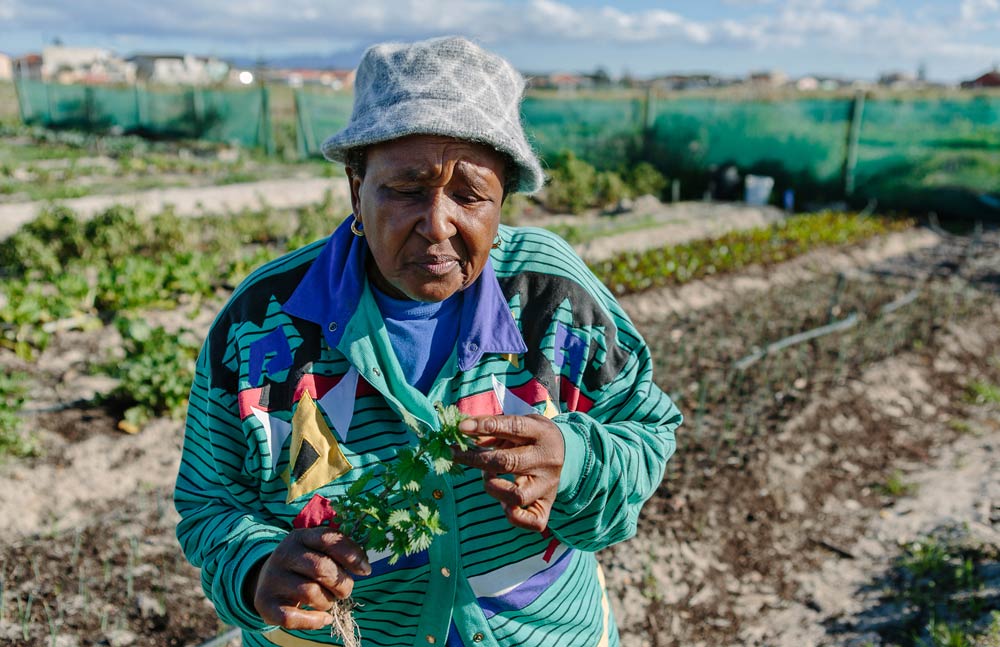
Moyo We Khaya food garden
What are the biggest challenges you face with the garden?

The biggest challenge in the garden is the pests. The seeds don’t cause many problems, but the pests do. We’re not using pesticides, you see. There are moles and snails, it never ends. And we have to be friendly to the environment, which is frustrating. We have to be nice to them, even though they’re messing up our garden.

What is your favourite part of the gardening process: the planting, the tending or the harvest?

Harvesting is the best, because when you harvest you think back to how you have nurtured the veg. Because it does need nurturing . If it’s not growing well then you have to do something about it. Growing is very difficult, but when you harvest, you can see that you’ve worked very hard and you’ve nurtured the plants very well. It’s like raising a child, there can be lots of frustration but once they’re all grown up the parents can feel proud.
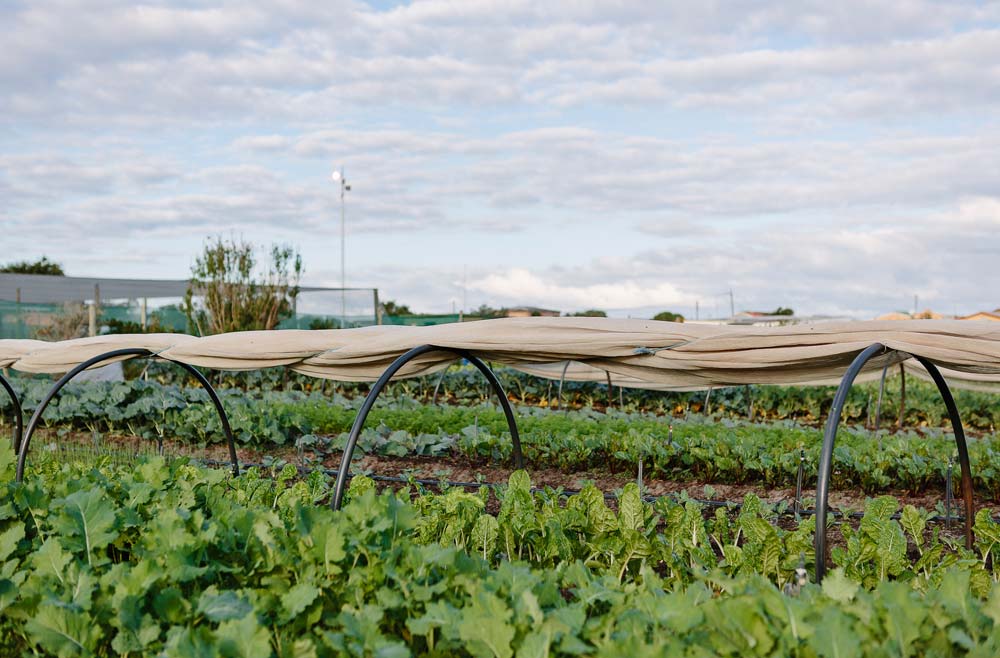
Mama Nancy and Moyo we Khaya Garden
What have you enjoyed most about being part of the Abalimi team?

I had never been involved in such a project, this was the the first time. It has its challenges. I’ve worked in the government where there’s money that comes in and you know what to do with it. Working on a project like Abalimi, you have to rely on donated funds and it’s quite challenging. I am enjoying it though, because even though it can be frustrating, the challenges always teach us something.

What has the community’s reaction been?

People come and appreciate what we are doing here. Especially the elders, who wished they had joined us from the outset, when we started. They didn’t realise that it was going to look like this. Only now they come and ask that if there’s a space, they would like to join. I thought that the youngsters in the area, who weren’t working, would come and see me working in the garden and think “why not us”. But they only marvel at me when I go home, and then talk to me and ask what I was doing.

They would ask me why I wasn’t chilling at home, to which I would say, there’s no time to chill in life. You have to keep busy. If I wasn’t in the garden I would be doing something else. But I figure that it’s close to home, and I’m enjoying it.
Moyo- We khaya_Peace Garden
How did the 12 staff members come to work at the gardens?

Once we obtained the land, Christina actually took a loudspeaker and announced “all those who would like to grow vegetables in the garden, please come! We’ve got the land, it’s very exciting! All are welcome!” And a lot of people came, but we had to cut the numbers because others were elderly people and we wanted people with energy.

The youth came, but found it very difficult because they’re not used to working very hard, and here it’s no child’s play. I told them that we were going to work very, very hard. If you think you can’t make it, there’s the door. Don’t cheat yourself, if you can’t work hard, don’t even start. We don’t want the land to be unused. The people working here have been here a while.
Mama Nancy and Moyo we Khaya Garden
Can you tell us what’s next for the garden?

Well, we intend to get the land next door. Initially we wanted both pieces of land, which together make two hectares. It was meant to be used for a school, but there are too many schools in the area so we applied for the land. It took us quite a while to get the first land, but we should get the new land soon.

abalimi.org.za

Delicious produce is grown in healthy, living soil. #Harvesttotable series brought to you by Reliance Compost.

Reliance Compost

Sweet and Sour Stir Fry with Sweet Potato “Spaghetti”

Findus Vegetables

A delicious and vibrant vegetarian dish that is perfect for weekday dinners.

Serves: 4
Difficulty: easy
Preparation time: 20 minutes
Cooking time: 20 minutes

Stir-fry Sauce
1 Tbsp (15 ml) sesame oil
1 tsp (5 ml) garlic, finely chopped
1 tsp (5 ml) ginger, finely grated
½ tsp (2.5 ml) red chilli, finely chopped
1 Tbsp (15 ml) Soy sauce
1 Tbsp (15 ml) rice vinegar
1 Tbsp (15 ml) honey
1 Tbsp (15 ml) tomato paste
1 tsp (5 ml) sesame seeds
1 tsp (5 ml) corn flour
½ C (125 ml) water
salt and pepper

Sweet Potato “Spaghetti”
4 tsp (20 ml) olive oil
4 tsp (20 ml) butter
1½ (450 g) yellow sweet potatoes, peeled and spiralized
1 tsp (5 ml) garlic, finely chopped
1 tsp (5 ml) ginger, finely grated
1 (4 g) chilli, finely chopped
1 (410 g) tin butter beans, drained
salt and pepper

Stir-fry
1 Tbsp (15 ml) olive oil
500 g (1 bag) Findus Wok Bali
150 g ricotta, crumbled
¼ C (60 ml / 12 g) onion sprouts
handful basil leaves

Stir-fry Sauce
Add the oil to a hot pan over medium heat. Add the garlic, ginger and chilli and sauté for 1 minute. Whisk in the rest of the ingredients until smooth. Simmer for 2-3 minutes until slightly thickened and season with a pinch of salt and pepper.

Sweet Potato “Spaghetti”
Heat the oil and butter in a hot pan over medium heat. Add the sweet potatoes, garlic, ginger and chilli and fry for 8 minutes. Add the beans and fry for a further 4 minutes. Season to taste.

Stir-fry
Heat the oil in a hot frying pan over medium heat. Add the Findus Wok Bali and fry for 4-5 minutes until tender. Stir in the stir-fry sauce.

Serve the stir-fried vegetables on top of the sweet potato “spaghetti”. Top it off with the ricotta, onion sprouts and basil.

TIP: The sweet potato “spaghetti” is fun to make and vibrant in colour. If you like, you can replace it with regular spaghetti, glass noodles, egg noodles or rice.

Fresh Brew: Dive into Aegir’s A Wee Heavy 90 Shilling Ale

Aegir Project Brewery is probably one of the most exciting new breweries in the South Africa. It’s run by brewmaster Rory Lancellas, and as well as their awesome line up of regular beers, they brew two seasonal beers. A Wee Heavy 90 Shilling is Autumn’s offering and you better believe, it tastes as good as a cold pint after a treacherous row through stormy seas.

The brew pours a dark reddish brown with an off-white frothy head. On the snout it’s got big biscuity malt character backed with hints of dark fruits and a sugary sweetness. As you dive in you’re hit with a first wave of rich malt character. Shortly after, the second wave crashes in with flavours of burnt sugar, treacle and sultanas.

It finishes off with a lingering 36 IBU bitterness and leaves you thirsting for more. The brew is robust and complex, and even though it sits at 6.5% ABV, it feels clean and approachable.
Aegir continues to impress with great beers that are interesting and well made. We think craft beer fans are going to love this one, but will it be more popular that summer’s Hopricot IPA? We’ll have to wait and see. In the meantime we’re going to enjoy as many 90 shillings as we can for as long as it’s available.

We think craft beer fans are going to love this one, but will it be more popular that summer’s Hopricot IPA? We’ll have to wait and see. In the meantime we’re going to enjoy as many 90 shillings as we can for as long as it’s available.

Did you know? The term a “90 shilling” comes from the old Scottish method of naming a brewery’s beer? It’s based on its alcohol content and resulting tax rating. If you were buying a 90 you knew you were getting only the best the brewery had to offer.

aegir_beer

Facebook | Twitter | Instagram 

Darling Brew & Foliage: A Village Idiot Sunday Collab

We ain’t sure whether it was the braai-smoke wafting over the balcony, the promise of delicious fire-food, or of a few crafty brews that got us walking off Loop street, but either way, it was Sunday in Cape Town and we were about to get stuck into The Village Idiot Braai Collab Series.

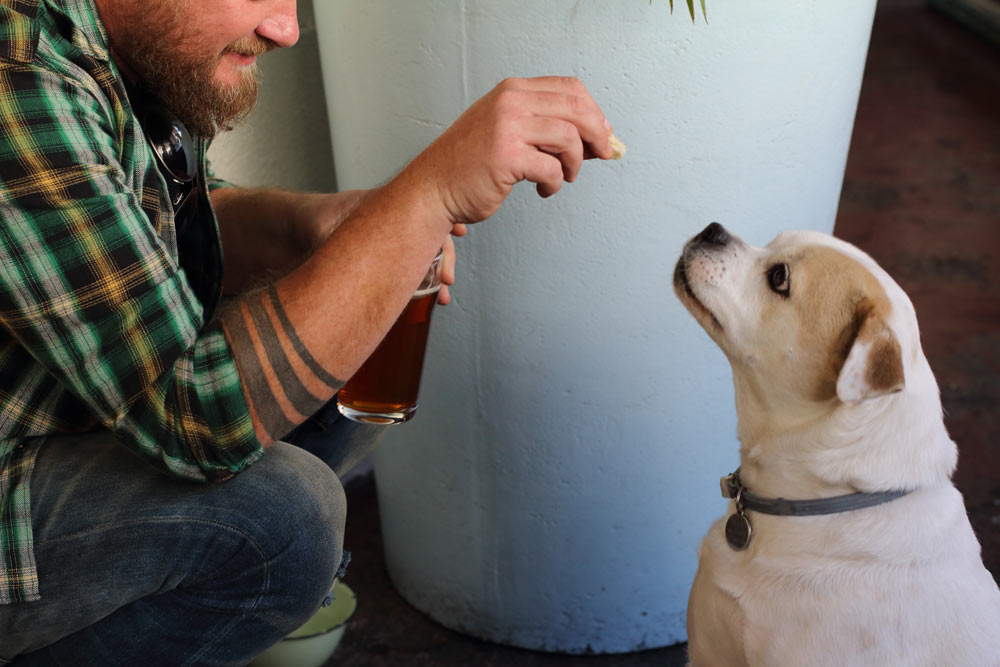
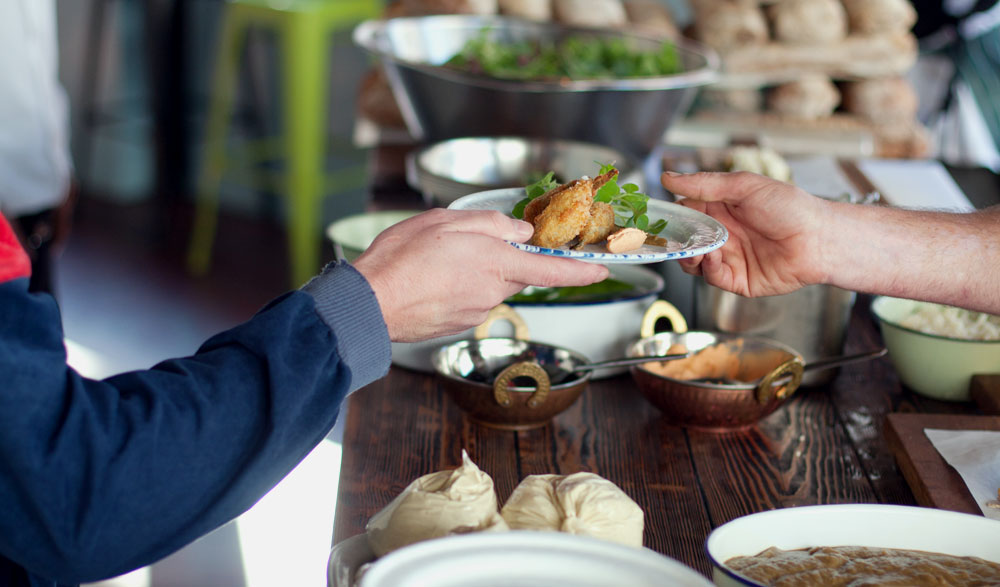
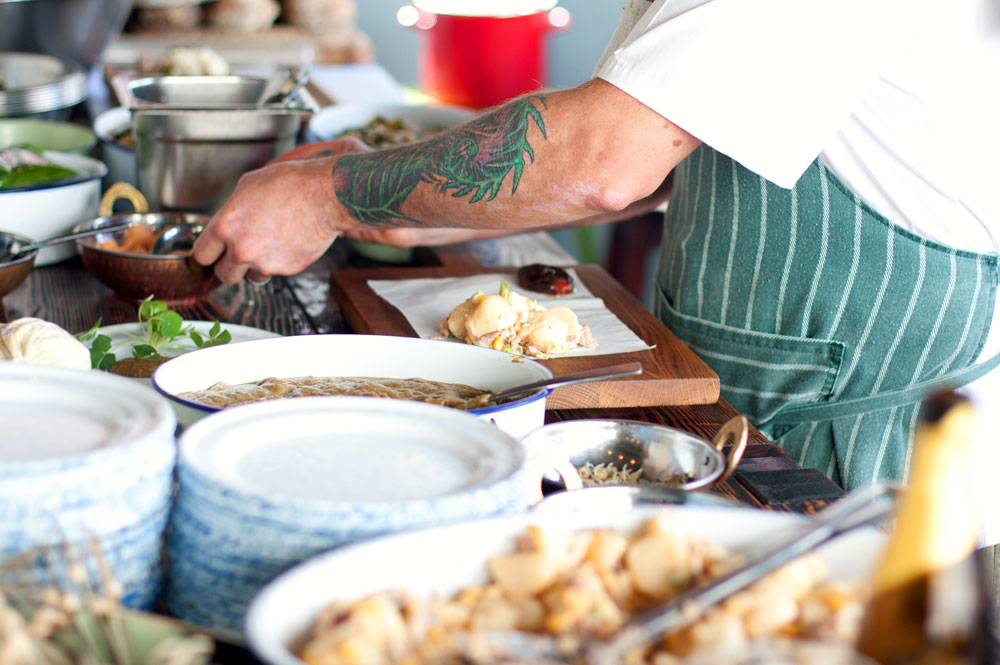
Oskar the ostrich (the real village idiot), was watching us from his perch behind the bar. On the balcony next to the braai is Chris Erasmus from Foliage Restaurant, a man who looks like he lives in the forest and loves living off the land, and that’s not far off. His team are no different, and it’s clear from all the tattoos and beards that these guys enjoy taking time and care with what they create – either that, or they make up the Franschhoek chapter of the Hippy Hell’s Angels. With big piles of foraged mushrooms, loaves of acorn and pine needle bread, and a grill full of low ‘n slow smoked spare ribs and brisket, it was shaping up to be one tasty afternoon. But first things first, beer.
Darling Brew & Foliage – A Sunday Collab at the Village Idiot
Village Idiot Darling Brew
Darling Brew head brewer Felix is pouring pints, and before we can say “Weskus-beskus” he fills our glasses with his newest beer, Blood Serpent. Since Darling Brew have built their own brewery, their beers just keep getting better, and holy-hoppy-happiness Batman, this beer is proof of that. This dry-hopped lager has depth in spades, with a spicy kick, and a serious feel-good factor – being that it’s Africa’s first carbon neutral beer. Barefoot hippies and daisies aside, carbon emissions from the brewing process are offset by contributions to the Kariba REDD+ Project in Zimbabwe. Would we like another? Don’t mind if we do.

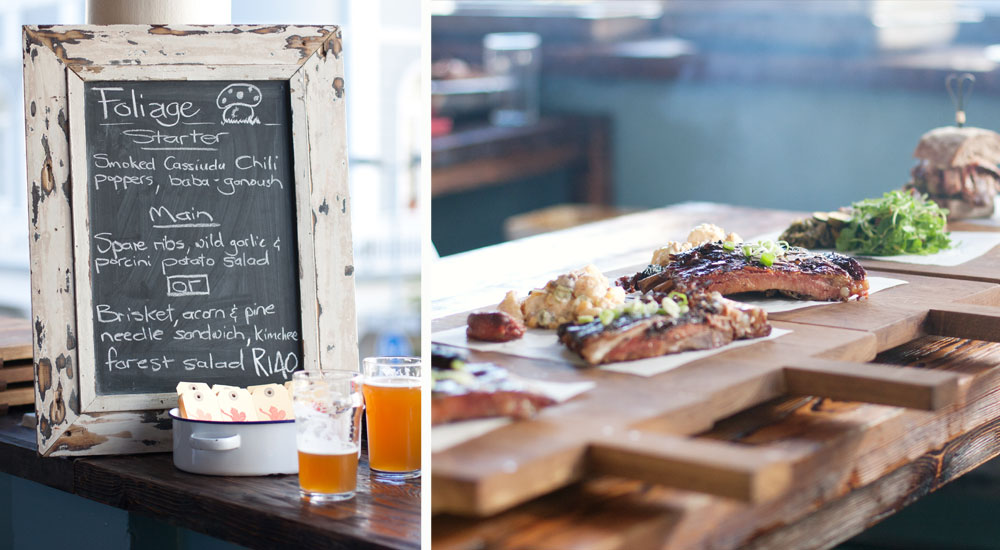
It’s nearly chow time and we head inside. This place is a collection of the best SA has to offer; oak barrels, old books, leather, skulls, fire and booze that would make Ernest Hemingway feel right at home in the Great Karoo. The starters arrive, smoked Cassiudu chilli poppers with baba-ganoush. The chilli kick works a treat with the spicy bite in the Blood Serpent, with just the right amount of hop bitterness to make you want another sip, and another one, and another.village_idiot_food
Darling Brew & Foliage – A Sunday Collab at the Village Idiot
It takes no time for our crew to smash those, and just then a selection of main courses arrives. The reverent silence lasts about as long as my last sip of beer and soon it’s all hands on deck, and fingers grabbing ribs. More beer please.
Darling Brew & Foliage – A Sunday Collab at the Village Idiot
Village-Idiot-Chris-Erasmus
It’s time for Darling’s Thunderbird IPA, a perfect match for the fall-off-the-bone, smoked spare ribs served with porcini, wild garlic and potato salad. There is something magical about the combination of a dark, meaty, caramelised crust, and sweet, smokey pork. Add to that a glass filled with serious dose of hops and a malty backbone – you can’t go wrong.
Darling Brew & Foliage – A Sunday Collab at the Village Idiot
The second main option, low ‘n slow brisket, served on acorn and pine needle bread, with kimchee forest salad was close-your-eyes-and-you-are-in-the-forest stuff. Smokey, earthy flavours that just won’t quit, and yeah, there was only one beer for this. With it’s dark, roast, toasty flavours Black Mist is a blacker than black ale that’s a perfect companion to the epic, foraged, fire-food.
Darling Brew & Foliage – A Sunday Collab at the Village Idiot
While the guys grabbed one for the road, the ladies got stuck into something sweet off the menu; mini-koeksisters with Amazi ice-cream. Wow! The deliciousness doesn’t quit, and we love it.
Village Idiot Foliage Sunday Collab
This is what Sunday-fundays are all about – a great concept, at an awesome spot, with chilled vibes, good people, delicious, local braai-chow and some of the best craft beer SA has to offer. Will we be back next week? You bet we will.

This Sunday sees Masala Café cooking up Bunny-Chows, and incredible craft beers will be from our mates at Woodstock Brewery. Beers and bunnies, these are a few of our favourite things. See you there…

The Village Idiot, 32 Loop Street | thevillageidiot.co.zaFacebook | Twitter | Instagram

Foliage Restaurant, Huguenot Road Franschhoek | foliage.co.za | Facebook | Twitter | Instagram

Darling Brew | darlingbrew.co.za | Facebook | Twitter | Instagram

Greenpop Unveils Their Organic Nursery

Reliance Compost
Someone once said “gardening is cheaper than therapy and you get tomatoes”, and words have never rung truer than for our friends at Greenpop, the social enterprise responsible for the reforesting of South Africa’s indigenous trees. This week saw the end of months of hard work when they officially launched their organic garden in Woodstock. We stopped by to get the story behind the garden.

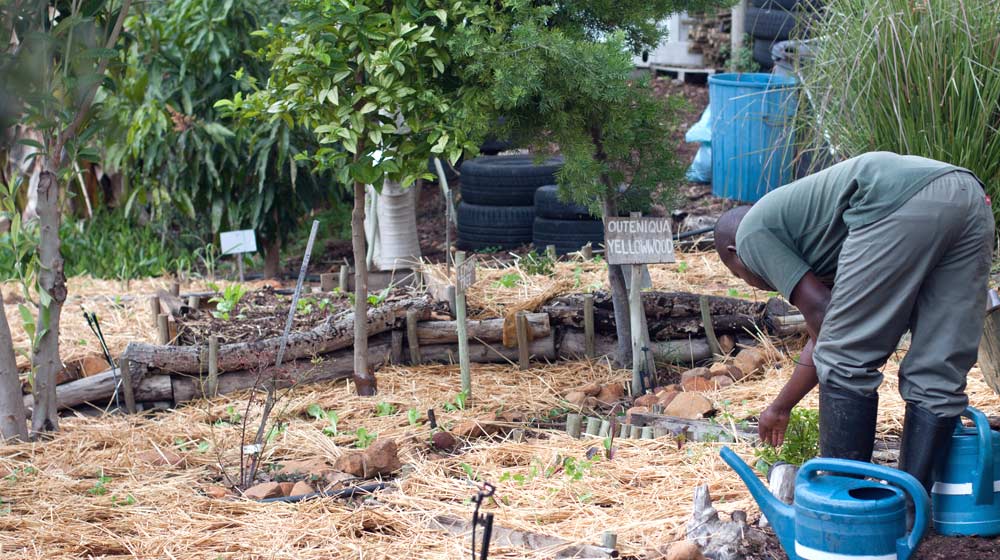
The garden, which Greenpop took ownership of over four years again, came into their care after ‘Tree-E-O’ Misha stumbled across an abandoned lot just above the Mountain Road Primary School. The environmental warriors then decided to convert it to a glowing green space full of trees, fruit and vegetables.
Green pop Greenpop Nursery
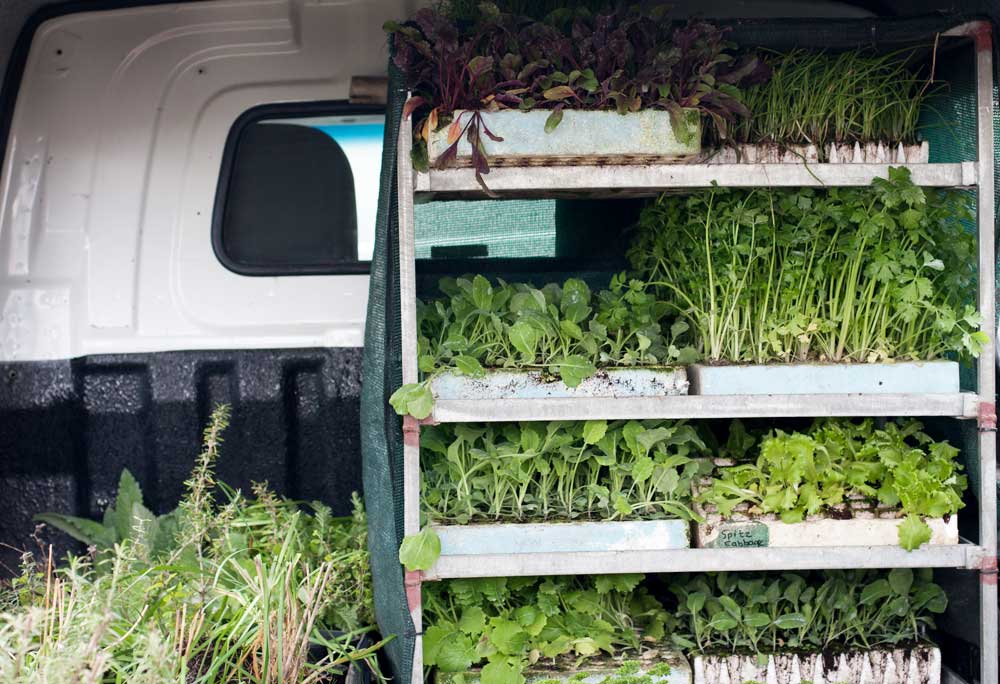
The garden provides them with room to store and cultivate their trees yet to be planted, as well as a place to grow organic produce that they use in their office kitchen.

Greenpop is powered by a huge team of volunteers and interns and these veggies are put to good use in the office – especially on a Friday where they gather to make a delicious vegan meal.

And while this garden, having been tended, cleared, fed and loved, has been a huge success for Greenpop, they felt that this year it deserved a little extra love. They called in longtime friend of Greenpop, Ben Getz and his team at Urban Harvest, to give the space a wonderful makeover.Greenpop Nursery
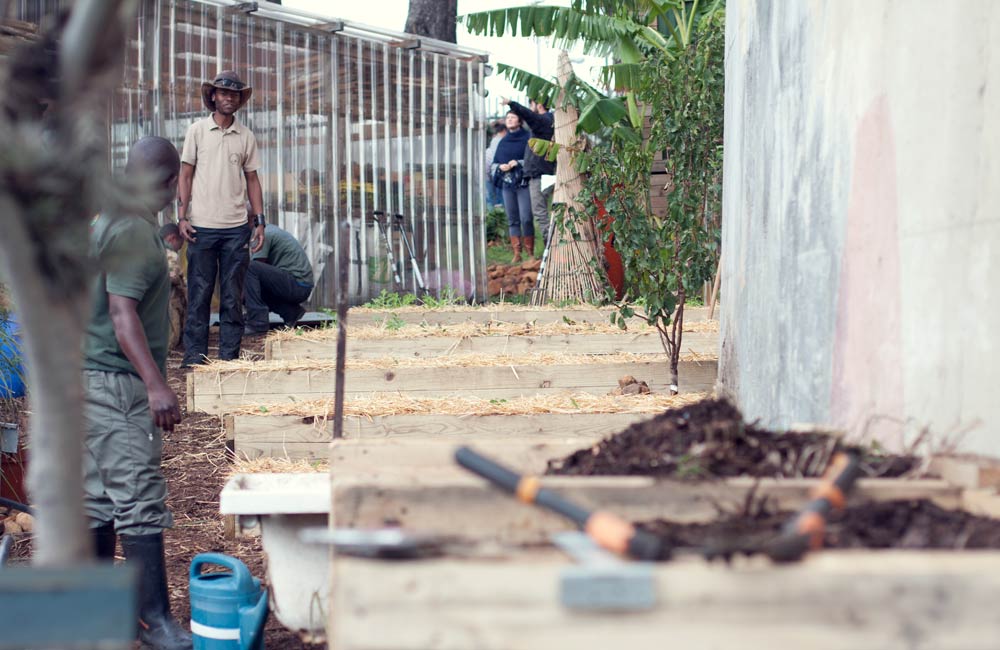
While in need of a little refresh, the garden itself was still in extraordinarily good shape. Ben credits this to the fact that the Greenpop team, along with the trusty hands of caretaker Malibu, ferociously upheld their organic methods of gardening. The soil was exceptionally healthy and teeming with living organisms.

To build on this fertility, all that was required a little bit of a boost from Reliance compost and their own compost made on-site.

Alongside their compost pile is a thriving worm farm, an endeavour that will continue to improve on the health of the garden. How it works is, the worms make their way into the compost piles and are distributed back into the garden when the compost is spread amongst the plants. Earthworms are good for the soil because as they move through it, they create tiny tunnels, which facilitate in getting air and water to the root of plants.

Ben is also working to get a liquid fertiliser system up and running. This is done by making a tea from earthworm castings, and another two from yarrow and comfrey plants. What Ben likes most about supplementing the fertilising process with these teas is that it forces hand watering, as you can’t pump them through the irrigation system. Hand watering and deep watering allow for the standard irrigation to penetrate the soil and can be absorbed properly by the roots of the plants.

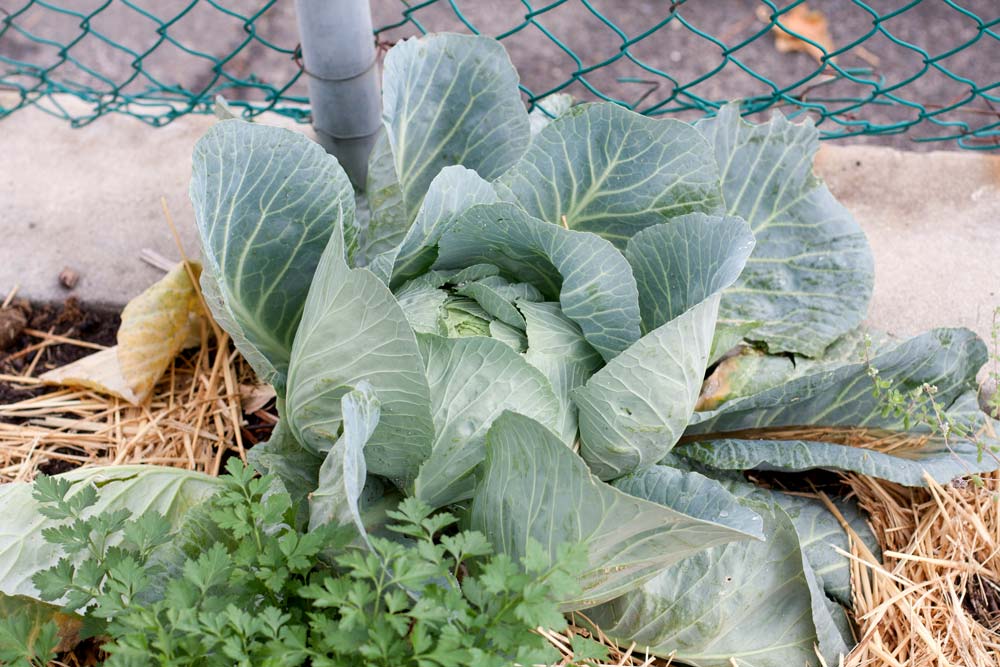
And the plants themselves truly are the stars of the show. In four short days Urban Harvest, along with 20 volunteers, have not only revitalised an edible garden but have aided in turning it into a urban jungle. It features a wealth of celery, kale, spinach, large leafy cabbages and even turnips.

Greenpop NurseryGreen pop

There are banana trees, heavy with fruit about to ripen, and pockets of flourishing herbs including perennial basil, parsley and more sage than they will know what to do with.

There’s even a sneaky granadilla plant that’s taken up an entire side of the office (upcycled from a cargo container). There is an even balance of perennial and seasonal plants, most of the perennials will live for years to come while some of the seasonal will have to replanted within the next year. It’s a delicate process of knowing where to plant what, but one that Ben and his team manage confidently.Greenpop Nursery
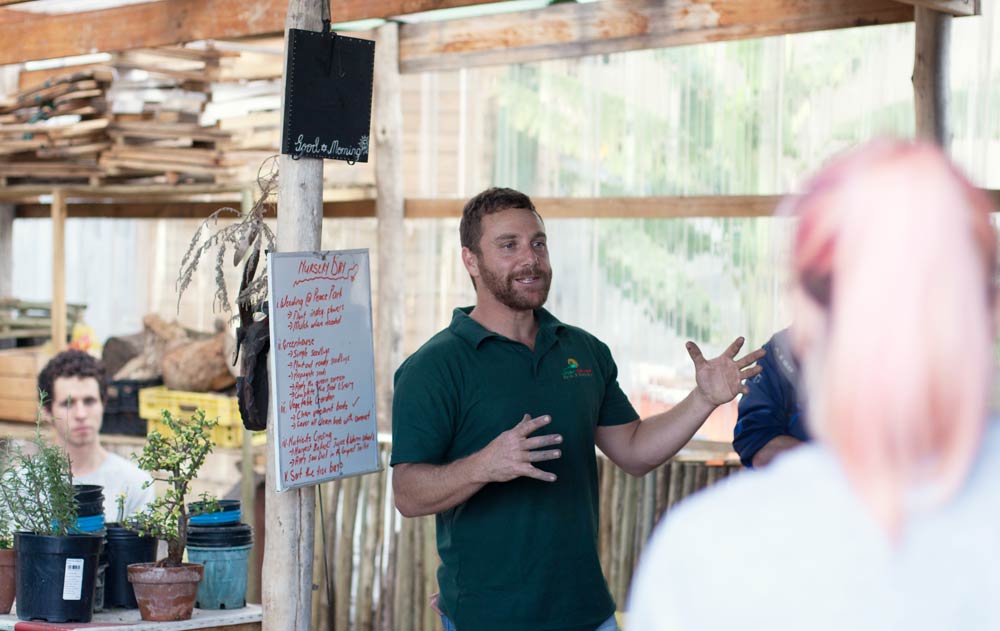
Working in the same office space as Greenpop, we are wowed daily by the incredible things they do. We admire their dedication to making the world a greener and cleaner place and the success of their garden is a result of their unending passion for the environment. Urban Harvest shares in this vision for a happier earth and Ben has  helped Greenpop establish a beautiful garden that will no doubt continue to flourish. For the meantime, the garden will remain as a storage facility for their fledgling trees and as a source of produce for the office. For any members of the public keen to discover more, there are open nursery days held every third Tuesday. Anyone is welcome to join in and get their hands a little dirty.  RSVP to their nursery days so that you can be made aware of any potential schedule changes by clicking HERE. Who knows, you may just catch the Greenpop bug and join the good fight for the planet.
Greenpop Nursery
Greenpop.org | Facebook | Twitter

Urbanharvest.co.za | Facebook | Twitter

Delicious produce is grown in healthy, living soil. #Harvesttotable series brought to you by Reliance Compost.
Reliance Compost

Six Great Beers to Drink this Winter

Winter has finally descended and we couldn’t be happier. It’s the perfect time to pig out on comfort food and drink hearty beers that smack you around the chops with big flavour. Here are our top six picks to get you going on your winter craft beer journey.

Innis & Gunn Original

Innis & Gunn are known for their oak-aged beers and this was the one that started it all. It’s still brewmaster Dougal’s favourite and if it’s good enough for a Scottish winter, it’s good enough for ours. The original is a classic Scottish ale that’s matured for 77 days over bourbon casks to give it a distinctly oaky character. It’s full of caramel and roasted malt aromas and jammed with toffee character and a subtle, fruity hop finish. Warm up this winter with a wee dram or six.

innisandgunn.com


Jack Black Lumberjack

It may be winter but we still need to braai. So the next time you’re standing out there alone trying to braai your choppies with a headlamp, make sure you’ve got a Lumberjack by your side. Lumberjack has a deep red hue with a rich, roasted malt character up front. It’s backed by a truckload of hops to give it a fresh citrus and pine quality with a snappy 40 IBUs. It’s got enough body to get you through those cold evenings, and goes great with any meat you happen to be braaing.

jackblackbeer.com


Darling Black Mist

Black Mist is what brewmaster Felix and all the Darling employees drink after a hard day’s work. It’s a brooding black ale that’s bursting with aromas of roasted nuts, coffee and caramel. The aromas follow through onto the palate with layers of roasted malt that develop into flavours of coffee and chocolate. It’s easy to see why this black ale is Felix’s favourite. It’s wall to wall flavour yet it still feels light and easy drinking.

darlingbrew.co.za


Wild Clover Double Owl

The Double Owl is Wild Clover’s flagship beer and it’s also brewmaster Ampie’s favourite. It’s a European style brown ale that’s designed to help you relax and forget the woes of the day. It has a fresh citrus and subtle floral nose that’s complemented by caramel and burnt sugar notes. On the palate it’s all nuts and biscuit flavours and it has a lingering, subtle bittersweet finish. We highly recommend enjoying this one on a comfy chair in front of a roaring fire with a bag of roasted nuts.

wildclover.co.za


CBC Imperial IPA

Cape Brewing Company’s Imperial has become legendary in South Africa’s craft beer scene. It’s a hefty 7.5% ABV intense hop bomb that delivers an 80 IBU payload of American hops. It’s packed full of gooseberry and passionfruit flavours, complemented by fresh cut grass flavours and backed with a malty character. It’s big, boozy and it’ll warm your soul and your cheeks this frosty winter.

capebrewing.co.za


Brewdog Jet Black Heart

Every so often you taste a beer that makes you rock back on your heels then whip forward for another sip. For us it was this brew from the lads at Brewdog. Jet Black Heart is ridiculously good. It’s silky smooth and has a full, rich mouthfeel. It’s rammed full of chocolate and coffee flavours with subtle fruit undertones. We’ve always been suckers for milk stouts and Jet Black Heart has – wait for it because here comes the cheese – stolen our hearts…

brewdog.com

BioCape Wines

Reliance Compost
Since 1898 five Redelinghuys generations have produced grapes and wine under the African sun in Paarl, one of the largest wine regions in Africa. The unique location makes all the difference, offering a diverse landscape from which to produce a range of red and white wines across their five wine ranges. Their grapes are naturally grown in organic soil, hand selected and produced in small batches to be expertly crafted with love.

The spirit to enjoy life to the fullest is still what goes into each bottle of BioCape wine. This wine is to be enjoyed with any food or on its own, but never alone. Get some friends around, step outside your comfort zone and feel alive.

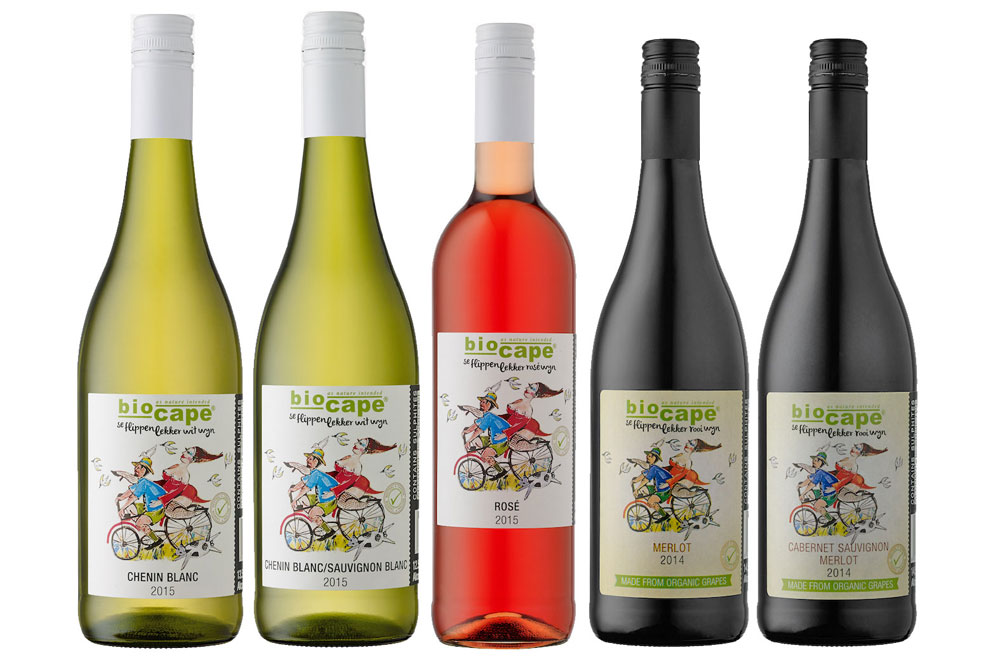
Blended by winemaker Daniele Kriel, the BioCape wine range consists of a refreshing Chenin Blanc and Sauvignon Blanc/Chenin blend, a crisp Rosé, as well as a earthy Merlot and Cabernet Sauvignon/Merlot blend. Their organic farming, diversity and traditional winemaking techniques allows for the creation of a unique wine that boasts heritage, elegance & balance.  Part of the secret lies within the bottle, made with care and pride as it was done generations ago.

VINEYARDS

On the farm, St Pieter’s Roche, eco-friendly and organic farming is implemented. Advanced farm pre-development research, paired with effective vineyard management such as pruning practices, tipping, organic soil and scheduled irrigation, has produced top quality fruit and grapes, which results in top quality wine!
BioCape-farm
PEOPLE

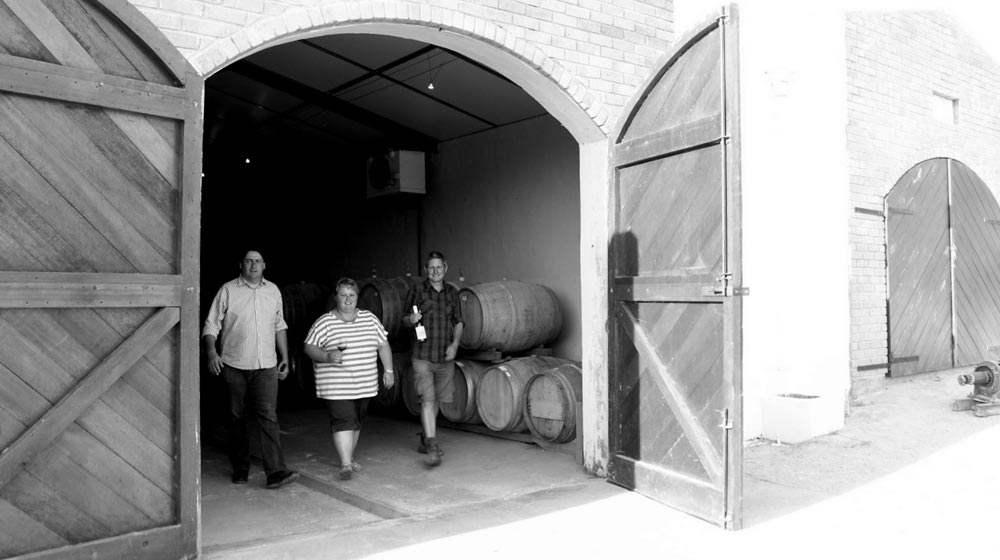
A dedicated and passionate team pours in all the effort to create a wine and product range full of flavor and diversity. The farm and cellar staff are all well seasoned and have the opportunity to learn further and grow in their positions. This ensures that the St Pieter’s Roche team: owners, managers, and laborers all feel a sense of accomplishment.
BioCape-Team
CELLAR

A minimum intervention philosophy is followed in the cellar. Only the best grape batches end up in the BioCape press. The grape temperature is closely monitored during the production process to extract the maximum amount of flavour and aromas. They focus on eco-friendly practices and no harmful chemicals are used.

BIOCAPE WINE RANGE

BioCapeWine

Chenin Blanc 2015

Tasting Notes: Citrus and fine Granny Smith apple aroma’s on the nose. Once in the mouth opening up with intense mineral flavours, again citrus and guava to finish the feeling.

Aging Potential: This wine is best enjoyed immediately

Serving suggestions: This wine is perfect on it’s own but will complement a fresh summer salad, or creamy cheeses.

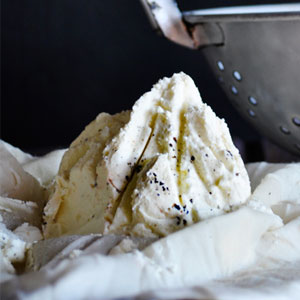
Cheese_300x300

Click for an easy recipe for making your own cream cheese at home.


Chenin Blanc/Sauvignon Blanc 2015

Tasting Notes: A fruit mix of pears and apples on the nose, spiced up with some citrus.

Aging Potential: This wine is best enjoyed immediately.

Serving suggestions: Cooled as an aperitif on a sunny day.

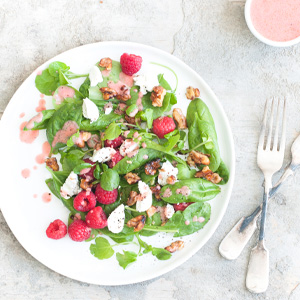
Raspberry-Goats-Cheese-Salad

Click for the recipe for this delicious Raspberry and Goats Cheese Salad


Rosé 2015

Tasting Notes: On the nose you smell hints of fresh, full ripe berries. The pallet is filled, round and smooth, tastes of the berries comes back. A lingering aftertaste complements this wine.

Aging Potential:This wine is best enjoyed immediately.

Serving suggestions: Delicious on it’s own but can also be enjoyed cooled on a summer afternoon. Alternatively enjoy with curried dishes.

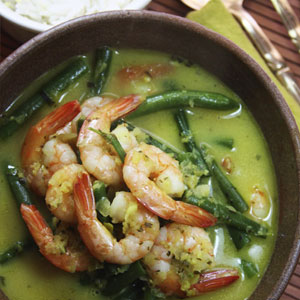
prawn-curry-300x300

Click for the recipe for this fragrant Prawn Curry with Lemon and Coriander Rice


Cabernet Sauvignon/Merlot 2014

Tasting Notes: Mulberry, plum and Morachino cherry richness complimented by sweet butterscotch and vanilla nuances.  The sweet empty cigar box, dark chocolate and sweet spice aromas follow through on the palate and create with the ripe, subtle tannins a wine ready to be enjoyed.

Aging Potential: This wine is best enjoyed immediately.

Serving suggestions: Superb with chicken liver and chorizo or garlic pasta dishes.

Aglio-E-Olio-Linguine-With-Olive-Oil,-Garlic,-Chilli-&-Parsley_300x300

Click for the recipe for this Aglio E Olio Linguine with Olive Oil, Garlic, Chilli & Parsley


Merlot 2014

Tasting Notes: A basket of ripe plums, red berries, and a minty richness complimented by earthy nuances of pencil shavings, cloves, and pepper. The ‘Merlot richness’ follows through on the palate, and creates a mouthwatering experience. A wine destined to be enjoyed young, with food and friends!

Aging Potential:
To be enjoyed now or will still benefit from maturing another for 4-5 years.

Serving suggestions: The fresh, ripe cassis berry and floral nuances, mulberry and plummy fruit flavours are very well complimented by hearty dishes like casseroles, cassoulets and baked dishes which combine beef, lamb, pork, goose duck, beans and lentils.

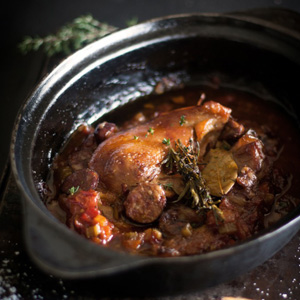
Red Tomato’s Cassoulet of Duck, Lamb and Chorizo Recipe

Click for the recipe for this Cassoulet of Duck, Lamb and Chorizo

For more information email wine@biocape.co.za

BioCape Wines will be available for tasting at the Good Food and Wine Show in Cape Town this weekend – make sure you stop in to sample.

Delicious produce is grown in healthy, living soil. #Harvesttotable series brought to you by Reliance Compost.Reliance Compost