A Taste of Northern Italy

A whirlwind tour of Northern Italy that will whet your appetite for some amazing Italian-inspired food!

BOLOGNA
image_textbox1

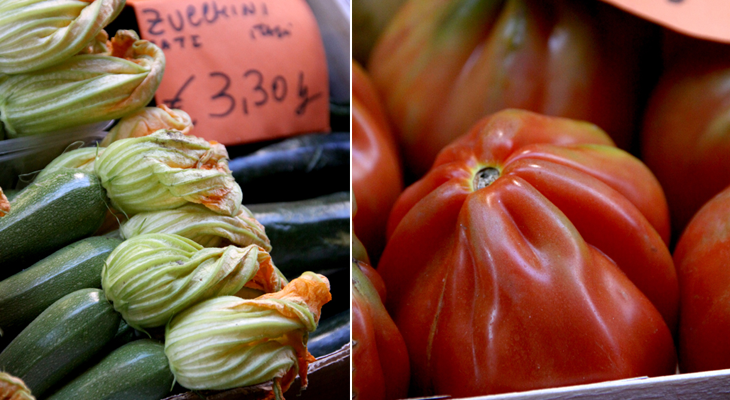
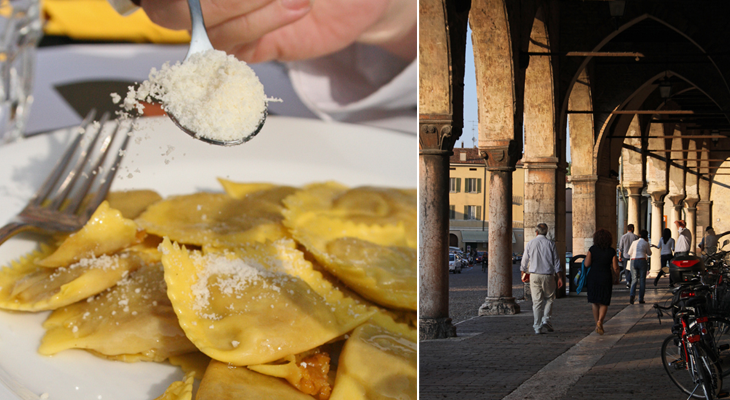
Bologna is a city of many names: “the fat one” (la grassa) in reference to its meat and cheese-heavy cuisine; “the learned one” (la dotta) in reference to its famous university; or “the red one” (la rossa), referring to the colour of the roofs in the historic centre.  Today, Bologna is a handsome city of russet porticoes and colonnades; home to one of the oldest universities in Europe; a culinary mecca; and a proclaimed UNSECO City of Music. Spend a weekend exploring the city on foot, starting with its 40km of covered walkways, built as a simple solution to a 12th century housing crisis: extra rooms overhanging the pavements built onto existing houses.

Marvel at the larger-than-life statue of Neptune in the Piazza Maggiore which scandalised the city with its brazen nudity when it was erected in 1567; or see the Roman ruins that the city was built on under the Sala Borsa. Bologna University is the oldest in Italy, and the Archiginnasio where it was housed from the mid-16th century, is a feast for the eyes. A feast for the tastebuds can be found in the Quadrilatero area, a foodies’ Aladdin’s cave packed with food shops and market stalls. Make sure you sample tortellini in brodo (pasta parcels stuffed with meat and cheese) and ragu (Bolognese sauce), both local specialities. Finish the day in Osteria del Sole, a bring-your-own bar with a twist where you can buy some local dry red Lambrusco and eat at the Osteria’s tables with your own picnic of the Prosciutto, Parmigiano Reggiano and salami that you bought at the market.

FERRARA
Ferrara_new

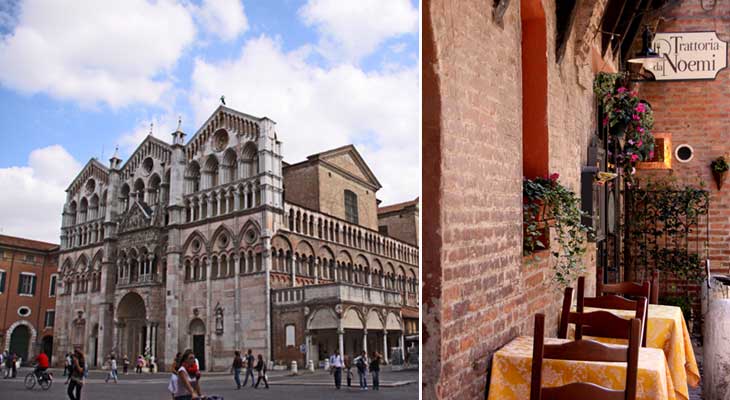
Fifty kilometres northeast of Bologna lies Ferrara, a city that grew up along the banks of the Po di Volano river. This UNESCO World Heritage Site city owes much of its prestige to the Este family dynasty that governed it for 300 years from the 14th Century, leaving behind them lavish palaces and a city transformed by forward-thinking urban planning.  Get a feel for the old city my walking along the 2km of cobbled and arcaded Via della Volte where arches overhead originally linked warehouses on the river to wealthy merchants’ homes; and explore the Romanesque 12th century Basillica with its beautiful marble façade and majestic interior.
image_textbox2
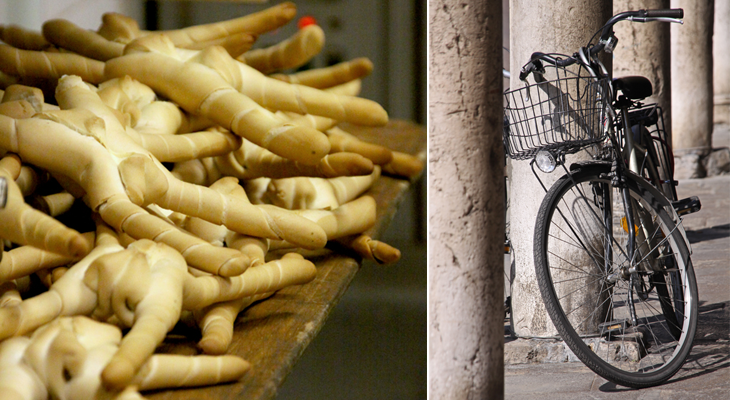
In the Castello Estense, with its four turreted defence towers and one of the last surviving water-filled moats in Europe, you can visit the claustrophobic dungeons where Ugo d’Este and his young lover Parisina (and stepmother!) were imprisoned before being beheaded.  Then leave the old town behind to explore the Ercolean addition, created when Duke Ercole I in the late 15th century ordered the old city walls demolished. He then had new medieval city walls built that doubled the city in size by enclosing a new modern “ideal” city built on an axis of two main north-south and east-west roads – widely regarded as the genesis of modern urban planning. Do as the locals do and hire a bicycle to cycle around the 9km of totally preserved medieval city walls, before stopping at Panificio Perdonati for hand-made coppia ferrarese, a unique local bread consisting of two rolled arms of dough twisted together in a central knot. The name means “couple”, and it’s not hard to see why!

MANTUA
Mantua_new

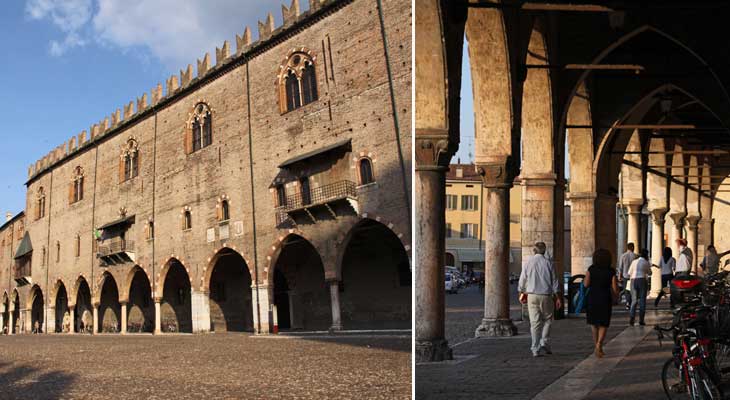
Mantua, on the border of the Veneto and Emilia Romagna regions, was once described by Charles Dickens as being grey, boring, dull and smelly – but visit today and you will find a compact, romantic city packed with beautiful architecture, cobbled piazzas – and great food.  Surrounded on three sides by defensive artificial lakes created in the 12th century, Mantua acquired power and influence under the ruling Gonzaga family who in the 15th century made it one of the main artistic, cultural and musical hubs of Northern Italy. Begin your walking tour in the Piazza Ducale, named for the Palazzo Ducale, the Gonzagas’ personal mini-city comprising 500 interlinked rooms and courtyards, which can still be visited today.  Although much of the art was lost when the Austrian army sacked the city in 1630, glorious frescoes by Andrea Mantegna can still be seen, including the famous Camera degli Sposi. If churches are your thing, you are in for a treat – from the Rotonda di San Lorenzo (Mantua’s most ancient church dating from the 11th century) to the Basilica of Sant’Andrea completed in 1790 with its barrel-vaulted nave and arched façade that towers over the intimate Piazza Mantegna. But to me, the best way to while away a few hours in Mantua is to grab a table at Grifone Bianco, one of the many restaurants on the Piazza dell Erbe, to watch the world go by and to eat some of the local specialities: tortellini di zucca (pasta parcels filled with pumpkin and amaretti crumbs), risotto made from locally grown rice, or sbrisolona (a cake made with almonds and fruit).
image_textbox3
Words & Images by Jeanne Horak-Druiff

To be inspired to cook Italian click HERE.
Taste of Seoul

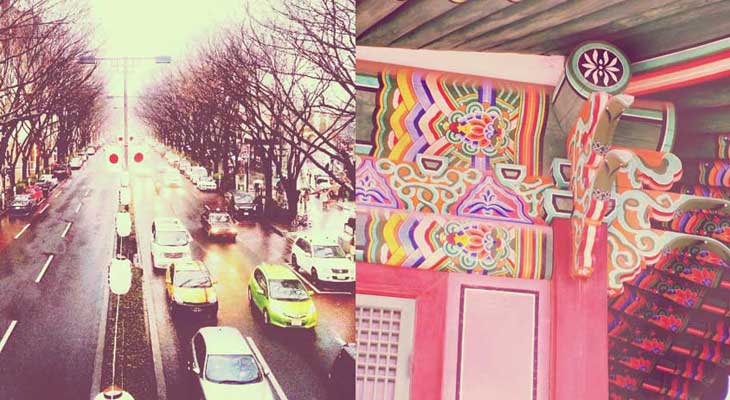
Nearly three years ago I came to Seoul to teach, and found myself smitten with this monster metropolis. Simply put, Seoul is a great place to live and to eat. It’s clean, safe and efficient, culturally rich and has a great restaurant culture.

But let’s put things into perspective. First of all, imagine the entire population of South Africa (around 50 million) living in a country smaller than the Western Cape. Next, imagine a fifth of those people living in one city. This is Seoul. It’s no wonder that Seoulites love to eat out because of their small living spaces and busy lifestyles.

Restaurant districts are clustered throughout the city, usually around the universities (of which there are almost forty) and often with streets too narrow for driving. The confined space is festive, though. Couples, friends, businessmen and students wander where their food-cravings take them.

Restaurants here are also predominantly speciality-based, often having just two or three items on the menu. However, whatever is served will be done so at lightning pace, and it is very, very good.

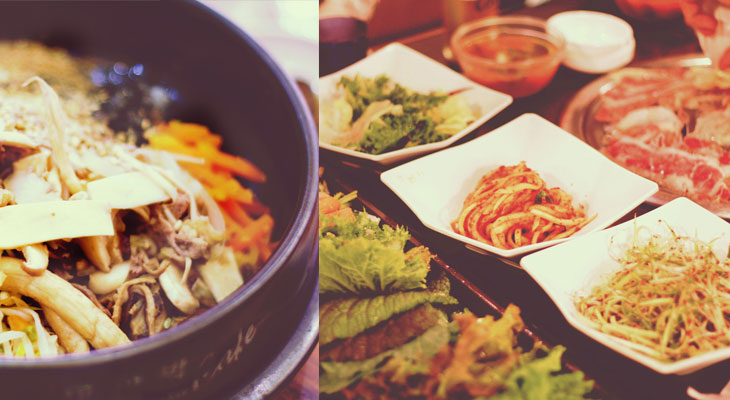
Let’s start with the Korean barbeque. At these restaurants, charcoal grills are built into tables, allowing you to grill tender rashers of beef or pork yourself. One of my favorite barbeque places in Seoul is Bonga in Seoul’s glitzy Gangnam district, which serves succulent marinated beef called bulgogi along with a fantastic spread of lush, Jurassic Park greens.  The grilled meat is then wrapped in these leaves and you’re absolutely allowed to just shove the whole thing into your mouth. It’s a great hands-on meal and about as close to a braai as you’ll get in Seoul.

korea-text

Korea is definitely a meat-loving country. Apart from Buddhist monks, vegetarians are virtually non-existent. When I first arrived here, I was usually met with perplexed looks when I explained that I don’t eat meat. I soon realized, though, that I would either have to change my ways or go hungry!

Although meat-free options are scarce, one delicious pick is bibimbap. This is a traditional dish of mixed rice and vegetables including bean sprouts, julienned cucumber, mushrooms and pickled radish. It is topped with dried seaweed flakes and a hearty dollop of spicy, chili paste called gochujang. Bibimbap is served in two variations – either in a regular bowl or a scorching ‘hot stone’ bowl, with creates a delicious layer of crispy rice at the bottom.

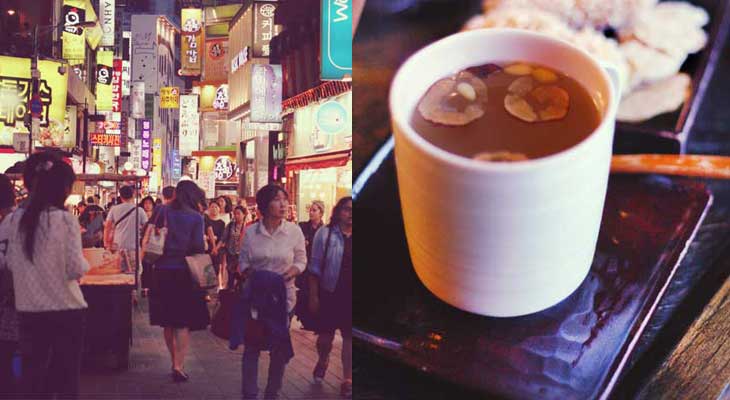
If noodles are your thing, kalguksu comes highly recommended. My favorite variety is served at Myeongdong Kyoja in the trendy Myeongdong shopping area. These knife-cut, handmade, wheat flour noodles come in a rich beef and chicken broth with bits of ground beef, zucchini slices, chives and mini pork dumplings. Happiness in a bowl.


korea-text-2

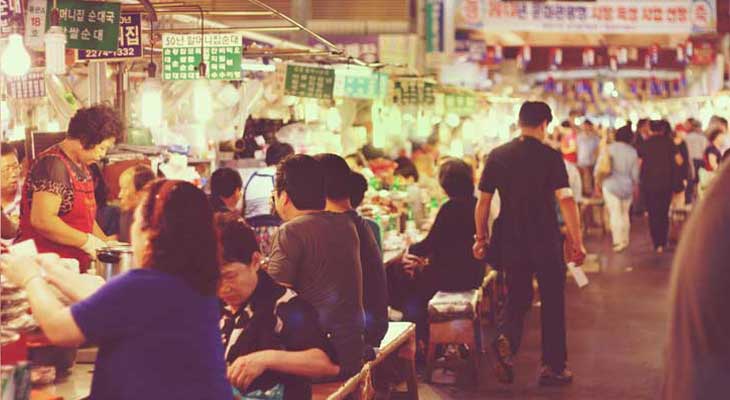
To experience more of Seoul’s traditional food culture, a good place to visit is Gwangjang Market. This market is famous for pajeon – crispy rice and wheat-flour fritters with green onion, seafood or beef. If you’re feeling adventurous, try some jokbal (pig’s trotters in ginger soy sauce) or soondae (blood sausage with glass noodles). You’ll also find endless varieties of kimchi, Korea’s national dish. Kimchi is pickled cabbage, radish or cucumber which is fermented underground in large stone jars for several months. It is prepared with plenty of salt, brined anchovy and chili paste. Kimchi is served as a side dish with almost every Korean meal. It takes some getting used to, but if you keep at it, you’re bound to get hooked!

Seoulites are busy people, and when they don’t have time for a sit-down meal, there is plenty of street food around. You’re bound to spot some ddeokbokki – a vibrantly red dish of chewy, glutinous rice cakes drenched in spicy chili sauce.

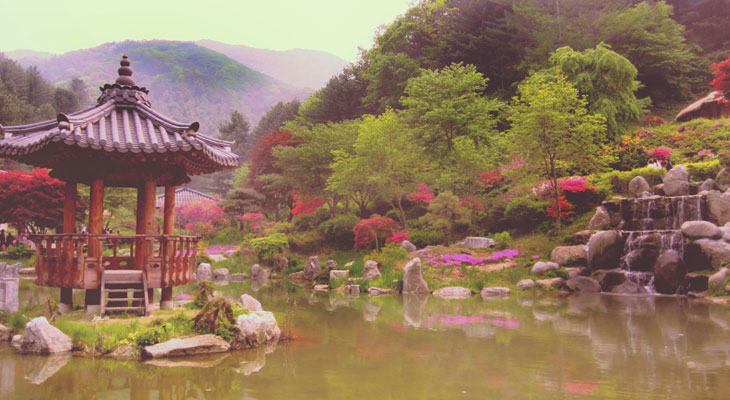
Despite the bustle and noise of the city, it is always possible to find a true piece of the Land of the Morning Calm, as Korea is traditionally known. One of my favorite spots is Suyeon Sanbang, a serene, traditional teahouse where you can enjoy ginger tea or omicha (five flavour berry tea) and enjoy the beautiful view of the surrounding garden.

gardens-text

After decades of war, occupation and economic strife, Korea is now a prosperous nation which has built itself from nothing. Koreans take great pride in their heritage, especially their food. While Seoul embraces international flavours, it keeps a firm hold of its traditional specialities and I am very happy to keep eating whatever this exceptional city has to offer.

in_txt_new_1

in_txt_new_2 in_txt_new_3


Arabian Nights – 48 Hours in Dubai

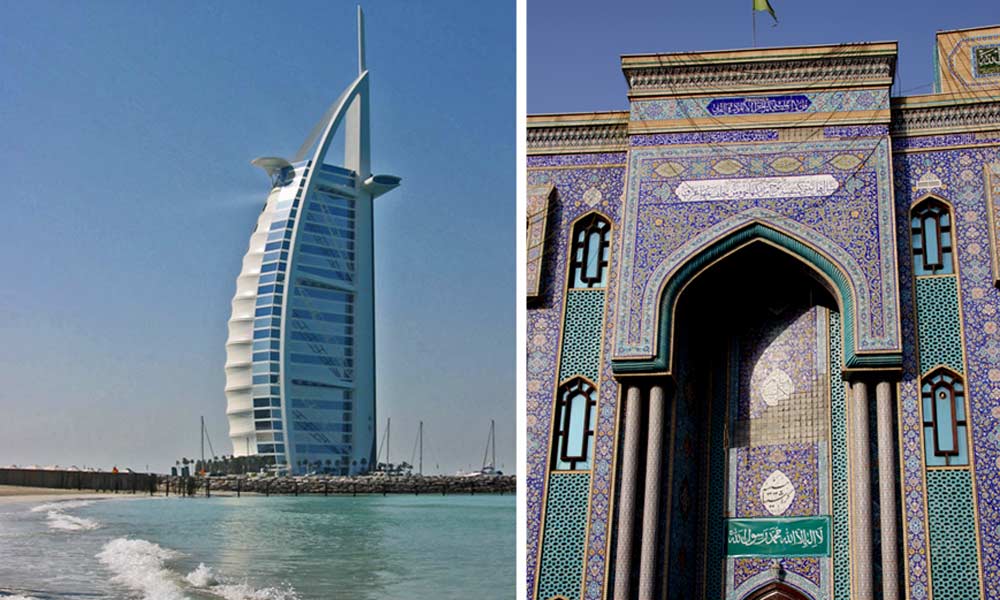
As I sat on the old wooden boat, surrounded by the babble of a dozen languages and dialects, sandwiched between a woman in an orange sari and a man in a traditional Arab robe, I had to smile – this is the Dubai that nobody tells you about. I had stepped off my plane in the early hours of the morning and after a shower and a nap, I set out to find the city behind the glitz and glamour of the tourist brochures.
dubai-mosque

Take the metro to Al Ghubaiba station and walk to Dubai Creek and join the locals for the 1AED crossing on a wooden abra as Emirati have done for decades. Step onto the Deira side and feel as if you have travelled back in time as porters in turbans and robes scurry back and forth between the souks and the waiting wooden cargo boats docked on the Creek.

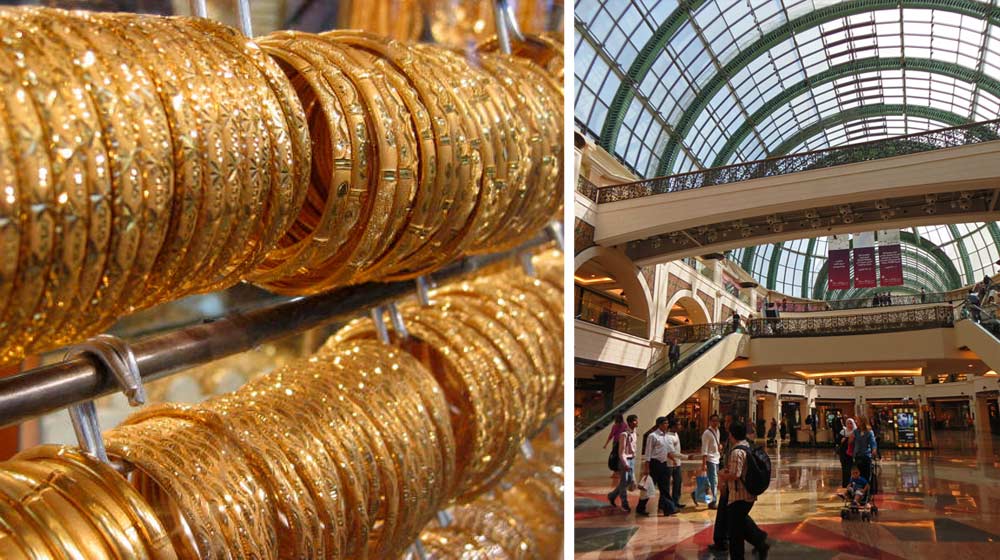
The old gold souk is the best known of the souks and positively drips with gold in every shape you can imagine.  Even more interesting are the textiles, embroidered slippers, belly-dancing outfits and pashminas to be found in the adjacent alleyways. But my favourite is the neighbouring spice souk redolent with the scents and colours of saffron, cinnamon, dried rosebuds, cinnamon sticks and dried limes.

After a day in the bustling souks, it was time to see what lies beyond the city limits.  Choose one of the many companies that run dune-bashing safaris who will fetch you from your hotel to ferry you to their waiting 4×4 vehicles.  After whizzing along a pretty ordinary road until all signs of civilisation have disappeared beyond the horizon, we suddenly turned off the road, straight into the vast sea of red-tinged dunes that stretch east of the city and cover much of southern Dubai. One brief stop to deflate the tyres a bit and to check that all seatbelts were fastened, and we were ready to go.  I was already slightly apprehensive about the entire concept of dune bashing and seeing our driver mouthing a silent prayer as we set off did nothing to allay my fears! But I needn’t have worried – the drivers are experienced and the vehicles are very stable, despite the crazy angles at which we ascended the dunes and the controlled slides with which we descended. Soon I was squealing with delight rather than in terror and when we stopped to watch the sunset I was a tiny bit disappointed.  Once the sun set, we were driven to a desert camp for an evening of camel-rides, belly dancing, henna painting and a feast of middle-eastern food.  Looking up at the stars above the outlines of the dunes, it’s easy to imagine what Dubai must have been like a hundred years ago – vast, wild and empty.dubai-beaches
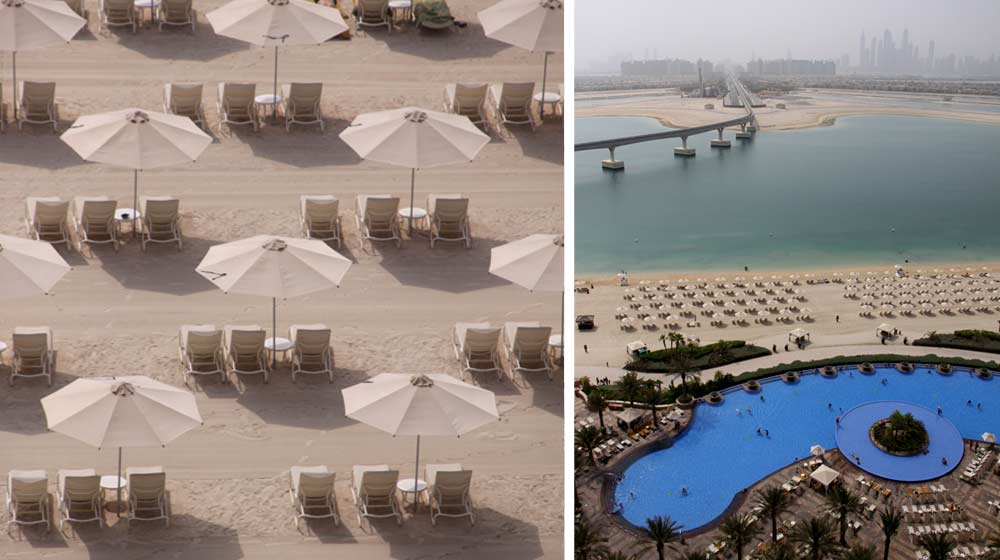
After a day of the more traditional Dubai, it was time to explore the glitzy side of the city. After a quick breakfast of scrambled eggs with ful mudammas (a traditional broad bean stew) I headed straight for Dubai Mall, the world’s largest shopping mall and home to the Burj Khalifa, the world’s tallest building. The high-speed lift whisks you up to the observation deck on the 124th floor in an ear-popping 62 seconds. The view from up there is quite literally breathtakingly expansive.  Back down in the mall, be sure not to miss the 10-million litre Dubai aquarium in the middle of the mall, the Dubai ice-rink, or the spectacular musical fountains outside the centre which rival the Bellagio fountains in Las Vegas for their mesmerising beauty. A quick cab ride away, I was whisked off to the Mall of the Emirates, another huge shopping mall containing two indoor ski slopes, one of which is the world’s first indoor black run – it provides a couple of hours of surprisingly enjoyable skiing and nothing beats the surreal feeling of skiing in the morning and heading for the beach in the afternoon! Dubai’s white sandy beaches are safe and lapped by the warm (bath-temperature!) waters of the Persian Gulf. Choose the beach at Jumeirah to swim with a ringside view of the 7-star Burj Al Arab, or the beach near the marina for a backdrop of sparkling skyscrapers and the cocktail bars of the nearby Royal Mirage hotel.
dubai_mall
Finish your day at Aquaventure – a massive adventure waterpark adjacent to the Atlantis resort on The Palm, followed by dinner in one of their dozen restaurants, including an outpost of Nobu, before heading for bed before your early-morning flight home.

A Sri Lankan Culinary Adventure

Words by Georgia Schuman

Images by Melanie Motto-Ros & Andrew Arnott

Srilanka_4


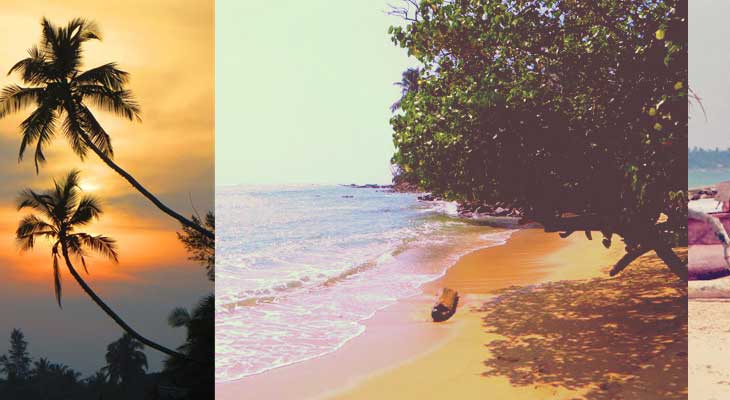
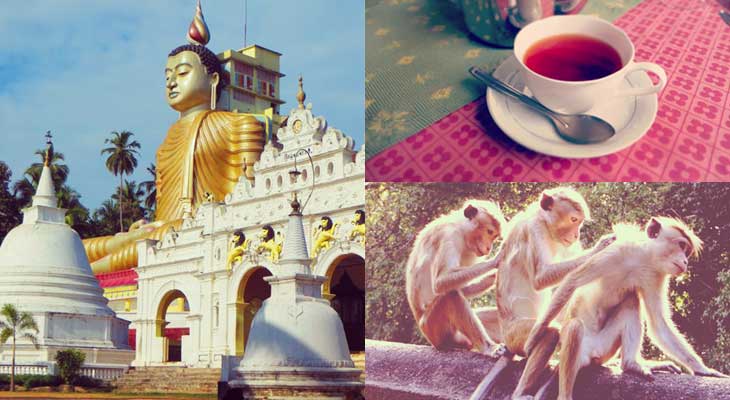
After a year spent in India eating an intoxicating variety of street food and gourmet curries, I landed in Sri Lanka with high expectations for a similar culinary experience. I was quickly disappointed. Travelling along the South coast, I was by a factory line of touristy, beachside restaurants serving up the same monotonous menus of omelets, fried rice and an insipid, watered-down version of what may once have passed for a local curry.

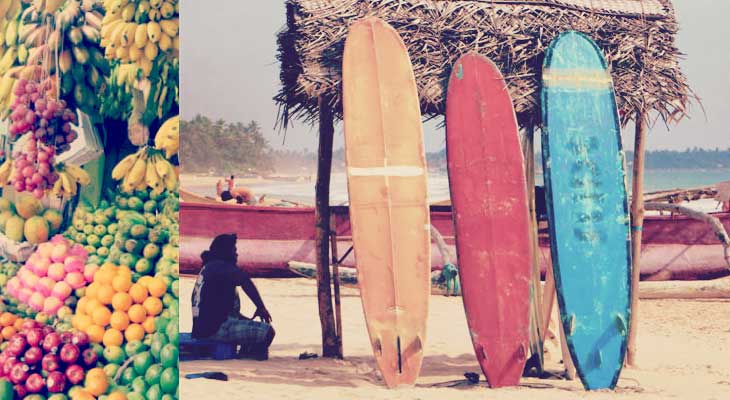
It didn’t take long for us to realize that we would have to move off the beaten track in order to find some genuine grub. In the meantime, we gorged on pineapples, mangoes and bananas, king coconut juice and buffalo curd drizzled with coconut treacle. From Hikkaduwa to Welligama to Mirissa, we surfed our way along the South coast on a tropical sugar high. Until we landed in the small seaside town of Polhena, perched on a rugged stretch of coastline where turtles laid their eggs and bats soared through the starry skies at night. And it was here, in the unkempt kitchen of a local family, that I was to experience my first truly Sri Lankan meal: spicy seerfish curry and wambatu moju (a classic Sri Lankan staple of deep-fried aubergine curried in mustard seeds and coconut vinegar) served with red rice, mango chutney and coconut chili sambal. I was instantly hooked.

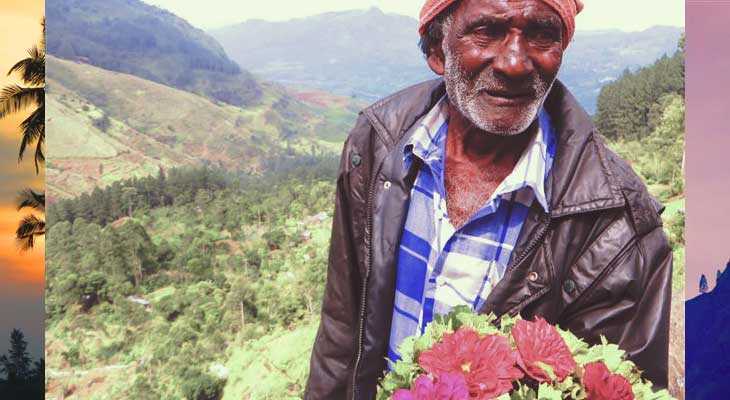
We continued our travels up into the mountains, eating our way from one village to the next, visiting the kitchens of the family matriarchs and watching in awe as they prepared their evening meals. Shopping was seldom done at supermarkets. Vegetables and spices were bought from chaotic markets in the village center and were bizarrely over-sized and brightly coloured. I had never seen eggplants so purple, or cabbages so big that you could hide behind them.


web_fishing_Sri Lanka


Every meal – no matter what it contained – had the same, unchanging name: ‘Rice and Curry’. This simple title belied the feast we were often presented with: a minimum of three curry dishes accompanied by rice, poppadums, sambals and salad. Almost every dish contained generous chunks of garlic and chili. Dal and vegetables were curried in sweet coconut milk, chicken and fish always cooked slowly on the bone.

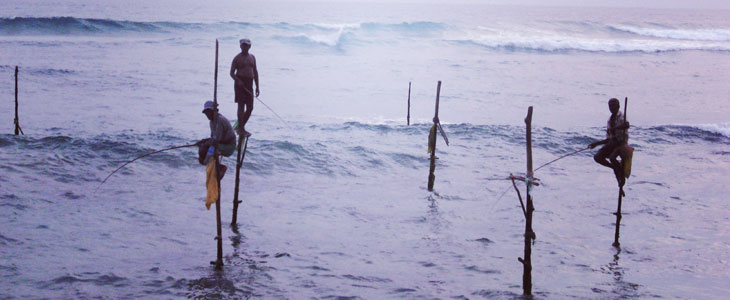
Sri Lankans are infinitely proud of their food, and every meal was served with a warm smile and an unforgettable moment. There were peppery tuna curries at sunset on the beach in Tangalle – caught that afternoon by fishermen in a traditional oruwa (a fishing boat dating back to the 8th century). There was fiery, devilled chicken (so named because of its heat) and roasted cashews in the bustling dust of Kandy’s local diners. There was a decadent roast garlic curry in the misty mountains of Ella, with wild rice wrapped in banana leaf parcels, comforting chunks of breadfruit soaked in coconut milk and plates piled high with poppadums. In the colonial village of Nuwara Eliya we ate syrupy wattlapan (a spiced coconut pudding) and drank endless pots of homegrown tea whilst rain cascaded down the cliffs outside. “Coffee is a fine drink …” our guesthouse owner explained, whilst brewing yet another pot of chai, “but tea is a drink for the soul.”


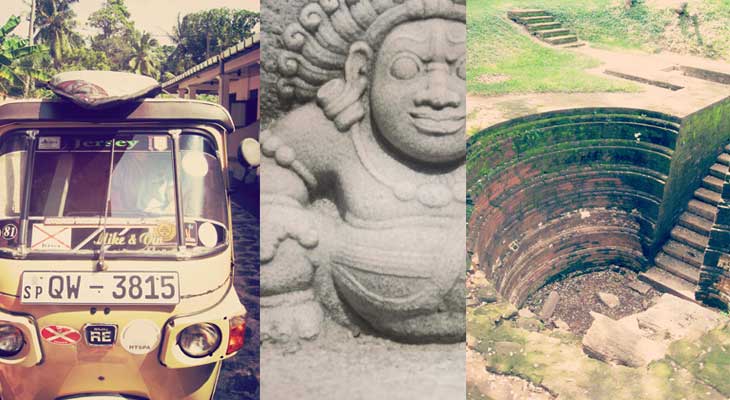
Halfway through my journey, I decided to explore the lesser known parts of the island on cramped local buses which sped through the countryside in a flurry of wild hooting and high-pitched Singhalese pop music. It was on these adventures that I was introduced to the street food: withered old ladies boiling corn on muddy pavements, sugary tea bubbling in rusted urns and rotis of every shape and size containing anything from curried potato to mango and melted chocolate.


Srilanka_1


Towards the end of my trip, I had the good fortune of staying with a farmer and his family in the tangled green jungle of Thiranagama. Lakshman’s garden was so alive it would wake me up before sunrise, and the evenings were abuzz with mosquitos, chipmunks and spiders the size of my hands. There were flowers everywhere, flourishing in the tropical sun and the afternoon rain. Behind the garden was Lakshman’s rice paddy, which his father had started in the 60s. His home and his farm, less than 500 meters from the vibrant beach of Hikkaduwa, had somehow survived the tsunami – and, believing himself to be divinely protected, he would kneel with his family at sunset before a statue of Buddha, burning incense and chanting prayers of gratitude.


Every evening, clad only in a sarong and a string of beads, Laksham would serve me the treasures of his garden cooked and curried by his wife. I sat in the damp heat under a whirring fan, slapping at mosquitos and listening to the crash of the ocean behind the palms trees, eating curried banana flowers, carrots drizzled in ghee, cinnamon pumpkin curry and tart, spiced cabbage. It was here, in the gardens of this humble household, that I ate the best food of my holiday.

Sri Lanka is a land of lazy iguanas and incessant birdsong, hooting tuk tuks, ancient temples and infinite stretches of ocean. The brutal civil war that plagued the island for over 20 years has finally come to an end, and it felt safe and easy to travel. As more tourists pour onto the island, you are as likely to find a decent pizza as you are to be treated by the locals to their kind hospitality and exquisite cuisine.

Places to eat:

Shanthi Guesthouse, Hikkaduwa
Aroma Restaurant, Hikkaduwa
Ravanna Ridge Guesthouse, Polhena
Delmini Restaurant in Mirissa for the best rottis and kottu-rotti
Little Ella Restaurant, Ella (booking essential)


Srilanka_3


Srilanka_5


Srilanka_6

A Visual Journey of Istanbul Turkey

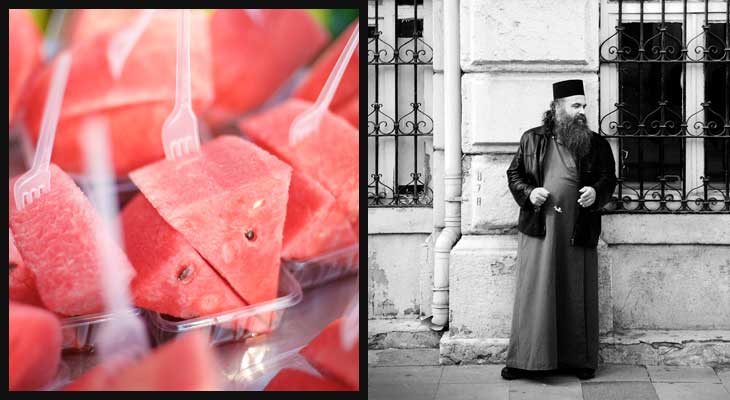
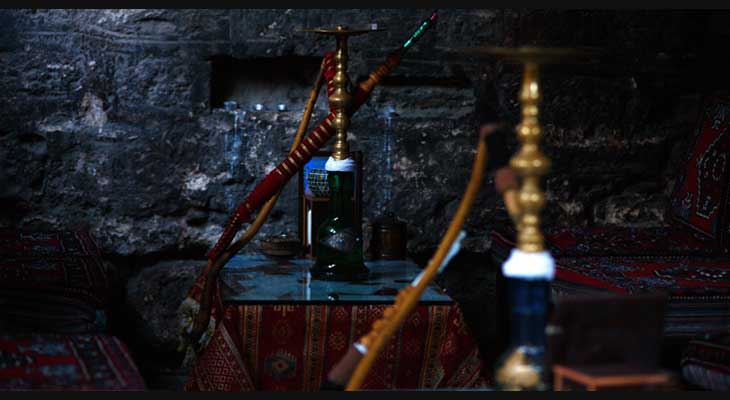
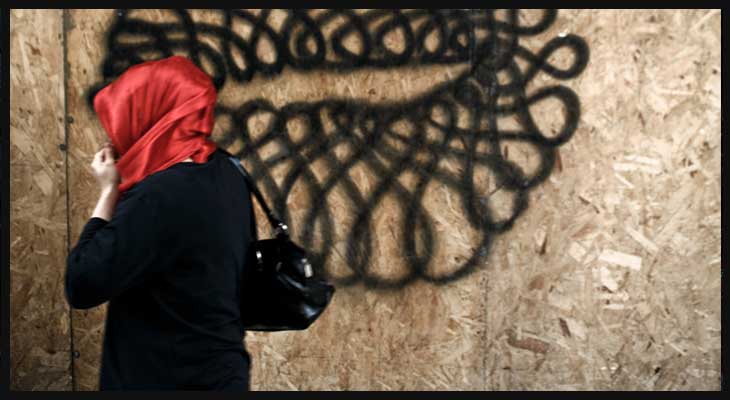
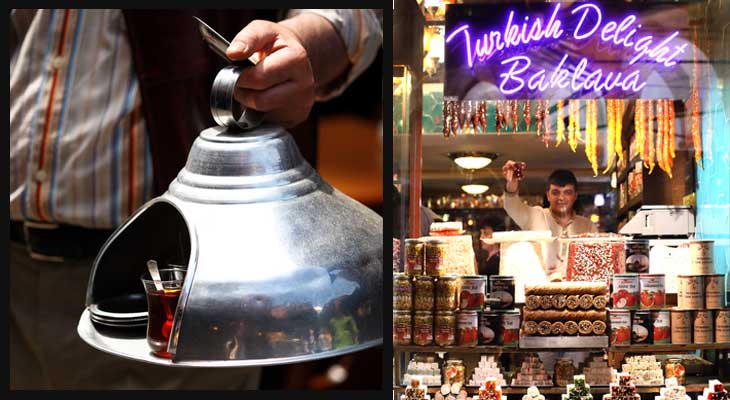
Resident Crush photographer Henk Hattingh, travelled to Istanbul, Turkey in April this year, he brought back with him a mosaic of incredible pictures and experiences, which inspired this feature. Join Crush on a A Visual Journey of Istanbul Turkey.

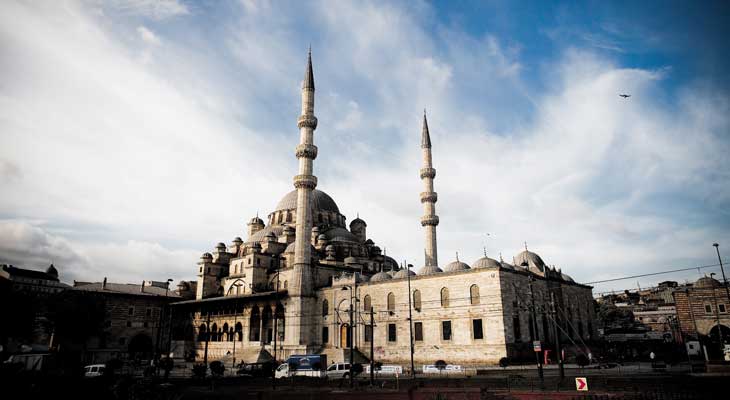
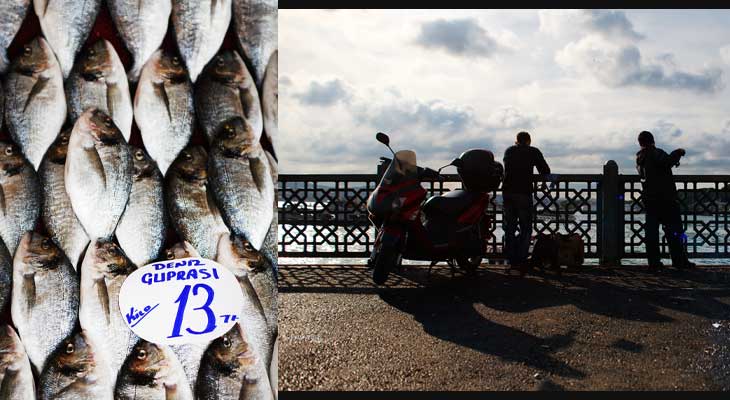
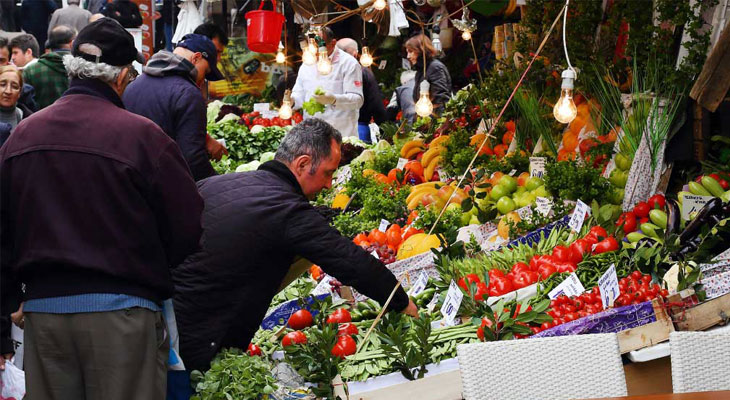
Istanbul is a city full of life – bustling markets like Ortakoy where one can sample amazing street food, or Kadikov, reached by boat-taxi, to buy fresh fish, fruit and veggies.

Henk credits the Hagia Sophia as one of the highlights of the trip, ‘Seeing the view of the city and mosque roofs from the inside of the Hagia is amazingly surreal’.

Inspired by the flavours of the of Istanbul markets Henk collaborated with talented, stylist, Illanique van Aswegen to develop four Turkish inspired recipes. The results are almost as beautiful as the destination.

A Visual Journey of Istanbul Turkey


A Visual Journey of Istanbul Turkey

Quote_1

A Visual Journey of Istanbul Turkey

A Visual Journey of Istanbul Turkey

A Visual Journey of Istanbul Turkey

A Visual Journey of Istanbul Turkey

A Visual Journey of Istanbul Turkey