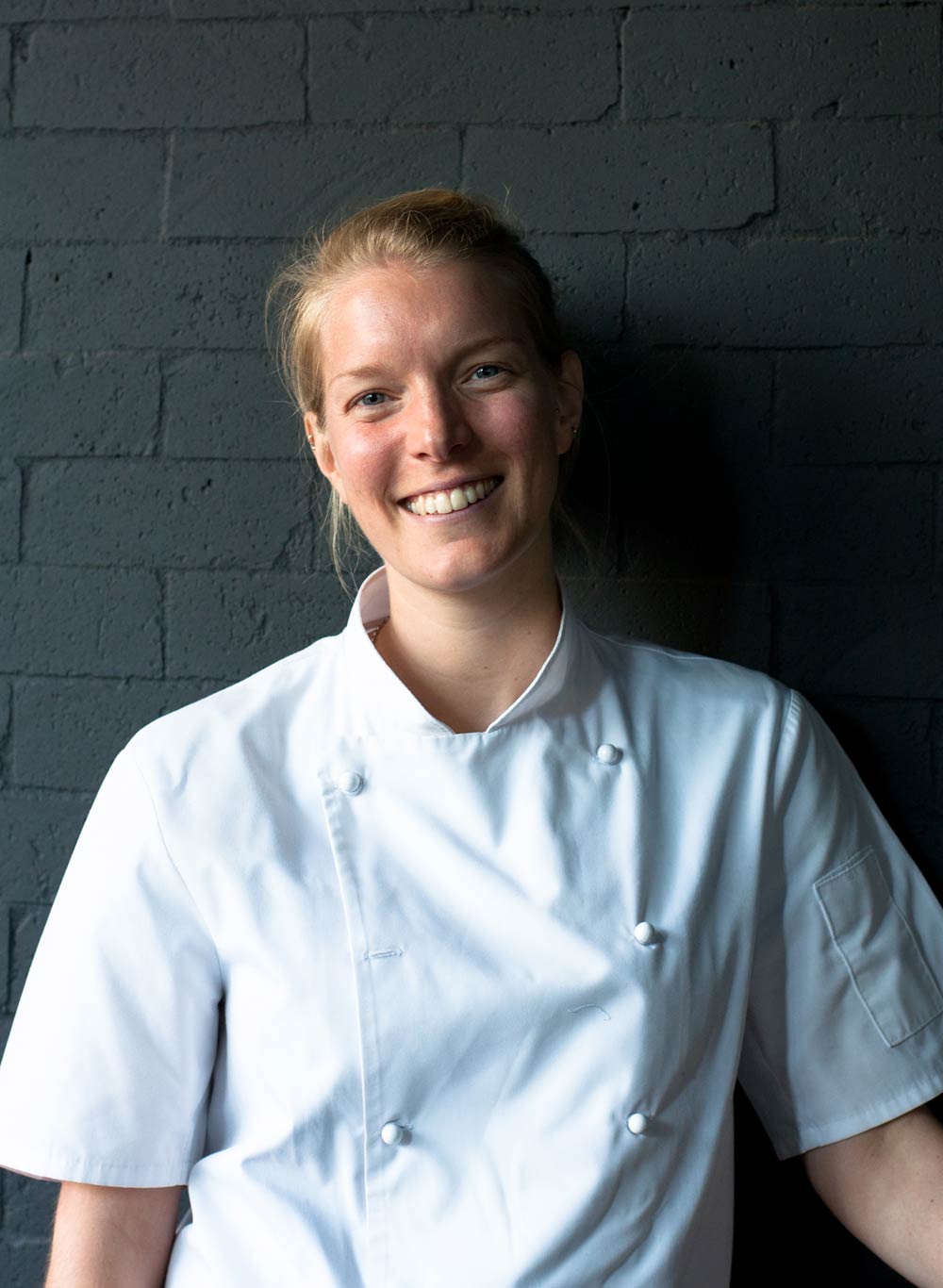
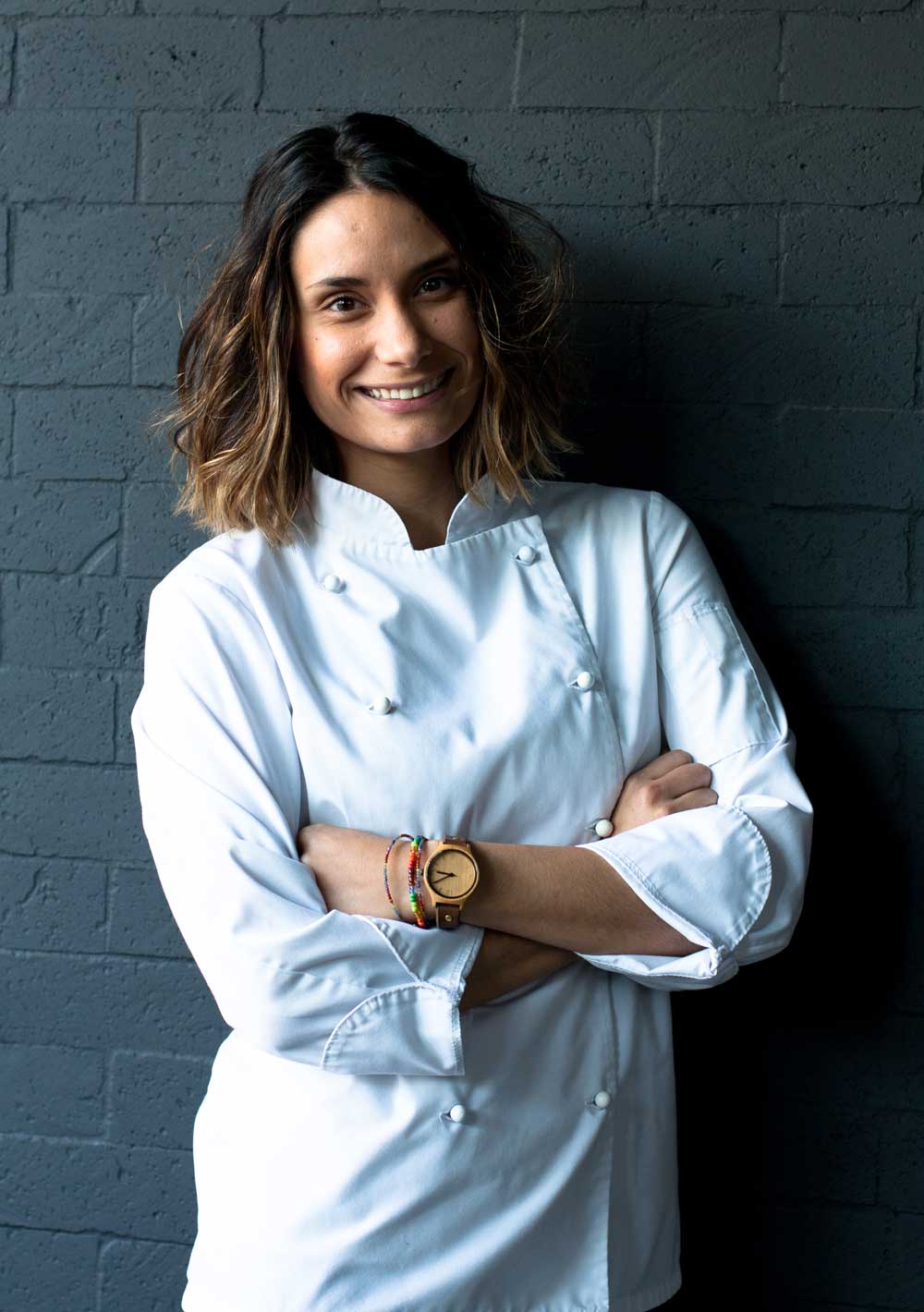
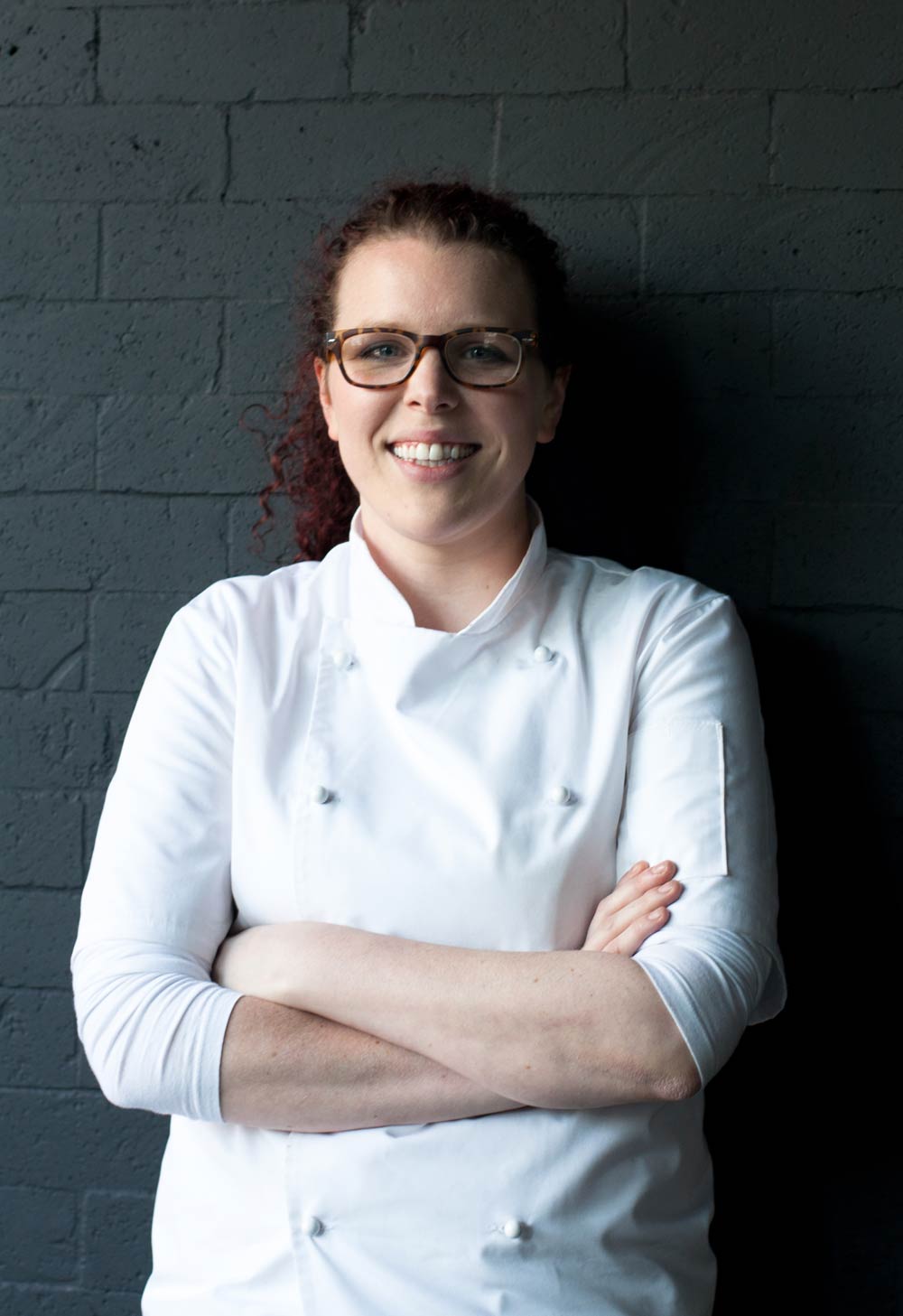
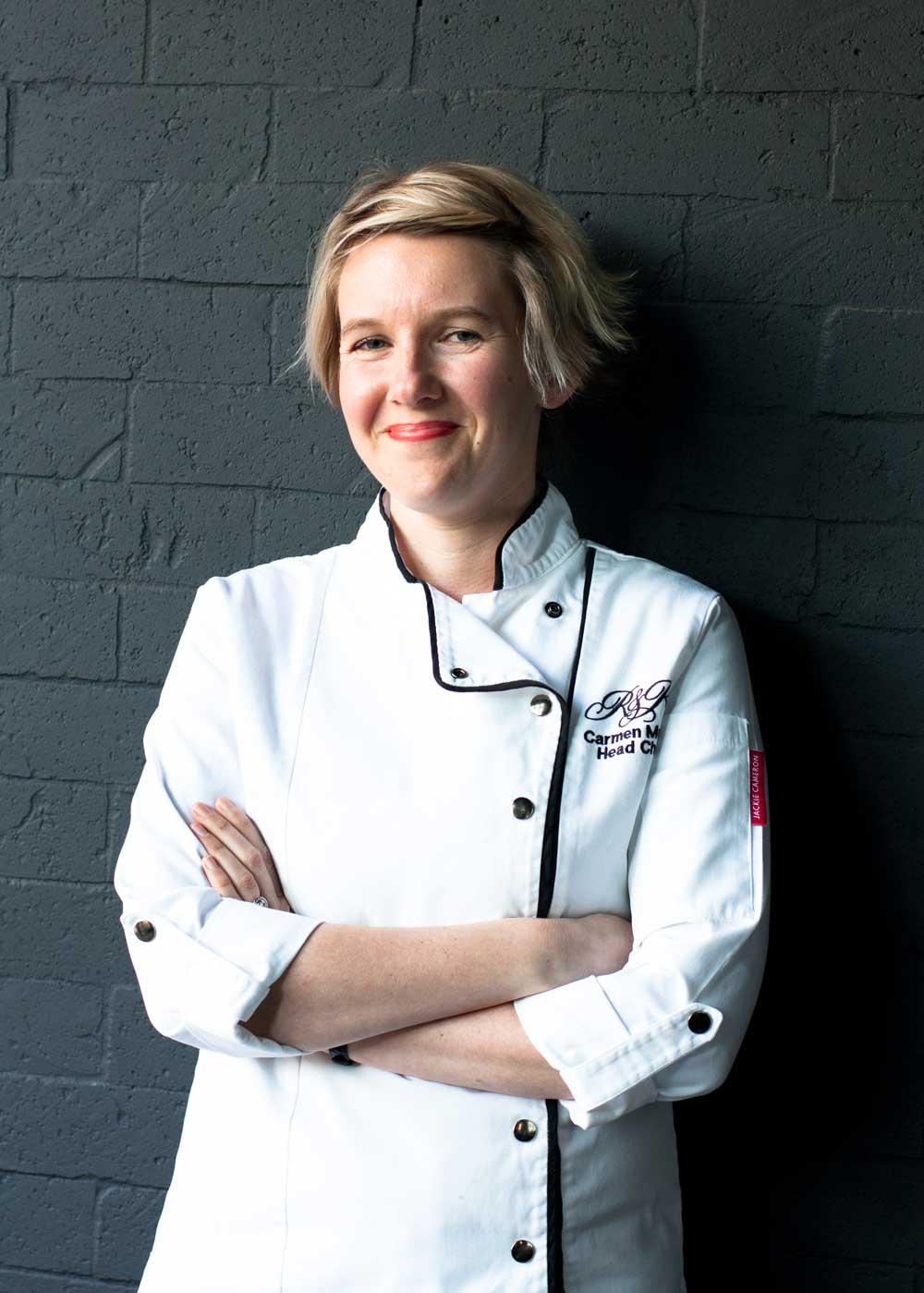
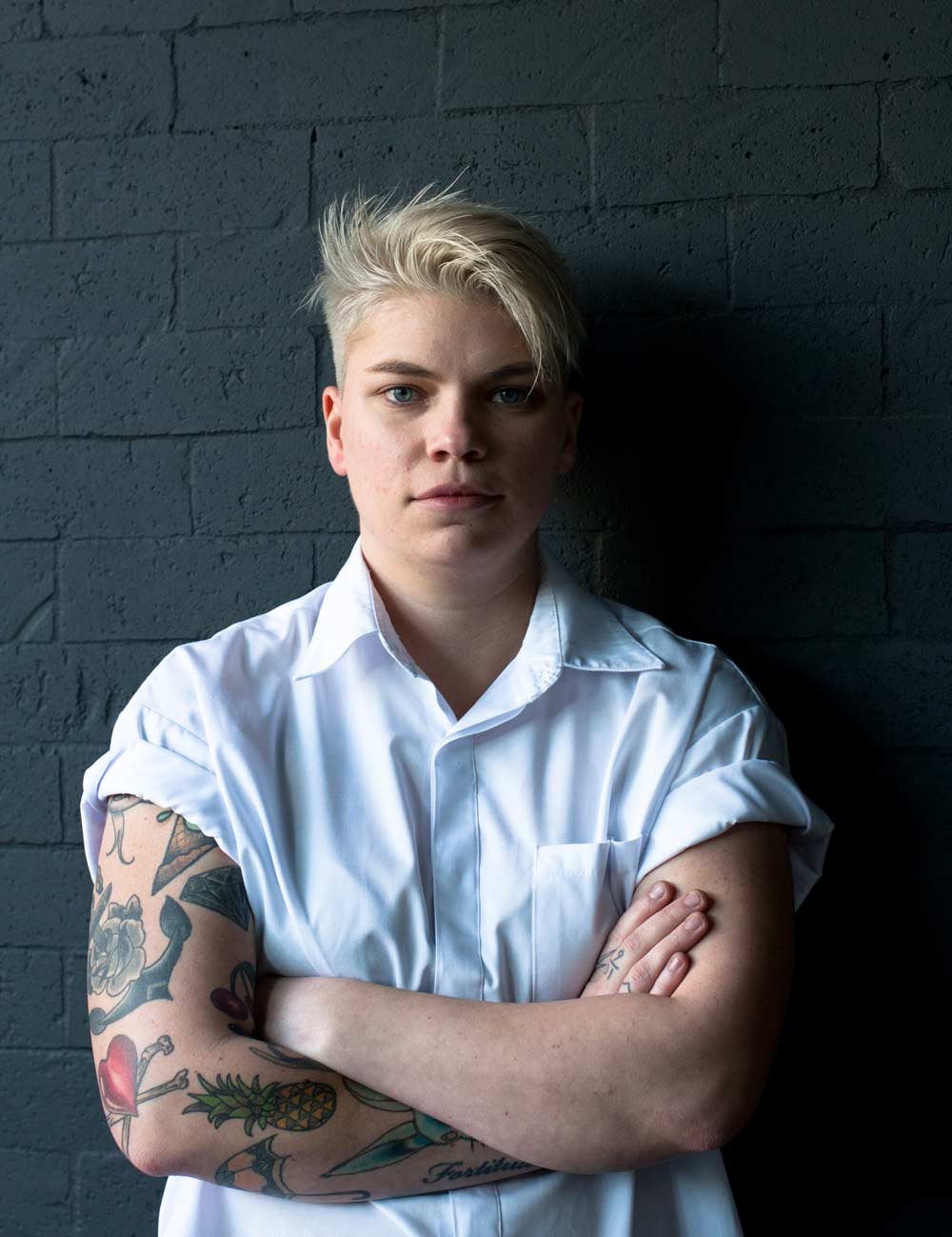
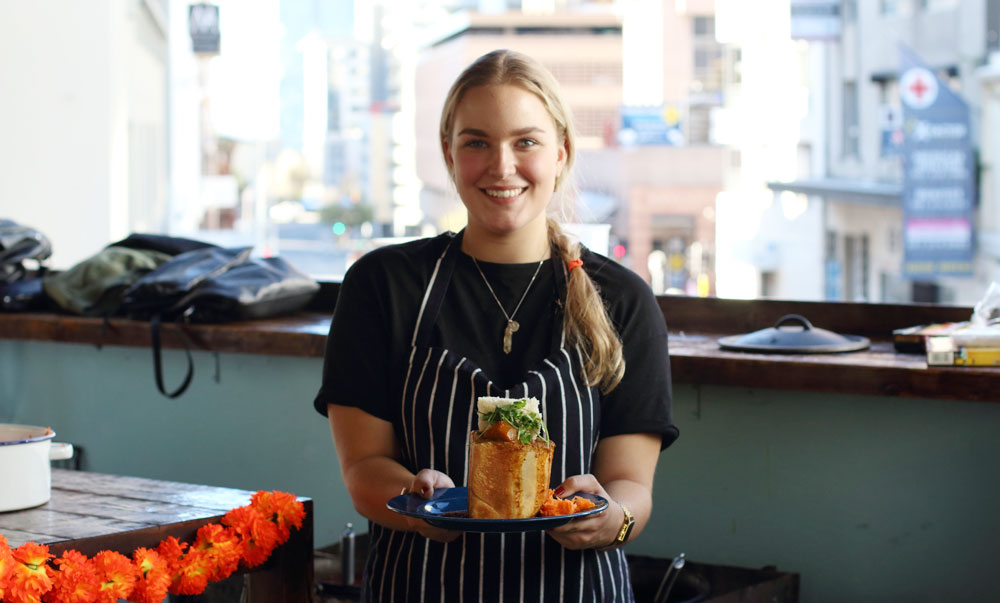
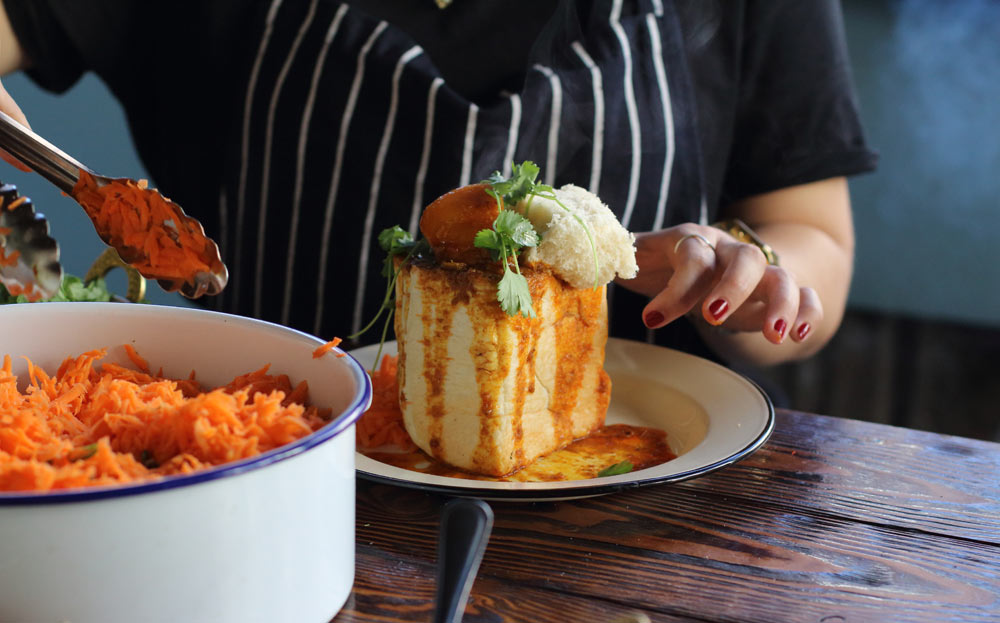
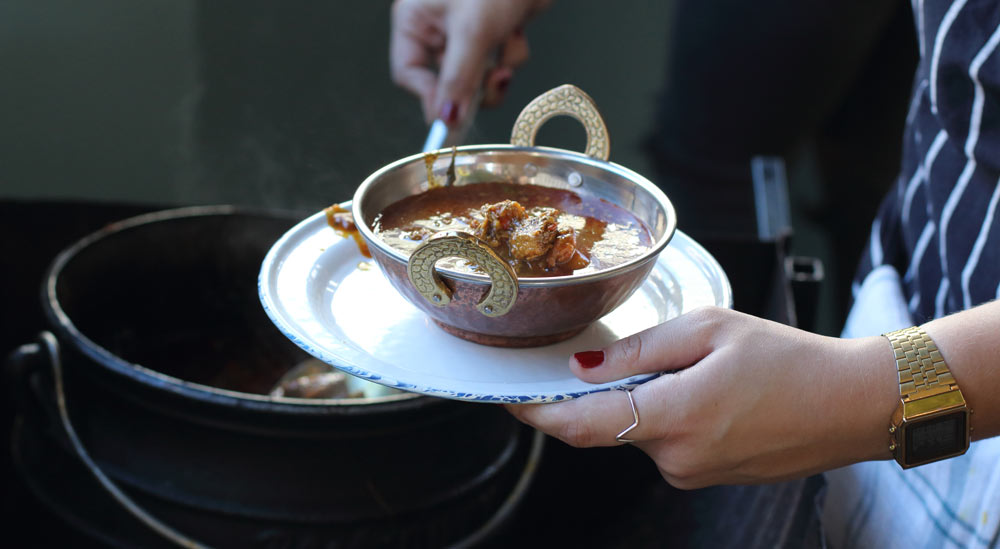
5 Minutes with Chef Emma Hofmans

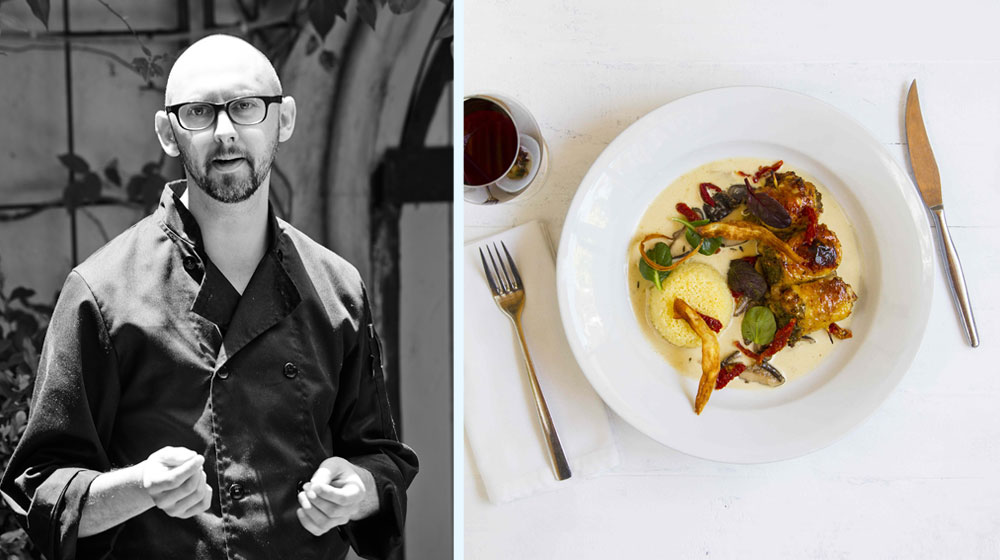
What would we do without Hallelujah? We don’t even want to think about it. Emma Hofmans is the chef genius behind all those amazing lobster rolls and duck tacos. She’s worked in some incredible restaurants, but we’re hoping she stays on Kloofnek for a while.

You are cooking some of the best food in Cape Town at the moment. What has been your journey to get to this point in your career?

Emma: I studied at The Culinary Academy (now The Hurst Campus) which included a 6 month placement. I was sent to The Cellars-Hohenort where I started at the Conservatory and then did my second 3 months at The Greenhouse. I loved the kitchen so much I asked for a job and they hired me full time! I worked there for another year, working my way around every section and building myself up to Chef De Partie. Then I moved on to The Pot Luck Club which was an amazing experience, seeing a different kind of kitchen environment and stepping away from fine dining. However, I wanted more freedom so found the opportunity at Hallelujah. Almost 2 years later and I am still here! It’s been a huge learning curve but was definitely the best decision I could have made.

Was there been a defining moment in your career that made you realise that this is exactly what you are meant to be doing?

Emma: The first few weeks of internship were really hard. I wasn’t getting it and I kept screwing up. I sat myself down and told myself that I knew how to cook, Iwas just over thinking it – then things started to fall into place. It probably only really clicked when I started at The Greenhouse where things were a lot harder than at The Conservatory. It took a little while but eventually things started happening so naturally that I didn’t even need to think about what I was doing during service. It was such an amazing feeling, the adrenaline pumping through my veins. I loved it and thought, “This is awesome. I think I should do this for a while”.

How would you define your culinary style?

Emma: Ummm… I don’t know if I could define it, but I am an extremely relaxed cook. I try to keep my flavours bold but well-balanced. I don’t like over complicating food. Keep it simple and consistent.

What is your earliest food memory that you think inspired you towards this career?

Emma: Probably discussing what was for dinner with my mom. As I got older, I got more involved in preparing dinner, I loved experimenting and trying new things. My mom is an excellent cook – it was largely thanks to her that I went down this path.

What is the best career advice you have ever been given? Who gave it to you?

Emma: My professor at chef school advised me to watch and learn. To do the prep you need to do but to make sure that you are always watching everyone else. To ask questions – any chef worth their salt is going to be more than happy to share their knowledge with you.

If you had all the time and money in the world, what would be your ultimate food day? What would you eat for breakfast, lunch, and dinner?

Emma: Breakfast: Bagel and shmear and ice coffee from just about any bagel shop in NYC!

Lunch: Filet de Perche (tiny fresh water fish… it’s a speciality in Switzerland) and a glass of Rosé at the lakeside in Geneva.

Dinner: A full Italian feast. From the snacks to the antipasti, to the dessert and espresso at the end.

Most memorable meal? Auberge D’Onex in Switzerland, my parents used to take us there for special occasions. The food is wholesome and delicious and uses some of the most incredible ingredients. The meal starts with a wedge of Parmigiano Reggiano and a knife!

Top of your restaurant bucket list? Osteria Francescana (going there in 3 weeks!), Alinea, Pujol.

Favourite way to end a busy day? Glass of wine.
Emma
hallelujahhallelujah.co.za | Facebook | Twitter

Want to read about more badass women in kitchens? Read here.

Read our review of Hallelujah here.

5 Minutes with Chef Kirby Auret

You may recognise Kirby Auret from Ultimate Braai Master but did you know that she’s a classically trained chef? She’s about to open her first restaurant, The Flying Boar in Vredehoek and we can’t wait to enjoy her delicious food.

You are cooking some of the best food in Cape Town at the moment. What has been your journey to get to this point in your career?

Kirby: Watching my mom cook and do events from a young age inspired me to get into the industry. Working crazy hours just for the feeling of achievement, not taking breaks because of wanting to produce the best. That commitment has gotten me to where I am today!

Has there been a defining moment in your career that made you realise that this is exactly what you are meant to be doing?

Kirby:  Working at The Test Kitchen and plating the food that I always admired.

How would you define your culinary style?

Kirby:  I don’t really have a particular style. I just love cooking with local ingredients and letting them speak for themselves without over complicating the dish. I do, however, like all my dishes to have somewhat of a wow factor when you look at them before tucking in!

What is your earliest food memory that you think inspired you towards this career?

Kirby:  When I was about 8-years old my parents ran a guesthouse called Bramble Lodge in George. My mom was the chef and allowed me to help to assemble the fruit plates in the morning for breakfast. I remember trying to fan out slithers of paw paw (old school I know!) and thinking, I just want to make it perfect! Over the years she taught me her ways – I wouldn’t be the chef I am today, if it wasn’t for her.

What is the best career advice you have ever been given? Who gave it to you?

Kirby:  Just go for it, don’t be afraid of criticism and follow your heart – Caron Auret (mom).

If you had all the time and money in the world, what would be your ultimate food day? What would you eat for breakfast, lunch, and dinner?

Kirby:  Bacon and Banana French Toast with aged cheese for breakfast. Cheese and meat platters with all the different preserves and fresh warm bread for lunch and pizza for dinner, of course.

Most memorable meal? First fine dining experience at La Colombe – when chef Luke Dale Roberts was still there.

Top of your restaurant bucket list? DOM – Alex Atala.

Favourite way to end a busy day? A delicious goblet of Chardonnay.
Kirby
Facebook | Twitter

Want to read more about other badass women in the kitchen? Click HERE.

5 Minutes with Chef Marijke Duminy

Marijke Duminy is a force to be reckoned with. Having gone from law to culinary school, she is a brain that turns out some incredible food. She also makes up the other half of Wynberg treasure, Four & Twenty Café. She’s exciting, genuine and fun, just like her food.

What has been your journey to get to this point in your career?

Marijke: I finished high school convinced that I was meant to be a lawyer and dutifully completed a BComm in Economics and Law at UCT, but I never felt excited or enthused by any of it. In a moment of spontaneity and reckless abandon, I followed my inexplicable gut feeling and applied to study at Silwood Cookery School. My life changed forever – I was in rapturous amazement every day and had never felt so profoundly inspired before.

As fate would have it, I also met Tracy at Silwood where she was teaching practical cookery. Our friendship soon took us to France together where we wept at how beautiful a box of macarons tasted, danced in the street uncontrollably from eating the best apple tart tatin ever, ate duck-fat potatoes for breakfast while gasping with garlicky joy and sat in our hotel room shrieking with delight at the perfect stinky cheese and braised endive that we had snuck in, in our bags. We realised that we were both utterly obsessed with flavour (and eating) and that we had the same deep emotional response to food. Food literally makes us cry with joy sometimes. We decided we also wanted to make food that makes people feel something and so, the concept for Four & Twenty Café was born.

Four & Twenty Café opened in April 2013 and undoubtedly, nothing prepared us for the immense personal enormity of producing food under our own names. Suddenly, we were able to say something significant through our food, and the story was all ours to tell. Every single day in our café has been a lesson and an opportunity to create something meaningful behind the noise of life. The journey has not been glamorous: it’s dirty and tough and very ‘unlady-like.’ and often heart-breaking. But this journey is not bigger than us, it is part of us and can be found in everyday things too, like chopping the perfect, crisp mushroom or getting a ‘sick’ kitchen burn!

Has there been a defining moment in your career that made you realise that this is exactly what you are meant to be doing?

Marijke: This is a toughie, because I have had several defining moments along the way. The most intense is, however, every single time I step into my kitchen to play with recipes for menu development: I realise over and over again exactly why I am here, doing this. I feel like dancing and singing and laughing – it makes me indescribably happy.

How would you define your culinary style?

Marijke: Much like me: lighthearted but sincere. I use old-school techniques with reverence, but from there on out it’s gloves off play-time.

What is your earliest food memory that you think inspired you towards this career?

Marijke: My parents took us on a family trip to Bangkok, Singapore and Hong Kong when I was five and a half years old. The street food blew my mind: sticky wok-fried cockroaches and grasshoppers, things that looked savoury but tasted sweet, and my favourite, almost mystical ice kachangs. We had no frame of reference for any of the flavours, all we could do was TASTE! It was the most satisfyingly bewildering and intoxicating experience of my life and I remember it as if it was yesterday.

What is the best career advice you have ever been given? Who gave it to you?

Marijke: Never forget to honour and value the people who stand beside you every day, who buy into your vision and make your dream happen, with you – Franck Dangereux.

If you had all the time and money in the world, what would be your ultimate food day? What would you eat for breakfast, lunch, and dinner?

Marijke: Breakfast: Pho in Hanoi, Vietnam.

Lunch: Sitting on my grandmother’s balcony, eating her oxtail stew, drinking merlot (her favourite) and laugh-crying at silly memories. Followed shortly by her famous hand-churned jasmine sorbet (made from an extract from her own harvested flowers from her garden).

Dinner: Venetian seafood risotto (followed by Tiramisu OBVIOUSLY).

Most memorable meal? This is SO difficult! There are many vying for the top position, but I had a Bogavante Paella. (Spanish crayfish basically) in Zaragoza at a small side street café, that changed me forever! It was crimson in colour and tasted like the crayfish were roasting inside your mouth for the first time. Simply insane! I had a bright red ring around my mouth that I wore proudly like a trophy! I fell into their tiny kitchen with tears streaming down my cheeks, begging for their shellfish stock recipe, which of course they refused to relinquish!

Top of your restaurant bucket list? Arzak, San Sebastián.

Favourite way to end a busy day? Good music (singing along and dancing are optional, depending on just how busy the day was), even better wine and lots and lots of couch!
Marijke
fourandtwentycafe.co.za | Facebook | Twitter

Read about more badass women in the kitchen HERE.

Read more about Four and Twenty here.

5 Minutes with Chef Tracy-Leigh Genricks

Tracy-Leigh Genricks is one half of the dream duo that brought Four & Twenty on to Cape Town’s food scene. Having graduated from culinary school, working at La Colombe and then returning to teach cookery at Silwood, she has a formidable wealth of food knowledge.

You are cooking some of the best food in Cape Town at the moment. What has been your journey to get to this point in your career?

Tracy: After graduating from my third year at Silwood Cookery School I explored my interest in teaching. This was a passion of mine and I was the cooking practical supervising chef (1st year programme) at Silwood from 2009-2012. Marijke and I travelled to France for a ‘food holiday’ and with my intense love of tasting different foods and eating, my love and passion for cooking, baking and confectionary, I was bursting with inspiration to create my own business where I could be the person behind the flavours and recipes. I have learnt so much over the last 3 years – about business, people and a lot about myself. Every day since opening, Marijke and I have committed ourselves lock, stock and barrel to the business and to maintaining a standard we feel is vital for a successful business. A lot of hard work, relationship building and tough decisions have been part of our journey.

Has there been a defining moment in your career that made you realise that this is exactly what you are meant to be doing?

Tracy:  Every day. My dream was to have a space where I could design my own food and tasty creations for someone else (hopefully) to feel the way I feel when I eat something delicious! I am happiest when I am eating something delicious with someone who feels the same way. I see our café as a happy place for customers to taste quality food in a pretty, quaint and cosy environment. I see this every day when I walk around the shop. This is what I was meant to do, no regrets, just excitement for the future of Four & Twenty.

How would you define your culinary style?

Tracy: Classic methods and authentic flavours. I love food that is unpretentious with just enough complexity to make it interesting and different from what you can find anywhere else. Flavour and textures should be the main focus – garnishes and any other additions should only be there if they contribute something to the overall experience of the dish. All my food is created from an initial thought, then it is tested and perfected, adjusting where necessary, and only when it is EXACTLY what I imagined the final result to be, THAT is when we offer it to our customers.

What is your earliest food memory that you think inspired you towards this career?

Tracy: ‘Cake sales’ at school. They were the highlight of my week! When it was my turn to bring something, my mom and I used to bake the ‘cookie-day cupcakes’ with glacé icing and hundreds and thousands. Although this seems very simple, we only ever baked those for the cake sale and I always knew that they were the best cakes on sale. I kept this to myself but I was always very proud.

What is the best career advice you have ever been given? Who gave it to you?

Tracy:  The best career advice has always been from my dad. I can’t isolate the ‘best’ career advice, but he believed in me which taught me to believe in myself.

If you had all the time and money in the world, what would be your ultimate food day? What would you eat for breakfast, lunch, and dinner?

Tracy:  For breakfast, I would have my boyfriend make flapjacks with golden syrup, mascarpone and loads of fresh berries and a delicious cup of coffee to enjoy in my pyjamas while sitting on a patio overlooking the sea on a beautiful morning. Lunch would be bao’s and ramen at Momofuku in New York and a Coca-Cola. Dinner would start with ‘bar snacks’ – a Genricks family tradition of a ‘smorgasbord’ usually consisting of cheeses, cured meats, lightly toasted bread, patés, relishes, pan fried chorizo and my mother’s ‘Larb’ – lettuce cups with spicy pork mince scented with lemongrass, lime and fresh herbs – all served with a glass of chilled Ataraxia Sauvignon Blanc, on my parents balcony in Simonstown. Then, a crayfish braai for mains and mom’s pavlova with ice cream and fresh berries for dessert.

Most memorable meal?

Grant Achatz’s ‘Alinea’. Edible floating strawberry balloon definitely the highlight of the night!

Top of your restaurant bucket list?

Massimo Bottura’s ‘Osteria Francescana’, of course, isn’t it everyone’s?

Favourite way to end a busy day?

Take away sushi on the couch with a glass of wine watching Downton Abbey with my pooch, Archie.
Tracy
fourandtwentycafe.co.za  | Facebook | Twitter

Read about other badass women in kitchens HERE.

Read more about Four and Twenty here.

5 Minutes with Chef Carmen Muller

Carmen Muller is no stranger to the Cape Town food scene. She’s perfected her craft in some of the country’s top kitchens and is currently heading up the restaurant at Rupert & Rothschild Vignerons.

You are cooking some of the best food in Cape Town at the moment. What has been your journey to get to this point in your career?

Carmen: I had enrolled to study drama at the University of Stellenbosch when luckily I had a change of heart halfway through my matric year and decided to study all things food! I completed my Grande Diploma at Silwood School of Cookery in 2005 and worked at various establishments such as Terroir, Constantia Uitsig and Towerbosch. I also briefly worked in 2 restaurants as restaurant manager. When the opportunity came to open The Tasting Centre at Rupert & Rothschild, I could not refuse. I think I might be mildly addicted to being part of the opening of a new restaurant – this was the fifth time! You definitely learn and grow in experience and age, as this has probably been the most successful attempt.

Has there been a defining moment in your career that made you realise that this is exactly what you are meant to be doing?

Carmen: My first hectic service as a student back in the day at Terroir – it was both terrifying yet thrilling. I knew few other professions would ever be able to equal that feeling!

How would you define your culinary style?

Carmen: I think because I am classically trained and a bit of a purist, it might be defined as being traditionalist. I like clean, bold flavours without messing around too much. Keeping food honest and about the wonderful produce – if this can actually described as a style!

What is the best career advice you have ever been given? Who gave it to you?

Carmen: Never settle for second best in life! Be a go-getter – my dad.

If you had all the time and money in the world, what would be your ultimate food day? What would you eat for breakfast, lunch, and dinner?

Carmen: Breakfast: Croissants and a ‘Grilled Cheese’ from Ile de Pain.

Lunch: Fresh, homemade pasta with grated white truffle and real French butter.

Dinner: Our friend, Johan, makes the best Cassoulet I have ever tasted, so that would be my death row dish!

Most memorable meal? My first meal as a student at La Colombe in 2005 when Franck Dangereux was the Head Chef – my first taste of foie gras, his classic prawn tempura starter, Sauce Albefura…

Top of your restaurant bucket list? Tickets (Barcelona)

Favourite way to end a busy day? Le Lude Brut MCCCarmen

rupert-rothschildvignerons.com  | Facebook | Twitter

Want to read more about other badass women in the kitchen? Read HERE.

Read more about Rupert & Rothschild HERE.

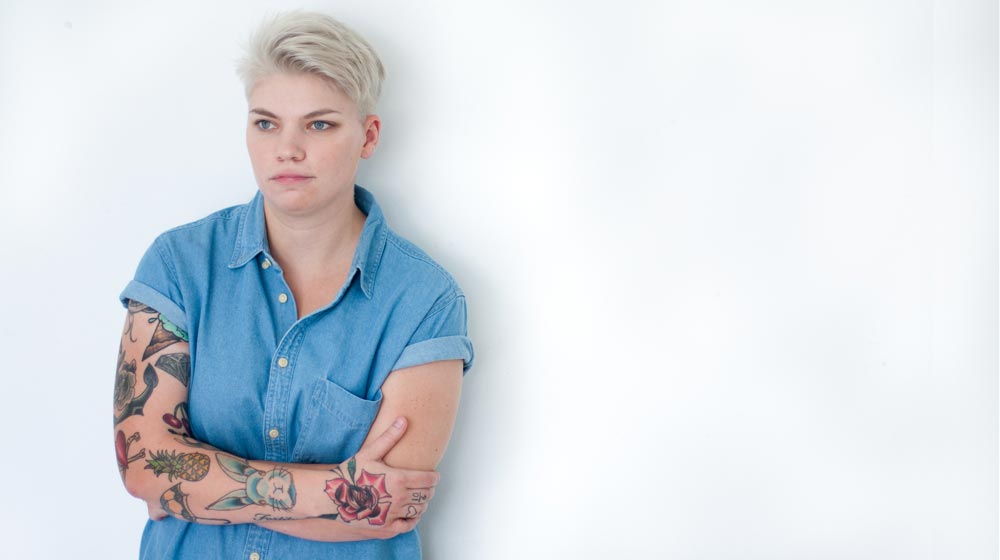
5 Minutes with Chef Ash Heeger

Ash Heeger is something of a culinary wunderkind. After making her way to the top of the restaurant food chain she moved to London to tackle two 3 Michelin-starred restaurants there. She has just moved back to Cape Town and opened the doors to her first restaurant, ASH, off Bree Street.

What is your earliest food memory that you think inspired you towards this career?

Ash: I think there were a number of high end meals that I enjoyed when I was younger because my parents were always quite into eating good food. I think for me, it was a series of small moments – the perfect crème brûlée, a delicious ice cream, a great roast, things like that.

You are cooking some of the best food in Cape Town at the moment. What has been your journey to get to this point in your career?

Ash: I went to culinary school in Cape Town, before working under Luke Dale-Roberts. I worked for Luke for about 3 years, before moving to London where I worked under Brett Graham at The Ledbury and then Ashley Palmer-Watts at Dinner by Heston. These great mentors, partnered with hard work, got to me to the point where I felt I could open my own restaurant. In June of this year, I opened the doors to my first restaurant – ASH.

Has there been a defining moment in your career which made you realise that this is exactly what you are meant to be doing?

Ash: I think I always knew that this is what I was meant to be doing, but I have a lot of moments now when I’m reminded that it is exactly where I’m meant to be.

How would you define your culinary style?

Ash: Constantly evolving. I think I always strived to cook the food that the chef I was working for wanted and now suddenly I’m cooking the food I want, which is very different and much harder. I always try to evolve and adapt constantly, and, hopefully, to get better and better.

What is the best career advice you have ever been given? Who gave it to you?

Ash: I think it must have been from Luke (Dale-Roberts). He wasn’t the only person to give me advice but he was certainly one of the first and his words have stuck with me. He said to show up early, leave late, taste everything, trust no one, attack each task with a new hunger, never work for the position you have, work for the position you want. And just work hard.

If you had all the time and money in the world, what would be your ultimate food day? What would you eat for breakfast, lunch, and dinner?

Ash: I’m not much of a breakfast person, but I’d have a hot smoked trout bagel from The Shed in Notting Hill. Lunch would be barbecue at Franklin BBQ in Austin, Texas. Dinner, I think, would be a plate of poutine in Vancouver, can’t beat it.

Most memorable meal?

Ash: The Walrus and The Carpenter in Seattle, they do incredible seafood and oysters but there was this so-simple-it’s-stupid tomato and tonnato sauce dish that just blew my mind.

Top of your restaurant bucket list?

Ash: Faviken (Sweden)

Favourite way to end a busy day?

Ash: Whiskey, preferably Scotch.
Ash

Want to read more about badass women in Cape Town kitchens? Click HERE.

Can’t get enough of Ash? Read more about her restaurant here as well as a review.

ashrestaurant.co.za | Facebook | Twitter

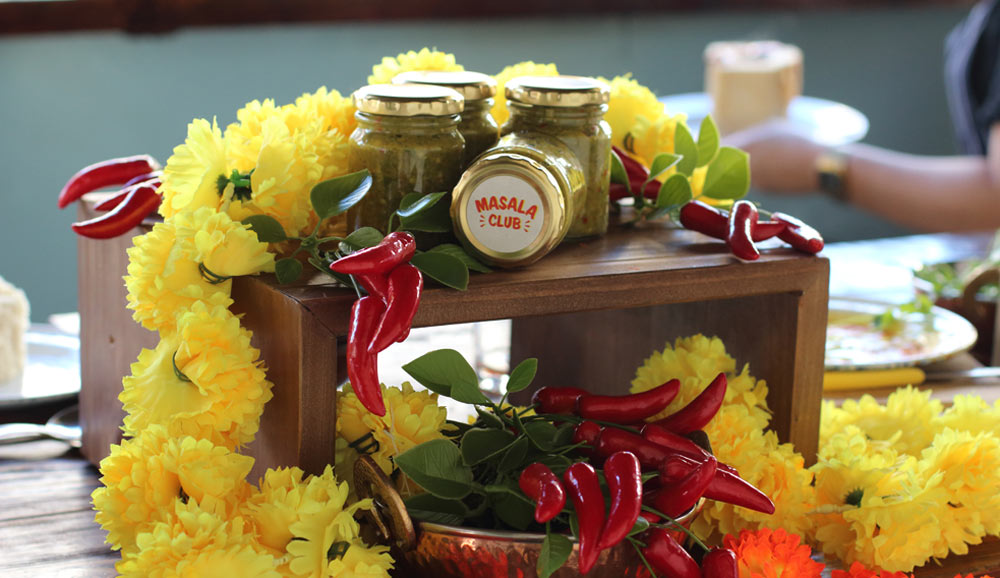
The Mother of Bunnies – Michaella from Masala Club

Every now and then life sends you little hints that can ultimately lead you to your destiny. For Michaella of Masala Curry Club, that hint came in the form of a spicy lamb bunny chow. After this born and bred Durban girl relocated to Cape Town, she soon realised that she just couldn’t scratch her bunny chow itch with what was available in the Mother City. So, she decided to head back home to start a month long apprenticeship to learn the art of making the perfect bunny. She’s now brought a taste of Durbs down to the Cape for us to enjoy. We first met Michaella and tasted her wares at a Village Idiot Sunday Collab and after our first bite we decided we wanted to find out a bit more about her motivation behind this career change. We caught up with her recently for a short interview…
Masala-Club
Where did you learn to make curry and bunnies?

I learnt in Durban down at Lugs (Blue Lagoon). I worked in the kitchens there for about a month to gain experience. I think I served over 1000 bunnies during my time there. I was desperate to come back to Cape Town and enjoy a spicy Durban curry, so there was only one option for me – go back to Durban and learn exactly how to make one… and that is what I did!

What’s your best tip for making a kickass curry?

Freshly blitzed tomatoes are way better than canned. Onions, onions, onions… the more the merrier!

If you could share a bunny with anyone dead or alive, who would it be?

Samuel L Jackson. Love that guy! I think the conversation over that bunny would be hysterical!
Masala-Club
What’s the best curry you’ve ever had?

Honestly, coming from Durban I am literally spoilt for choice. If we are talking traditional sit down curry – Mali’s on Gobal Road in Durban has a killer Rogan Josh. Another incredible curry is at the Britannia Hotel – it will melt your socks off.

You’ve only been going for a short time and the response have been amazing, what’s next for Masala Club?

Yes, we have been up and running for a couple of months now. The feedback has been incredible and it’s great to hear people saying good things about my curry. We really want to focus on our frozen curries so that people can stock up their own freezers for those hassle free nights. So place an order! Hopefully in the future there will be a store where all our great customers can come dig in.
Masala-Club
Where can people find you and hunt down a bunny?

We don’t have a store front at the moment, so we operate out of the Old Biscuit Mill every Saturday from 09h00 to 14h00. Foreigners are fascinated by the bunny chow – the most common question I get asked is “Is that a cake?” Other than the Old Biscuit Mill, you can order frozen curries from me anytime of the week – if I have what you are looking for in stock then I deliver within the CBD same day. But if I need to cook a new batch of curries, then it takes about a day or two max. We also do a Bunny Lunch Run – delivery to offices in the CBD on Thursdays – orders need to be in the previous Wednesday 10h00.
Masala-Club
Lamb or bean?

Half ‘n half. The mixture of the two is insane.

Facebook | Twitter | Instagram

Talking to Massimo Bottura

With over 25 years of being in the business, it is no surprise that Massimo Bottura of Osteria Francescana, has received 3 Michelin Stars. The restaurant, which is situated in Modena, Italy, has been listed in the top 5 at the World’s 50 Best Restaurant Awards since 2010 and last night (13 June 2016) was awarded the coveted number 1 spot! The only Italian restaurant to have been awarded this accolade so far.

Osteria Francescana has only 12 tables and serves 12 courses, with the style of Bottura’s cooking being a combination of contemporary art and avant-garde cuisine. We just had to find out more about him.
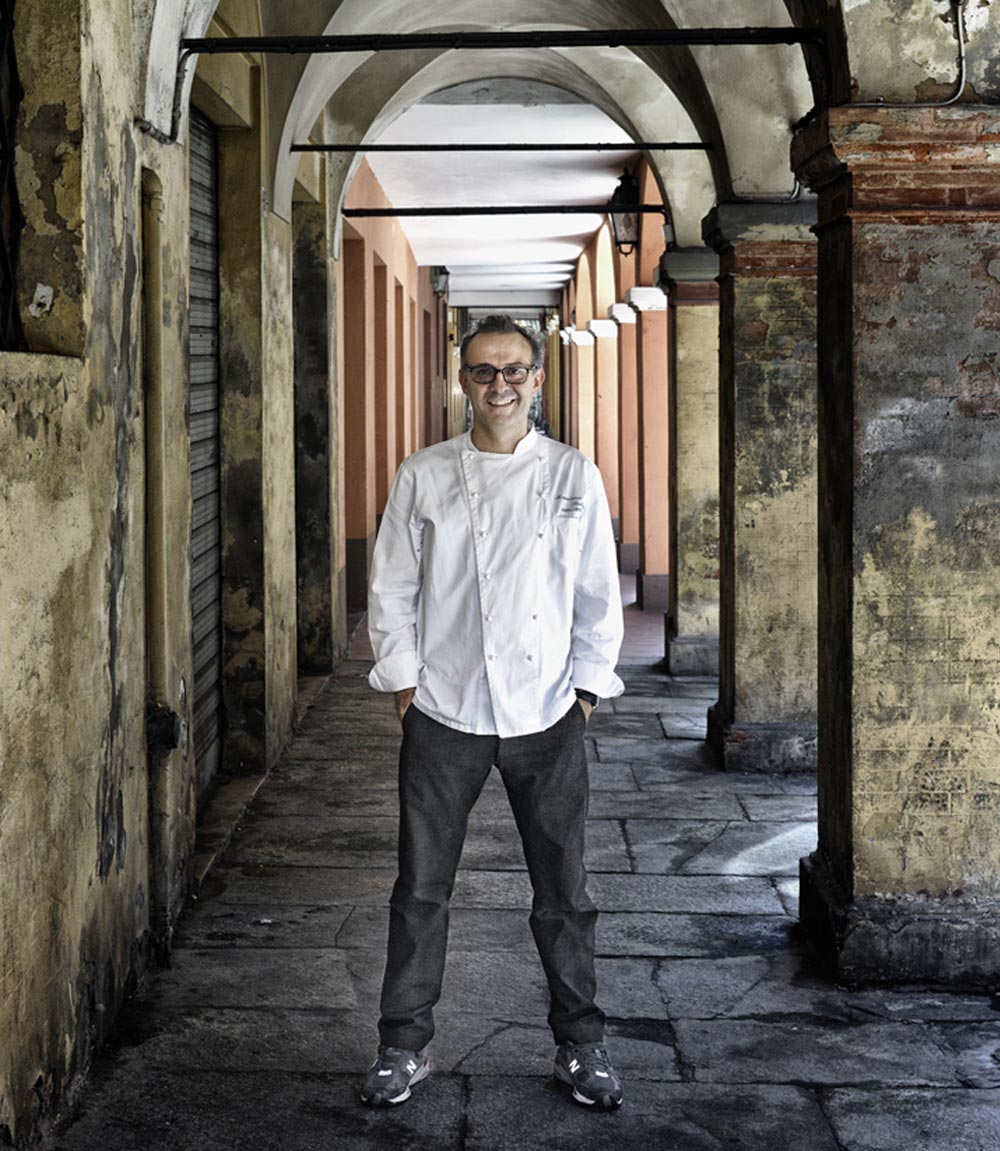
Massimo-by-Paolo-Terzi-2
© Photography: Paolo Terzi, Modena

Crush had the chance to peek into his world and ask the award-winning chef a few questions about his cuisine, his thoughts on South Africa and more…

Where did it all start? Was it at the foot of a typical Italian grandmother?

Yes. As a kid, I was always under the kitchen table. It was my refuge from three older brothers’ torments and threats. I found peace at my grandmother’s feet as she rolled out the dough for tortellini, among the smells of broth and roast meats and silenced by the constant chatting of my grandmother, mother and aunt who prepared meals for the ten of us every lunch and dinner.

Then I entered the kitchen as a young man with little training but lots of energy and passion. I learned the hard way – by buying an old trattoria and making it my own. These were the good old days. I look back on them fondly as every moment was crucial for my growth as a chef and a person. I was fortunate enough to have great mentors like Alain Ducasse and Ferran Adrià who shaped my ideas and kept me with my feet on the ground. Little did I know when I began back in 1986 what an adventure I was on!

The majority of us on the tip of Africa have never experienced a 3 Michelin Star restaurant – is it perfection on and around the plate?

It is a great responsibility to have three Michelin stars, as it was with two, or even one. I always remind my staff that our guests are coming from all over the world for a once in a lifetime experience. We do everything we can to ensure it will be one they will never forget.

We believe that the dining experience is a magical combination of hospitality and service but also surprises and emotions. We strive for perfection in every gesture and engage with our guests during the meal to invite them into our world. Our plates are concentrated on flavour and storytelling as there is so much gastronomic heritage in Italy to be tasted and explored.

With 12 tables, we are able to offer intimacy and personal attention to each diner at Osteria Francescana. There are many dining possibilities, from the 6-course Traditional Tasting Menu to the Classic 8-course Menu to the 12-course Sensations Menu, in addition to the à la carte menu.

The titles of your recipes have a simple, poetic feel about them such as ‘a potato waiting to become a truffle’ rather than over- the-top, chef-speak? Why is this?

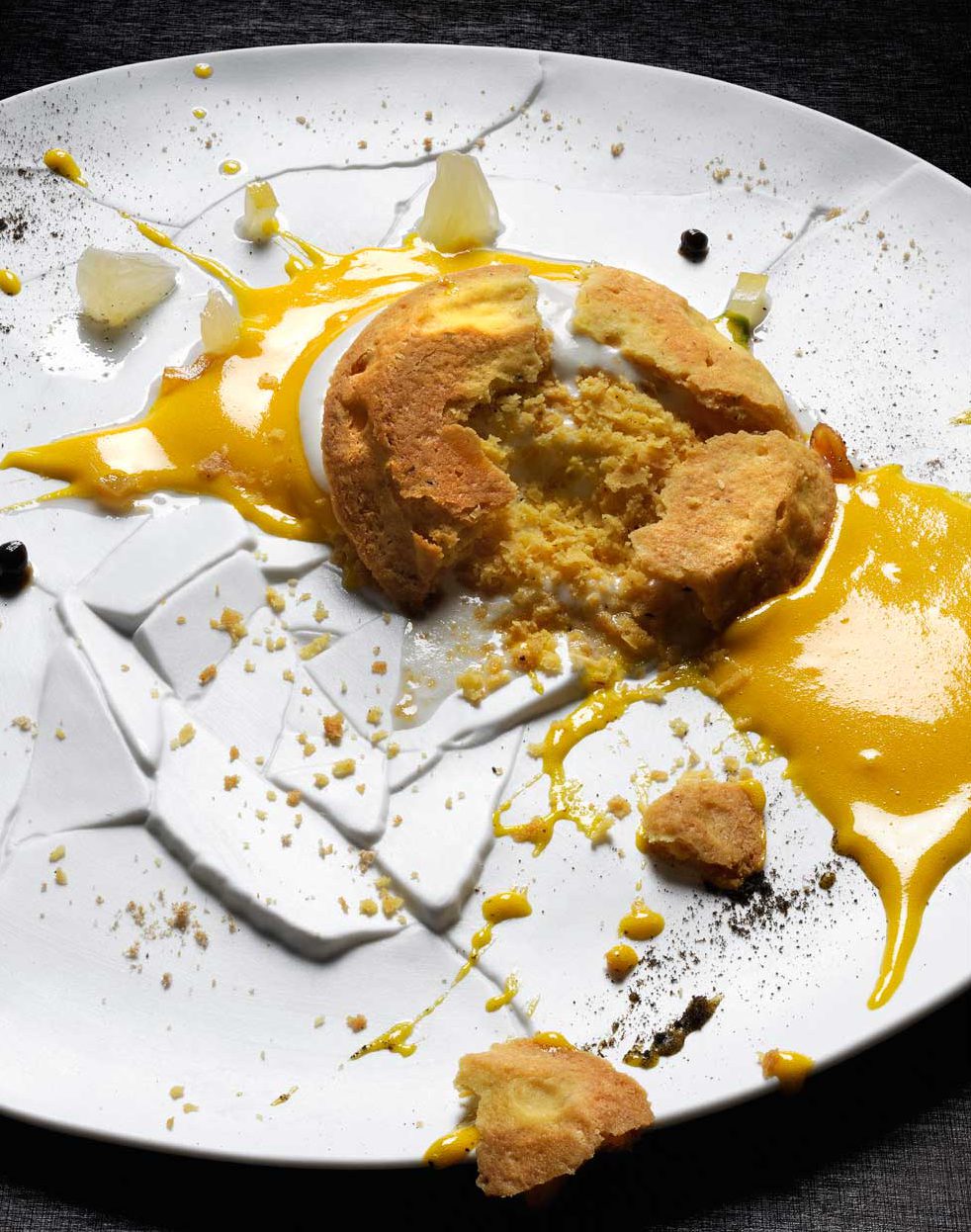
Narrative is a big part of the dining experience at Osteria Francescana, as each dish has a history and story behind it. Food is storytelling with flavours. We are concentrated on flavour in the kitchen – flavours that evoke emotions and forge new memories. Some of our plates are landscapes, others childhood memories, others treasure maps. We like to keep our guests on their toes – never knowing what to expect next.

I think the narrative dialogue that runs through my cuisine comes from growing up in a big noisy household with five brothers, aunts and uncles and my grandmother at the table everyday. Sometimes there were fifteen of us at a time. The conversation was always buoyant with the exaggerated tales that my brothers would tell and my parents trying to keep us all in order. The conversation was as important as the food and consequently I am no longer able to separate the two. Everything I eat, even the simplest pizza, has a narrative behind it from the ingredients to the pizzaiola who works the dough.
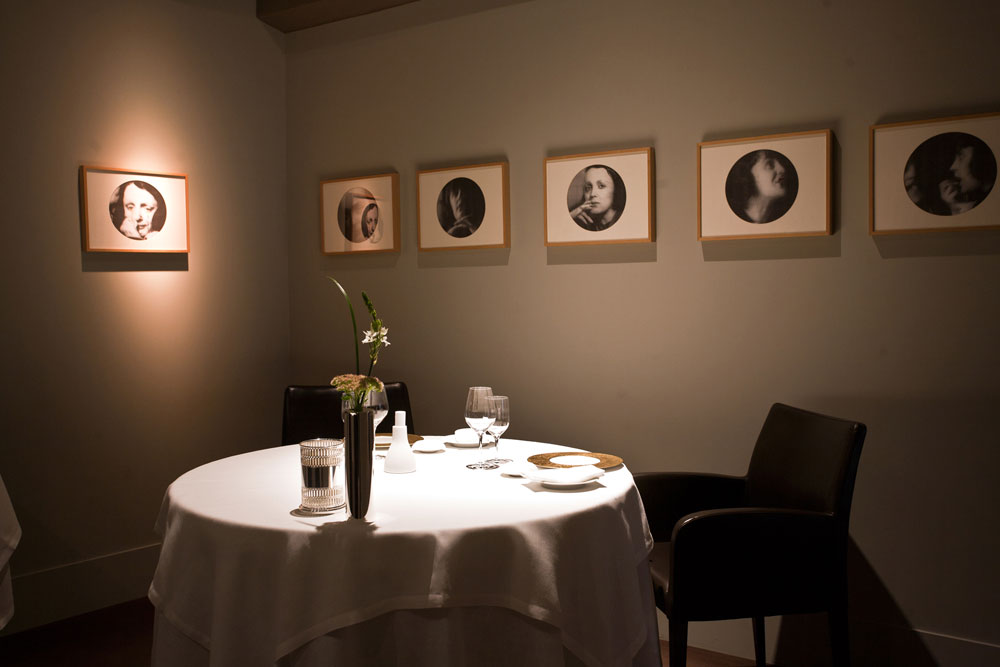
Osteria-Francescana-Corner-table-Credit-Paolo-Terzi
© Photography: Paolo Terzi, Modena

Does an idea for a new recipe come to you as a clear, complete idea or is it a process? Do you start with an idea and then test, correct and build on it – rather like a painter adding layers and textures to a painting?

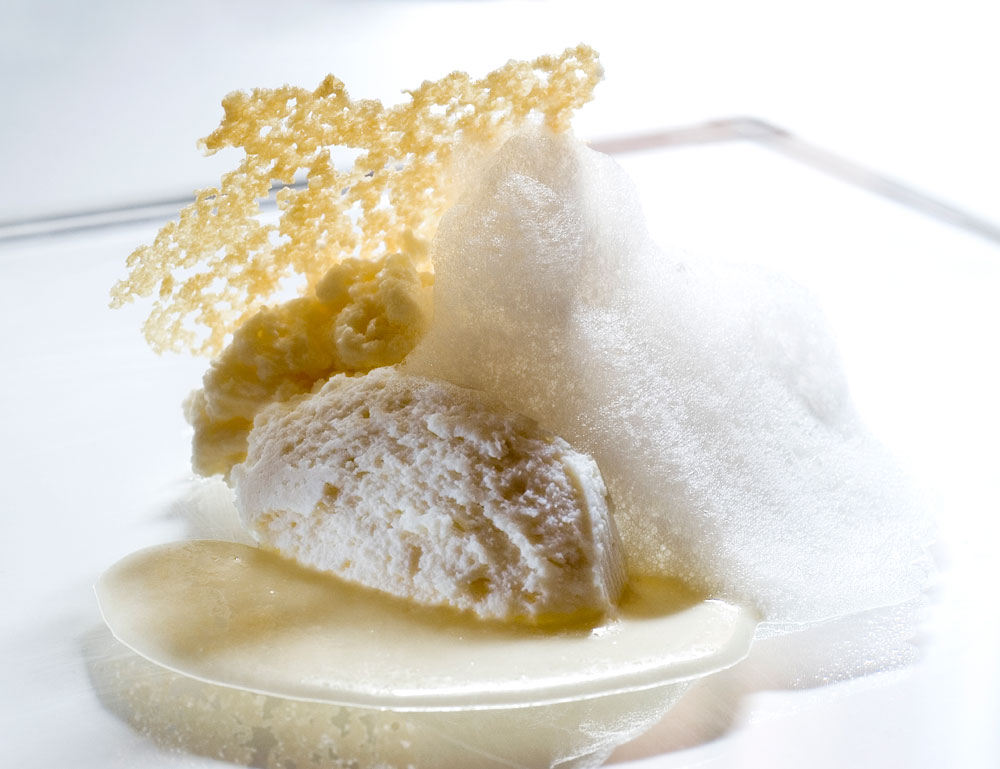
I think through everything – sometimes the process begins with a great product or ingredient – like Parmigiano Reggiano – and the plate ‘Five temperatures and textures of Parmigiano Reggiano’. A plate like that is a monochrome in white, a meditation on the qualities of a product and a plate that has been fifteen years in the making. There was no conceptualizing – only the desire to think deeply and profoundly about one ingredient and see how far I could run with my imagination and culinary technique.

Other times, the process begins with a feeling, an emotion that I want to capture with a food experience, like the Zuppa di Lumache – or Snail soup. With this plate I was aiming to capture the essence of winter above ground but express the life and earth below the surface. It took a lot of experimentation, patience and time to get the complicated layers of flavors just right.

Most of all it, cooking takes passion – that is – determination not to stop at the first thought that comes to mind or idea about a combination of flavours, but to look into yourself to find the answers to the question you are asking.

I always think of a new plate as an architect thinks about a building. Why am I making this? For whom? With what materials? What does this mean? How will it make people feel? What does it say about the future? And how will it change our landscape?

Do you consider the environment when you create dishes? By this I mean sourcing local ingredients where possible or limiting wastage or would this limit the end product?

I am constantly amazed at the quality and variety of products we have locally here in Italy. Working with local suppliers allows you to establish a human relationship that betters not only your food and your restaurant but also helps support a future for these artisans. A great part of our success is thanks to the heroic farmers and cheese makers who provide us with such exceptional products. We would be nowhere without them.

Right now I am working on a series of plates around the idea of ‘leftovers’ and not throwing away even the tiniest scraps. Perhaps this is because Italy is facing a great economic crisis, or maybe I am getting old and just don’t want to throw anything away, I don’t know… but the recipes that come out of this reflection will have stories to tell which I hope will last as long as the recipes themselves.

Is there an ultimate team that you wish you could have in your kitchen? Who would they be?

I admire anyone who makes the hard choice to become a chef. I don’t think there is any ultimate team – there is just the team you have and you need to value every single player on that team – from the most experienced to the youngest of the staff. Everyone has something to give. There are no easy paths to success in this business. As Picasso often said “success is 10% talent, and 90% hard work.”

The most important qualities I look for in a chef are humility and passion. Living your dreams is the hardest thing you can do. All my respect goes out to those chefs who dare to make a difference in their community and country.
Osteria-Francescana-Corner-table-Credit-Paolo-Terzi
© Photography: Paolo Terzi, Modena

Top 50 restaurant, 3 Michelin stars and numerous other awards – what an incredible achievement. What inspires you to stay at the top?

For the past 25 years we have worked towards three Michelin stars. Now that we have achieved this goal we can say there is still a lot of hard work to do everyday. The work keeps you honest. It keeps you with your feet on the ground but it is important to let your head float around in the clouds so that you can still dream. Maybe the bottom line is that I love my job and can’t imagine doing anything else.

I am on the board of the Basque Culinary Centre and will be doing some teaching this spring. It is very exciting to pass on your small nut of information to the next generation. Someday I’d like to open a school locally – to create a new model where chefs are working hand in hand with agricultural students, creating new systems together and exploring our rich culinary heritage with an open vision toward culture and art as well as gastronomy.

I often say, “In my future, I see more future.”

Is travelling to other countries and tasting new cuisines an important part of being a chef?

I love travelling… I do it often for business and not enough for pleasure. I always try to take something back from my travels – usually it is not something physical but a lesson I have learned from another chef, a new ingredient or even just a new perspective. I recommend to all the young chefs to travel and see the world, to be curious, to read and explore. Experience is the best school of all.

What do you think is the next food trend?

For me, the next decade will be dedicated to our artisans – the cheesemakers, the butchers, the heroic farmers – and those who provide us with the raw materials for our craft. The relationships we develop with our agrarian brothers are everything to our future. Italy’s greatest resource is its artisans. We must support them and reflect light on them in order to guarantee that the next generation of artisans will be there for our children and grandchildren. It is very important that young chefs do not lose themselves in their own dreams of grandeur but keep building for the future of their country. The more we focus on territory and on the amazing resources we have been given by our ancestors, the more we are able to create recipes with lasting value. Ethics and aesthetics go hand in hand. Think about the power of the Slow Food movement and how it has changed a generation of chefs. This is the trend for the next decade, and maybe forever. Someday instead of celebrity chefs, there will be celebrity farmers and that will be a great day indeed.
Osteria-Francescana-Corner-table-Credit-Paolo-Terzi
© Photography: Paolo Terzi, Modena

What are your interests outside of the kitchen?

I love to listen to vinyl records on my Transcriptor turntable after work. Sometimes jazz, sometimes electronica and sometimes, old, classic rock that takes me back to the good old days. The experience of listening to music, especially when you turn out the lights, gives me space to think. I am beginning to share my passion for music – I have over 10,000 vinyl records – with my 16-year-old daughter. This is amazing. She is just blown away every time I take out an album.

The restaurant is closed on Saturday for lunch so I try to have lunch with my 89-year-old mother. I don’t have a lot of free time, but the time I have I like to spend with the people I love.

On Sundays, my day off, I take long walks with my dog and my son, Charlie. Our dog is always getting into trouble, jumping in canals and chasing rabbits and we are always running through the mud to bring her back. Half the fun is cleaning up after. Life in the restaurant is very stressful so I look for activities that help me to relax.

Have you been to South Africa or do you have a trip planned?

I travelled to South Africa for the first time in November 2012 to attend the Eat Out Conference. It was a short trip that left me eager to return and explore more.

I visited Margot Janse at the Tasting Room at Le Quartier Français and Luke Dale Roberts at the Test Kitchen. Both are exceptional chefs with a real sense of pride in South African products and heritage. South Africa has a very bright future with the extraordinary products at hand and quality wines coming out of the country. I saw tremendous potential for growth and a set of inspired young chefs with great aspirations.

Osteria Francescana has just been announced as the number 1 restaurant in the world for 2016 by the World’s 50 Best, the first Italian Restaurant to have been honoured with this placement. theworlds50best.com

We talk to Executive Chef Neethling du Toit

We recently visited La Petite Ferme in Franschhoek and enjoyed a night away in the stunning French-country inspired luxury accommodation. While there, we ate a delicious dinner at La Petite Ferme Restaurant, which has become known for its culinary offering. The restaurant has previously been listed as one of the top 15 ‘Best Value’ establishments in the world by Condé Nast Traveller, and this is attributed to a combination of the venue’s cosy setting, flavoursome contemporary food and excellent service. Executive chef Neethling du Toit puts together a menu that highlights rustic flavours, served in a stylish and modern way. We chatted to the Worcester-born chef about what makes him tick…

Neethling-La-Petite-Ferme
Tell us a bit about your background as a chef… 

I was first inspired by food when working at a pizza takeaway restaurant after school, during my teens. I then briefly pursued a career in steel construction before going oversees to work as a security guard. When I came back I enrolled in the ICA chef’s school in Stellenbosch. I did my internship at Chamonix restaurant under Dane Newton in Franschhoek. When the owners sold the restaurant I moved to La Petite Ferme as sous chef before taking over as executive chef in 2011.

What was exciting about the opportunity at La Petite Ferme when it came along?

I was a young chef and it was a great challenge. It was a great opportunity to work at a restaurant with such a long history and to try and maintain that standard while adding part of yourself along the way.
Neethling-La-Petite-Ferme
Do you have a specific meal or food moment/memory that made you want to be a chef?

As stupid as it might sound, it happened while I worked at the pizza restaurant. Although the food was simple, I got a sense of satisfaction from preparing it – this fuelled a passion for cooking which developed more and more as I became a chef.

Franschhoek is an abundant place – specifically for foodies, what makes La Petite Ferme special in your opinion?

It is a combination of things – La Petite Ferme has always served food that is good, honest and delicious. Our biggest secret weapon has to be the spectacular view we have, which draws diners to our establishment.
Neethling-La-Petite-Ferme
Tell us about the menu and food style at La Petite Ferme…

The food can best be described as contemporary country. Simple food that is cooked perfectly and concentrates on big flavours. A combination that will make the conservative diner happy, as well as excite the more daring.
La-Petite-Ferme
Food trends come and go, whats hot for you right now?

A lot of chefs are toying with simpler food and then they dolly it up to be more extravagant and appealing for the more gourmet market.

Is there a secret to a running a successful kitchen/restaurant?

Yes, taste your food! Then everything else falls into place.

Have you had a funny moment in the kitchen that has stuck with you?

Yes, a baboon that found its way into the kitchen during the winter season looking for food. The situation gets funnier if you consider the fact that the kitchen consisted of just women at the time. My ears are still ringing from the screams.

One culinary trend that you wish would die?

The whole gluten-free thing. There are few better things than warm, freshly baked bread with butter melted in to it. It helped my granny to live a fulfilling life to the age of 88-years before she passed away a few years ago. Save the baker and eat bread.La Pette-Ferme-foodTo wrap up we ask Neethling to tell us a bit about a few of his favourite things.

Neethlings favourite….

place to unwind… Piketberg
drink at the end of service… brandy and soda
late night snack… chocolate
movie quote… ‘I’m gonna make you a offer you can’t refuse’. The Godfather
ingredient right now… chilli
toast topping… cheese
thing about winter… spicy curries

Sample Neethling’s cuisine at La Petite Ferme Restaurant, Franschhoek Pass Road. Booking is recommended

lapetiteferme.co.za |  reception@lapetiteferme.co.za | 021 876 3016

Chef Ash Heeger

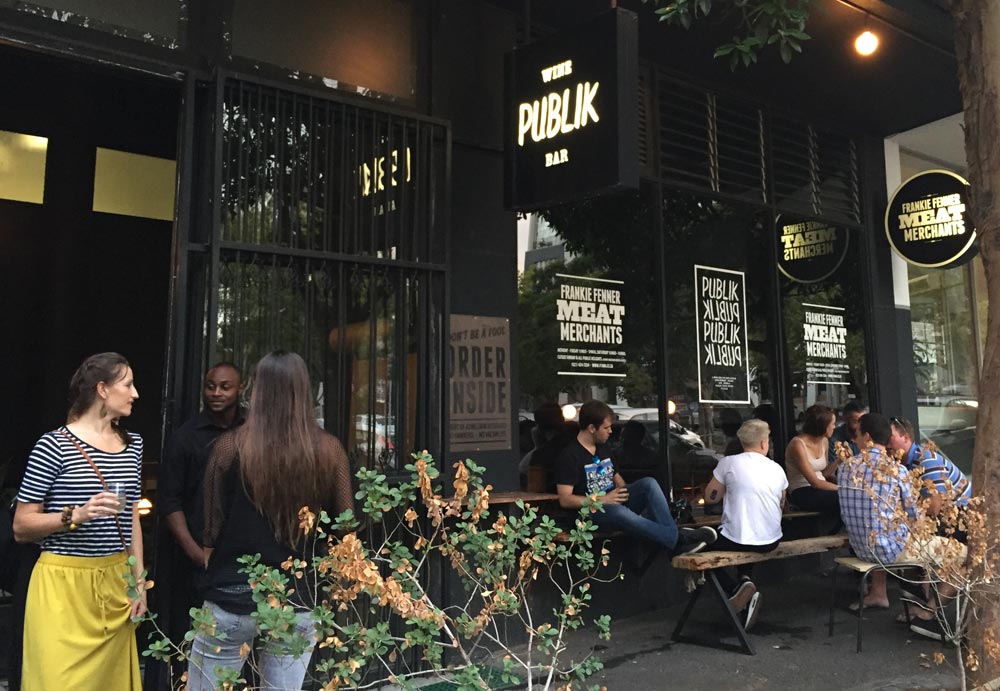
ASH restaurant is being set up in collaboration with free-range butchery Frankie Fenner Meat Merchants and Publik Wine. Chef and owner, Ash Heeger, talks to Crush about the journey to opening ASH and what we can look forward to when the doors open towards end March/beginning April 2016.

Tell us about yourself and Ash restaurant…
I graduated from cookery school in 2010 after spending the year at La Colombe with Luke Dale-Roberts who then asked me if I would like to be involved in The Test Kitchen. In 2013 I moved to London with my lovely girlfriend and started working at The Ledbury, which was a real learning curve. I moved to Dinner [by Heston] and worked there for just under two years. And now, I’m back. The restaurant ASH is one of those punny names. Obviously my name’s Ash and we’re cooking on an indoor barbecue. A very special indoor barbecue called a Josper, made in Spain, of galvanized steel that allows for very high temperatures while maintaining fairly regular heat throughout. It imparts a really intense charcoal flavour in a very short period of time. You can cook anything from a very thin piece of steak to a whole leg of lamb.

Tell us about the food…
When you think of fine dining as you know it now, you think of frills, you think of a certain pretence attached to the experience (or at least I do) – intensely shined silverware and white linen. So we’re basically doing the opposite, and we’re going for matte, bare, lots of wood, lots of stone for the interior and a very similar, simple concept for the food. Instead of taking unnecessary things and putting them on the plate and having lots of different techniques in lots of different facets, we’re going to take one or two things and showcase them. It’s going to be the type of place that you can go and not feel like you have to act in any particular way. You can come for an anniversary or birthday or a quick bite. It’s really up to you. What’s interesting about the restaurant and the food is that it’s a limited way of cooking where we’re basing the menu on what Frankie Fenner Meat Merchants has available. It’s a nose to tail approach to cooking.

How did this collaboration with The Fenners of Frankie Fenner and David Cope of Publik come to fruition?
I believe it was towards the end of February 2015 that Andy wrote an open letter to the chefs of South Africa. In this letter, which I believe is still up on his blog, he said that he was looking for someone who was ready to step up and come to cook in the space (FFMM x PUBLIK). I was in London at the time, and had no real reason to return home, or so I thought. Anyway, I was really moved by what he said so I left a comment. Something along the lines of “what about me?” Andy replied almost immediately and by the end of that day I had pretty much made up my mind. I was going to move home, and we were going to do this thing.Publik_wine_bar

Why is the cause of free-range meat so important to you?
To be brutally honest, it wasn’t important to me for many years. If we had this conversation before I left for London, I wouldn’t really have much to say. There’s a huge appreciation for free- range farmers over there. Chefs are educated constantly on what hard work it is to raise these animals and the sequence of events that lead to a carcass eventually landing up on our butcher’s block. At Dinner by Heston we constantly had the opportunity to go to the farms, meet the farmers and the animals which really brought it home for me. A few of us went to our pig supplier’s farm and we held piglets that were less than a day old. Half an hour later we were in the abattoir watching the adult sows being slaughtered. It’s tough to watch, but that really changed the way I look at what I cook and eat. Now, the other end of the spectrum was driving through West Texas last year. For hundreds of miles, as far as the eye can see, are feed lots with thousands of cows, tens of thousands. The adults are all standing in single file in these metal turnstiles, with no space to move. All they can manage to do is eat the grain below them. Even after losing sight of the feedlots, the stench that hangs in the air is absolutely putrid. How could I possibly cook and eat that meat and still be able to sleep at night?

Food trends are always changing, do you think this shift towards responsible eating is here to stay?
I definitely think so; I think that the time of excess is over and that people want to know where their food comes from, they’re being much more health conscious and I think if anything it’s going to progress to another level within the next few years.

What has been the biggest challenge, to date, of setting up the restaurant?
I’d say check again with me in 6 months, I’m sure I’ll have plenty of horror stories by then.

You’ve had an illustrious and impressive career for someone so young, working in the world’s best restaurants – how does it feel to have achieved so much before the age of 27?
I really don’t think I’ve achieved that much from anything other than hard work. I got here because I showed up early, I left late and I never gave up.

What makes you happiest at the end of the day?
My little family that consists of a little dog called Mash and a lovely lady called Jess.

Quickfire Questions
Current favourite ingredient: I have a real thing for Old Bay seasoning right now.
Kitchen tool you can’t live without: A spoon.
Guilty food pleasure: Woolies Salt and Vinegar straw-shaped chips and sour cream dip. Terrible.
Drink after hard service: Beer. Or whiskey.
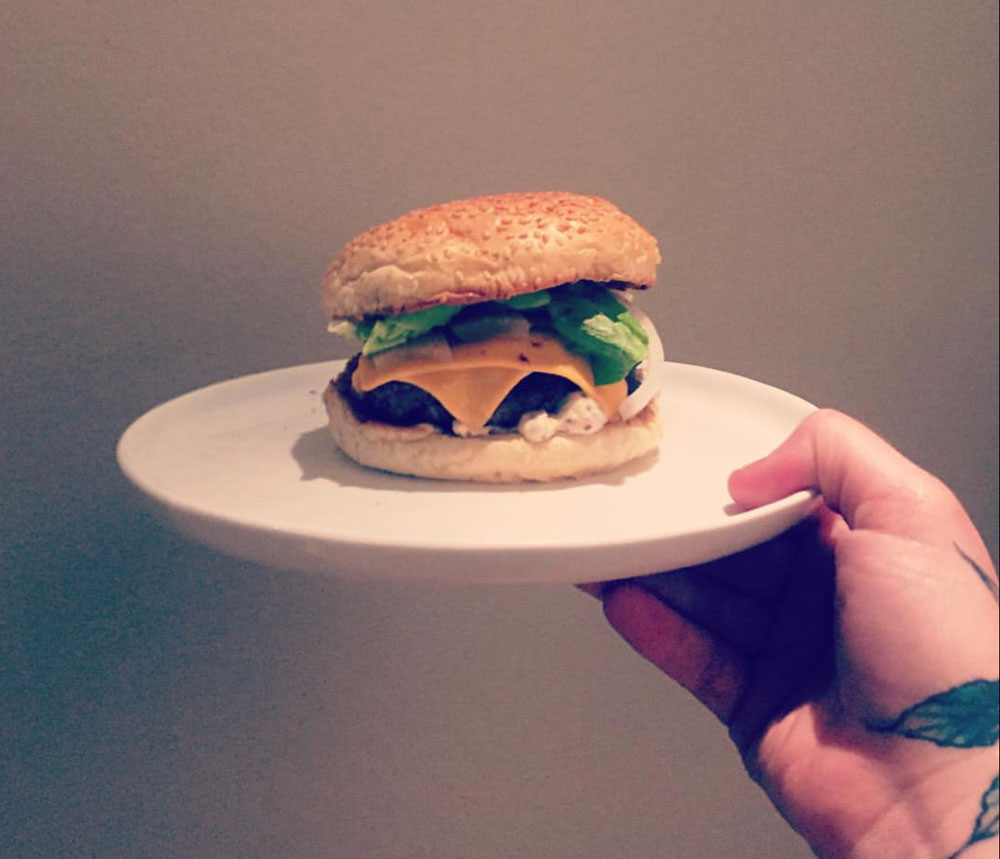
Last meal on earth: Something beefy, possibly a burger…
burger_by_ash
Chef_Ash_Heeger
To follow the progress and opening of ASH restaurant, follow Ash on Twitter | Instagram.

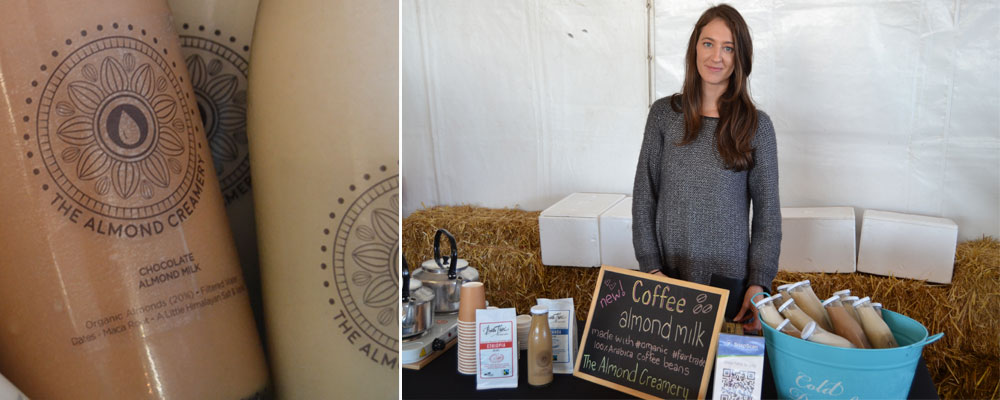
Adri Geyser from Almond Creamery

Tell us a little about the team behind the Almond Creamery
I founded the Almond Creamery when I was studying health and nutrition. My education, combined with a passion for inventing interesting creations that are not only healthy, but also delicious, is what sparked the start of The Almond Creamery. Our team is made up of my mom Sharon, who is also the factory manager and Zimkitha, who is behind the production of the milk. We all love what we do, especially sending off our delicious almond milk to our customers and knowing that they always have access to the tastiest, healthiest almond milk in Cape Town.

We are hearing a lot about milk substitutes at the moment, nut milks specifically, what do you think has prompted this trend?
Being in the health industry for over 6 years, I have noticed a definite trend towards a more health-conscious lifestyle. The increase in chronic diseases has spurred people to find out what they need to change in order to be truly healthy. Information has become easier to attain and so we are able to take responsibility for our own health and our family’s by making healthier choices.

The increase in vegan-focused movements specifically around Cape Town, as well as the Banting trend that took off last year, has also prompted people’s interest in milk alternatives – nut milks in particular. They are lower in carbohydrates and higher in healthy fats, along with many other contributing health benefits.

Was it a personal health choice that made you switch to using almond milk?
I had my own health journey many years ago, and recently decided to move away from consuming animal products, not only for health reasons, but also because of the environmental impact of animal agriculture. For this reason, I am always looking for healthy, environmentally friendly products that also taste really amazing. When I couldn’t find any seriously delicious milk alternatives, that weren’t laden with sugar or preservatives, I went to my happy place (the kitchen) and started to experiment. I wanted to create  something that I could serve my friends without feeling like I was depriving myself, or them, of enjoyment.

Almond-Creamery-

What are the benefits of almond milk and why should we choose almond or a vegan milk substitute over dairy?
There are many benefits, both health and environmental, that make almond milk in particular, a better choice compared to dairy.

  • Healthy fats: almond milk is higher in healthy fats (omega-3 fats and mono-unsaturated fats), and lower in unhealthy fats (saturated fats) and cholesterol.
  • Contains no hormones and no antibiotics: almonds don’t get sick and hormones cannot be injected into them to artificially produce more milk. Therefore almond milk is naturally antibiotic and hormone-free.
  • Lactose and casein-free: dairy-free milk alternatives contain no lactose (a milk sugar) nor casein (a milk protein) and are therefore perfect for those who are lactose intolerant or who have a casein sensitivity or allergy.
  • Contains vitamin E and other nutrients: although unfortified almond milk does not contain as much calcium or vitamin D compared to fortified cows milk, it does contain 40% RDI of vitamin E (essential for healthy skin) per cup and biotin (an essential energy nutrient), plus minerals such as phosphorous, magnesium and manganese, which are all important minerals for bone health.

Choosing almond milk over other milk alternatives like soya and rice milk is mostly preference, but we think that almond milk is so much richer and tastes a whole lot yummier than other milk alternatives. As a nutritional expert, I don’t recommend soya milk to most people because of the phyto-oestrogens present. These can mimic hormones such as oestrogen and may cause potential hormonal imbalances if consumed in large quantities over long periods of time.

Tell us a bit about what goes into the production of almond milk? (Where the nuts are sourced from, how the process works etc.)
Our precious raw almonds, sourced from a local, organic farmer, are soaked overnight to activate. This ‘activation’ by soaking in filtered water is an important step in our process as it does two things – it brings the raw nuts to life (if you were to put these in the ground they would start to sprout vs unsoaked almonds which would not), plus much of the tannin is removed, which improves the absorption of certain nutrients within the milk.

Once the soaking is complete, they are popped into a high-powered blender, together with some filtered water, a little Himalayan salt and alcohol-free vanilla extract. This is then blended for a few minutes to ensure that the almonds are properly blended and most of the nutrition has been extracted. To make sure you get the creamiest consistency we strain this beautiful mixture through a nut milk bag and the almond milk is ready!

It’s no secret that nut milks are expensive, why is that?
Almond milk is much more expensive than dairy milk for two main reasons – dairy farmers are heavily subsidised to make milk more affordable, plus the almond prices spiked due to droughts in California (even local almond prices have spiked because of demand).

Tell us about your flavours…
We currently have three flavours – The Classic (previously Vanilla) is a mildly flavoured milk that is perfect over cereal, or in hot drinks.

The Chai is infused with a homemade chai spice blend with the addition of dates for sweetness and is our best seller.

The Chocolate is made with raw organic cacao and maca root powder, giving it a creamy and rich flavour similar to traditional chocolate milk. We’ll be introducing a few new flavours very soon too.

Your packaging is beautiful! Tell us a little about the design of the label and the choice to package in glass.
The Mandala, which is the centre of our logo, exhibits radial balance within the Buddhist and Hindu cultures; it is a spiritual symbol representing the universe. I have always been drawn to these beautiful creations and when I thought about starting an almond milk business, I knew I had to use a Mandala in the logo design.

The decision to use glass was an easy one; it’s easier on the eye and is much better for the environment than plastic. Glass can be recycled or reused (as a vase for pretty flowers, or as a water bottle).

We ask our customers wherever possible, to bring back their empty glass bottles to the OZCF market on Saturdays. The bottles are then properly disinfected and reused at our factory to reduce our waste impact on the environment.

Where can readers find Almond Creamery milk?
We have stockists all over Cape Town, including the Cape Quarter Spar, Saucisse Deli in the Old Biscuit Mill, Zetler Pharmacy in Gardens, Organic Living in Constantia Village, and a few in the Northern Suburbs (Welgedacht Spar) and Stellenbosch (Bebe’s Chocolaterie). Check out our Facebook page for a complete list of stockists and feel free to suggest a store near you.

You can also come and visit us at the OZCF market (held in Granger Bay near the Waterfront) on Saturdays. We’re there every weekend having fun and enjoying the spectacular views of the mountain and the sea at the most beautiful farmer’s market in Cape Town!

Quick-fire Questions
If you were a colour, what ‘hue’ would you be?
Green is my favourite colour, which is probably why one of our next flavours will be green. Wait, what?!

What’s your secret obsession?
I count almost everything; I do sums of numbers on signs as I drive by, or of car’s number plates for example. I play games in my head with the numbers, trying to get to different sums with what I see. It keeps me occupied when I’m bored, which hasn’t been very regularly lately!

Who would play you in a film about your life?
Wow tough question! I absolutely LOVE Julia Roberts, and would be so honoured if she were to play me in a film about my life. She has the most amazing laugh and her free spirited playfulness somehow reminds me of myself, or maybe of whom I’d like to be.

Facebook

Meet Karl and Greg of Beer Country

Beer Country is South Africa’s first TV show dedicated to beer, food, fire, and the open road. Hosted by two of the thirstiest guys on the planet – brothers, Greg and Karl. The guys also create incredible food over open flames and pair what they eat with what they drink.

We sat down with these two fellas to find out a bit more about what makes them tick (besides beer and braai that is). But firstly, who exactly are the Beer Country guys?

Greg Loves to braai. His first and to date best job was getting paid to braai boerewors at age thirteen. For him there is no such thing as too much fire, and he believes that craft beer is love in a bottle.

Karl loves beer. He also loves fire and food, and when it comes to cooking doesn’t believe in half measures. When he is not braaing and drinking beer, you can find him drinking beer and braaing.

We know you guys were contestants on the Ultimate Braai Master Series 1, can you tell us a bit about that?

G: Roadtrip of a lifetime, no doubt! Every group of mates has a guy or girl who takes charge of the tongs when it matters, and this was our chance to see how we stacked up. On the call-to-entry, I am not sure whether it was the look in Justin Bonello’s eyes, or in the yellowtail’s he was holding, but the challenge was on. All in, we did pretty well after a seriously steep learning curve.

K: UBM was one of the toughest and most incredible adventures of a lifetime. For us it was always about the road trip and making it to the end. We managed to do all that and then come in second place… kinda sucks but I’d do it all over again in a heart beat.

How did UBM lead to Beer Country?

G: Not gonna lie, coming second was tough as nails, but it was also a massive motivator. I don’t think we would have fought as hard for Beer Country had we won. I reckon it was the Universe asking us:” How badly do you want it?” Pretty badly as it turns out. Seems you need to learn how to lose before you learn how to win, just ask the Bokke!

K: The idea for Beer Country happened about five minutes after we found out that we hadn’t won. After a whole bunch of swearing we got talking and decided that if we didn’t win this TV thing, then we’d make our own. Beer and braai was what we’re good at, so it sort of just evolved from there.

Craft Beer is a buzz phrase at the moment, can you tell us a bit about the phenomenon?

G: I think the artisanal food and craft revolution go hand in hand. Yes, it costs a bit more, but you get what you pay for and then some. When you see the passion and love behind these beers… that trumps a bottom-line any day. More people drinking better beer. It’s a beautiful thing!

K: When you think about beer and the beer industry before craft beer, we were all drinking lager, all the time and there are like 10 different brands of it. There’s nothing wrong with lager and I still drink lots of it, but there’s more to life than lager. That’s what craft beer has to offer.

All of a sudden there are all these new styles of lagers and ales just waiting to be tasted. I think that’s why craft beer has taken off like it has. People want exciting beers.

How does the industry in SA compare to US and Europe?

G: Right now the USA has this massive momentum built over the past two decades on truly epic beers. Europe just has good beer, and has had for hundreds of years. As for us here in SA, well we learn pretty quickly, are able to maak-‘n-plan, and we have the road map. Some of our guys and girls have started getting just the right mix of courage and consistency, with a little added local inspiration. We are lucky enough to be living in the thick of it. Exciting times for sure!

K: South Africa is doing well but we’re still many years and many beers behind those guys. Things are moving at an amazing pace here and we’ve got new breweries opening up on a regular basis here. I don’t know it we will ever compete on size but we’ve got some kick-ass beers here and I think the future is looking tasty.

What item would you take with you to live on another planet?

G: Bacon! Instant galactic president-for-life status.

K: Can’t fight that logic, but for me, a good and solid folding knife is a must. Everyday.

Late night petrol station snack?

G: Is beer a snack? I reckon so.
K: A good pepper steak pie solves everything.

First food memory?

G: It was in the Kruger Park. I was seven years old and got handed the tongs by my dad to look after the wors. Smashed it!
K: Hmmm.. it’s not my first but it’s one that sticks out – mom opening the tupperware of hot egg-mayo sarmies on family road trips. It’s a powerful scent… stings the nostrils.

What ingredient you wished you could grow on a tree?

G: Unicorns. I bet they would make an amazing potjie!
K: The original Huy-Fong Sriracha Sauce. Nothing comes close to the real Red Rooster!

A moment in time you can teleport to?

G: Well in 2015 my birthday is International Back to the Future Day, seriously. So this may actually happen!
K: Any Led Zeppelin concert from the early 70s

Beer-Country-Guys

Food moment you wish you could reverse…

G: Downing a pilchard smoothie at SANCCOB, filming Beer Country. The volunteers feed it to the baby penguins. Not even the brewer’s yeast could save the fishy, cod-liver oil, Husky combo. Worst. Idea. Ever.
K: Ostrich penis while judging the Ultimate Braai Master auditions. It was a bad decision and I blame Justin Bonello for giving it to me.

Most uncomfortable place you have ever had to sleep?

G: We have slept in some crazy places, but two on the Ultimate Braai Master stand out for sure. Karl…
K: First night on the Orange River, we shared a 2 man tent that was made for hobbits (again, thanks Bonello). Then in the Transkei, flat on a freshly laid cow-dung floor. The farting cow was in there with us, along with a wolfpack of cockroaches. That was pretty special, and we wouldn’t change it for anything, haha!

Favourite ingredient right now to cook with?

G: Chipotle chillies, hands down. Spicy, smokey, smells like fire, tastes great on anything. They are fire-foodie crack!
K: Our Karoo-Dust spice mix. It’s a USA-style dry rub and we use it on everything.

What local craft beer are you gonna be having with your fire tonight?

G: For the longest time my go-to was Devil’s Peak Woodhead (which I love), but right now I am reaching for CBC – Mandarina IPA. Too good…
K: Bring on the hops, Woodstock Brewery – Californicator. All day long.

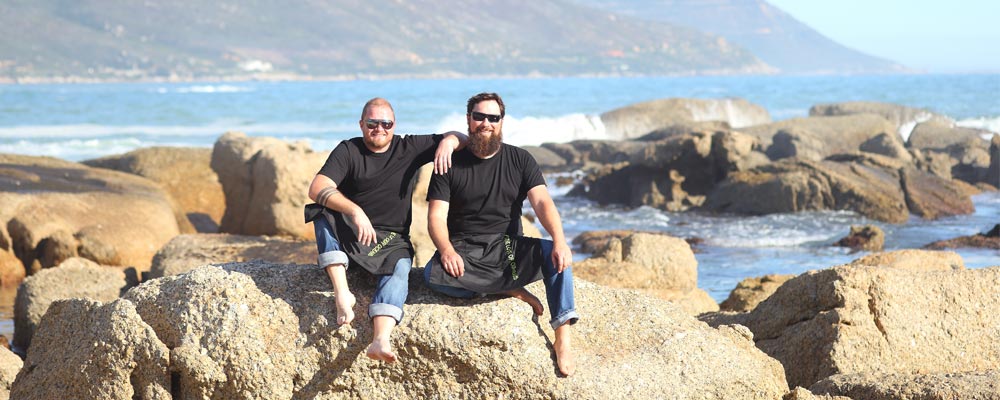
The Guys Behind Wazoogles

Give us a little background on yourselves and how the brand came about?

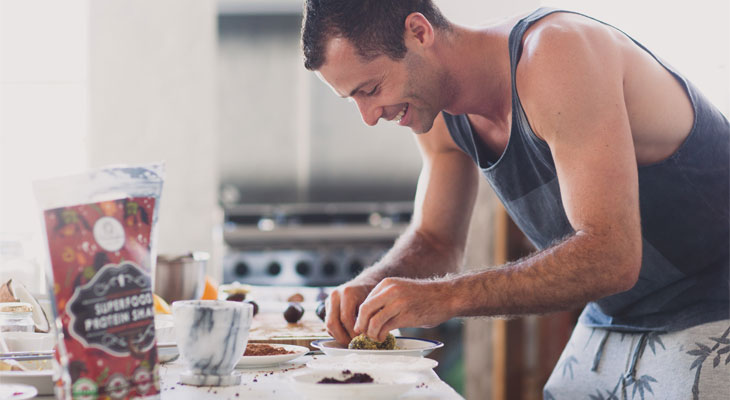
We are passionate surfers, chefs, travellers and yogi’s who are grounded and immersed in the present beauty of the natural world. We are brothers, born four years apart and raised in the beautiful city of Cape Town, South Africa. Gavin, a passionate advertising photographer and Warren, a creative jewellery designer and art director.

So, what led you did you divert your time from your busy professional lives to create a product like Wazoogles?

Our vibrant passion is the product of adversity. While leading an active lifestyle in Cape Town, Warren constantly battled with his immune system; colds and the flu often forced him to sit at home while his mates tortured him with stories of epic waves and stand-up barrels. When western medicine failed and eastern medicine prevailed, he realised how vital food actually is to a healthy body and mind. After thousands of hours of reading, self-study and sharing good food with family and friends, Warren slowly, but naturally embraced a plant-based, whole foods lifestyle with an emphasis on superfoods and Chinese medicinal super herbs.

From visiting his GP every 6 weeks, Warren has not seen his face in almost 5 years, neither has he taken any pharmaceuticals. He doesn’t get sick anymore, he has constant energy, sleeps like a baby and always has a HUGE smile on his face. The proof was in the eating and life tasted amazing. Warren then converted Gavin to the world of superfoods and plant-based living after he experienced similar challenges with his immune system whilst battling an eight year fight against chronic fatigue syndrome.

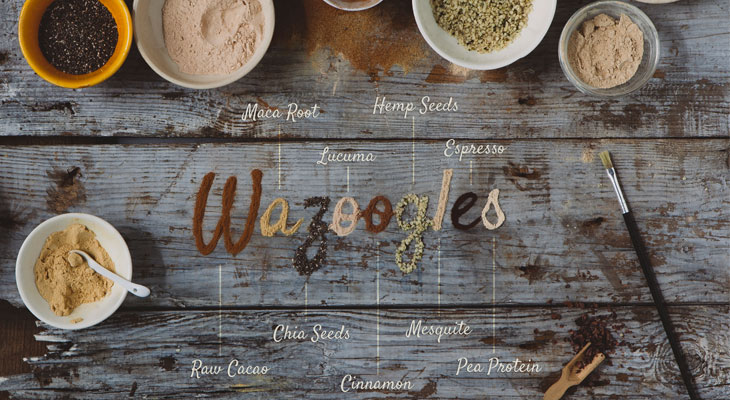
Sick and tired of witnessing large food companies pull the wool over consumer’s eyes, we decided to develop our own product. Sourcing from the smallest and most ethical farms around the globe, the foods sourced for this product are some of the most nutrient dense foods on this planet. As two passionate brothers, we have developed something that is packed with all the essential minerals and nutrients, a product that not only makes us feel amazing, but is absolutely delicious, convenient and helps us to navigate this fast paced world with a healthy kick.

Wazoogles-Stencil

Who came up with the name Wazoogles? We would also love to know what the concept behind your unicorn logo and funky packaging…

As a nickname, Warren came up with the name Wazoogles. He was just having fun with his passion project and wanted to create something amazing, without having to take it all too seriously, hence Wazoogles Superfood was born.

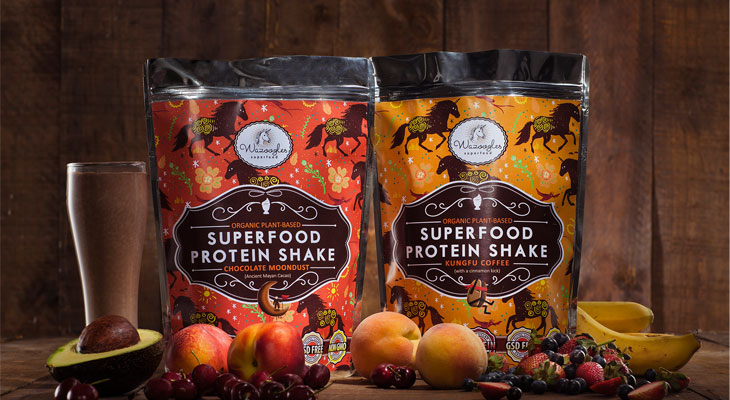
The unicorn logo was the brainchild of our illustrator, Jade Klara, a long time friend and one of the most talented creatives in the country. Respecting Jade’s awesome creative mind, we gave her a blank canvas to work with. We illustrated to Jade, that Wazoogles superfoods are the most magical, unbelievably nutrient dense foods on this planet, affording the human body with energy, and nutrition in an almost magical way. She responded with a unicorn, the most perfect emotive icon to represent these magical foods.

We have tried to do everything in-house and the packaging is no exception. As a qualified art director and designer, Warren utilised his creative background and designed the packaging himself. We wanted something bold, colourful and fun, turning the health product industry on its head, by thinking outside the box and allowing our passion to effortlessly shine through our packaging. Our beautiful wallpaper design is inspired by and pays respect to the ancient Aztec and Mayan civilisations that revered these magical foods as their most valuable food sources, due to their powerful healing properties.

Wazoogles Packshot

Can you tell us a bit about  ‘superfoods’?

Superfoods are the most nutrient dense plant-based foods on the planet, that are easily digestible and absorbable by the human body, often making the other foods we eat pale in comparison when compared side-by-side for their nutrient and mineral properties. All of Wazoogles superfoods are certified organic and we place a strong emphasis ensuring we source from farms around the globe that practice fairtrade ethics.

Why should we be choosing to add superfoods to our diet?

Superfoods are packed with many of the essential minerals and nutrients that are by large lacking in the in-organic mass produced agricultural food system of today. And as such, they satiate the body at a cellular level. We feel strongly that it’s time the mass produced processed food companies of today are shown up for who they are and what they do, and the only way to get that job done is to educate the public and at the same time offer them real health products, where the front of the packaging is as honest as the back, and that is what we are striving to do.

How would you describe your lifestyle / your food and lifestyle philosophy?

It’s simple, it really is. We believe fad diets and big companies have totally complicated what should be a simple and healthy diet. There is a huge difference between setting your goal to lose weight as opposed to obtaining a healthy body. We simply bring it all back to the basics. We live a predominately plant-based diet, placing an emphasis on nutrient density without ever compromising on taste. We keep active, surf when we can and pursue our passions. We believe balance is the key to everything, and one should never stray too far in either direction. If your great grandparents wouldn’t recognise it as food, it probably isn’t. Stop following fad diets in the desperate hope that you can achieve your goal in 5 minutes. There are no shortcuts in life and certainly not in nature. Treat those as you wish to be treated, eat unprocessed whole foods from the earth, move daily and drink lots of water. Your body and this planet will smile upon you for all of it.

wazoogles-lifestyle

Can you give our readers 5 easy tips on how to kickstart a change to a healthier lifestyle?

Absolutely!

  • Start by reading the ingredients of all the food products you buy, if you can’t pronounce it, it probably isn’t healthy for you. If it has a letter (usually E) followed by a few numbers eg: E5104, don’t eat it – it’s not really food, it’s simply a food-like by-product, and it surely isn’t good for you.
  • Try cutting down or out processed foods (eg: fast food or pre packaged non fresh food), sugar, wheat and dairy from your diet. Do this for 2-3 months and then start slowly introducing them back into your diet and notice how your body feels when you do this. At the same time increase plant-based foods like fruits and vegetables into your diet, if it comes from nature, it’s probably packed with the good stuff. PS: your new favourite colour should be green!
  • Shortly following point two, listen to your body! Your body is more intelligent than you will ever be able to comprehend. Stop ignoring symptoms of deeper cause or repressing these warning signals with medication. If your body feels off, it is communicating with you and you ought to listen to it.
  • These days we are stuck at desks, sitting under fluorescent lights for minimum eight hours a day. We aren’t designed to do this and research has shown it lowers our life span. Try do some exercise every day, if you don’t have time take the stairs on all your meetings, by the end of the year your body will be thanking you for this.
  • Don’t take life too seriously. Don’t sweat the small stuff, life’s too short. Who knows what tomorrow will bring. Be grateful for all the good in your life, lead with your heart, and act with out reaction. Live your life by these basic simple, and easy principles, and your positive actions will literally manifest a better environment around you.
  • We know you asked for five tips, but this one’s on the house… start every day with a smoothie!

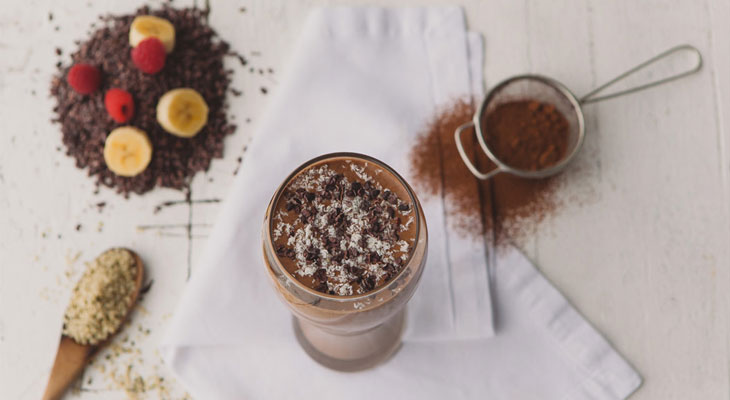
Wazoogles-smoothie-730x400

On that note….Do you guys have a favourite smoothie combo?

Wow… that’s the toughest question so far! I wouldn’t say we have an exclusive favourite, but our current top-spot holder is:

  • 1-2 servings of Wazoogles Unicorn Berry flavour (launching soon and packed with the most nutrient dense and anti-oxidant rich deep purple plants on this planet).
  • half a frozen avo.
  • half to one whole frozen banana.
  • a handful of frozen blue berries.
  • 1 medjool date.
  • 1 Tbsp (15 ml) tahini (sesame seed paste)
  • A handful of fresh green leaves (kale, baby spinach, watercress, swiss chard etc. De-stem the kale and chard).
  • Approx 300 ml spring water or almond milk

Optional: Top with crunchy cacao nibs, dried mulberries and activated buckwheat. Blend together drink with a straw and eat the crunchy bits with a spoon… or simply guzzle the whole thing down!

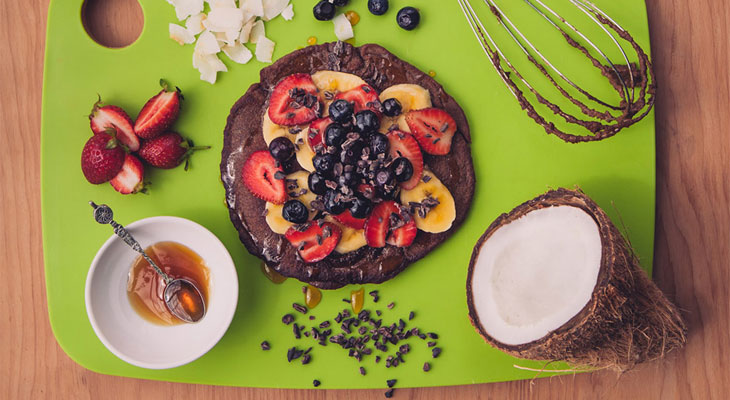
Wazoogles-Crumpet

Quickfire Questions

Best foodie destination… Hawaii. (Ed’s note: Are you guys sure thats for the food and not the waves?)

You can only eat one fruit for the rest of your life, what is it…?

Gotta be watermelon. Gotta be living in the tropics!

Favourite Saturday morning ritual…

  • One litre of room temperature lemon (and possibly cayenne) water.
  • A cup or more of our favourite tea combo, which is currently an energising blend of organic yerba mate tea brewed with some raw wild honey, and mixed with a tablespoon or two of chia seeds.
  • Followed by a long and energizing yoga class or a surf if the waves are cooking.
  • Finished off with one of our favourite Wazoogles smoothies with all the toppings one could think of, or a summery Wazoogles smoothie berry bowl with fresh slices grapefruit segments, almonds, goji’s and toasted coconut.

If you could read anyone’s diary, whose would it be?

Probably the editor of Crush Mag… otherwise how else would we know what foods are trending in this beautiful city? (Ed’s note: haha!)

To read more and to order online visit wazoogles.com | Facebook | Instagram
Amanda Lewis

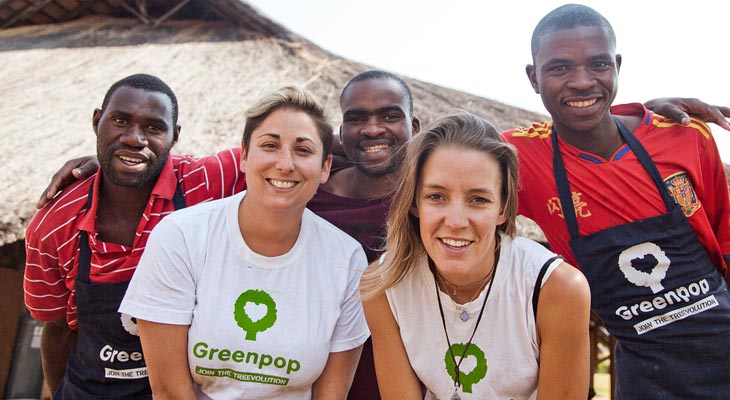
At the end of June this year, Amanda set off for Zambia with Greenpop South Africa, to assist with the Festival of Action (also known as #GPZam2015), a re-greening initiative for Zambia. This was the second year in a row that she would be attending, and would head up the bush kitchen for over a month, in order to keep volunteers of the project nourished and well-fed.

Why did you attend GPZam 2015?

I had already made up my mind that I was going to join GPZam2015 the minute I left camp in 2014. I was asked by Lauren from Greenpop in 2014 if I would be interested in running the kitchen for the festival for six weeks and after serious pre-planning for Saucisse Deli, I was lucky to take time off and join the team. It was such a life-changing experience for me that I had to go back.

Amanda Lewis with Greenpop

Have you always been an eco-conscious person?

I have always taken a very ethical stance towards the food I cook, and certainly the products that my deli sells, but I had never thought about the waste side of things. After running a green kitchen for six weeks in Zambia in 2014 and arriving home to my old outdated waste system in my restaurant, there was no doubt that I had to change things. I immediately implemented new systems that I had learnt at the festival. We currently recycle all of our plastic, glass, tin and paper/cardboard, we only use biodegradable cleaning products as well as biodegradable packaging. We hope to encourage our neighbouring restaurants to start implementing new systems too.

How did you manage to cook in an eco-conscious, sustainable and energy-efficient way while in the bush?

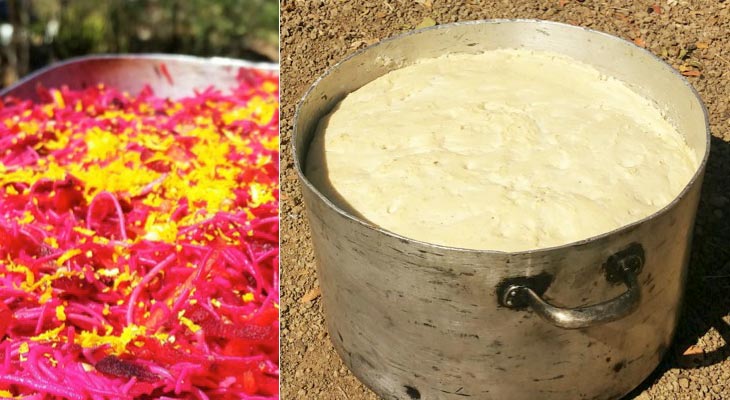
Cooking in the bush is all about serious pre-planning and good old problem solving. On a good day you could find yourself having a few hours off lying by the pool and on a bad day you could find yourself trying to cook in a kitchen filled with bees while trying to pay for chickens that arrived out of nowhere. But that’s what I love about it. Every day is a new challenge. I was able to experiment using solar cooking as well as the use of Wonderbags. Fantastic methods for the bush. We monitored our daily use of gas and electricity as well as meat consumption, and cooking mainly vegan meals kept our footprint down to a minimum.

greenpop-food zambia

How did you source your produce? 

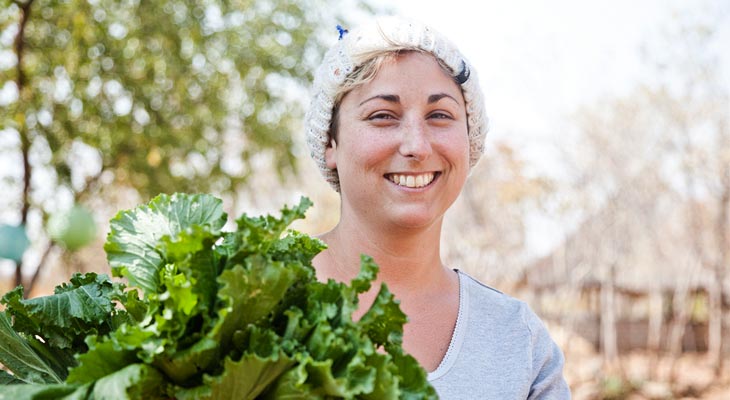
AHaving met many of the local farmers in 2014 I was able to create a good business relationship with them. Our pledge is to only support local, therefore we are able to buy produce that is in season from the local farmers rather than supporting the larger super markets. On a daily basis we had bicycles arriving with vegetables and eggs stacked high, keeping our meals as fresh as possible.

What do you hope to achieve by making Saucisse an eco-conscious establishment?

Besides knowing that on a daily basis I am making the right choices for my immediate environment and for my customers, I hope to use the restaurant as a platform to spread the knowledge that I have learnt and create a ripple effect. We all have the ability to do it, sometimes you just need a lightbulb moment. Hopefully I will help wake a few people up during my journey, living a green lifestyle. I am very keen to help out any restaurateur out there who is looking to change their systems.

Amanda Lewis Saucisse

Are all products sold in Saucisse from local suppliers?

Our focus at the deli has always been to support local. In the first year there were a few products that I struggled to get hold of from local suppliers, but after five years in business I can now proudly say that all of our meats, cheeses, and pantry items are all locally produced from small independent producers. It’s amazing how many new creative products come onto the market each year. We keep our fridges and shelves packed with only the best South Africa has on offer. And we encourage tasting!

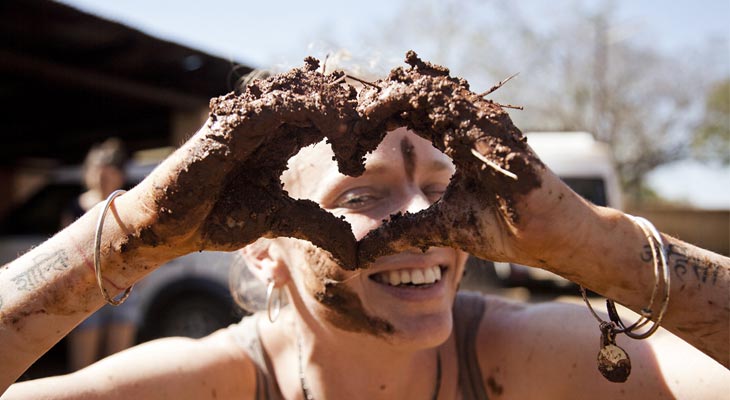
Greenpop love

Any parting words?

As a business owner I realise the importance and responsibility I have on my impact on the world. It can either be a positive or negative one. I pledge to utilise my time to help and encourage the people around me to look after our planet and I hope my story will inspire others too.

saucissedeli.co.za | Twitter | Instagram | Facebook 

greenpop.org | Twitter | Instagram | Facebook 

Photography Credits: Amanda in Zambia/with Greenpop: Marike Herselman | In the deli: Mariusz Szczawinski
Compiled by: 
Lynette Botha

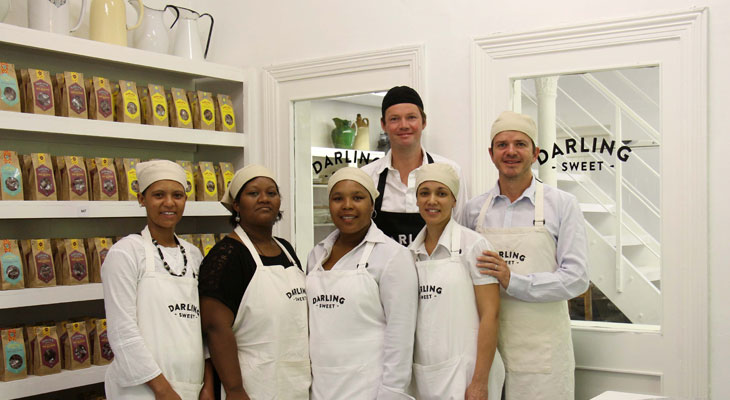
Darling Sweet

Crush catches up with Frits van Ryneveld and Hentie van der Merwe, two gents who are living the dream – living in a small town up the West Coast and producing gorgeous artisanal toffees with unique South African flavours.

Tell us a bit about yourselves, Darling Sweet and how you came to be in the business of sweet making…

I (Frits), was living in the beautiful Swartland town of Darling, when I met Hentie. I ran an antique shop and also worked in the corporate world. I mentioned to Hentie – artist, trained chef from his years living in Belgium and senior lecturer at Dept. Visual Arts, University of Stellenbosch – that I wanted to make toffee. Immediately he was in on the idea! We decided on real, hand crafted, proudly Swartland/West Coast butter-rich toffees!

Tell us about the toffees you make…

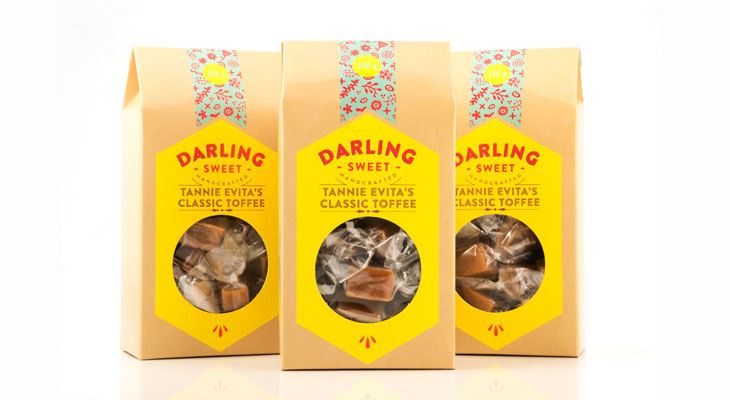
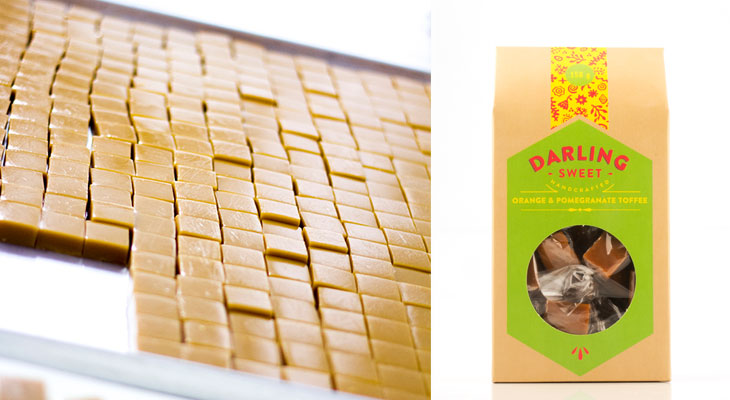
We produce preservative free, handcrafted toffees made in our factory in Darling. The real old-fashioned toffee, made the real old-fashioned way.

What makes your confectionary different from commercial products?

Our toffees are handcrafted, our packaging is recycled paper, our cellophane is bio-degradable and we use only the best real local ingredients without any synthetic flavourants or colourants. And we produce our toffees slowly…

 Old School Darling Sweet Toffees

Tell us about your yummy flavours!

Currently we have:

 Tannie Evita’s Classic Toffee – old fashioned butter toffee, proudly named after our Tannie Evita Bezuidenhout (turning 80!), paying homage to her life work. A bite of this toffee also goes to The Darling Trust.

Honey & Salt Toffee – a raw veldflower honey and fleur-de-sel from Velddrif makes this our local-is-lekker toffee

Sour Fig Toffee – made from the fruits of the indigenous Sour Fig plant (Carpobolus Edulis) – we call this our indigenous toffee

Orange & Pomegranate Toffee – we make our own orange juice reduction, so NOTHING is synthetic in our toffees. The pomegranate pips we get from Netgranaat.

Red Wine & Chocolate Toffee – a Darling Shiraz and cocoanibs from Cocoafair. An excitingly spicy toffee.

Liquorice Toffee – made from real liquorice powder and organic colourants, this toffee also boasts nothing synthetic.

Ormonde Wines Toffee – we use this top wine farm in the Swartland region’s unique wines to create and assorted box of toffees.

 Old School Darling Sweet Toffees

We love your packaging, who designed it?

When we decided to get our business up and running we contacted Hannerie Visser and she was a huge support. We said we want to sell old-fashioned toffees and are from the beautiful veldflower area of Darling. The designer team was Kinsmen (Fred and Gideon) and they created exactly what we wanted!

What is the your business philosophy?

Darling Sweet is a business based in Darling. We create the best quality flavoured toffees with flavours and most ingredients sourced locally.

We believe it is not just about making money – it is about producing a unique product while creating job and career development opportunities and also in a small way assisting in growing our country’s economic development. The future of this country lies with small companies like ours, creating employment and stimulating the economy.

Old School Darling Sweet Toffees

Where can people find/buy your toffees?

We have been blessed by huge support from shops throughout South-Africa as well as Namibia! Please look out for our toffees on shelves. Also come and visit our shop and tasting room – 3 Station Rd, Darling and watch us produce toffee.

Purchase online here darlingweet.co.za or visit on Facebook 

Win a hamper of Darling Sweet toffees HERE

Coffee Roaster Mzukisi Xhati

The real-coffee culture continues to boom in South Africa and as it has grown it has begun to change the lives of many local people. One such person is Mzukisi Xhati. Mzukisi’s love affair with coffee didn’t start out in the way that it did for a lot of us. It didn’t develop from having his hands wrapped around a cup of warm brew in some trendy hipster coffee joint, but rather more fortuitously as he worked as a labourer on a building site.

The owner of the building site spotted something special in Mzukisi, he showed initiative, and proved himself to be a very quick learner, dedicated to everything he did. After the building project was finished, he moved on to doing some gardening work and this soon led to him getting his driver’s license. He then took on the role of driver for three days a week for Quaffee speciality coffee roasters. Warren, the owner of Quaffee Coffee in Constantia also spotted Mzukisi’s ambition and ability, and saw an opportunity to take his skill level up another few notches and to teach him about real coffee. Warren’s first lesson taught Mzukisi that the coffee they were making didn’t need his normal three sugars and milk to be enjoyed, and that those additions were destroying many of the coffee’s true flavours. Mzukisi’s education into the subtle flavours and aromas of a well-roasted cup of coffee had begun.

Mzukisi’s potential talent for roasting was immediately obvious, and Warren decided that the next step was for Mzukisi to be trained by Stephen Diedrich, the owner of Diedrich Roasters in America, who is considered to be one of the top roasters in the world. This would be Mzukisi’s first trip overseas and understandably, he felt the pressure of their expectation on him. While completing the course, Stephen Diedrich was apparently so impressed with Mzukisi’s innate understanding of coffee roasting that he offered him a job and a place to stay in the USA. Luckily for South African coffee lovers, he is happily married and so returned to SA bringing all his newly acquired coffee roasting skills back with him.

Quaffee Coffee in Constantia

The Diedrich Coffee Roaster used at Quaffee is a complex electronically automated system and was a challenge for Mzukisi since he had never used a computer before – but he mastered this in no time. Mzukisi prefers to roast some beans manually as he says that he finds it be more accurate for certain bean profiles. At Quaffee, he is dealing with 26 different coffees all with different roasting profiles. He can now tell where the beans are from just by looking at them. Beans are roasted on demand at Quaffee to ensure the freshness of the end product.

“To roast coffee you need great patience and concentration,” says Mzukisi.  Definitely don’t try to chat to him in the middle of the roasting process,  this time is critical to keeping the heat and air flow correct, ensuring that the beans turn at the right point. With most highland coffees, he likes to keep the heat lower in the beginning to keep the beans from drying too early. If this happens, the coffee will not develop its intricate flavours. Coffee has really changed Mzukisi’s life;  hard work has made it possible for him to forge a new career path and to uncover his true passion.

Order one of the 26 roasts available online from Quaffee. They range from easy drinking, to medium and balanced, to dark and full-bodied. There are also a couple of limited edition coffees. One common thread you will notice is the undeniable attention to detail that comes from Mzukisi’s passion and skill.

Quaffee Bloc, Buitenverwachting, Constantia | 021 794 298

quaffee.co.za

Crush talks to artist Peter Eastman

1) You are the first fine artist on a page that is usually filled with masters of the art of making food and wine. Do you have a strong appreciation of these other art forms?

Yes, there are similarities in the process of creating food and wine and creating art. As paintings will describe and evoke through visual elements, some dishes will attempt to evoke moods or places through flavour, taste and texture.

2) Please give our food and wine fanatics some background to your career as an artist/painter?

I am a self-taught artist, a painter. I spent a bit of time restoring antiquities and, since then, have been a full time artist living and working in Cape Town.

3) What are you working on currently?

Landscapes in enamel and resin. There is a lot of process involved in making these new paintings – resin layers are built up in the studio and the paintings move from indoors to outdoors as they get made. Outdoor light is very different to studio light so I have been making my recent paintings outdoors in different settings. I make them in part in the studio then mix the layers of enamel colour in different outdoor settings and at different times of day. The paintings are pretty big so they have to get taken to whatever outdoor setting I am going to by bakkie and then set up on trestles. There is something about being outdoors mixing paint that creates colour combinations that one wouldn’t normally get in the studio.

Crush talks to artist Peter Eastman

4) Fine art and great wines are often found in the same exclusive settings.

Is this something that concerns you? It can be an experience for the senses to have the different art forms combined although to really look at art in a gallery setting is best for me.

5) What chef’s dishes are visually inspiring to you?

I find it interesting to talk to chefs and winemakers and to understand the process of creation behind food and wine. The way in which a chef combines flavours can be similar to a painter mixing colours, finding the right combinations that sing together… and the struggle that goes with creating these combinations and coming up with new ideas.

6) Favourite restaurant and wine?

Carne, I like simple food – meat and veg.

7) How does food enrich your life?

I can’t think how if affects it, but I am sure a world without amazing tastes and flavours would be pretty awful.

8) When, where and what is your next exhibition?

A group painting show at What if the World gallery, Woodstock in July with new landscapes.

9) Braaier of chops and wors or haute cuisine chef at home?

Chops and wors… maybe a bowl of mussels.

Crush talks to artist Peter Eastman

10) Last time you visited a wine estate?

Groot Constantia, this month.

11) Chefs have to be fine craftsmen when they create some of their intricate dishes. Tell us about the process of creating one of your enamel pieces?

The paintings are built up in layers, with a kind of skeleton of texture and color that changes as each new layer is applied and as one layer of colour reacts to the one above. Often you have to be planning quite far ahead. But while one plans with each new layer, things change and the outcome is frequently different from what one expects.

12) Do you ever work in an absinthe haze? Are you partial to a tot of something?

More like a turpentine haze in the studio…

Crush talks to artist Peter Eastman

13) What book are you currently reading?

‘Moby Dick’ and online ‘Letters of note’ (www.lettersofnote.com/)

15) Individual interpretations of wine and art can differ? How do you react to other’s opinions of your work?

You can’t worry too much about what other people think – you have to just have confidence in your own vision. Although frequently the viewers point of view and literally their presence, is an important part of a lot of my reflective paintings.

16) Who or what inspires you at the moment?

My Partner, Kirsty and daughter, Jemima


www.petereastman.com
Chef Christi Semczyszyn from Dear Me
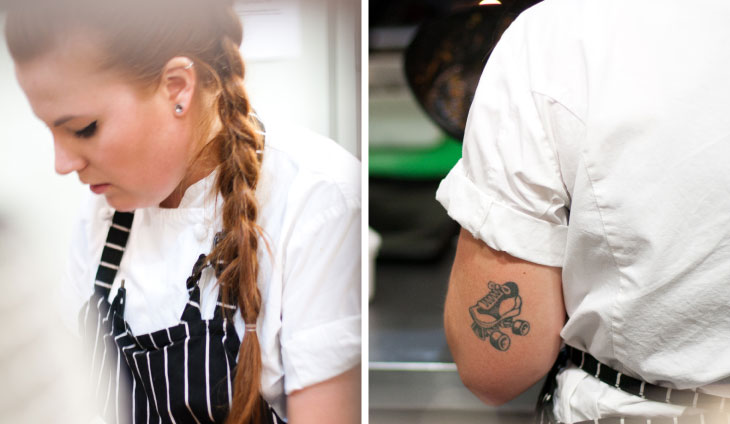
Executive Chef, Dear Me Restaurant

Crush creates a series called Chefs & Music, in which we pair a chef with a local SA band. The chefs create dishes based on the song they picked.

The dish: Seafood Potjie with Miso Sand and Squid Ink Toast

The song: Taking it easy by Goodluck

Listen to Taking It Easy by Goodluck

ChristiSemc_730_1

Taking it easy accurately describes holidays up the West Coast with my family. Fishing and diving amongst the rugged black rocks for crayfish and mussels and cooking it all over an open fire meters away from the beach. These are some of my favourite memories… I incorporated these elements into a playful take on a seafood potjie, eaten with homemade bread.
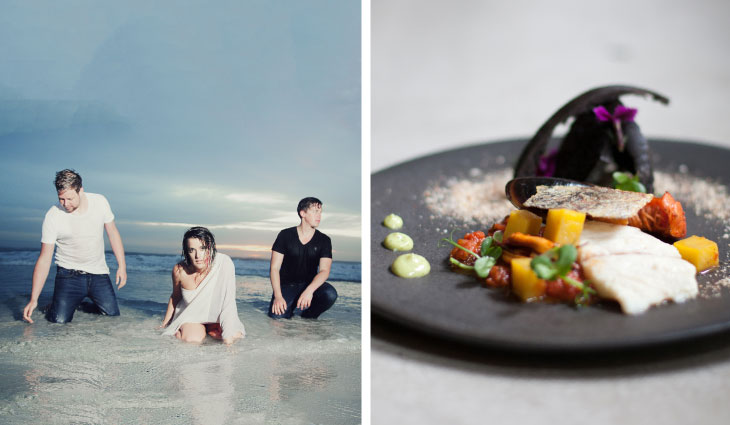
ChristiSemc_730_2

SEE THE RECIPE HERE

Without a doubt you would have tapped your foot to a Goodluck tune over a summer holiday or while road tripping with friends. The Live Electronic Act’s electronic-jazzy-swing sound has been heard over South African and international airwaves plenty and they proudly hold the record for most number 1’s and top 10 singles off of a debut album in South Africa. In addition the bands received 5 South African Music Award nominations and a total of 7 number 1’s across SA radio. The duo consists of Ben Peters (producer, sampling and live percussion), Juliet Harding (song writer, lyricist and vocalist) with Matt O’Connel joining them for live performances (keys and saxophone). GoodLuck’s smash hit ‘Taking it Easy’, which was selected for this shoot, also features vocals of Mathew Gold. Their latest album, Creatures of the Night, was a world first with it being recorded completely outside in the Namibian desert. The album includes a full length documentary following the bands journey through Namibia capturing this one of a kind album.

goodlucklive.com