CBC changing the face of craft beer

Leading South African craft beer producer, the Cape Brewing Company (CBC), is once again challenging traditional perceptions of craft beer by introducing their newest creation not in a bottle, but in the latest generation of aluminium can. CBC, which has not used a can previously for any of its beers, felt that the quality of the latest generation of aluminium can was finally good enough for their customers, and their beer.

CBC’s new creation is produced in Sweden in partnership with Swedish brewery Åbro, which has one of the most advanced can fillers in Europe. The can itself is created using sophisticated aluminium processing technology, and provides a perfect seal for the beer while guaranteeing its taste and flavour. The can was chosen not only because of its ability to preserve the beer’s quality, but also because it is portable, quick-chilling, and sustainable.

The new beer customers will be drinking when they open the can is a classically top-fermented Pale Ale. The recipe is a result of close collaboration between Wolfgang Koedel, CBC’s brewmaster and Lennarth Anemyr, the master brewer at Åbro Breweries in Sweden. Together they have more than 60 years of brewing experience, and have created a beer that will be enjoyed by master brewers, CBC’s fans, and beer drinkers across South Africa.CBC-Brewmaster-Wolfgang-Koedel

CBC’s new Pale Ale will be available at major retailers and liquor stores nationwide from mid-March 2016.

To coincide with its debut, CBC will launch its own smartphone app specially designed for its fans to get the most out of their love of CBC craft beer. The app combines photography, social sharing and a badge award system to encourage fans to take their own journey with CBC’s new can, share it with their friends, say cheers to the best pictures, and track how far the can travels around South Africa and the world. Taking CBC’s new can along on their journey will earn fans badges, which will form part of future competitions.

CBC’s new app is part of its Love the Craft, Love the Journey campaign, which is aimed at encouraging people to learn about and appreciate craft beer, while at the same time showcasing the amazing journey from South Africa to Sweden that CBC went on to create their new Pale Ale, and asking fans to support CBC by choosing to take CBC’s new can on their own journey.

capebrewing.co.za | Facebook | Twitter

Urban agriculture at Abalimi Bezekhaya

Reliance Compost
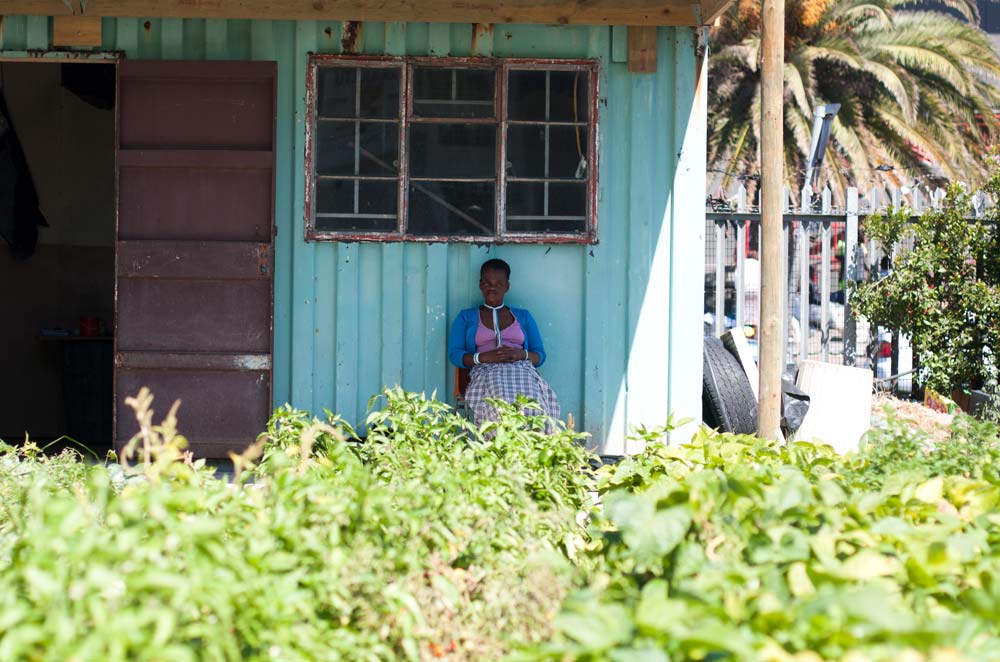
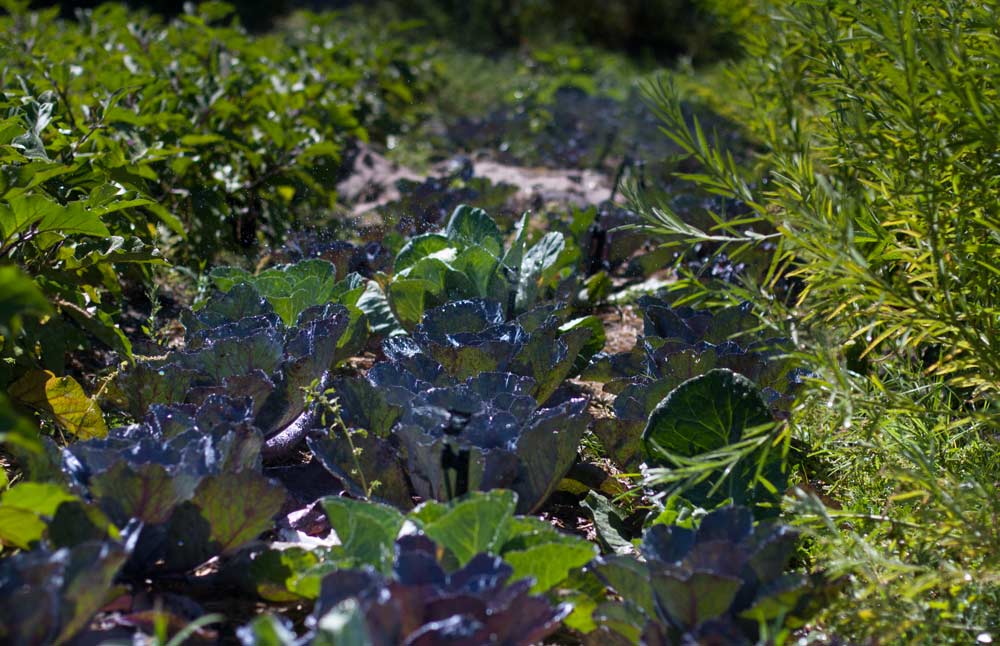
It all started in 1982, during the terror of the apartheid regime, when Peter Tempelton of the Catholic Welfare Bureau, Rob Small, Christina Kaba and Dave Golding and others, began to think of practical ways to help the affected black and coloured members of South Africa survive. The idea was to make use of the empty spaces in the townships and turn them into something invaluable – fresh food. So they established Abalimi Bezekhaya, and later Harvest of Hope and the Farm and Garden National Trust. The aim was to raise funds to educate micro-farmers and gardeners, anyone who grows fresh food at home or in plots up to one hectare in size, allowing them to hone their expertise. Abalimi Bezekhaya is a community based agricultural, voluntary association, non-profit organisation, which allows underprivileged members of the township the chance to overcome poverty by growing their own food in a garden under their own management.
Abalimi Bezekhaya
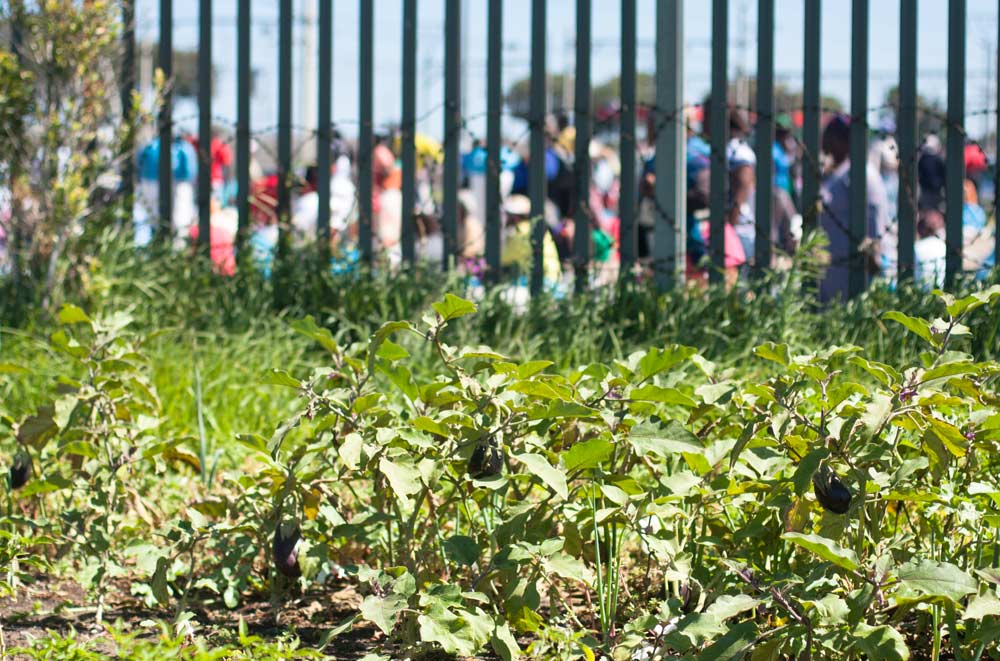
It’s an incredible organisation that uplifts the people of the Gugulethu and Philippi townships by enabling them to learn a trade that they can take anywhere they go, as well as pass it on their children and fellow community members. How it works is a member of the community, either acting as an individual or as part of a small group, is given access to seeds, tools and information to grow and maintain their organic gardens. From there they are able to feed themselves and are given the opportunity to sell any extra produce on to Harvest of Hope, the first community supported vegetable box business for micro-farmers in South Africa. There are a few different phases within the structures of the gardens. The first are survival and subsistence phases, where the farmer is simply growing enough to survive or produce a small seasonal surplus, then it moves on to a livelihood farming phase where the farmers are producing enough to live off, by by eating and selling enough for themselves and their families and lastly it’s commercial farming, where profits can be made.

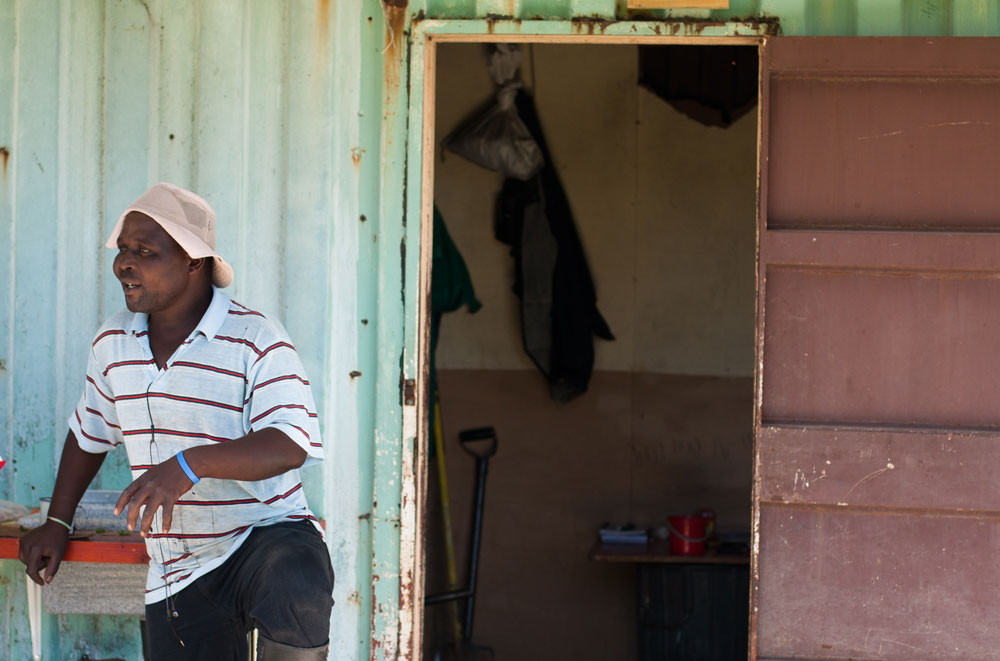
There are many varied sizes of farms involved with Abalimi, and some of those members are doing more than just growing and selling their vegetables. A number of the farmers have formed an organisation called the Vukuzenzele Urban Farmer’s Association (VUFA) and they overlook issues that any of the farmers may be experiencing. One such issue is the matter of the Philippi Horticultural Area, roughly a 3000 hectare piece of land. The farmers’ association wants the land for commercial agriculture, a move that would improve the lives of thousands of families in the area. The city of Cape Town is in talks with big business owners to develop gap housing estates on the best of the land, and the farmers are trying to fight this potential deal. It would be a massive victory for the farmers, and one can only hope that the city council sides with agriculture and sees the massive influence the piece of land has for food and water security. This land is also known as the most important re-charge sump for Cape Town’s Cape Flats Aquifer, which could give Cape Town up to 30% of its water in future. This potential could be destroyed if the land in built upon, because the aquifer will not be properly recharged any longer. Sibongile Sithole is one of the men leading this organisation, which is mostly run by mothers, acting as the current vice chairperson. He also runs one of the most productive urban farms, situated near the Nyanga Junction in Gugulethu, with three women, in the livelihood phase. He’s an inspiration to the younger people of the community, and is actively calling for more of them to become involved in the organisation, to ensure longevity. As he said, “we need fresh blood!”.
Abalimi Bezekhaya
Abalimi Bezekhaya
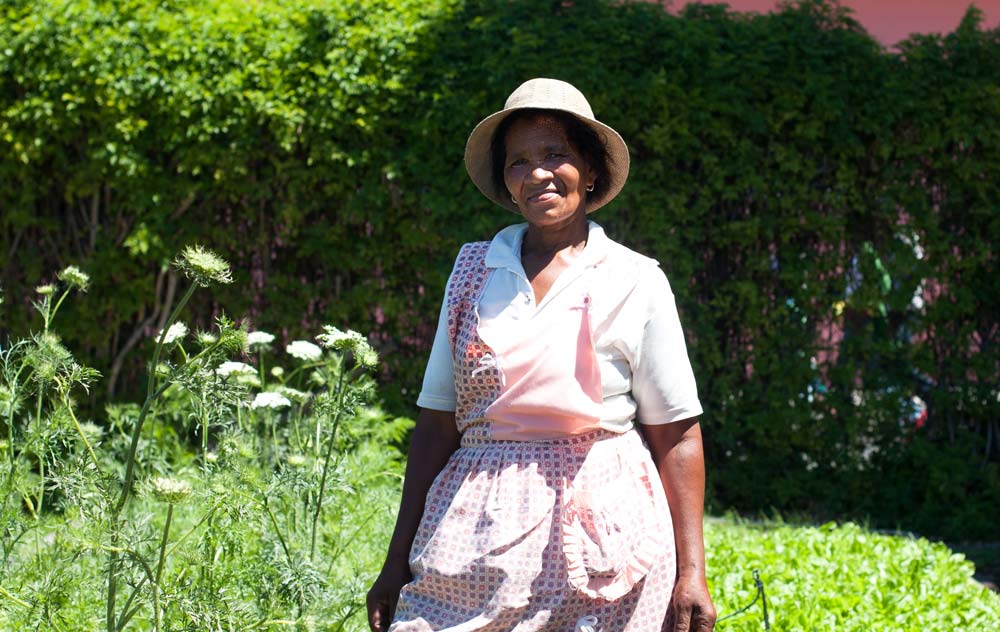
Further along the farmer development chain of phases in micro-farming is Mabel Bokolo, who has reached the pinnacle level of livelihood farming, bordering on commercial. Not only does she grow luscious organic vegetables for herself and her family, but she sells a number of her vegetables to the Abalimi affiliate Harvest of Hope, which supplies fresh veggies to the people of Cape Town. She also provides seedlings and a training venue for the Abalimi farmers, as well as makes her own compost. She’s a hardworking super-granny, who has concrete plans to move back to the Eastern Cape to develop her farmland there, with and for her family, complete with pigs, chickens and cows.
Abalimi Bezekhaya
Abalimi Bezekhaya
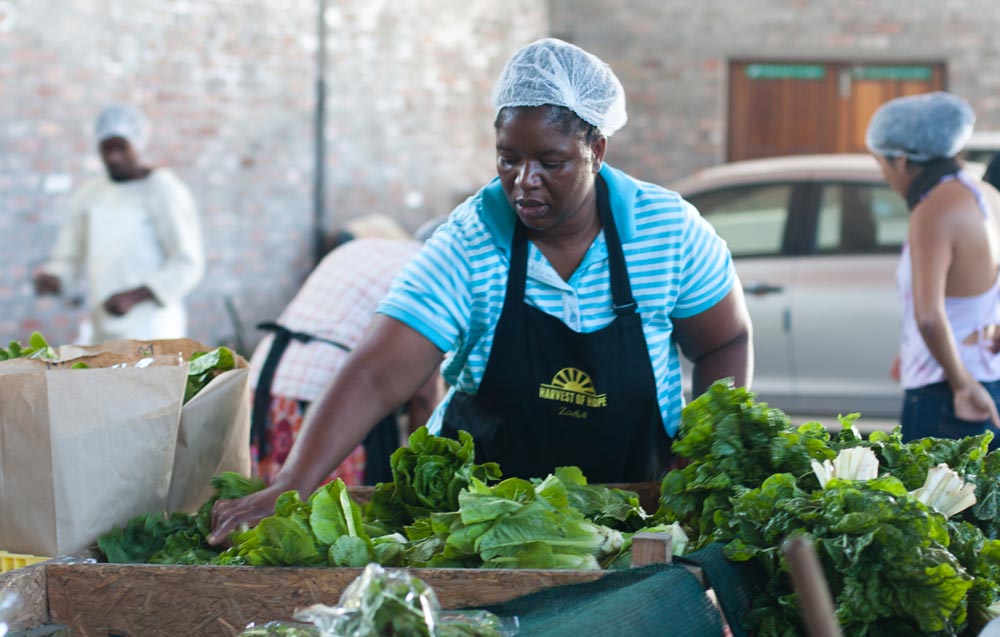
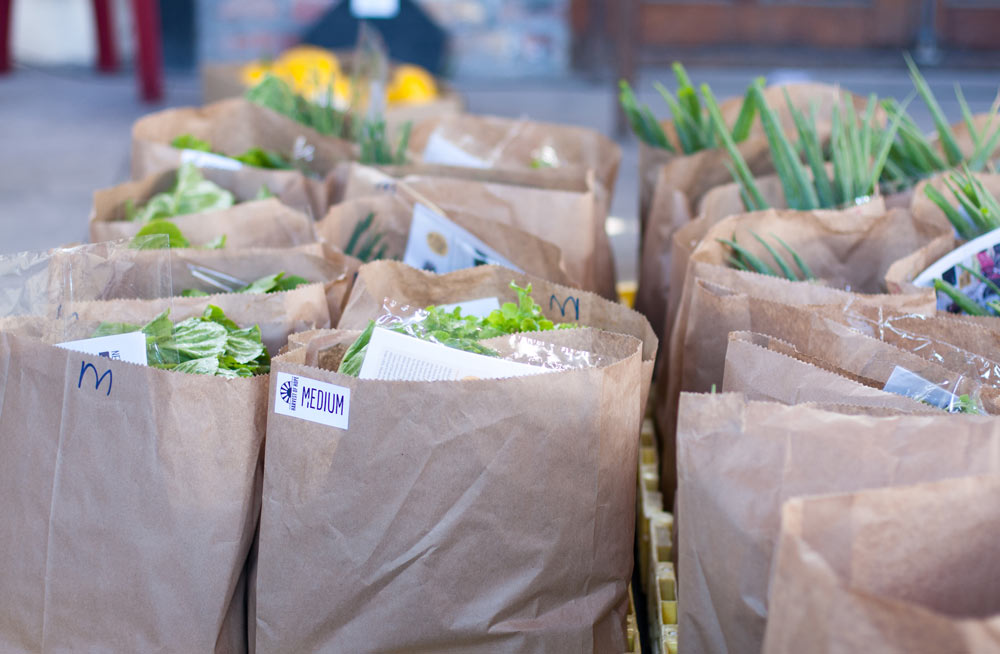
The Harvest of Hope is a popular enterprise whereby people in Cape Town sign up and pay for a weekly delivery of organic vegetables. There are between 30 and 40 drop off points all over the city, where you simply stop by and pick up your bag. The prices range between R99 and R133 and while you may never know exactly which veg you’re getting, you’re guaranteed to get the freshest, most wholesome produce at a price and quality you simply can’t get at any supermarket. Harvest of Hope actually buys the vegetables from the Abalimi farmers, they then pack the bags and boxes. Any unsold produce is donated, often to charities in the area.
Abalimi Bezekhaya
Abalimi Bezekhaya
In a country such as South Africa where real change and development can and should happen through agriculture, it has never been more pressing to support these farmers. So, do your bit for your own health and your country and sign up for your weekly bag of organic veggies, and not only save money, but know that you’re helping a farmer in the townships to feed themselves and their family.
Abalimi Bezekhaya
To sign up for your weekly organic veggies, visit the Harvest of Hope website. For further information on Abalimi Bezekhaya, click here and for more on the Farm and Garden Trust, click here.

Facebook | Twitter

Delicious produce is grown in healthy, living soil. #Harvesttotable series brought to you by Reliance Compost.

Reliance Compost

What are you packing? with The Good Hope FM Breakfast Team

findus_inpost_banner

They say that breakfast is the most important meal of the day and this could not be truer than for the breakfast team on Good Hope FM, who are up with the sparrows, or possibly even before the sparrows, on a daily basis. Delivering a morning radio show as lively as theirs takes energy and focus and we know it must be challenging to eat well and stay healthy when you’re up at the crack of dawn. Most of us struggle to organise ourselves and pack breakfast/lunch when we work normal hours, so we wanted to find out from the team how they manage their eating and exercising when working such odd hours.

SHOW HOST: Dan Corder
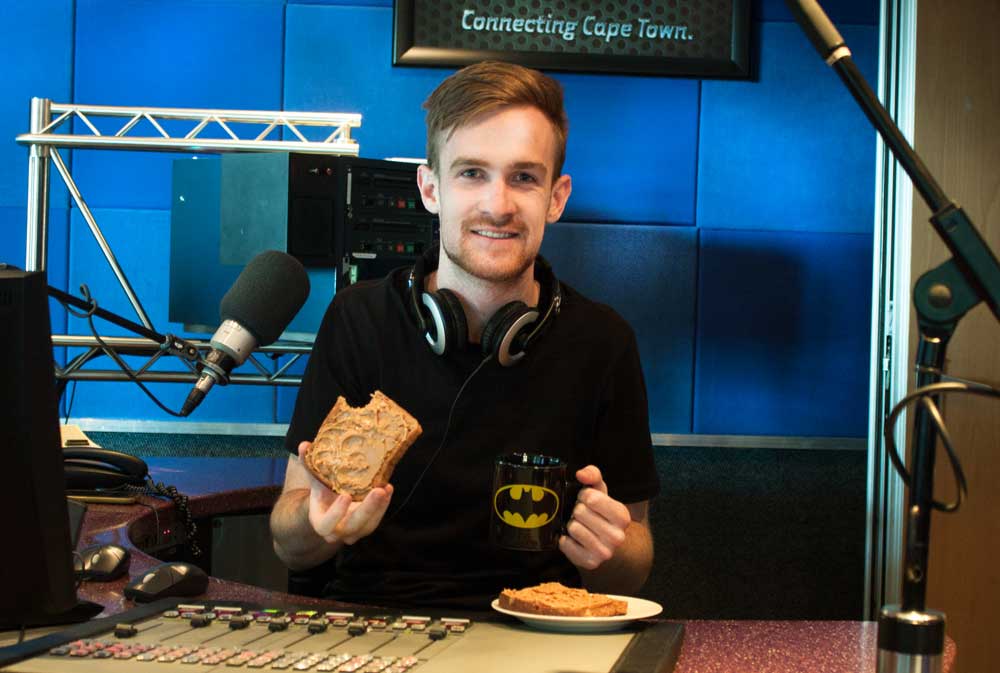
dan_corder Head DJ for the KFM Breakfast Team/If you bring in a packed breakfast/lunch, what do you bring?

The only time I bring breakfast to work is when my bed has been too warm to get out in time to eat before driving to studio for the show! In that case, I don’t have time to pack either, so in these cases I usually arrive at the station with a plate of two pieces of brown toast haphazardly smeared with peanut butter, and a cup of ground coffee powder and sugar. Fortunately, there is always boiled water at work. I wolf all of that down during the first news bulletin.

Do you make it yourself or does someone make it for you?

It’s all me. Living alone has its benefits, but sometimes you wish you could have your old Dad-made school sandwiches delivered.

If you could have the ultimate breakfast/lunch made for you daily what would it be?

Avocados. A farm of avocados. With a teaspoon. Avocados.

Do you try and get out and do something active after the show or on the weekend? If so what kinds of things do you enjoy doing?

Definitely. Radio is dangerous. When one’s work involves sitting down for hours on end, lethargy is a problem. I often feel tired because of sitting, even though I have energy. To revitalize myself, I play squash and soccer. It must be competitive, with other players, or I get bored.

What is your secret food indulgence that you might sneak off to buy during work?

Avocados. Genuinely. I know where to buy in every area in the city. Drought or no drought. Nothing can stop true love.

Follow Dan Corder on Twitter.


TRAFFIC CO-HOST: Erin Li
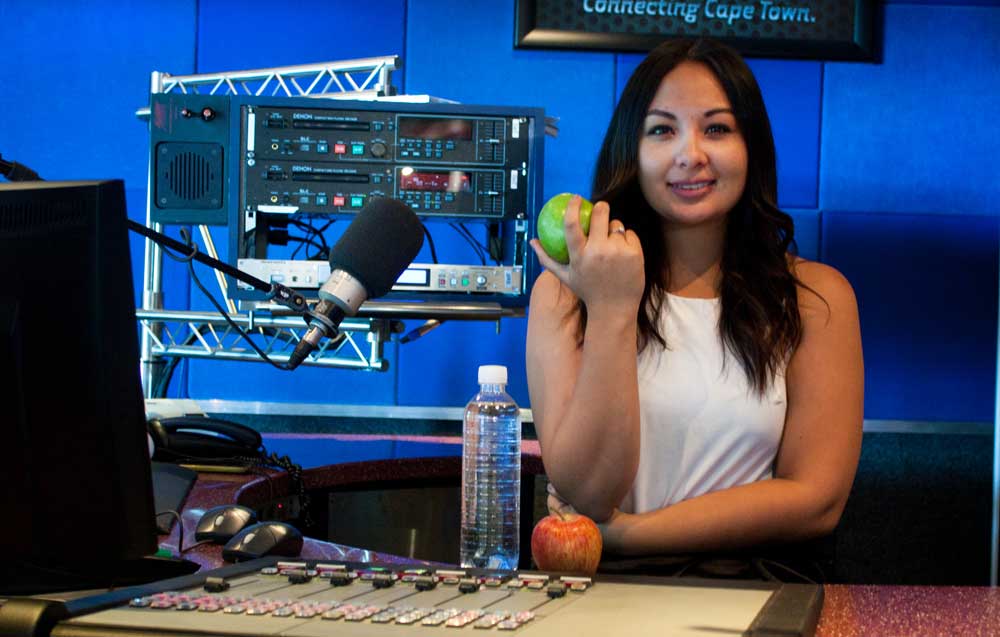
erin_lee traffic reporter for KFM Breakfast ShowIf you bring in a packed breakfast/lunch, what do you bring?

My breakfast usually consists of 1 apple, a banana and a bottle of water 3-4 days a week, in winter, it’s a flask of green tea. One of those days are 2 boiled eggs, only when I have time to boil them.

Do you make it yourself or does someone make it for you?

I make it myself most times, otherwise my hubby puts it together for me… good man that he is.

If you could have the ultimate breakfast/lunch made for you daily what would it be?

I’m not too big on lunch, but a small portion of muesli and fruit, a three-egg omlette with rocket, Rosa baby tomatoes, feta, avo and a tall glass of sparking water with lemon… everyday please!

Do you try and get out and do something active after the show or on the weekend? If so what kinds of things do you enjoy doing?

We are so lucky to have a little bit of time to spare after the show before hitting real work, so I have different activities for each day of the week just after the show. Although, the show is so full of high energy that it sometimes feels like we’ve finish run a 10km!

Monday: walking 8-10 km
Tuesday: yoga class
Wednesday: cycle day
Thursday: small hike in Deer Park or a quick run with my dogs
Friday: plank exercises and lunges

What is your secret food indulgence that you might sneak off to buy during work?

There are these glazed honey and almond mini tarts that I love. When I do decide to have a cheat day, which is hardly ever, I get those with a Hazelnut Latte from Seattle Coffee.

Follow Erin-Li on Twitter


NEWS READER: Sandra Rosenberg

Sandra_Rosenberg newsreader for the KFM breakfast teamIf you bring in a packed breakfast/lunch, what do you bring?

I seldom bring a packed lunch. But when I do, it’s likely to be a smoothie, some biltong, dried fruit or some sort of crudités.

Do you make it yourself or does someone make it for you?

Sadly I have to pack/make my own snack pack/ smoothie.

If you could have the ultimate breakfast/lunch made for you daily what would it be?

I have a real penchant for spicy food, so I think it would have to be Huevos Rancheros. Soft, sunny-side eggs, served with tomatoes, green chillies, coriander and cheese over a crispy corn tortilla. On a rainy Sunday morning however, nothing is better than thick pancakes with cinnamon and honey. Served with Earl Grey tea.

Do you try and get out and do something active after the show or on the weekend? If so what kinds of things do you enjoy doing?

I have two boisterous Boxer dogs, who are like wrecking balls if I don’t take them walking at least once a day. I’d love to say I’m a cyclist, but I’m not. I am more of a cycler for fun. I live right on the wine route and enjoy a slow leisurely cycle over the weekends. Erin however has introduced me to yoga, so I’m super keen on exploring that further this year.

What is your secret food indulgence that you might sneak off to buy during work?

I will deny it in public… but bacon biltong! It is just too delicious. There, I said it, honey-glazed chilli biltong.

Follow Sandra Rosenberg on Twitter.


SPORT PRESENTER AND COMEDIAN: Dalin Oliver

Dalin_Oliver sports reporter for the Goodhope Breakfast TeamIf you bring in a packed breakfast/lunch, what do you bring?

The essentials while at work would be two yoghurts, an apple, a banana, a jungle oats bar and a cup of green tea.

But wait there’s more. I usually have a bowl of coco-pops before at home.

Definitely winning.

Do you make it yourself or does someone make it for you?

I’m hopeless in the kitchen, hence the reason for the above breakfast combo. No cooking needed.

If you could have the ultimate breakfast/lunch made for you daily what would it be?

I’ll probably break it up into three courses.

Starters: Yogurt, banana and muesli. Sweet/green melon and pineapple.

Mains: beef sausage, bacon and chicken wings.

Dessert (that’s right, there’s dessert in my ultimate breakfast – not everyday though):

French toast, maple syrup and bacon with a side of Nutella/caramel pancakes.

The sweet tooth has now been fed and we are ready to take on the day.

Do you try and get out and do something active after the show or on the weekend? If so what kinds of things do you enjoy doing?

I try to jog as often as possible after work – at least 3 times a week. Nothing more than 10 km though.

In summer my weekends are taken up by top division club cricket for St.Augustines.

I recently started surfing. I’m really enjoying it. This will be my winter hobby along with squash and social soccer.

What is your secret food indulgence that you might sneak off to buy during work?

Chocolate. Yes. I know. Too much sugar isn’t good for me. Beverage wise, a quality white café mocha does the trick.

Follow Dalin Oliver on Twitter.

To hear the Good Hope FM  breakfast team in action, tune in weekdays from 06h00-08h00. 

goodhopefm.co.za | Facebook | Twitter | Instagram

DIY Moisturising Hazelnut Coffee Body Scrub

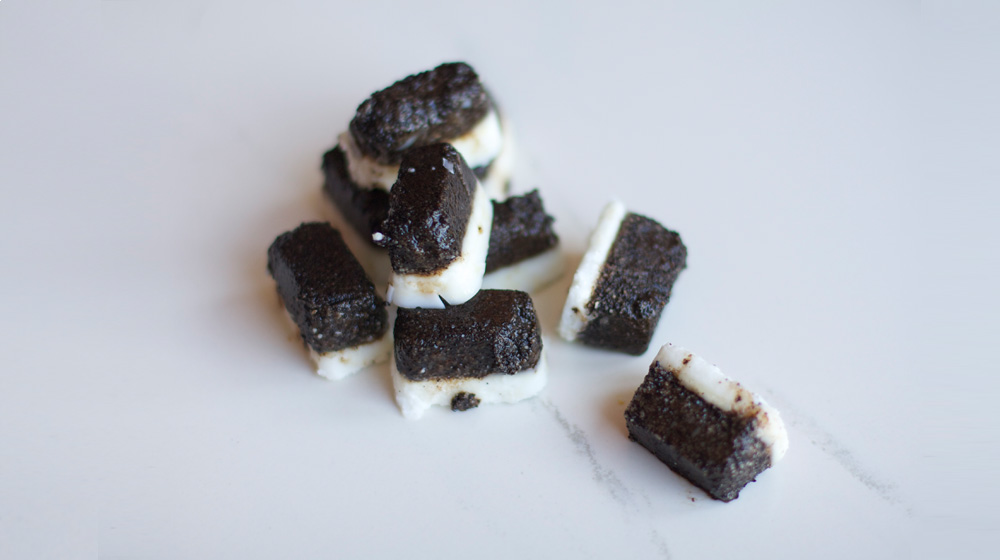
These exfoliating bars are a great way to re-use used coffee grinds. They are super easy to make and can be made with your favourite flavoured coffee for a fabulous smell. The bars melt with a little body heat and warm water, so use in the shower or bath to exfoliate and moisturise.

165 ml coconut cream
3 Tbsp (45 ml) unscented body butter
1 C (250 ml) coconut oil
1 C (250 ml) used hazelnut coffee grinds
1/2 C (125 ml) sugar

2 – 3 ice trays
cling wrap

We’ve used hazelnut coffee because we love it, regular coffee or any flavoured version you like will work.

Start by making yourself a plunger of coffee. Drink and enjoy… reserve the used coffee grinds.

Remove the steeped coffee grinds from the plunger and set aside to cool.

Combine the coconut cream, unscented body butter and the coconut oil in a microwave safe bowl. If the ingredients are solidified and are not easy to mix, heat for 10-15 seconds in the microwave to soften.

Combine the coffee and the sugar in a separate bowl.

Add ¾ of the wet mixture to the coffee and sugar mixture and stir well.

Line the ice trays with cling film – this will help with removing the scrub bars once set. Pour the combined mixture into each compartment of the ice tray, filling only about halfway. Place the trays in the freezer to set, this should take around 30 minutes.

Remove from the freezer and fill to the top with the coconut mixture. Return to the freezer for 6 hours or until frozen solid.

Note: When removing the cubes from the ice tray, do not twist the ice tray as this may split the two layers. Simply place it upside down on a surface and heat up the bottom with your hands. The cubes will fall out in a few minutes.

Store the cubes of hazelnut coffee scrub in the freezer. Remove when ready to use.

DIY-COFFEE-BODY-SCRUB

Delaire Graff Tomato and Buffalo Mozzarella Salad

Reliance Compost
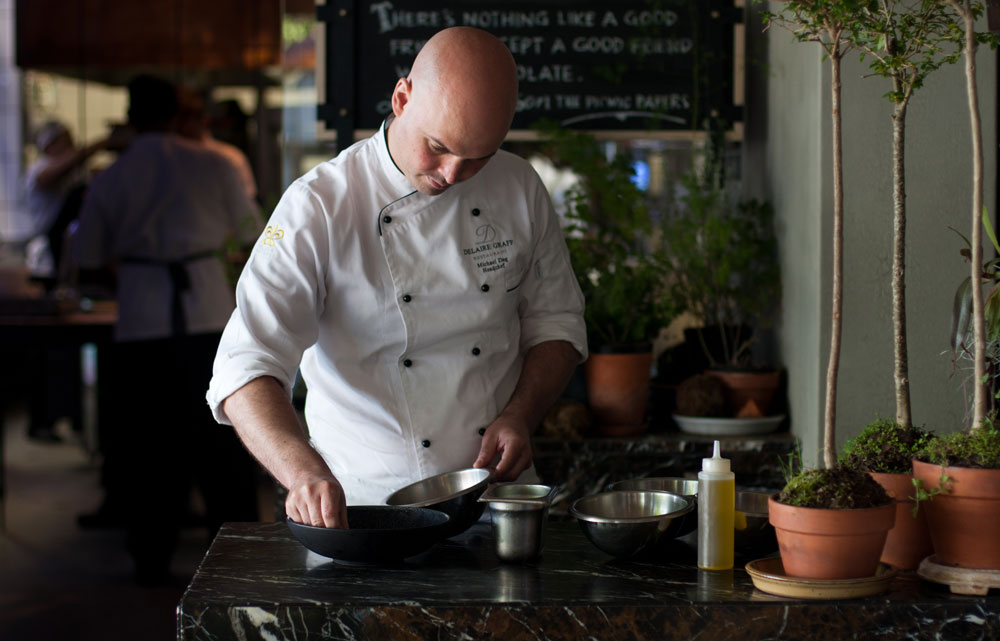
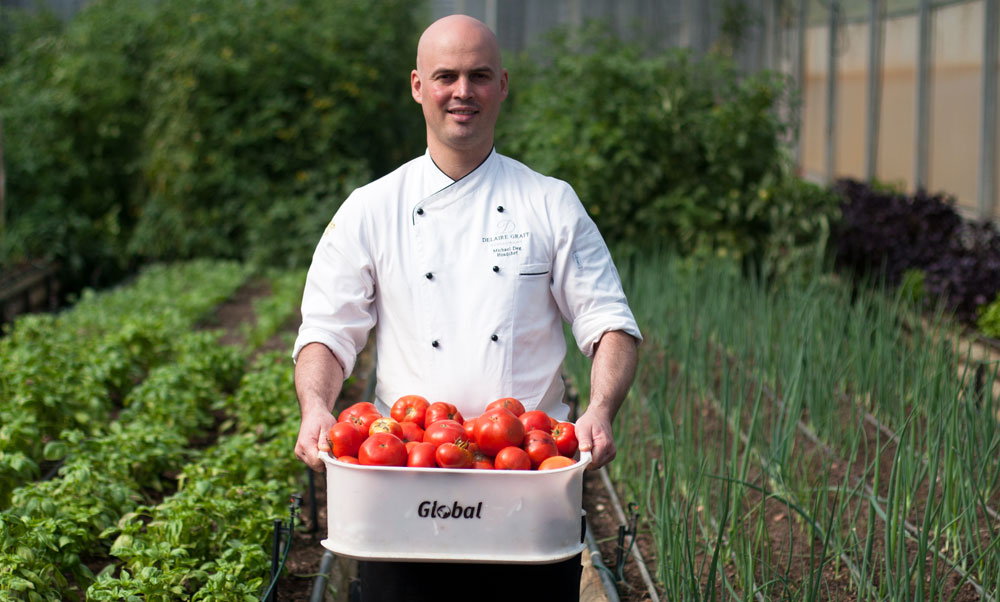
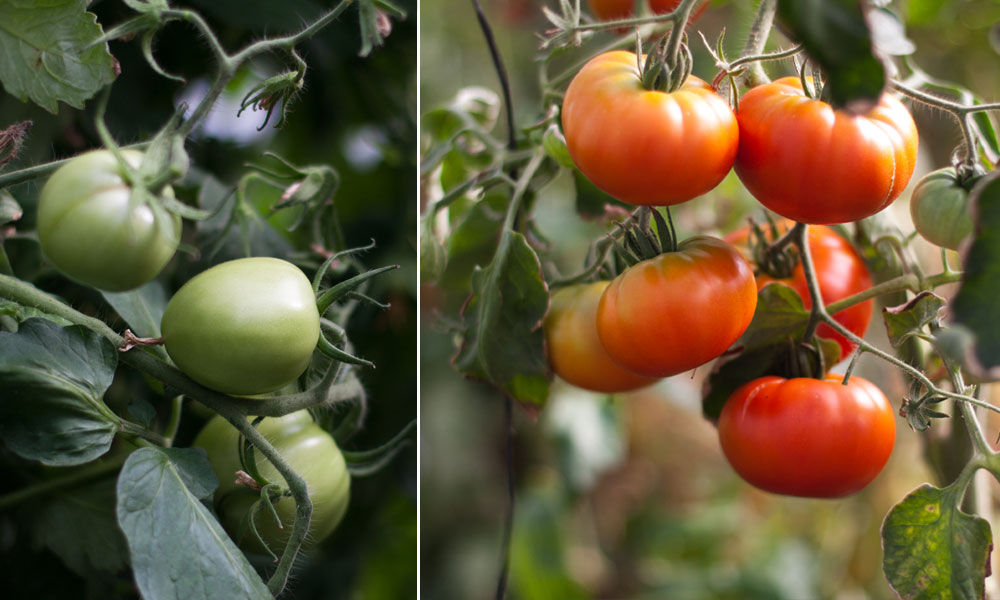
We recently stopped by Delaire Graff Wine Estate in Stellenbosch to take a look at their flourishing vegetable garden, micro green greenhouse and wormery. While we were there, Chef Michael Deg, together with garden manager Jerry, picked beautiful tomatoes from the vines, which were taken back to the kitchen to prepare this salad bursting with fresh flavour.Delaire Graff Chef DegDelaire Graff Tomato & Buffalo Mozzarella Salad

Serves: 4
Prep time: 20 mins

20 baby plum tomatoes
4 large vine tomatoes
200 g kalamata olives, pitted
2 balls Buffalo Ridge mozzarella
smoked salt
good quality extra virgin olive oil
handful of micro basil

Blanch the baby plum tomatoes in salted boiling water for 10 seconds and then refresh in ice water. Once cooled, strain and carefully peel the tomatoes – refrigerate until needed.

Using a mandolin, slice the vine tomatoes as thinly as possible and store neatly on a tray ensuring that they don’t break.

To assemble the salad, begin by lining 4 individual serving bowls with the thinly sliced tomatoes. In a mixing bowl, tear the mozzarella into smaller, bite- sized pieces, add the kalamata olives and blanched baby plum tomatoes. Season the mix with smoked salt and dress generously with olive oil.

Portion this mix evenly between the tomato-lined serving bowls and garnish with fresh micro basil.

Serve immediately and enjoy with a glass of Sauvignon Blanc.

Recipe by Chef Micheal Deg of Delaire Graff Restuarant.

Delaire-Garden-ChefTo find out what else is in season currently click here for our Seasonal Fruit and Veggie Guide.

Delicious produce is grown in healthy, living soil. #Harvesttotable series brought to you by Reliance Compost.Reliance Compost

The Edible Garden at Delaire Graff Estate

Reliance Compost
The road that winds through Delaire Graff Estate is breathtaking; it is flanked on all sides by vibrant, meticulously trimmed indigenous flora and is shaded naturally by a canopy of trees. It is clear at first glimpse that the natural surroundings are a huge part of what make this Estate a special place, along with its wines, luxury accommodation, incredible views over the Banhoek Valley and award-winning culinary offering.

Where indigenous flora can be scrubby and unkempt, at Delaire Graff Estate it is coaxed into well-behaved bushes and neat walkways that show off its varied beauty. What guests to the Estate may not know though, is that these manicured gardens also extend to a flourishing vegetable garden, from which produce is picked daily, to be used in the two onsite restaurants.

Michael Deg is the Head Chef at Delaire Graff Restaurant, and for him, the garden is incredibly important. The Durban-born chef spent 10-years in Dublin honing his skills, but weather restrictions and being city based, made going out and actually harvesting produce quite challenging. Instead, it arrived daily by way of suppliers. The opportunity now to walk through the gardens on a daily basis, to see what is flourishing, and to be in touch with what is in season, inspires the dishes and the menu that he puts together.

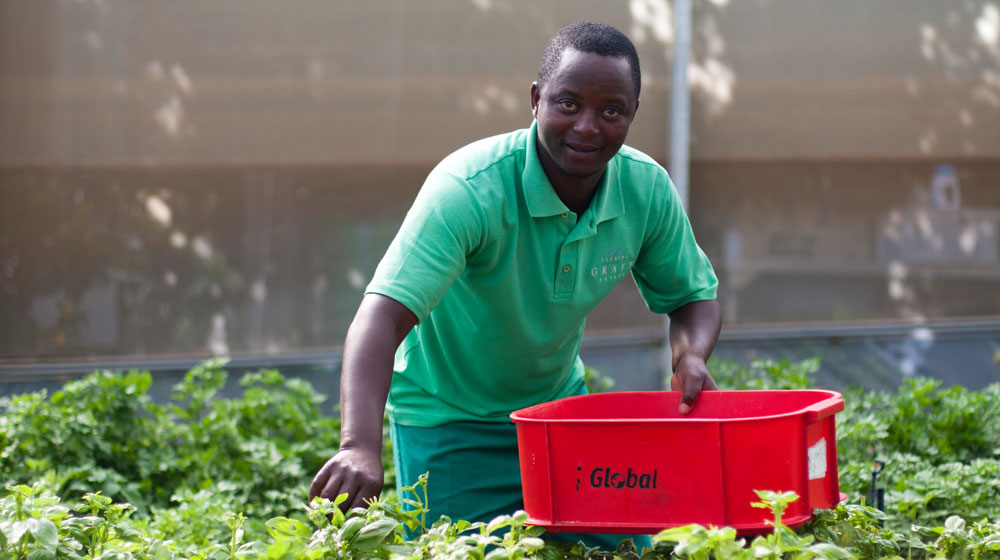
The vegetable garden at the Estate lies adjacent to the vineyards, and was originally set up by previous chef Christiaan Campbell. It is lovingly tended and looked after by Zimbabwean-born Jerry Gumungyu, who is passionate about this garden and knows every corner of it intimately. Because of the extreme heat of the area, part of the garden is under the cover of a shaded canvas greenhouse, which helps protect more fragile plants. With temperatures in summer reaching up into the early forties, it is definitely a necessity. Delaire Graff GreenhouseDelaire Graff Gardener JerryThe Edible Garden at Delaire Graff Estate
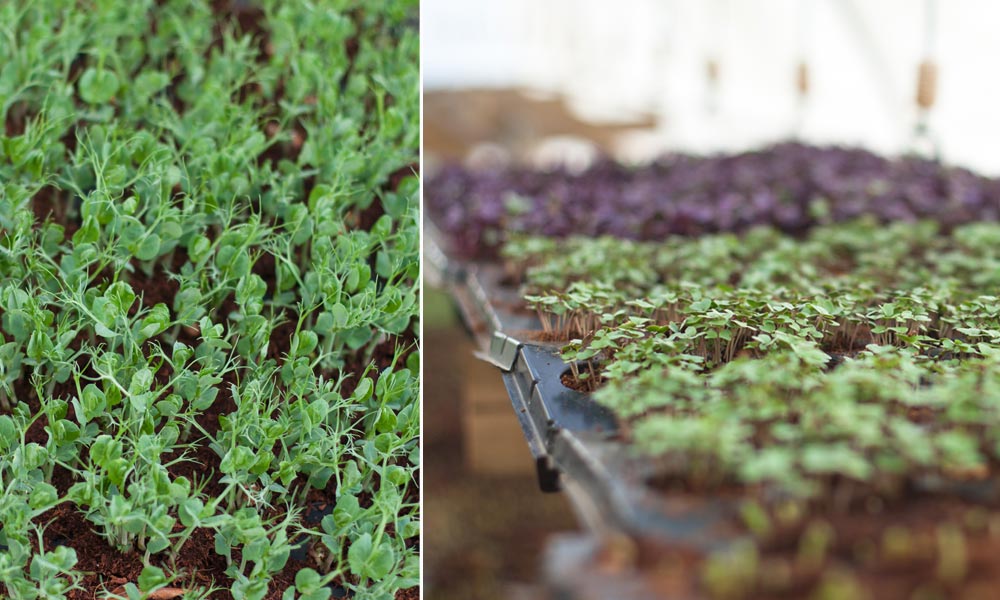
What is quite unique at Delaire Graff Estate is the thriving micro green ‘mini greenhouse’, which sits adjacent to the main one. Inside is row upon row of trays of tiny micro herb plants such as pea shoots, baby radish, mustard, nasturtium, sunflower and linseed shoots. Growing micro herbs is an absolute labour of love ­– these mini plants just get going before they are picked and need to be started again from scratch. Their flavour and beauty when plating a dish are so special though, that it’s worth the patience it takes to grow them. Its a job that Jerry puts a lot of effort into.
Delaire micro greens
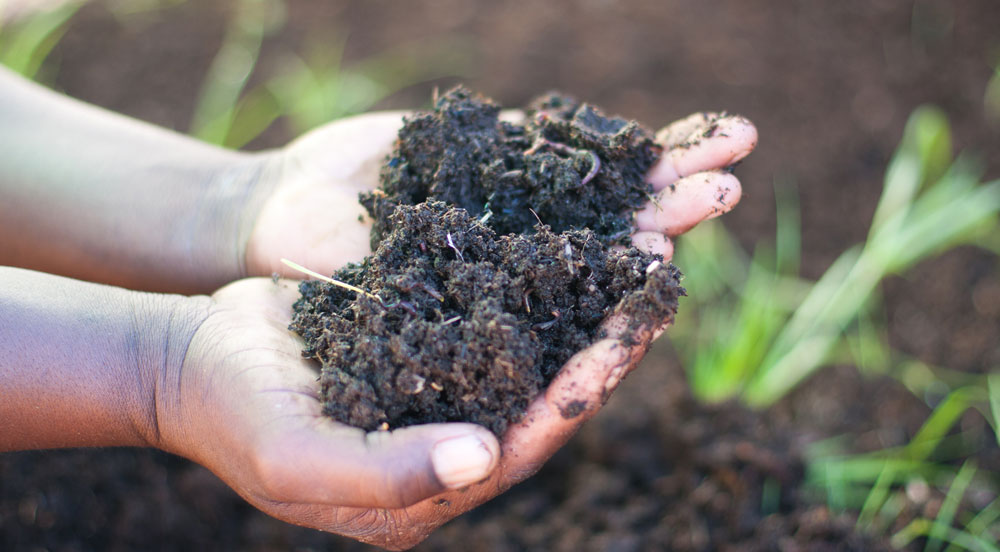
Jerry does not only have his plants and baby herbs to tend to though; he also has a thriving worm population to look after as well. In the restaurant kitchens, compostable waste is collected in special blue bins, and this waste is brought up to the wormery. The wormery works on a layer system, the worms begin from the bottom with compostable waste placed upon them, they then eat their way up to the surface and more food is added. Once they have reached the final top layer, this is the sign that all the food in the box has been eaten and the compost is harvested. The cycle then begins again. These compost worms can ingest their own bodyweight in matter each day. They are surface feeders, so they like to stay close to where the action is. They work extremely hard processing the kitchen scraps (with a little help from some organic Bokashi) and the result is rich, dark, healthy soil full of nutrients, which then goes back into the garden to nourish new plants. It’s a great cyclical system that minimises wastage and ensures healthy new growth.delaire worms
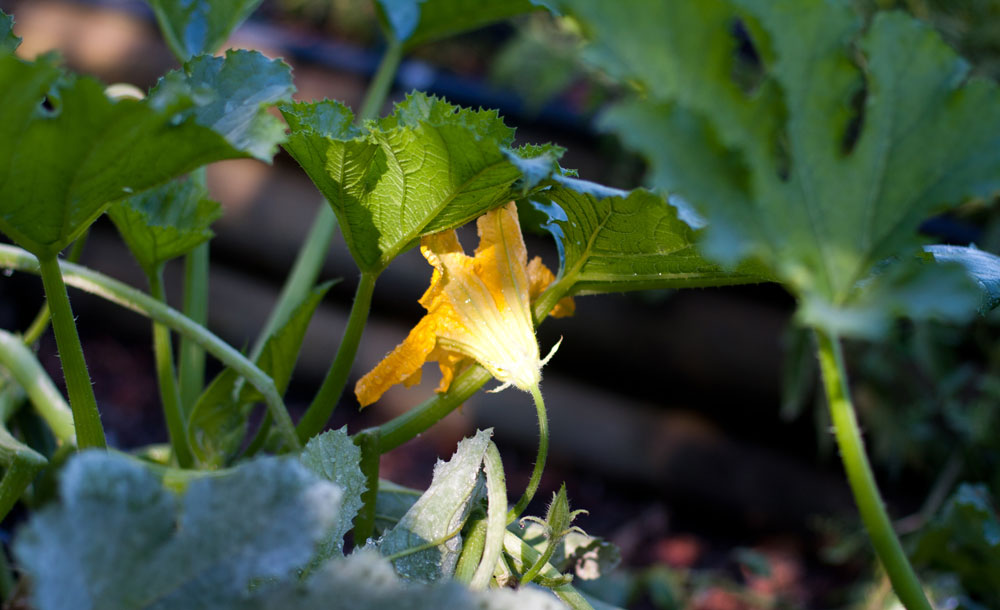
Jerry cites the weather as the biggest challenge for the garden with temperature variations playing havoc with the plants, however standing and admiring the garden, this would be hard for the untrained eye to spot. We see zucchini flowers budding, and Jerry points out beetroot, carrots, Jerusalem artichokes, chillies (chef Michael’s latest project), beans and even Peppadews. What makes it onto the plate in the restaurant doesn’t only come from the veggie garden; the kitchen team also traverse the Estate in search of wild ingredients such as wood sorrel and chickweed. Whatever makes it onto the plate, whether it be from the ornamental or vegetable gardens, it is 100% driven by what is in season locally.Delaire Delaire
Chef Michael also tells us that the olive oil used in the recipe he is going to be preparing for us, is from olives also grown on the Estate. The olives were specifically cultivated for oil production, and, once harvested, were pressed next door at Tokara. 150 litres of Delaire Graff-grown olive oil was produced and features on the menu alongside other garden-picked ingredients.

As we bid Jerry goodbye and head back down to the kitchen, chef Michael reiterates the fact that the food he likes to cook features big flavour profiles, served elegantly in dishes that are inspired by what is in season. A box of beautiful ripe red tomatoes were picked while we wandered through the garden – our guess is that they will be taking centre stage. Chef Michael believes that the produce picked straight from the garden and sent to the kitchen should be treated with minimal intervention and should be showcased for its natural flavour and beauty. With the popularity of Delaire Graff Restaurant – booked months in advance – it is clear that this philosophy is serving them well.

delaire.co.za | Facebook | Twitter | Instagram
See chef Michael Deg’s deliciously seasonal salad here

Delicious produce is grown in healthy, living soil. #Harvesttotable series brought to you by Reliance Compost.

Reliance Compost

Pear and Gorgonzola Stuffed Pork Loin by Tina Bester

Miele leaderboard-banner

Pear and Gorgonzola Stuffed Pork Loin with Sage Butter
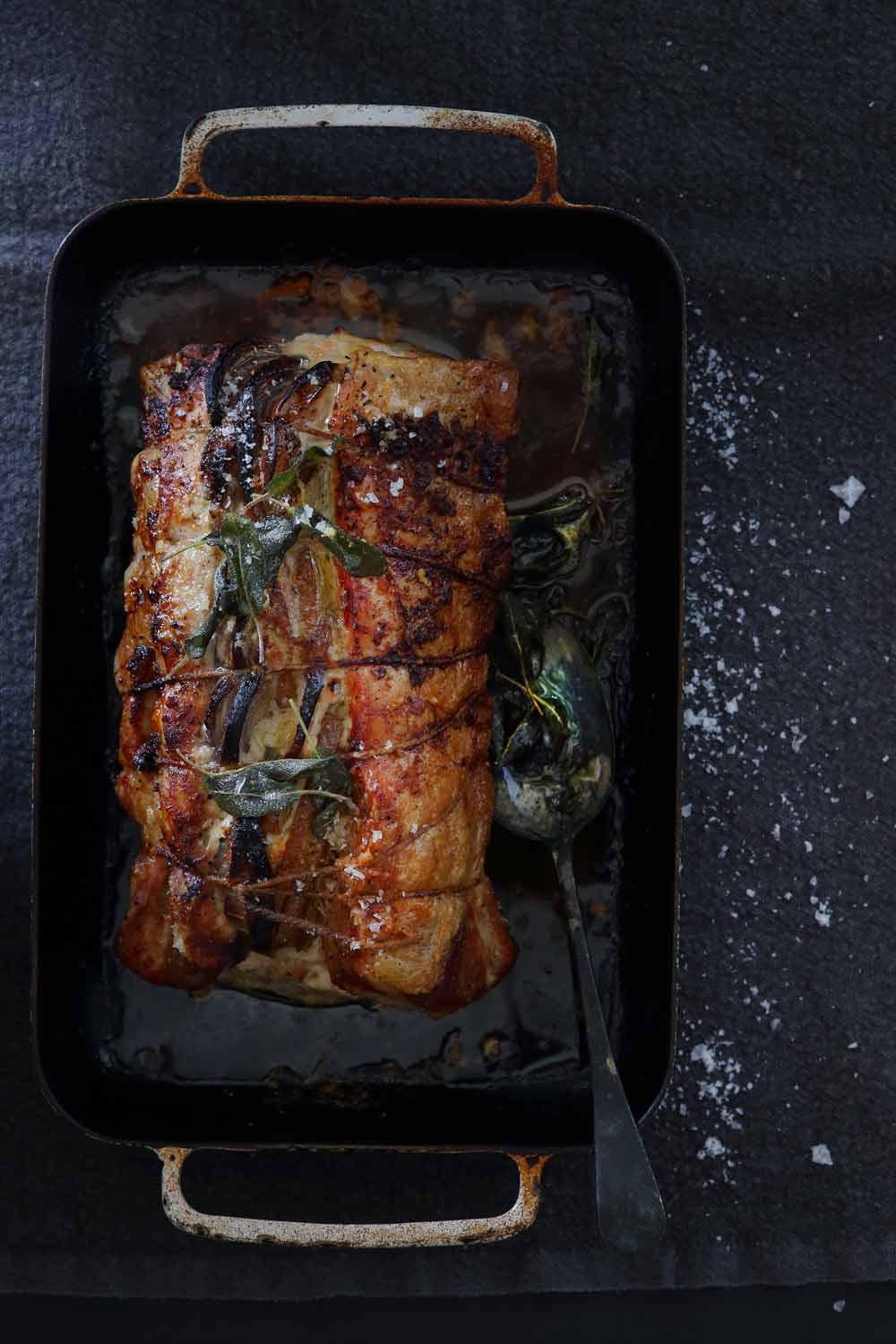
The pears in this dish are a great alternative to apples, which are often served with pork. The creamy Gorgonzola and crispy sage add a beautiful depth of flavour. Cooked to perfection in a Miele oven.

Serves: 4-6
Difficulty: moderate
Preparation time: 30 minutes
Cook time: 35 minutes

Stuffed Pork Loin
700 g pork loin
½ tsp (5 ml) salt
¼ tsp (1.25 ml) black pepper
50 g Gorgonzola, crumbled
1 Tbsp (15 ml) butter
1 red onion, thinly sliced
1 pear, thinly sliced
Maldon salt
2 tsp (10 ml) olive oil
1 C (250 ml) white wine

Sage Butter
30 sage leaves
50 g butter

Stuffed Pork Loin
Preheat the oven to 200 °C.

Slice the pork loin down the centre, lengthways. Slice almost all the way through the loin and then lay it flat on a board. Season the meat with salt and pepper.

Crumble the Gorgonzola over the meat and dot with little knobs of butter.

Place the sliced red onion and pear in the middle of the loin. Wrap the loin around the pear and onion and secure tightly with butchers twine. Sprinkle the top of the loin generously with Maldon salt.

Heat the olive oil in a frying pan and sear the pork for 2-3 minutes until browned. Rotate it in the pan 2-3 times browning all sides.

Transfer the loin to a roasting pan and add the cup of white wine. Place into the oven to roast for 15-20 minutes. Once cooked, remove from the oven and rest for 5 minutes.

Sage Butter
Heat the butter in frying pan and fry the sage leaves until crispy. Spoon the butter and sage leaves over the pork when ready to serve.

MIELE-Pork

Miele leaderboard-banner

Honey and Fig Thyme Tarte Tatin with Raspberry Ice Cream

Reliance Compost
We recently visited The Table at De Meye where Jess and Luke Shepherd showed us around their blossoming vegetable garden. Inspired by her garden, Jess created this beautiful dessert using honey, fresh figs and raspberries.

Honey and Fig Thyme Tarte Tatin with Raspberry Ice Cream

Serves:
 6
Prep time: 40 minutes
Cook time: 25 minutes + overnight freezing

Raspberry Ice Cream
400 g raspberries
1/2 C (125 ml) castor sugar
juice from 1 lemon
1 1/2 C (375 ml) milk, plus 2 Tbsp (30 ml) extra
1 C (250 ml) cream
1/2 C (125 ml) castor sugar
2 Tbsp (30 ml) glucose syrup (can substitute with golden syrup)
2 Tbsp (30 ml) cornflour
4 Tbsp (60 ml) cream cheese
pinch sea salt
1/2 C (125 ml) buttermilk

Tarte Tatin
100 g butter
100 g raw honey
thyme leaves, picked off the stem
10-12 large figs, halved
1 roll readymade puff pastry

The Ice Cream
Place the raspberries, sugar and lemon juice in a small saucepan, and bring to a boil over medium heat until the sugar is dissolved. Set aside to cool while you make the ice cream base. 

Place the milk, cream, sugar and syrup in a medium-sized saucepan and slowly bring to the boil. Allow to simmer for a couple of minutes. Combine the 2 extra tablespoons of milk and cornflour to make a slurry, and whisk this into the hot milk mixture. Continue stirring over medium heat for a minute until the mixture is slightly thickened. Remove from the heat.

Place the cream cheese and sea salt in a large stainless steel or glass bowl, and gradually pour in the hot milk mixture, whisking constantly. Add the raspberry sauce and then the buttermilk.  Fill a sink or basin with ice water – just enough to come halfway up the side of the bowl. Place the bowl into the cold water. Allow to cool for up to an hour, stirring occasionally.

Once the ice cream mixture is cold, churn in an ice cream maker. Place the finished ice cream in an airtight container and freeze for at least 4 hours before serving.

Tarte Tatin
Preheat the oven to 180 º C.

Melt the butter in a heavy-based ovenproof frying pan or skillet. Add the honey and stir into the butter until combined. Scatter over the thyme leaves.

Arrange the halved figs in the pan with the wide bottom ends facing the outer edge of the pan. Cut a suitably sized disc from the puff pastry sheet and lay over the figs. Prick the pastry with a fork, then bake in the oven for 20-25 minutes, until the pastry is golden.

Remove the tart from the oven and set aside for 10 minutes. Gently shake the pan to loosen the pastry from the edge, you may need to use a spatula. Place a large serving plate on top and invert the pan. Serve immediately with the raspberry ice cream.

(Note: the pictured tarte is an individual sized portion.)

Recipe by: Jess Shepherd of The Table at De Meye

To find out what else is in season currently click here for our Seasonal Fruit and Veggie Guide.
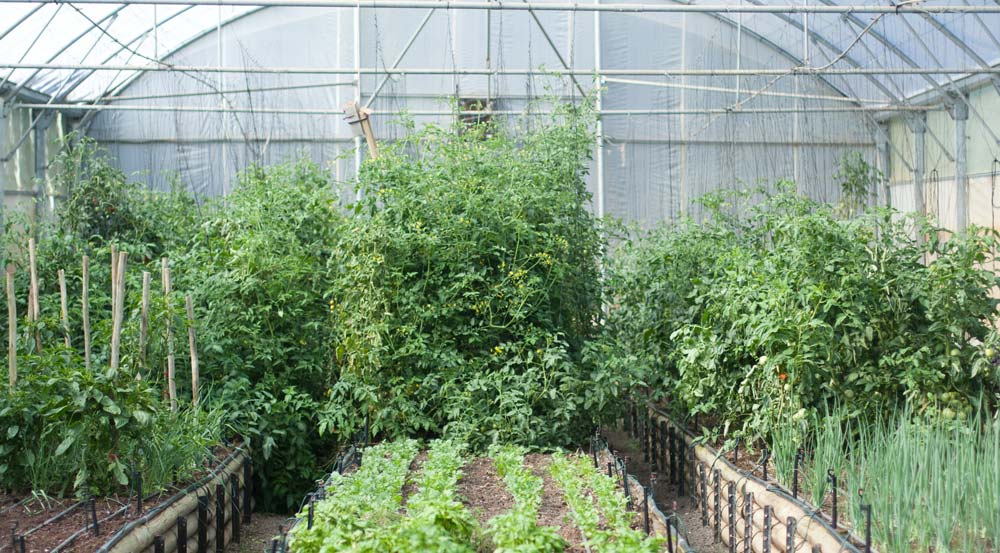
Delicious produce is grown in healthy, living soil. #Harvesttotable series brought to you by Reliance Compost.The garden at Table at De MeyeReliance Compost

GROWbag Gives Billboards a Recycled Lease on Life

Reliance Compost
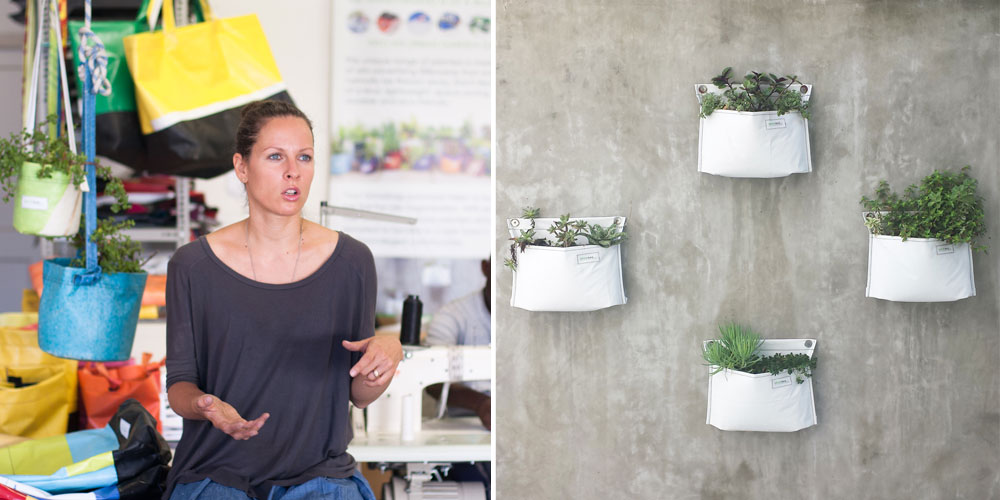
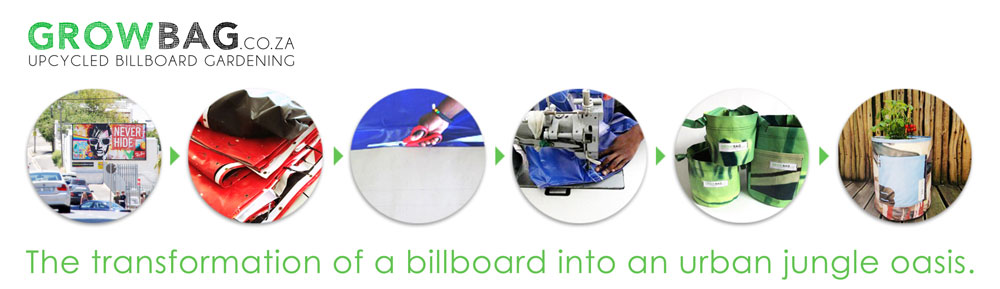
Billboards are a daily occurrence in the life of a city-dweller, something that you see but never really ponder, unless it’s a really good advertising campaign. Once they are removed, there’s probably even less thought about what happens to them, for the average person that is. But not for GROWbag creator Manuela Wall, who came up with the idea to recycle them into planters after seeing the incredible work that Soil For Life does for underdeveloped communities. The residents, who were taught how to make soil and then grow food from it, were using anything they could find as planters – tires, plastic bags and even shoes, and she was also reminded of her European upbringing in apartments where there are often no gardens and people want to grow plants, flowers and herbs. She had always had an idea to make planters and pots out of billboards, and finally had the chance to make it a reality. Fortuitously she met, Street Sleeper founder, Oliver Brain, who was also setting up his business of turning billboards into sleeping bags, so they came together to share a space as well as the billboards themselves.  Growbag
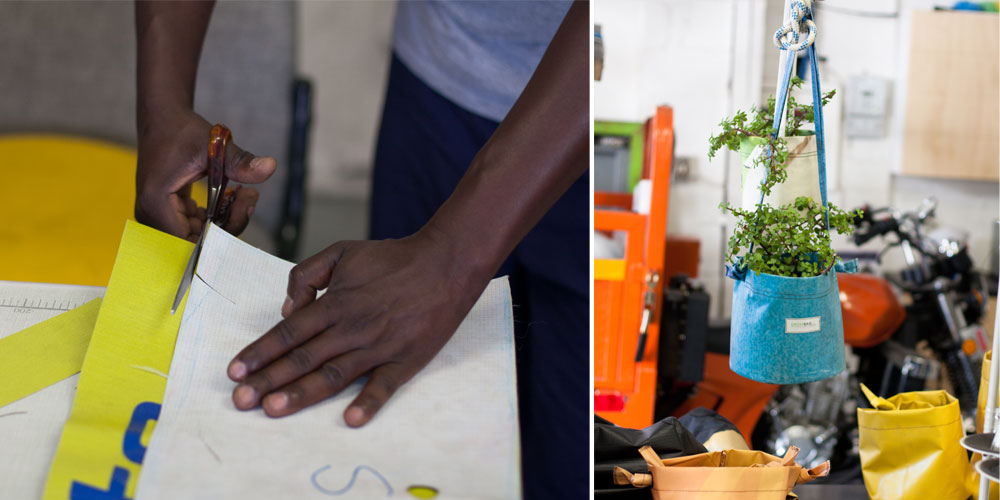
So she made it happen, and started making the GROWbag happen. Out of a small studio in the centre of Cape Town, she and her assistant, Naphtali, put the bags together. The process is much like making an item of clothing, she selects the billboard, or ‘skins’ as she likes to call them, based on colour combinations and wording. Interestingly enough, as the city of Cape Town is anti-billboard, they unfortunately don’t offer a removal service once the advertising comes down. So it’s up to Manuela’s partners to collect the discarded billboards and deliver them to the studio. The important thing with old billboards and the process of reusing them, is that they are advertising and often represent a company, so Manuela needs to manipulate the vinyl to ensure that there are no signs of a company name. From there, it’s cutting templates and stitching the pieces together.GrowbagGrowbag

At this stage, the production of GROWbags is still quite small, Manuela always ensures that she has enough bags to donate to the communities involved with Soil for Life. She believes strongly that this keeps the residents’ motivation going as there’s a sense of pride in how good it looks. She also believes that giving bags back to the community further entrenches the notion of something that creates new life – the entire thought process behind recycling. The bags do more than just look good too, they ensure that people can plant anywhere, as well as offering the soil protection from any pests or soil diseases that may be lurking in neighbouring gardens.

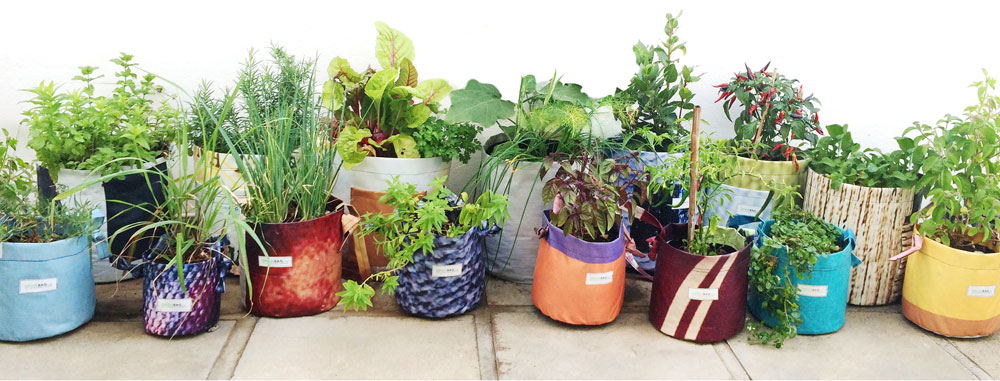
In a time where recycling couldn’t be more necessary, GROWbag is making something exceptional out of raw material that would otherwise be considered rubbish. And growing her business is not about making a profit, it’s about the upliftment of communities. Look out for her bags, available in numerous shapes, sizes and colours, at various markets in Cape Town. You can also order online at her store Bonsela and when you do, take pride in the fact that you’re supporting local entrepreneurs, while storing your plants in something that looks beautiful.
growbag-planters
For more information on this excting product and to purchase online visit growbag.co.za 

Delicious produce is grown in healthy, living soil. #Harvesttotable series brought to you by Reliance Compost.

Reliance Compost

Cherry Tomato and Watermelon Gazpacho

Reliance Compost

Serves: 6
Difficulty: easy
Prep time: 20 minutes
Cook time: none

Gazpacho
2 kg vine ripened cherry tomatoes, roughly chopped
5 cloves garlic, peeled and roughly chopped
1 small red onion, roughly chopped
small handful basil leaves
400 g watermelon rind and seeds removed, roughly chopped
100 g  bread, crust removed and torn into small pieces
1/2 C (125 ml) tomato juice
2 Tbsp (30 ml) red wine vinegar
4/5 C (200 ml) olive oil, plus extra for drizzling
sea salt and black pepper to taste

To Serve
extra tomatoes
basil leaves
olive oil

Gazpacho
Set aside 12 tomatoes for garnishing. Place the rest of the tomatoes, garlic, onion, watermelon, bread, tomato juice and basil in a blender (or large bowl if using a hand blender) along with a teaspoon of salt and a good grind of black pepper. Blend until smooth.  Add the vinegar and then, with the blender still going, add the olive oil in a steady stream. Refrigerate until needed.

To Serve
Pour the soup into individual bowls and top with the reserved cherry tomatoes, that have been cut into quarters. Garnish with torn up basil leaves, along with a final drizzle of oil. Finish with a little sea salt and another little crack of black pepper. 

Tomatoes-Table-at-De-Meye

Delicious produce is grown in healthy, living soil. #Harvesttotable series brought to you by Reliance Compost.

Reliance Compost

The flourishing vegetable garden at The Table at De Meye

Reliance Compost
The story of Jess and Luke Shepherd and how they came to own and run The Table at De Meye Wine Farm is something of a fairytale, they first met through Jess’s twin sister in Stellenbosch when Luke was studying at the university, and set up shop in Stellenbosch, running the former Nook eatery. After a while, they needed a change of pace, and so packed up and moved to Greyton where they stayed for a few months. It wasn’t long however though, that they felt the call of something different and took ownership of The Table.

For Jess, inspiration on what to cook was never a problem, she was always going to cook her food, her way – generous, lovingly prepared food. And with Luke by her side, they were already turning out some of the best eating experiences in the country. Around the beginning of 2015, they began to look at where all of their produce was coming from, despite already using organic ingredients, Luke had the idea to turn some unused space into a vegetable garden. They cleared the lot by hand and put the beds together using reclaimed wine poles from the vineyard. Luke, in particular, has a green-thumbed background with both parents being keen gardeners, growing their own veggies. He and Jess also built a raised bed in the small back garden of their first flat in Stellenbosch. It may just have been some peas, rocket and lettuce, but it was definitely the start of it all for them.
The Table at De Meye
The Table at De MeyeThe_Table_cabbage
And so, they began to grow every veggie their hearts’ desired; broad beans, aubergines, tomatoes, carrots, lemongrass, the list is endless. And while their garden has mostly been successful, right now the yield of some veggies requires them to change the menu more often. Not that it’s a problem for Jess, as she hates repetition and enjoys the challenge of having to mix things up. Having said that, if you take into account that the garden was built around the beginning of May last year, it truly has flourished and has resulted in plenty of produce. It’s nothing to dismiss, it’s an amazing yield for a garden so young.
The Table at De Meye
The_Table at De Meye_-tomatoes
The food that Jess cooks need no introduction. People come from all over the country and the world to eat at her table. The casual, family-style presentation of the dishes mean that guests truly feel a part of the family. The way that Luke and Jess conduct their business is a far cry from other restaurants where there is no thought as to where their food comes from. With free-range meat coming from Ryan Boon in Paarl, her food completes a circle that many chefs should follow. She respects the ingredient and in turn the food that she produces is world-class. Be sure to book a seat at The Table, and when you do, don’t be afraid to ask to see the veggie garden, soon to be upturned to make space for next season’s crop. Overall the experience at The Table is inspiring as well as deliciously satisfying, and you’ll leave the wine farm both full of Jess’s wonderful food, but also full of green ideas you’ll want to put into practice in your own garden.

The_Table_-brinjal
The Table at De Meye

Jess shares her recipe for Cherry Tomato and Watermelon Gazpacho HERE.

thetablerestaurant.co.za | Facebook | Twitter

Delicious produce is grown in healthy, living soil. #Harvesttotable series brought to you by Reliance Compost.

Reliance Compost

Fig and Caramel Cake

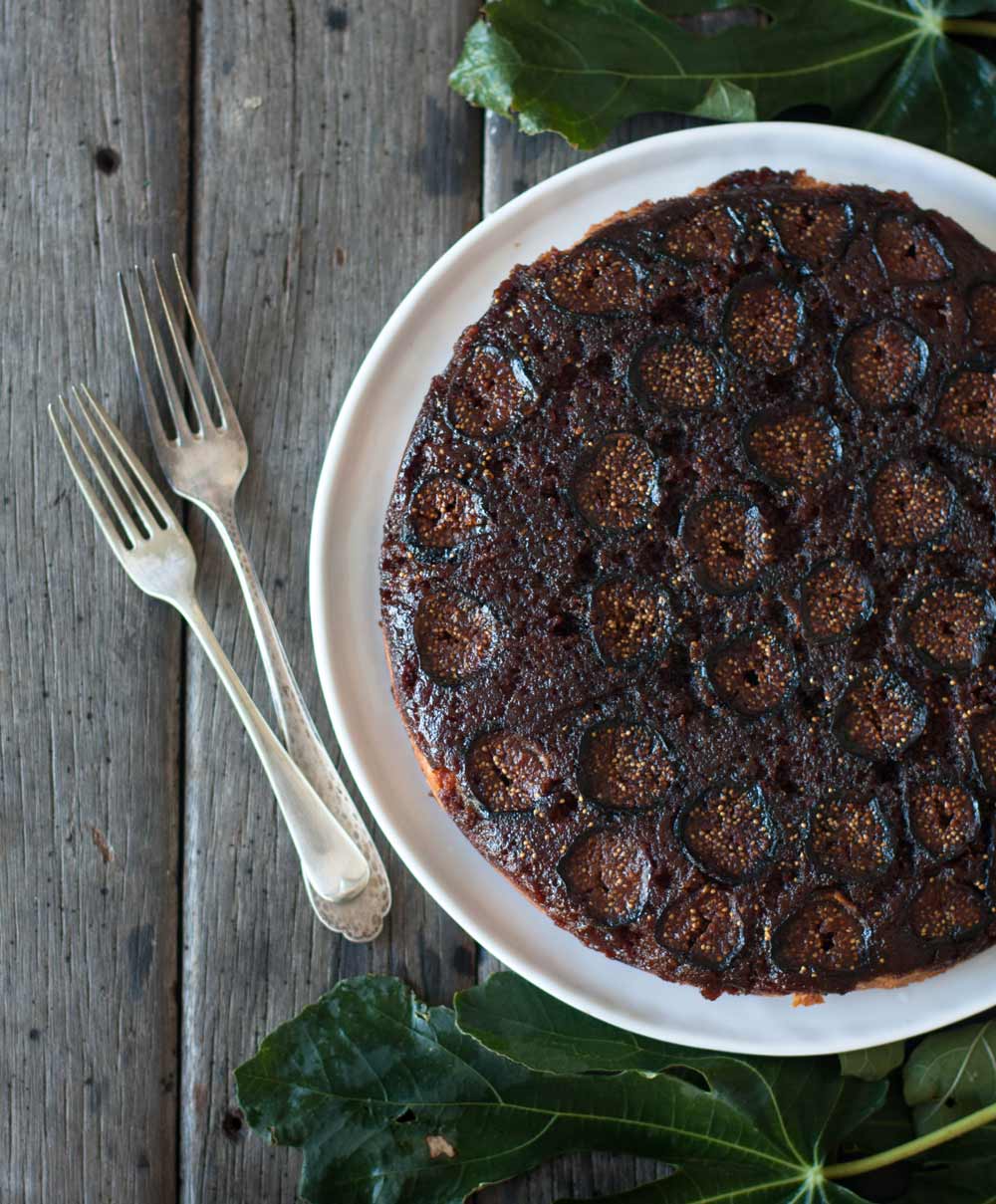
South Africa’s warm climate is ideal for growing figs, which are native to the Middle East. They grow beautifully in the summertime and you can tell if they are ripe by their skin which should be slightly soft, and have a gentle bed in its neck. They are delicious fresh, with cheese but make a perfect jam or preserve. Try them in this sticky and comforting caramel cake.

Caramel-Fig-Cake
Serves: 8
Difficulty: easy
Prep time: 20 minutes
Cook time: 50 minutes

Caramel

175 g castor sugar
¼ C (60 ml) water
250 g fresh figs, stalks trimmed and halved

Cake

150 g plain flour
2 tsp (10 ml) baking powder
½ tsp (2.5 ml) salt
175 g butter, softened
175 g castor sugar
4 eggs, beaten
1 tsp (5 ml) vanilla extract
¼ C (60 ml) ground almonds

To serve

Plain, double thick yoghurt

Method

Preheat the oven to 180 ºC and line a 24 cm springform cake tin with greaseproof paper and lightly grease with butter.

Caramel

Place the castor sugar and water in a small saucepan over low heat, stirring until the sugar dissolves completely. Once the sugar has dissolved, increase the heat to medium to bring to the boil until the syrup starts to turn brown around the edges. Then, reduce the heat again to allow it to caramelise slowly.

Don’t stir the sugar at all while it’s caramelising, simply swirl the pan to colour evenly. The caramel should be a rich brown colour, not a light tan. Once ready, pour into the buttered tin; set aside and leave to cool. Once cooled, place the figs cut side down into the caramel in concentric circles.

Cake

Sift together the flour, baking powder and salt into a small bowl. In a large bowl, or using a stand mixer, beat the butter and sugar together until combined, for about 3 minutes. Then add the eggs and the vanilla essence and slowly mix to combine. Lastly, add the flour mixture and the ground almonds and combine.

Spread the mixture over the fruit and caramel, don’t stress if the mixture may seem a little sparse– just keep working it until it covers all of the fruit and reaches the edge of the cake tin.

Bake for 45-50 minutes until risen and a skewer inserted into the centre comes out clean. Allow to cool on a cake rack for 5 minutes then run a knife around the edge of the tin; remove the tin and turn out onto a platter. Should any pieces of fruit stick to the greaseproof paper, use a spatula to place it back onto the cake.

To Serve

Serve warm or at room temperature with double thick yoghurt.

To find out what else is in season currently, click here for our Seasonal Fruit and Veggie Guide.
Wild Clover’s New Brewhouse and Tasting Room

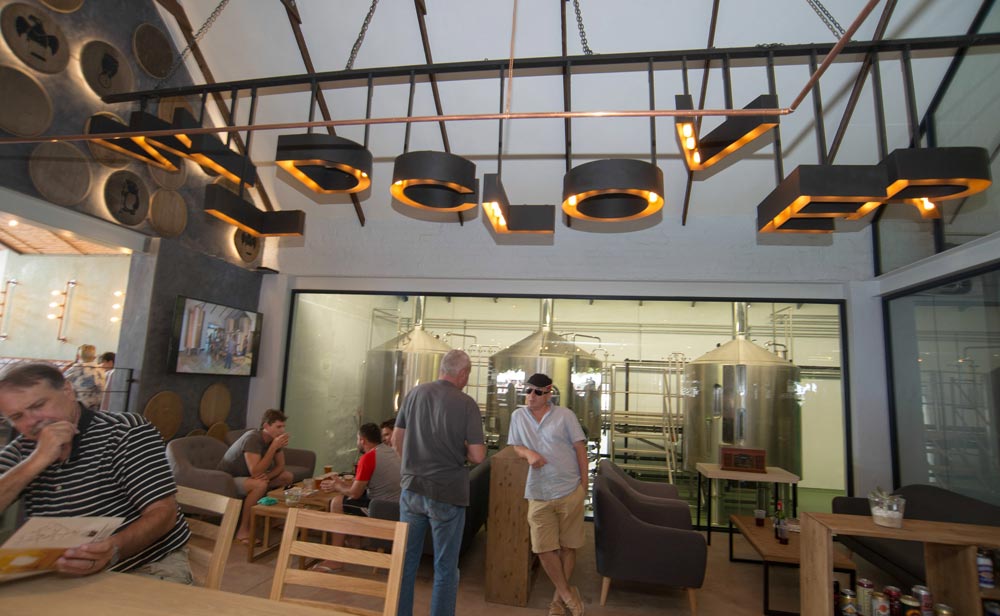
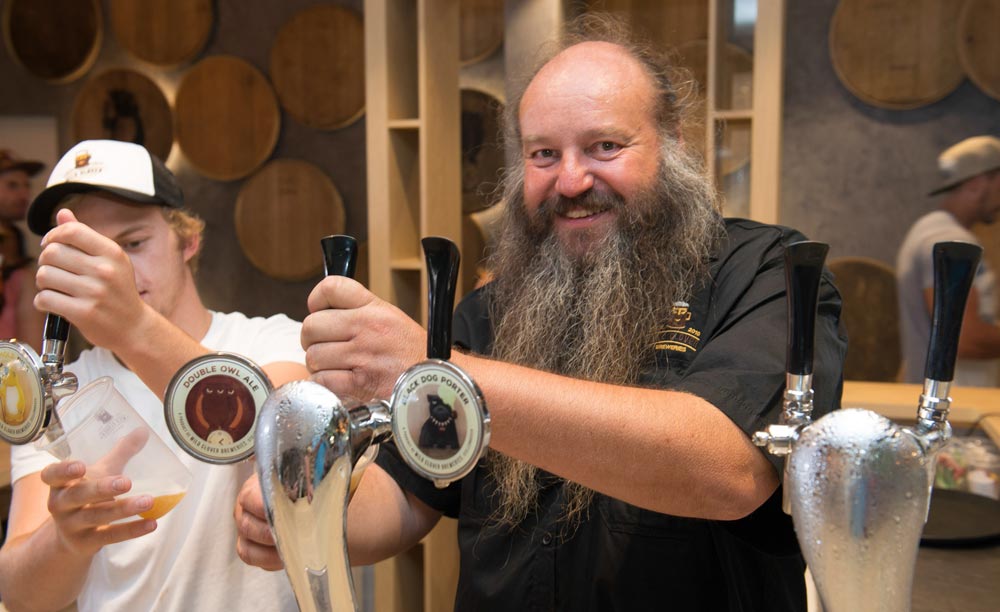
Wild Clover Breweries, the Stellenbosch-based craft-beer brewery that opened in 2010, has turned over a new leaf with last week’s launch of its state-of-the-art brew house and tasting facility on the Wild Clover farm situated in Koelenhof, between Stellenbosch and the N1. Besides a spanking new production facility with a brewing capacity of 2000 litres, a spacious visitor facility for tastings and light-snacks, Wild Clover Breweries has relaunched the labels of its four popular beers each with its well-known critter theme.

The Eagle Weiss Wit, Double Owl Ale, Blind Mole Pils and Black Dog Porter, a range of hand-crafted unfiltered beers with a reputation for exceptional quality, will not only be available at the Wild Clover facility, but also at quality bottle stores across Cape Town. The combined efforts of the visitor facility and national distribution will take the brand into a new league. Add this to an already flourishing wine production from uniWines Vineyards who were looking for a way to complement their wine offering and found the perfect partner in Wild Clover. The venture into craft beer is aimed at expanding the winery’s beverage offering. The substantial wine range is now complemented by the synergy with the quality craft beer sector, which is currently taking the South African drinks industry by storm. This will include offering craft beer to their current national and international wine clients who have already expressed interest in accessing South Africa’s dynamic and growing craft beer industry.
Wild-Clover-Breweries
The dedication and commitment to quality to quality craft beer by Ampie and his team means that Wild Clover Breweries are geared to expand and that the sky really is the limit for them. This teaming up with uniWines Vineyards at the Wild Clover Breweries facility, gives visitors a greater choice of the Boland’s greatest industries, beer and wine. Last Saturday’s launch of the new Wild Clover Breweries facility attracted hundreds of visitors, proving that besides being South Africa’s oldest wine route, Stellenbosch is making its mark on the brewing scene as well.
Wild-Clover-Breweries
For more information visit wildcloverbreweries.co.za or follow them on Twitter.

A Waterwise Garden – Creating a Grey Water System

Barbara Mueller lives in Philadelphia, a small town along the N7 towards Malmesbury. She is the author of The Gardening Blog, where she documents the trials and tribulations she experiences as she builds a working country garden, complete with edible veggie, herb and fruit garden.

Barbara undertook installing a grey water system in order to direct used household water into the garden and reduce the need for watering. Since we are experiencing such high temperatures currently, as well as serious water shortages, this is a very important DIY project to consider if you can.

Barbara shares the details, along with step-by-step photography, of how her grey water system was put together.


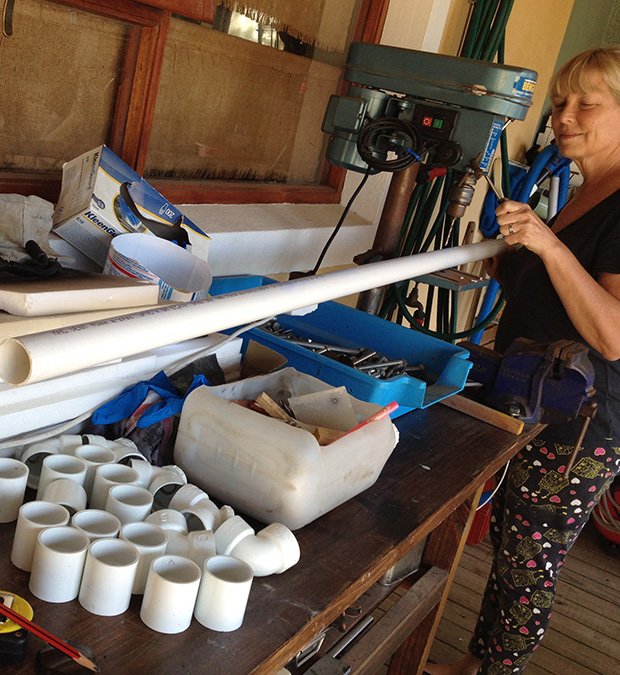
We have been planning this simple grey water system for quite sometime – it needed to be simple and cheap to do. We decided to use a collection box to trap the grey water and direct it to the veggie patch through a system of pipes. These pipes are the average plumbing pipes that you can get at any hardware store. It works like a drip system and spans the length of the 12m veggie patch.

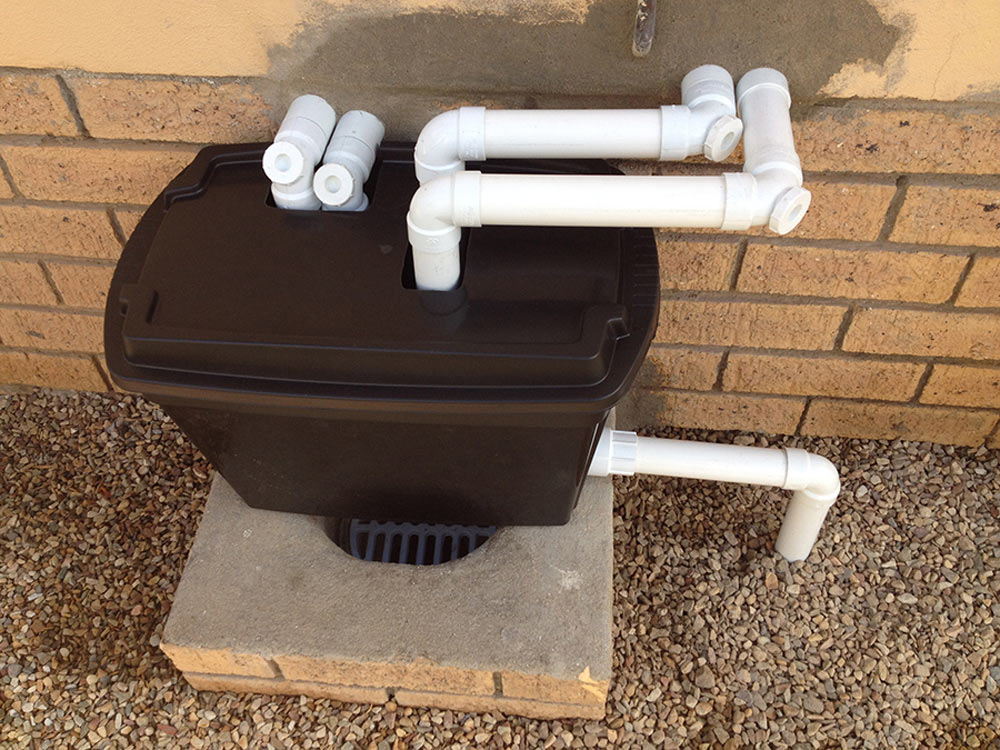
02 GREYWATER 14aThe two outlet pipes on the left come from the first bathroom shower and basin and the other two outlets come from the en-suite bathroom shower and basin. The first bathroom is where we will collect the water for the veggie patch in the black plastic box. Building a Grey water system In this bathroom we will rinse only and use organic soap. The other bathroom we will use to scrub up and shower and wash hair and do the necessary – these pipes will flow down straight through the black collection box and out to the bottom. This water will not be collected.Building a Grey water system You can see the grey water pipe coming out from the box – this is for the garden (I’m measuring it!). Precise measurements are always needed for a job well-done.Building a Grey water system Here the water will travel down and across to the veggie patch. You can see all the lengths of pipe waiting to be connected. The angle has to be correct so there is always a downward movement of water and no block ups. Don’t worry – we did a test in our planning! The black collection box just rests on the plumbing drain. This will keep it easy to clean.
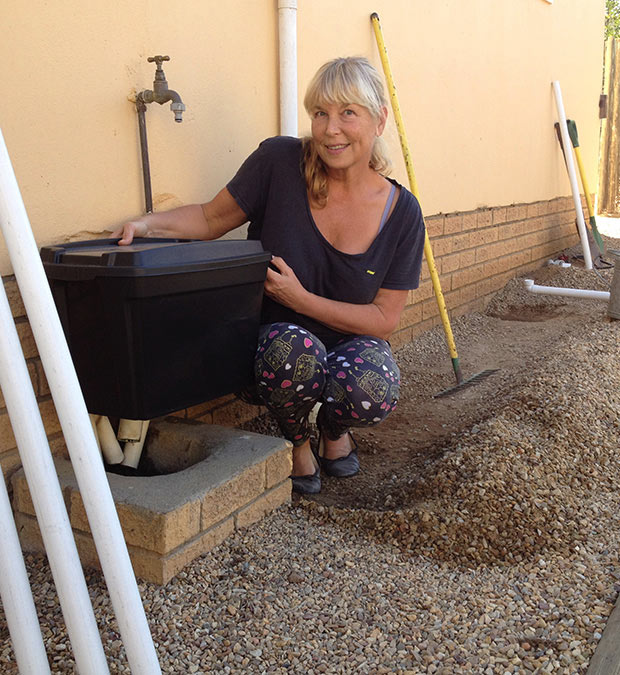
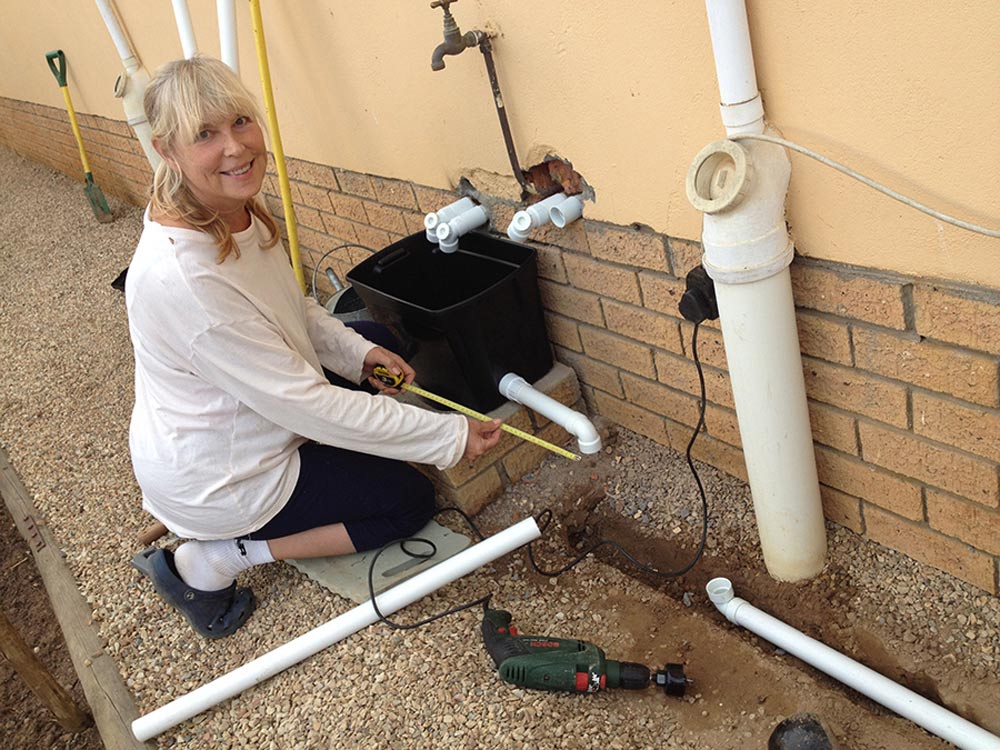
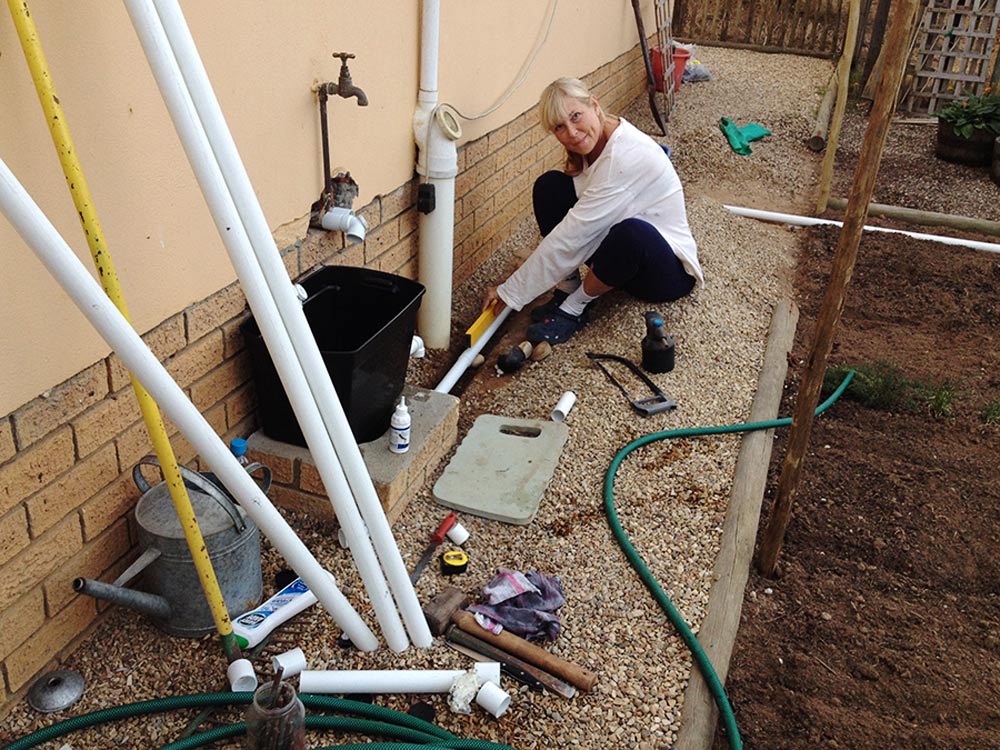
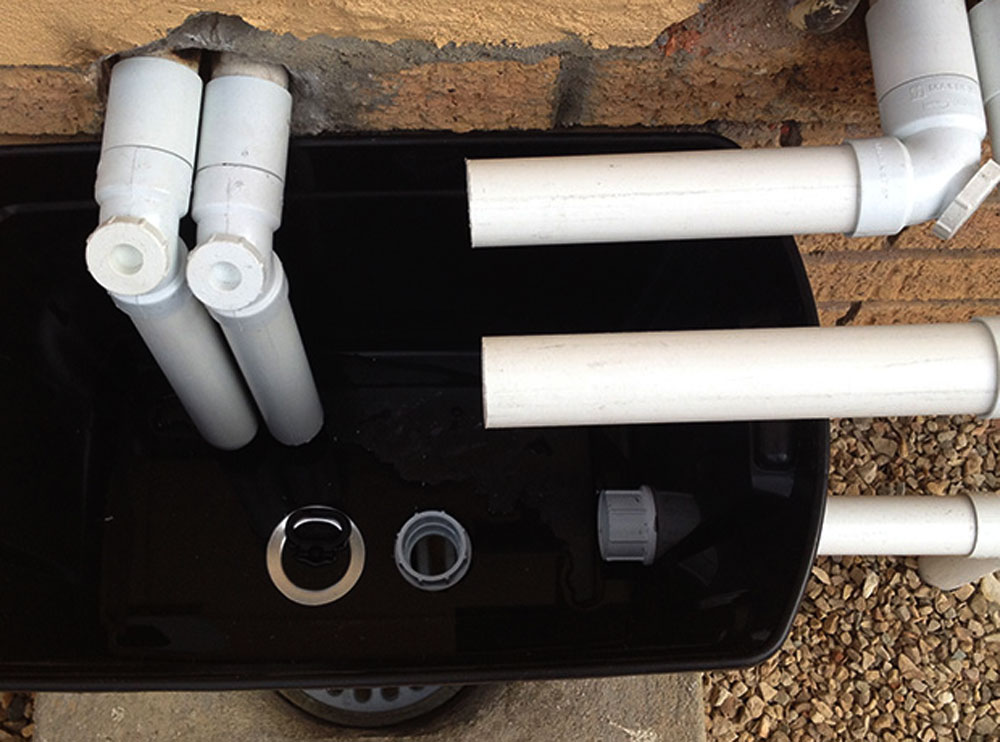
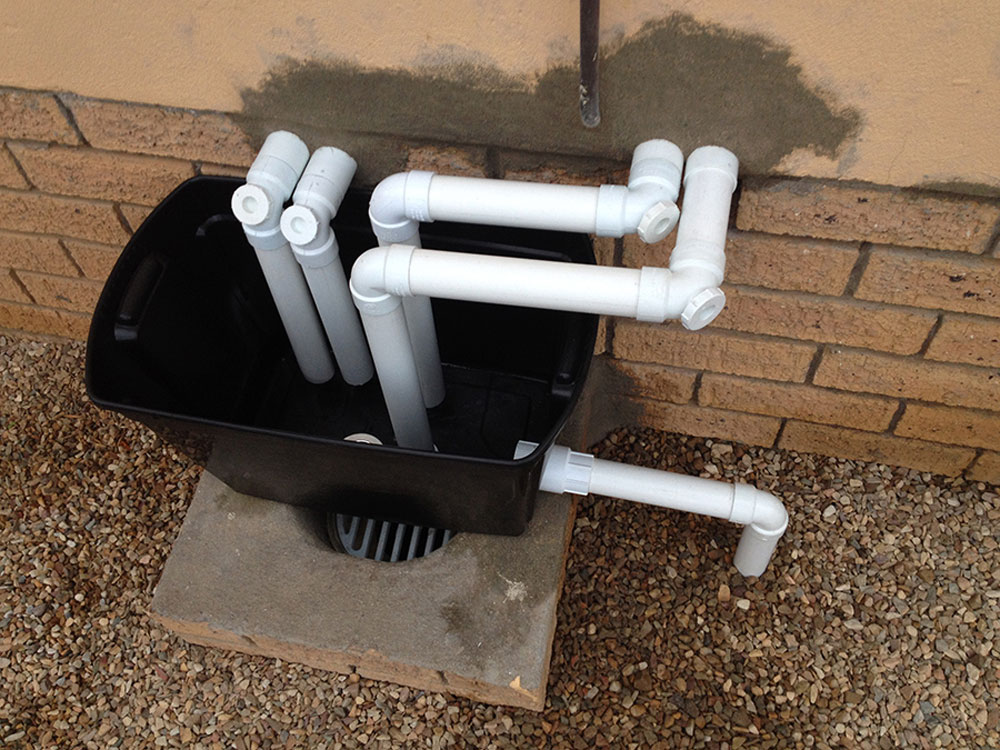
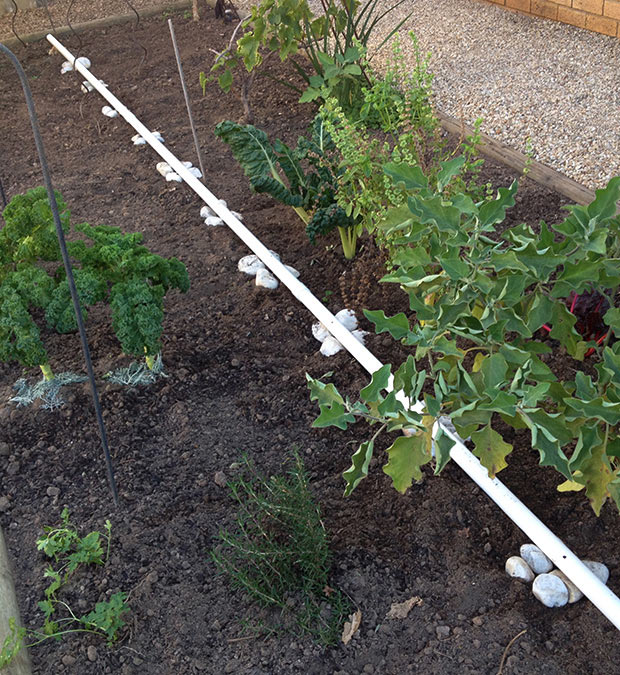
Now here you can see the neat cement job and the neat way the pipes come out of the wall. My hubby had to re-do the shoddy workmanship of the previous plumber – so this was a necessary DIY job. There is an opening at the bottom of the box – an outlet and plug, like in a sink.Building a grey water systemBuilding a Grey water system If it is in the middle of winter, I can release the water to flow directly into the drain – so not to over-water the garden. Smart, right? Here you can see three pipes collecting into the bin and the right pipe going through to the drain. All neat and finished off with a lid.Building a Grey water system Now you can see how the outlet pipe from the black collection box is hidden under the stones. It travels up slightly before turning to the veggie patch and the pipe comes back up to the surface. The exposed pipe has holes drilled at the bottom (you can see the black dot drawn on top to locate it). The pipe rests on stones to prevent dirt clogging up the drip holes.Building a grey water systemThe grey water does not come into direct contact with the plants or their leaves, so it is very safe. It drips into the ground and I have created furrows for the water to travel down to the end, giving good spread of water, as you don’t want it to pool in one spot.

Building a Grey water system We are very proud that the grey water system is now in place and no more waste of precious, usable water. Our Jojo Tank is in place as well, so this garden is truly water wise. We all need to be aware of how precious water really is and to be mindful as to how we use it sensibly. Everyone can do their small part to store it, save it and use it wisely!

Delicious produce is grown in healthy, living soil. The #Harvesttotable series is brought to you by Reliance Compost.


Little Saint Serves Up Good Karma on Bree Street

Reliance Compost
The organic food movement has been something of a phenomenon recently, and while some say that it’s utter rubbish and dismiss it as a fad, there are those enlightened individuals who understand its importance for personal health, as well as that of our environment. Unfortunately, for some restaurants the cost of going organic is too high, and they are not prepared to pay the necessary expense. The eternal question from naysayers is “Why is organic food so expensive?” Where, in fact, the question should be “Why is bad (referring here to genetically modified, pesticide-treated items) so cheap?”. That is where Little Saint starts by being different. Before even opening their doors, or making a single cent, they made the decision to use only free-range, organic and sustainable products.
LittleSaint
South African born Dominique moved to the UK when she was 18 years old and met Santiago Louzan Fidalgo, a Spaniard who was working in the Michelin-starred restaurant industry. Before long they were both working exceptionally hard and beginning to feel the strain that their lifestyle was having on their health. It hit them both that while they always made an effort to eat well, both being within the food industry, it inevitably came down to making a decision to look honestly and carefully at what they were eating. There had to be more to life than eating whatever was available in a supermarket. So, they eliminated refined sugar, reduced their intake of gluten and dairy and rid themselves of processed foods in general. Naturally the effect was instant, they were looking and feeling better. When people began taking notice and showing an interest in their changes, the idea to open a restaurant hit them. In the space of a year, they got married, moved countries and opened Little Saint. No small feat. When it came to deciding who they wanted to be as a restaurant, it was a balance between offering their own food and being restrictive. Some customers, even the ones who do their best to be healthy, will want a sneaky bit of sugar in their coffee. The idea of Little Saint is not to be restrictive, it’s about being healthy, ethical and eating as sustainably as possible.

So they threw themselves into finding the ideal suppliers, who were in line with their thinking. They also set the intention to find suppliers within the Western Cape, as even organic food can rack up the carbon emission miles if it’s coming from too far away. They looked to Ryan Boon in Paarl for free-range meat and Usana for their eggs, but most notably they joined up with Harvest of Hope for organic, seasonal produce. Harvest of Hope is a community based project where residents are encouraged and supported to grow their own organic vegetables, these veggies feed their families and the excess produce, of which there is a lot, is sold on to the rest of Cape Town allowing the gardeners to make an income for themselves. Not only is Little Saint making a pledge to serve the best quality food available but they’re also supporting an important community project. Sometimes, the bottom line is not all it comes down to. Dominique and Santi are also furthering the green feel of the restaurant with their 10 foot long living wall that houses their herbs, as well some lettuces. While they’re still experimenting with where to plant everything, it is fully self-irrigating and flourishes very happily.
LittleSaint
In terms of their menu and how they plan to use all these incredible raw materials, well that’s the easy part for veteran Santi. With his Spanish heritage and knowledge and understanding of the importance of using organic products, the fare is modern with a whisper of Spanish influences. Except for the Tortilla, for which they’re becoming known, that is very proudly a Spanish dish. If you’re unsure of what it is, it is not the flour-based wrap used for a burrito or taco, nor is it meant to be used interchangeably with a fritatta. A tortilla is a very traditional Spanish dish that is made with eggs and potatoes and is fried in olive oil. In short, it’s delicious and Santi has given it an update by making his with sweet potatoes. The rest of the menu features options like boiled eggs and soldiers (or troops as they’re referred to on the menu) for breakfast, salads and sandwiches option for lunch and their notorious triple cooked pork belly for dinner. Desserts are kept simple with poached pears, or even a simple cheeseboard to seal the meal.
LittleSaint
LittleSaint
And so, while there may be more choice on Bree Street than one person can manage, bear Little Saint in mind the next time you’re around for a meal. It’s real food being done by people who really care about what they feed you, as well as the impact that their supplies can have on the environment. Their motto is food for living and they couldn’t be more true to that ethos, this is more than a plate of food. It’s a way of life.

Photography by Claire Gunn.

Delicious produce is grown in healthy, living soil. #Harvesttotable series brought to you by Reliance Compost.

Reliance Compost

Tea Under The Trees

Reliance Compost
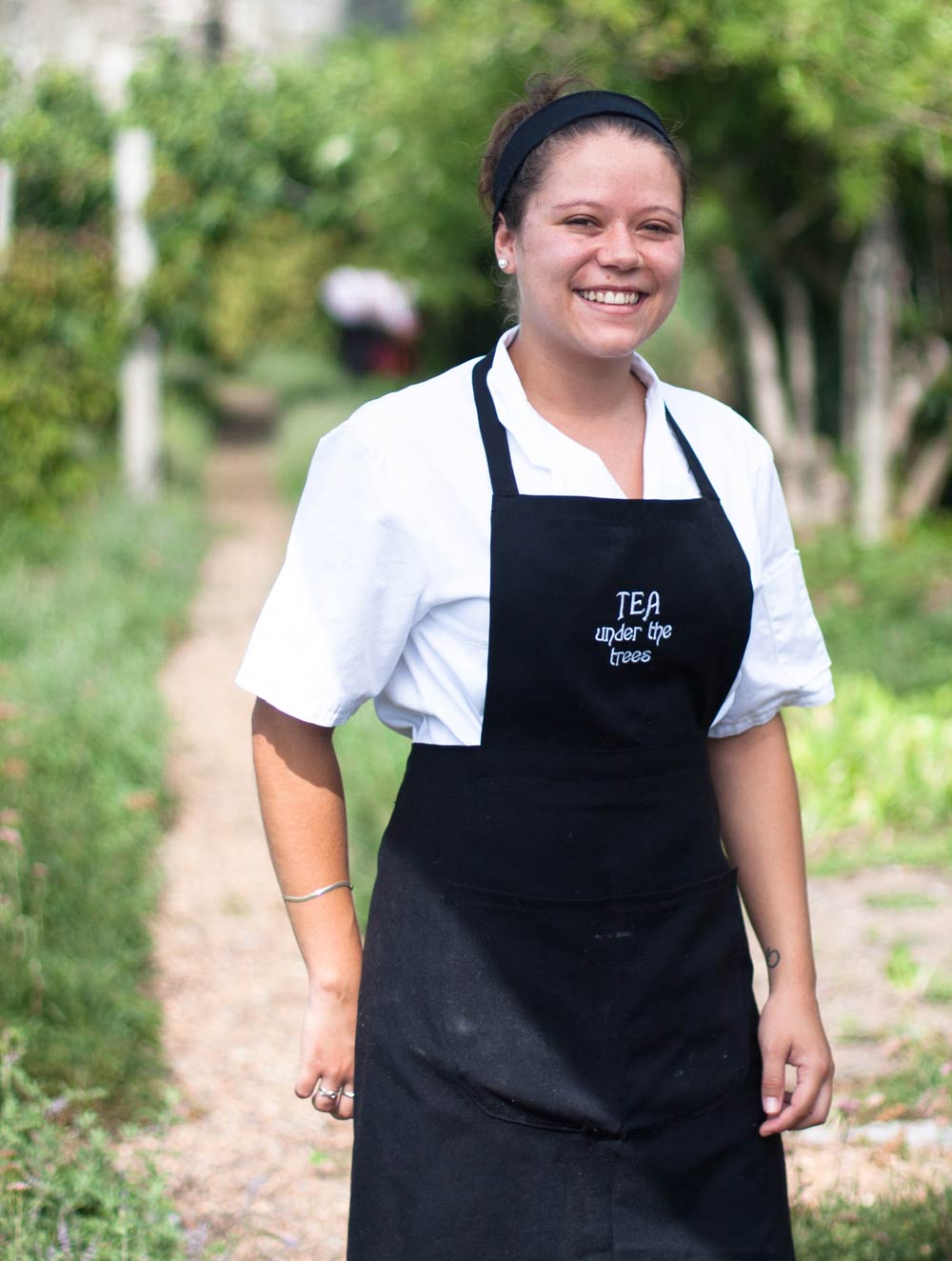
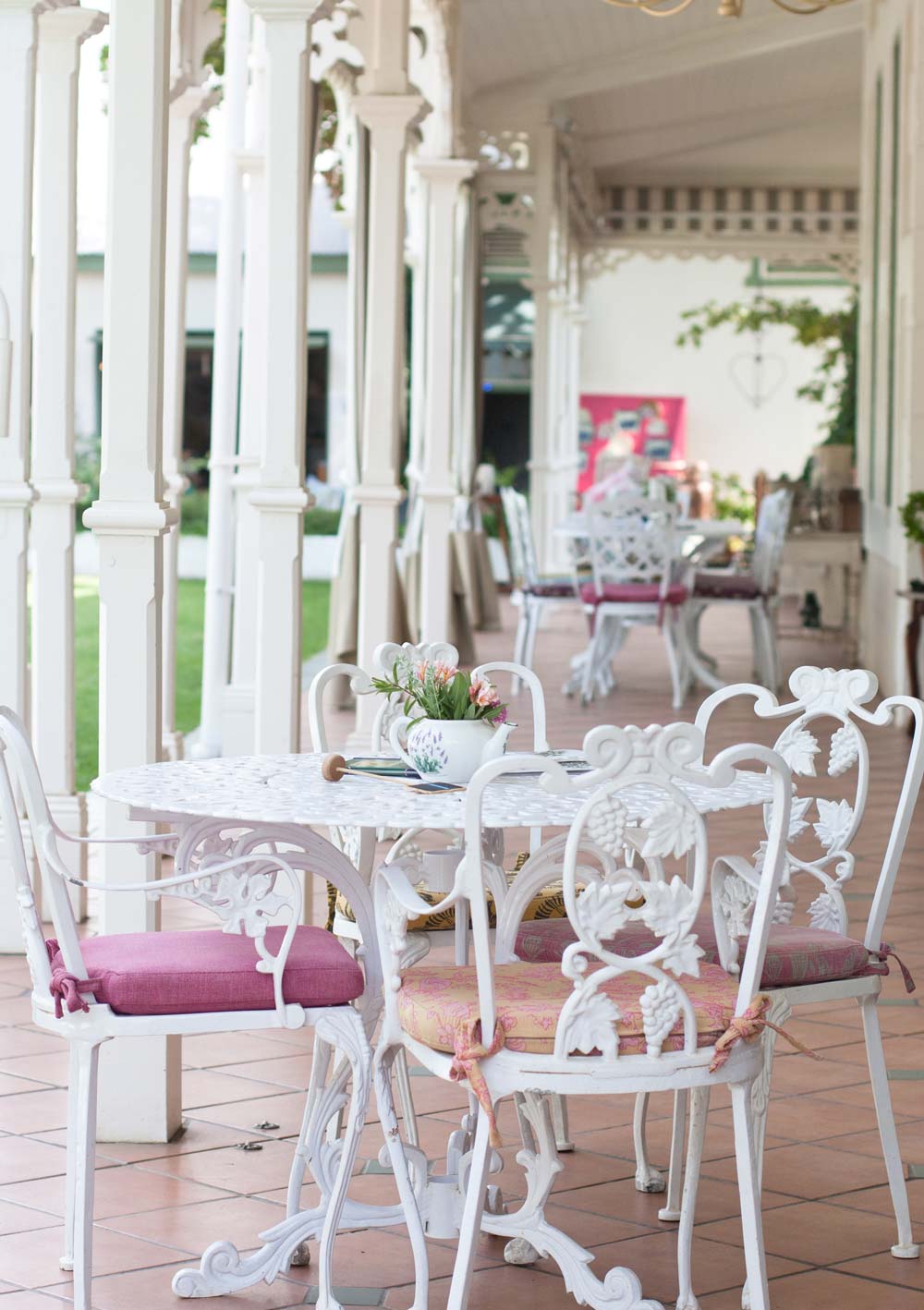
Driving along a dusty road off the main stretch of Paarl lies St. Pieter’s Roche, a working farm that is responsible for the grapes harvested under the umbrella of the Reliance Compost group. It’s a hive of activity, tractors coming and going, people carting produce all over the show but a walk through the vineyards reveals an oasis away from the hustle of the farm. Here you’ll find Tea Under the Trees, a casual café run by chef Kim and her small team, out of the farmhouse kitchen where Reliance founder Eddie Redelinghuys lives with his wife, Debbie.Tea-under-the-treesTea-under-the-treesTea-under-the-treesTea-under-the-trees
The homely setting sets the tone for the style and mood for the entire café, offering visitors in the area some respite in a shady spot under the oak trees, along with a cup of tea and cake.
Tea Under The Trees
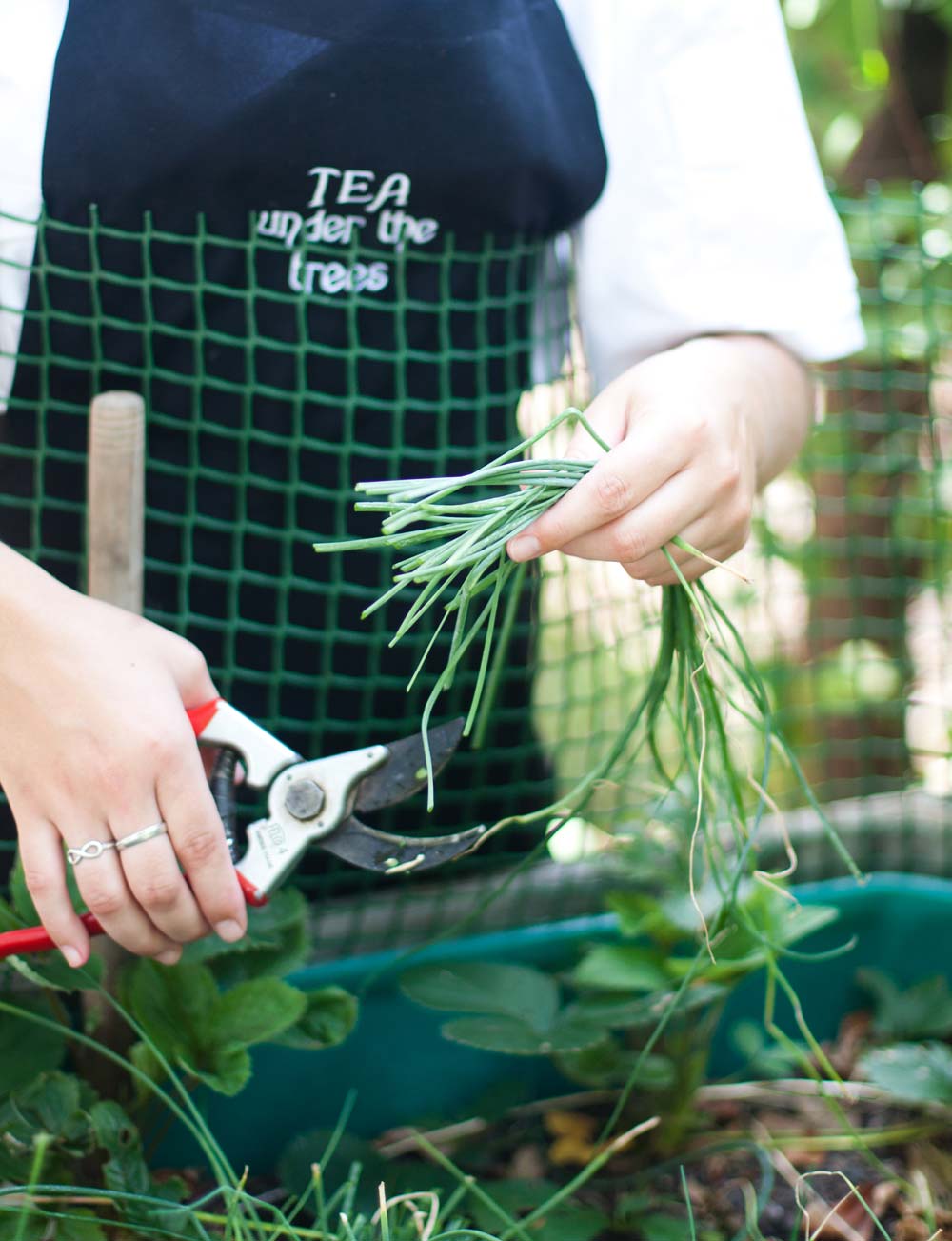
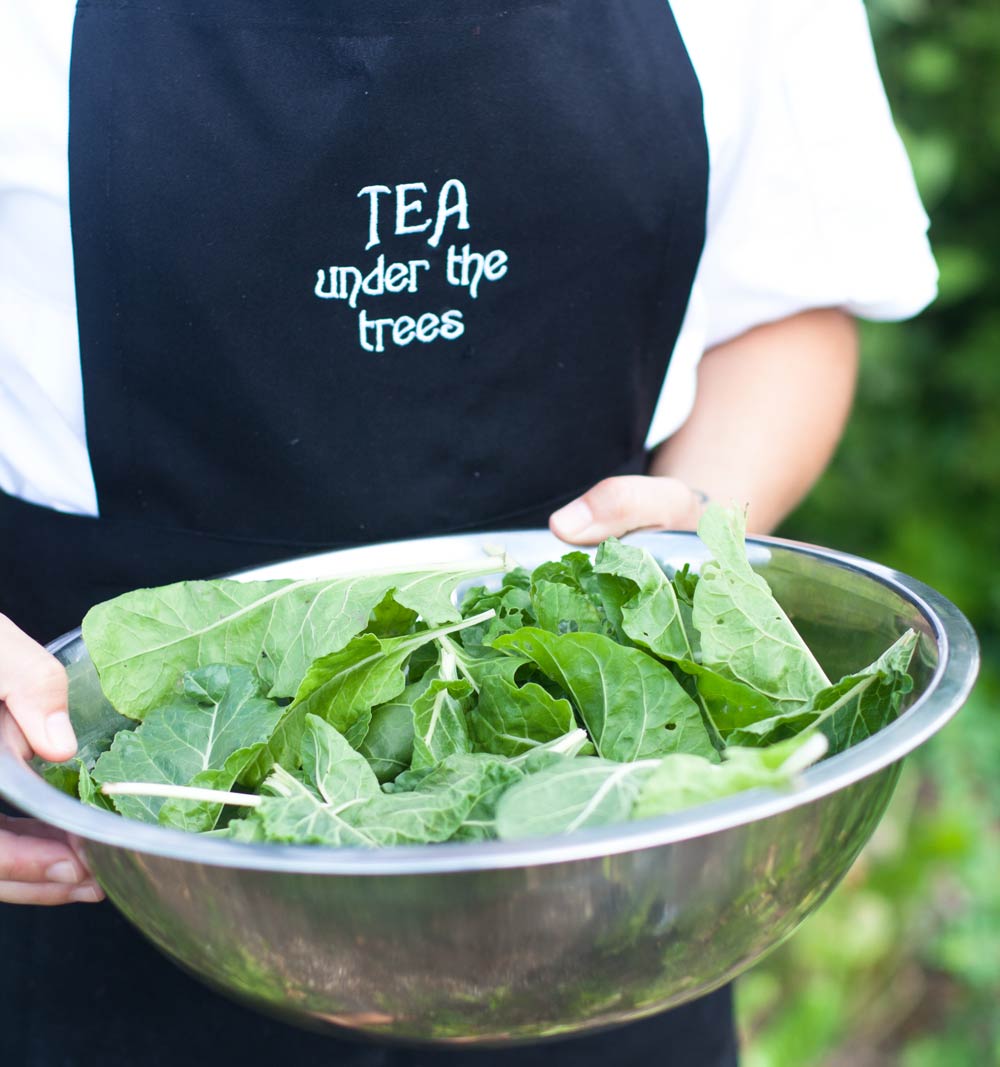
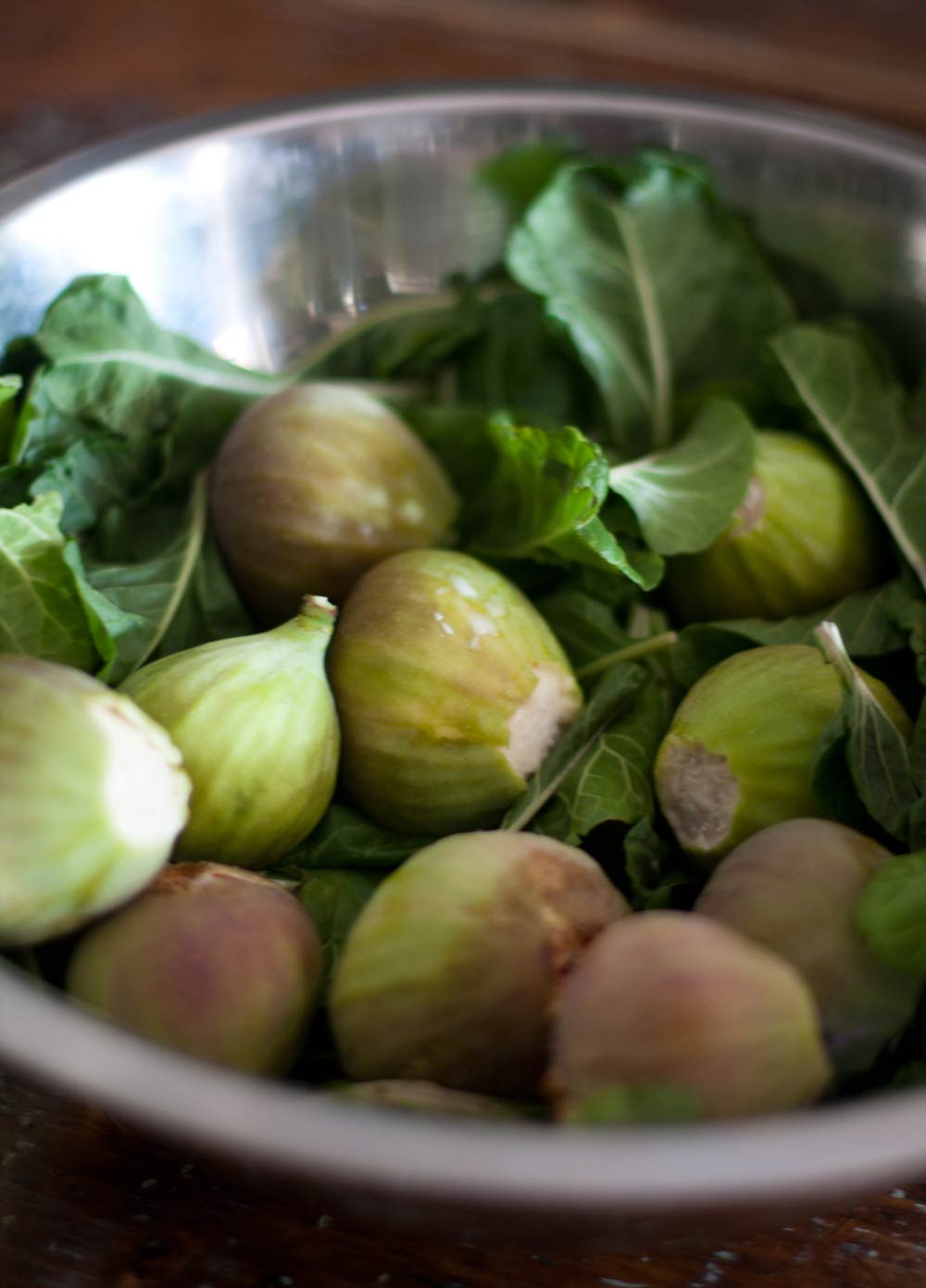
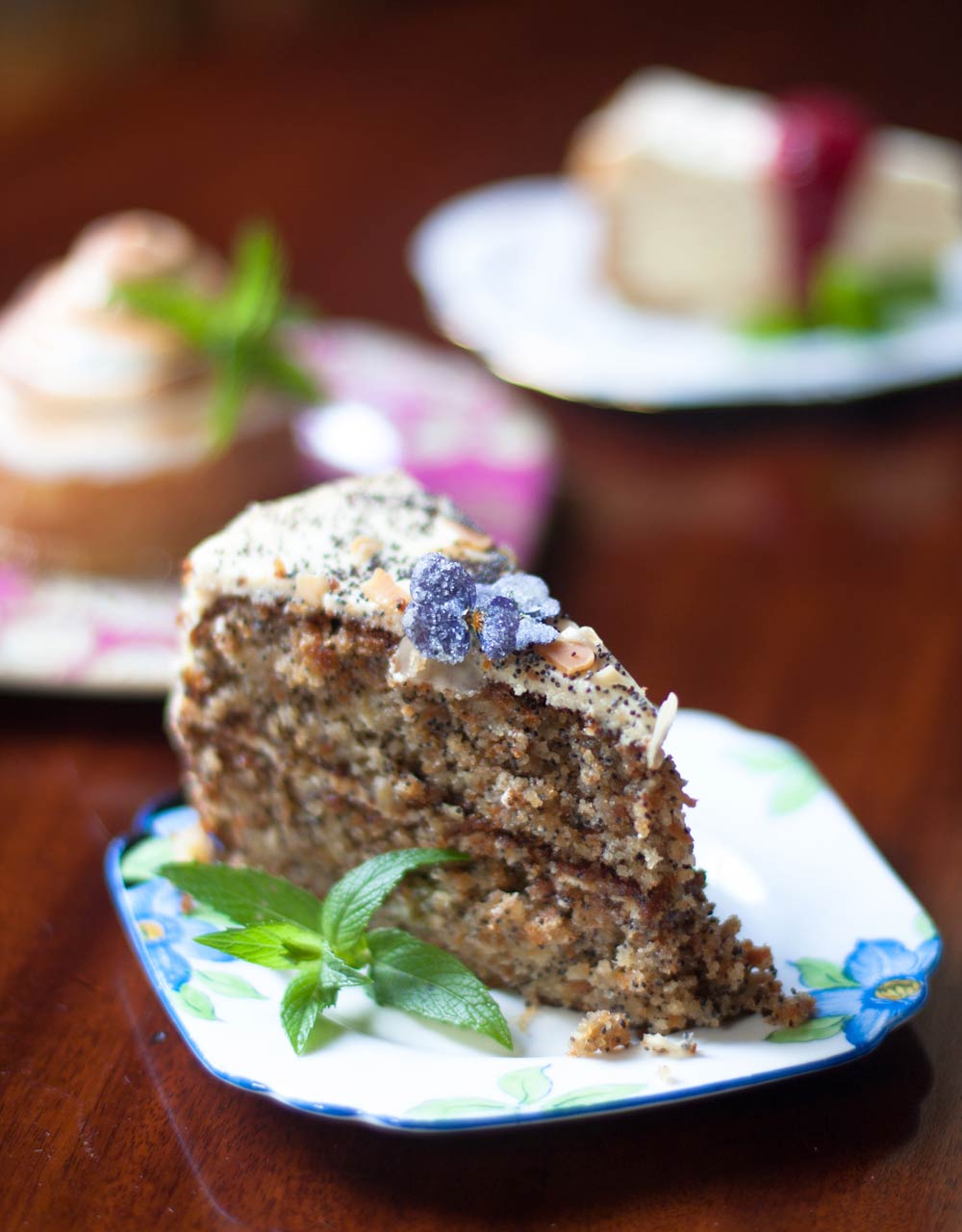
Visitors come from far and wide for Kim’s baked goods. Their carrot cake is probably their most famous treat on offer, with their baked cheesecake not far behind. All of the produce used falls under the farm’s ethos of being as organic as possible and a lot of the accompanying fruit, vegetables and herbs all come from their own little garden. They use the seasonal berries to adorn the cakes, especially that cheescake, and combine the herbs and veggies in their array of salads, sandwiches and quiches. Once the cakes are topped, the leftover fruit is turned into jams and preserves that are also available for purchase.Tea-under-the-treesTea-under-the-treesTea-under-the-trees
If you are after a venue for a special occasion, you can book the cafe out for a number anywhere between 20 and 100 people. Tea Under the Trees offers a function menu that is perfect for that birthday, kitchen tea or baby shower you have to plan. Whatever mood you’re in, Tea Under the Trees is the perfect place to recline in the garden with a slice of cake, take in the chitter-chatter of the birds and even enjoy a spot of shopping at the curated antiques store.

So, if you’re in the area look out for this gem and spend a wonderful, well-fed day on the farm.

Tea Under the Trees is located on St. Pieter’s Roche farmstead Main Road, Paarl.
Call 072 871 9103 for more information. 

Monday to Friday 9h00-16h00. Saturday for private functions only by private arrangement. Closed Sundays.

teaunderthetrees.co.za

Delicious produce is grown in healthy, living soil. #Harvesttotable series brought to you by Reliance Compost.

Reliance Compost

Discovering The Organic Roots of Reliance Compost

Reliance Compost
There really isn’t a buzzier word than organic at the moment. Fortunately, it relates to a movement that extends further than food trends, it’s a way of life that is seeing people truly question what they put in their bodies, be it their eggs, meat or vegetables. But if you take a step back, and look even further down the chain of food, it becomes glaringly obvious that where we get our food links to the farms it comes from and, if you want to get technical, the actual soil it grows in. You can’t be healthy if your vegetable plants aren’t well looked after and for that to happen a good solid soil foundation is required. That’s where Eddie Redelinghuys, the founder of Reliance Compost, stands on the subject. And as far he’s concerned it all starts with compost and he took some time to tell us why.

We met Eddie on his family’s 120-year-old farm in Paarl. He is a fourth generation farmer and grew up in the original farmhouse that still stands on the property today. Agriculture is well and truly in his blood. The farm is best known for their grape production, previously for wine but now table, and are responsible for exporting a high volume of grapes to the UK. His father believed in traditional farming methods and a way of conducting all the farm duties with as few pesticides and other such substances as possible. However, when the farm made a move towards to conventional farming in the 80s, and relying more on chemicals, there were a few obvious improvements but still issues that they couldn’t solve. One such issue was mildew, and when trying to spray the problem away on a particular batch of grapes meant that they were unfit for export and would then be sold in South Africa, Eddie questioned the ethics behind chemicals being used on the food we eat. If those grapes aren’t good enough to export, then why are they good enough for South Africans, he mused. And that was the beginning of his organic transition for the farm. Fortunately, his father had made use of similar practices some 40 years prior and it didn’t take long for them to be fertilising with manure, making use of natural fungicides and omitting all the chemicals they could.
Eddie_Reliance_A6
Once the decision was made to go 100% organic, Eddie’s work was cut out for him. The soil that had been destroyed by conventional farming laden with chemicals had to be rehabilitated and to do that he needed organic compost. And of course, in the late 90s, there was none in Cape Town. So he decided to make his own, using any grass and plant cuttings he could get his hands on. However, before long he began to struggle to find enough cuttings and came up with the idea to use the garden waste in the city’s landfills. He presented an idea to the city council, on how it would save them money, as well as reduce the quantity of rubbish being added to the dump. The government went for it and he was able to start Reliance, a profitable business for himself but also offering a sustainable outlet for the huge number of green waste. According to Eddie, garden waste accounts for around 80% of the city’s waste and Reliance is responsible for reusing that in a responsible and environmental way. He is quite the expert and is now able to offer advise to the government on regulating farming practices to get the soil up to an international level (read more here).

To say he’s passionate about the cause is an understatement and describes being green as simply making more sense. To throw away 80% of a reusable product is madness, particularly when you’ve depleted the soil in the process of growing the item and then throwing away the waste in a landfill. And he won’t be stopping at compost. Next he’s looking to revolutionise the use of diesel in his vehicle fleet by treating the sludge, food waste and other unmentionables in a landfill in a bio-digester to release the methane gas. Methane is a colour and odourless fuel very well suited to use in spark-ignited engines. This is not only a more cost-effective way to run a car, but prevents the methane gas from being released into the atmosphere where it is 21 times more potent than carbon dioxide as a greenhouse gas.
Eddie_Reliance_A5 Eddie_Reliance_A4
Eddie and Reliance are paving the way for a greener South Africa and he’s achieved the dream of being able to run a successful business while doing great things for the environment. His story is inspiring because he simply looked at creating organic remedies for his own plants on his farm and through that was able to assist in the cleaning up of Cape Town’s landfills. The term “one man’s trash is another man’s treasure” has never rung more true and we can be thankful for people like Eddie taking the time to care for the environment.Eddie_Reliance

Delicious produce is grown in healthy, living soil. #Harvesttotable series brought to you by Reliance Compost.

Reliance Compost

Songo Uplifts Kayamandi One Bicycle at a Time

findus_inpost_banner

Albert Einstein once said that life is like riding a bicycle – in order to keep your balance you have to keep moving and this really rings true for Songo Fipaza of songo.info – an organisation he created to promote cycling and sports to children in the Kayamundi township. Through this movement, he is steadily uplifting the community and giving these kids an extraordinary new outlook on life.

It all started for Songo in 1992, while already an accomplished sportsman, he was inspired by the achievements of Elana Meyer in the 1992 Olympics in Barcelona and the good name she was making for South Africa. At the time, he was playing soccer but then focused his attention solely on running, as he preferred the independence. “In soccer you rely on 10 other players, your success in running,” he says, “is up to you”. In 1995 he was representing the Western Cape in South African athletics, but was dealing with an improper diet and a few injuries. By 1998, he was on top form and completed his first half marathon, and by this stage was realising the impact that sport was having on his quality of life. By the time 2004 came around, he had established himself in the sports world of South Africa so much so, that when organisers of the gruelling Cape Epic were looking for a black rider, he offered to step up – provided that they gave him a bike. The organisers, of course, agreed. Since then, Songo has completed seven Cape Epics.

Songo training

Being on a bike really changed his perspective, he saw the way it brought a person into contact with nature, visiting places that you might not see on foot and, naturally, curated the discipline involved in the sport. It occurred to him then that these life skills would be invaluable to the children and teens of the Kayamandi township and so decided to set up songo.info. The aim of the organisation was simple, to change lives through the power of sport. The program is based around cycling, first teaching kids between 5 and 14 years old to ride a BMX bike, and then progressing them to mountain biking when they’re a bit older (14 years onwards). The best part about it, is that it’s entirely centred around being an after school activity that runs from 15h00 to 17h00. He has also set up an education program with a teacher who helps the youths with their homework. The split groups mean that each rider does an hour of homework and an hour of riding, making it easier for them to keep up with their workload, as well as keep in tip top shape. All races are planned for the weekends, meaning that the kids never have to miss any school. He has also added a specialised training group for young girls, which focuses on the significance of being fit and healthy, but even more importantly, is how it encourages the girls to bond and has positive female influences through women role models such as Cherise Stander.

The program is open to any and all young people wanting to get involved. If they come to Songo, they are welcome to join, on the condition that they follow the organization’s strict rules. Rules that ensure that the kids stay out of trouble and stay focused on their school work, as well as the sport itself. It’s no small feat for Songo and his team, who are fully immersed in these children’s lives. Just as he was inspired and guided by his mentors and colleagues such as Elana Meyer, Christoph Sauser and the late Burry Stander, he too is the inspiration and a form of support for these young children, going as far as helping them resolve personal and family issues. All of these young people are learning that a healthy body equals a healthy mind, keeping them motivated and supported to achieve their dreams in life.

Songo.info BMXSongo.info BMXSongo.info BMX

And if his social work wasn’t keeping him busy enough, Songo is also taking part in the mammoth Iron Man competition for the second time, taking place in Port Elizabeth in early April. Last year’s competition saw him learning to swim only 6 months prior to the competition – meaning that Songo is doing the race, complete with a 3.8 km swim, on only roughly 18 months worth of swimming experience under his belt. Almost immediately after Iron Man, he is jetting off to the UK to complete the London marathon. His determination is seemingly unstoppable.

Songo always ensures that he’s looking forward to the next thing that can effect major change in the lives of the children in Kayamandi. He has his mind set on finding funding for a swimming pool in the township, and hopes to teach children how to swim. This is not only a great form of exercise for them, but will prevent the high number of drownings that take place in the summer at beaches and dams nearby. Despite just celebrating the birth of his own daughter, he never shifts his attention from the youth development, and lives for them and their achievements. Be it raising funds for a pool, competing in marathons or even just learning to swim, Songo goes for it with his whole heart and is a true South African hero.Songo.info BMX

For more information visit songo.info | Twitter | Facebook